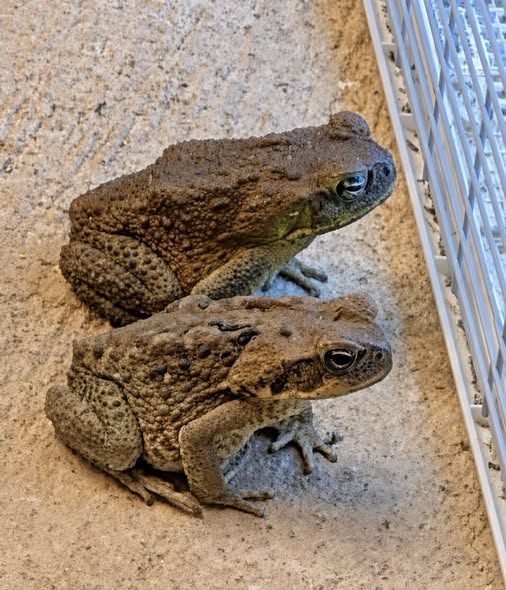
Why Toads Choose Your Yard: What Their Presence Means and How to Make Your Garden Wildlife-Friendly
Finding a toad sitting quietly beneath a plant, beside a garden path, or near your porch can be an unexpected surprise. Because these small amphibians are often most active after sunset, many people only notice them when they suddenly appear under outdoor lights or hop across the lawn.
But if toads regularly visit your yard, there is usually a reason.
Your property may provide several things a toad needs to survive: moisture, shelter, insects to eat, vegetation, and a relatively quiet place to spend the day. A yard that seems ordinary to a person can contain many useful resources for a small amphibian.
Toads can also play an important role in backyard ecosystems. They are predators of many small invertebrates, including insects, slugs, snails, and spiders, while also serving as food for other wildlife.
Their presence doesn’t necessarily mean that your garden has a pest problem. In many cases, it simply means that your yard is connected to a larger local habitat and provides suitable conditions for wildlife.
Here’s what may be attracting them—and what you can do if you’d like to make your garden more welcoming to native amphibians.
Why Do Toads Come Into Yards?
Toads don’t generally wander into gardens without purpose. Like other wild animals, they are looking for the resources that help them survive.
The exact reasons vary by species and location, but several factors are especially important.
1. Your Yard Has Plenty of Food
One of the biggest reasons toads visit gardens is the availability of prey.
Toads are primarily insectivores, meaning that much of their diet consists of small invertebrates. Depending on the species and habitat, their food can include beetles, caterpillars, flies, ants, crickets, spiders, slugs, and other small creatures.
A garden with healthy plant growth can naturally support many insects. Those insects, in turn, can attract animals that feed on them.
This creates a simple food-web relationship:
Plants → insects and other invertebrates → toads and other insect-eating animals
For gardeners, this can make toads useful members of the backyard ecosystem. They are not a replacement for responsible pest management, but they can contribute to the natural control of some invertebrate populations.
University extension programs and wildlife agencies commonly recommend providing habitat for insect-eating wildlife as part of a more balanced backyard ecosystem.
It’s also worth remembering that not every insect in a garden is harmful. Many insects are important pollinators, decomposers, or food for other wildlife.
A healthy garden isn’t necessarily one where every insect has been eliminated.
Instead, biodiversity can help create a more stable ecosystem.
2. Your Garden Provides Moisture
Toads have permeable skin and are closely tied to moist environments.
During hot or dry weather, they need places where they can avoid excessive heat and reduce water loss. This is one reason you may discover a toad beneath dense vegetation, mulch, leaves, rocks, logs, or other shaded areas.
A yard with consistently dry, exposed soil may be less attractive to many amphibians than one containing cooler, sheltered areas.
This doesn’t mean your entire garden needs to be wet.
Rather, small areas of shade and moisture can make a significant difference.
A shallow water source can also provide a useful resource. Wildlife organizations and extension services commonly recommend shallow, accessible water features for amphibian-friendly gardens.
If you provide water, keep it clean and make sure animals can easily get in and out.
A shallow dish placed securely at ground level can be more practical than a deep container.
3. Your Yard Offers Shelter During the Day
Toads are often more active around dusk and during the night. During daylight hours, they may spend much of their time hiding.
That makes shelter extremely valuable.
A toad might use:
- Leaf litter
- Dense groundcover
- Low-growing plants
- Mulch
- Fallen branches
- Hollow logs
- Rock piles
- Spaces beneath garden structures
- Compost areas
- Gaps beneath vegetation
- A simple garden shelter
Wildlife habitat guidance from organizations such as the U.S. Fish and Wildlife Service and university extension programs emphasizes the importance of providing cover and protected spaces for amphibians.
This explains why a perfectly manicured garden may sometimes attract less wildlife than a garden with a few naturally messy corners.
A small area of leaves or vegetation that looks insignificant to you can be valuable habitat to a toad.
4. Your Yard May Be Close to Natural Habitat
A toad’s appearance in your garden doesn’t necessarily mean it lives there permanently.
Your property may simply be part of its normal movement area.
Yards located near:
- Ponds
- Streams
- Wetlands
- Woodlands
- Meadows
- Drainage areas
- Natural vegetation
- Undeveloped land
may be more likely to receive visits from amphibians.
Many amphibians use both aquatic and terrestrial environments during their lives. Water can be particularly important for reproduction, while surrounding land provides feeding, shelter, and movement areas.
This means a toad can spend much of its time on land but still depend on nearby water for part of its life cycle.
Your backyard may therefore function as one small piece of a much larger habitat.
5. Outdoor Lights Can Attract Their Food
If you’ve ever switched on a porch light at night and noticed insects gathering around it, you’ve probably seen why lighting can indirectly affect toad activity.
A concentration of insects can provide feeding opportunities for animals that hunt at night.
Toads may position themselves near areas where prey regularly appear, including garden edges, patios, outdoor lights, and vegetation.
However, that doesn’t mean you should leave bright lights on all night specifically to attract toads.
Excessive outdoor lighting can affect many forms of wildlife.
A better approach is to maintain a diverse garden that naturally supports insects and other small organisms.
What Do Toads Actually Eat?
The diet of a toad depends on its species, size, location, and the prey available in its environment.
Many toads consume a variety of small invertebrates.
Their diet may include:
- Beetles
- Ants
- Flies
- Moths
- Caterpillars
- Crickets
- Grasshoppers
- Spiders
- Slugs
- Snails
- Other small invertebrates
Some of these creatures may be garden pests, while others are harmless or beneficial.
That’s important because toads aren’t selective garden pest-control machines.
They are wild predators simply responding to whatever prey is available.
If your yard supports a wide variety of insects, toads may naturally become part of that food web.
Are Toads Good for the Garden?
Generally, yes.
Toads are often considered beneficial wildlife because they consume a variety of invertebrates and contribute to the ecological balance of a garden.
University of Delaware Extension describes frogs and toads as important ecological participants because they act as both predators and prey. They consume insects and other small invertebrates while also providing food for larger animals.
However, it’s better to think of them as one component of natural pest management, rather than a complete solution.
A garden with toads can still experience insect damage.
If a particular pest is causing serious problems, other approaches may still be necessary. But supporting natural predators can be one part of a broader strategy.
Toads Are More Than Pest Controllers
It’s easy to think about toads only in terms of the insects they eat.
But their ecological role goes much further.
Toads participate in food webs at multiple levels.
They consume smaller organisms and may themselves become food for larger wildlife.
This means their presence contributes to the movement of energy through the local ecosystem.
Amphibians can also be useful indicators of environmental conditions because their permeable skin makes them particularly sensitive to changes in their surroundings. Exposure to pollutants and habitat changes can affect them.
So seeing a healthy population of native amphibians in an area can be an interesting sign that suitable habitat remains nearby.
Why You May See More Toads After Rain
One of the most familiar times to encounter toads is after rainfall.
Rain changes the environment in several ways.
The soil becomes wetter, humidity increases, and many small invertebrates become more active. Conditions can therefore become much more favorable for amphibians.
Rain can also trigger movement toward breeding sites for some species.
If you suddenly notice several toads around your property after a storm, it doesn’t necessarily mean they have just moved into your yard.
They may have been nearby all along.
The wetter conditions simply make them more active and visible.
Why Toads Often Appear at Night
If you rarely see toads during the day but regularly encounter them after dark, that’s completely normal.
Many toads are primarily nocturnal.
The cooler temperatures and higher humidity at night can provide better conditions for activity, while nighttime may also offer more feeding opportunities.
You might see one sitting motionless near a walkway or underneath an outdoor light.
It may look like the animal isn’t doing anything.
In reality, it may be waiting for prey to come within reach.
Should You Be Worried About Toads?
For most people, a native toad living in the garden isn’t something to fear.
Toads generally prefer to avoid humans and aren’t interested in chasing or attacking people.
The best approach is to observe them without unnecessarily handling them.
It’s also wise to keep pets from disturbing wildlife.
Dogs and cats can injure amphibians, while amphibians can sometimes produce defensive secretions when handled or attacked. Because different species have different characteristics, children and pets should be discouraged from picking up wild amphibians.
If you encounter a toad, simply giving it space is usually the easiest solution.
What About the Bumps on a Toad’s Head?
One feature that frequently causes concern is the pair of prominent glands behind a toad’s eyes.
These are commonly called parotoid glands.
They are part of the animal’s natural defense system.
When threatened, some toads can release defensive substances from these glands. The effects vary by species, and exposure can be particularly problematic for pets if they bite or mouth a toad.
For that reason, pet owners should prevent dogs and other animals from playing with or chewing on wild toads.
You generally don’t need to disturb a toad simply because you see it in your yard.
Observe it from a distance and allow it to continue on its way.
How to Create a Toad-Friendly Garden
If you enjoy seeing wildlife in your yard, you can make a few changes that benefit toads and many other species.
The key is to provide the basic ingredients of habitat:
Food, water, shelter, and safe places to move.
Create a Shady Shelter
One of the simplest options is to create a small sheltered space in a quiet part of the garden.
A partially buried clay pot, rock arrangement, log, or similar structure can provide shade and protection.
Make sure the shelter is stable and doesn’t contain sharp edges that could injure an animal.
University and extension resources specifically recommend simple shelters such as overturned or partially buried clay pots and small rock structures.
Leave Some Leaf Litter
Instead of removing every fallen leaf from every corner of your property, consider leaving some natural material in less-used areas.
Leaf litter can provide:
- Moisture
- Cover
- Hiding places
- Habitat for insects
- Protection from temperature extremes
The U.S. Fish and Wildlife Service recommends leaving leaf litter and creating natural areas as part of backyard habitat management.
You don’t have to let the entire yard become overgrown.
A designated wildlife area can provide habitat while the rest of the property remains neatly maintained.
Keep Some Areas Densely Planted
Groundcover plants, native grasses, shrubs, and other vegetation can create useful layers of habitat.
A diverse garden also supports a wider variety of insects, which can provide food for amphibians and other wildlife.
Native plants can be particularly valuable because they are adapted to local conditions and can support local ecological relationships.
Provide a Shallow Water Source
A small, shallow container of clean water can provide moisture for wildlife.
If you use one, place it somewhere shaded and secure.
It should be shallow enough that small animals can enter and leave easily.
Change the water regularly so it doesn’t become stagnant.
If you install a pond, consider wildlife safety from the beginning. Gentle edges or other ways for animals to escape are important.
Remember that not every toad will use a backyard pond for breeding. Their needs vary by species.
Don’t Use Pesticides Carelessly
One of the most important things you can do for amphibians is to reduce unnecessary chemical exposure.
Toads have permeable skin, which makes them particularly vulnerable to contaminants in their environment.
Broad pesticide applications can also affect the insects and other organisms that form the foundation of the garden food web.
Instead of automatically treating an entire lawn or garden, consider whether treatment is actually necessary.
Integrated pest management approaches can include:
- Monitoring plants before treating them
- Identifying the actual pest
- Removing affected plant material when appropriate
- Using physical barriers
- Encouraging natural predators
- Treating only affected areas
- Following product instructions carefully
Reducing unnecessary pesticide use benefits far more than toads.
It can also help protect pollinators, beneficial insects, birds, soil organisms, and other wildlife.
Be Careful When Mowing
Toads may hide in grass, leaf litter, or vegetation during the day.
That makes lawn equipment a potential hazard.
Before mowing areas that contain dense vegetation or wildlife habitat, inspect the area when possible.
You can also consider leaving a small wildlife zone unmowed or mowing less frequently in appropriate areas.
The U.S. Fish and Wildlife Service recommends creating wild zones and leaving some areas of vegetation for wildlife, while noting that homeowners should consider local fire-safety requirements where applicable.
A small section of your property can provide shelter without changing the appearance of the entire yard.
Keep Pets Away From Wildlife
Even if your dog or cat is well fed, it may still chase or investigate wildlife.
That can be dangerous for both animals.
Cats and dogs can injure amphibians, while a dog that mouths a toad may experience an unpleasant reaction from the animal’s defensive secretions.
If you want to encourage wildlife, supervised pets and designated wildlife areas can make a big difference.
This is especially important around ponds, log piles, dense vegetation, and other places where animals may hide.
Do Toads Need a Pond?
Not necessarily for every moment of their lives.
Many adult amphibians spend considerable time on land, where they feed, shelter, and move between habitats.
However, reproduction is often connected to water.
Depending on the species, toads may use ponds, temporary pools, wetlands, streams, or other suitable water bodies during breeding.
This is why simply putting a small container of water in your garden may not turn it into a breeding site.
It can still provide moisture, but successful reproduction requires the right environmental conditions.
Different species have different requirements.
Why Some Yards Have Toads and Others Don’t
Two houses on the same street can have completely different wildlife populations.
One yard might have dense plants, shaded soil, leaf litter, and a nearby pond.
Another might consist almost entirely of closely mowed grass, concrete, and dry exposed soil.
Even though the properties are only a short distance apart, they provide very different habitat.
Toads are more likely to use areas that offer the resources they need.
Location also matters.
A property near natural habitat has a greater chance of being visited by local wildlife than a property isolated from suitable habitat.
This doesn’t mean you need a huge garden.
Even small habitat features can become part of a larger network.
Your Yard Can Become Part of a Wildlife Corridor
Wildlife doesn’t recognize property boundaries the way humans do.
A toad doesn’t know where one homeowner’s property ends and another begins.
If several neighboring yards contain native plants, shelter, water, and natural vegetation, together they can create a much more useful habitat network.
University of Florida Extension explains that individual yards can contribute to larger habitat connections when vegetation and wildlife-friendly spaces occur across neighboring properties.
That means a small wildlife garden can have value beyond its own property.
A row of connected gardens can provide more opportunities for wildlife to move between larger natural areas.
Should You Feed a Toad?
Generally, no.
Wild toads are capable of finding their own food when appropriate habitat is available.
Rather than leaving out insects or other food, focus on improving the natural environment.
A garden with healthy vegetation, leaf litter, shelter, and limited pesticide use can naturally support the organisms that form the toad’s food supply.
Feeding wild animals can also create unintended problems, including attracting pets, pests, or other animals.
A better approach is to let wildlife behave naturally.
What If You Don’t Want Toads in Your Yard?
Not everyone wants wildlife around the house.
If you prefer to discourage toads from gathering in a particular area, focus on changing the conditions that attract them rather than trying to harm or remove them.
For example, you can:
- Reduce unnecessary outdoor lighting
- Remove unnecessary piles of debris
- Keep doors and window wells secured
- Eliminate standing water that isn’t intended for wildlife
- Keep pet food indoors
- Maintain areas immediately around entrances
- Use normal garden maintenance practices
If a toad is inside a garage, shed, or other enclosed space, gently allowing it a safe path outside is preferable to harming it.
Remember that wildlife management should be humane and appropriate for your local regulations.
Are Toads a Sign of a Healthy Garden?
Their presence can be encouraging, but it shouldn’t be interpreted as a guaranteed measure of environmental health.
Toads require suitable habitat, food, moisture, and shelter, so seeing them means your property is providing at least some conditions they can use.
At the same time, amphibian populations are influenced by many factors outside a single yard.
Weather, habitat loss, pollution, road traffic, disease, predators, water quality, and changes in surrounding land can all affect amphibians.
So rather than thinking, “I have toads, therefore my garden is perfectly healthy,” it’s more accurate to think:
“My garden provides some resources that local amphibians can use.”
That’s a meaningful thing in itself.
Toads and the Bigger Backyard Ecosystem
A garden isn’t just a collection of plants.
It’s a small ecosystem containing interactions among plants, insects, microorganisms, birds, mammals, amphibians, reptiles, and other organisms.
Toads are one part of that system.
Plants provide food and shelter for insects.
Insects become food for toads, birds, spiders, and other predators.
Toads become food for larger animals.
Leaves fall to the ground and decompose.
Microorganisms and invertebrates break down organic matter.
Nutrients return to the soil.
The cycle continues.
When homeowners focus only on removing every insect, leaf, fallen branch, or wild plant, they can unintentionally remove important parts of this ecosystem.
A more wildlife-friendly garden doesn’t need to be completely wild.
It simply needs some areas where nature is allowed to function.
Simple Changes That Can Help
You don’t need an expensive landscaping project to make your property more attractive to toads.
Start with a few simple changes.
Create one natural corner
Leave a small area with leaf litter, native plants, and natural shelter.
Add a safe water source
Use a shallow container and keep the water clean.
Reduce unnecessary chemicals
Use pesticides only when needed and follow appropriate instructions.
Keep some vegetation
Dense groundcover and native plants can provide both shelter and food for insects.
Provide hiding places
Logs, rocks, leaves, and simple shelters can give amphibians protection.
Protect wildlife from pets
Supervise dogs and keep cats from hunting in wildlife areas when possible.
Mow thoughtfully
Check dense vegetation and consider maintaining a small wildlife zone.
These changes can benefit much more than toads.
Birds, butterflies, beneficial insects, lizards, salamanders, and other wildlife may also use the same habitat.
What It Means When a Toad Keeps Returning
If the same area of your yard repeatedly attracts toads, that’s useful information.
It may indicate that the location provides several things they like.
Perhaps the soil stays cool and damp.
Maybe insects gather there.
Maybe a shrub provides shelter.
Perhaps there’s a pond or drainage area nearby.
Or the space may simply be part of a route between daytime shelter and nighttime feeding areas.
Rather than seeing the toad as an unwanted visitor, you can view it as a small indicator of how your landscape functions.
Wild animals often reveal features of a garden that humans overlook.
The Best Approach Is to Give Wildlife Space
The most important thing to remember is that toads don’t need constant attention from people.
They aren’t pets.
They don’t need to be picked up, relocated repeatedly, or fed.
What they need is suitable habitat.
If your yard already provides food, moisture, shelter, and safe places to move, the best thing you can often do is simply leave those resources available.
A quiet corner with plants and natural materials can be more valuable than an elaborate wildlife installation.
And sometimes, the simplest garden is the most useful one.
Final Thoughts
A toad appearing in your garden is usually not a random event.
Your yard may offer food, moisture, shelter, or access to nearby habitat that makes it useful to a small amphibian.
These quiet nighttime visitors can contribute to the natural food web by consuming a variety of insects and other invertebrates, while also serving as prey for larger wildlife.
If you want to encourage them, focus on the basics: provide sheltered areas, maintain some natural vegetation, keep water sources shallow and clean, reduce unnecessary pesticide use, and protect wildlife from pets and lawn equipment.
You don’t need to transform your entire yard.
A few thoughtful changes can create a small refuge for amphibians and other wildlife.
So the next time you discover a toad sitting quietly beneath a plant after sunset, there’s a good chance it isn’t lost.
It may simply have found exactly what it was looking for.