Why Do Hard-Boiled Eggs Sometimes Have Green Yolks?
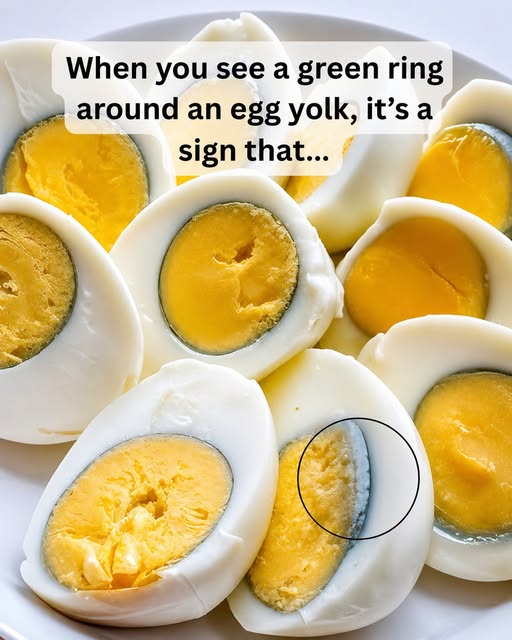
You cut open a hard-boiled egg expecting to see a bright yellow yolk, only to notice a greenish or gray-green ring around the outside.
At first, the unusual color can be surprising. It may even make the egg look as though something has gone wrong during cooking.
In most cases, however, a green ring around the yolk has a simple explanation: the egg has been cooked for too long or at too high a temperature.
The color is caused by a chemical reaction between compounds naturally present in the egg. It is generally a cooking-related change rather than an indication that the egg has suddenly become spoiled.
Understanding why it happens can help you cook hard-boiled eggs with a more appealing color and texture.
What Causes the Green Ring?
The greenish ring forms when sulfur compounds from the egg white react with iron in the yolk.
Egg whites naturally contain sulfur-containing compounds, while egg yolks contain iron.
When an egg is exposed to prolonged heat, these compounds can interact near the boundary between the white and the yolk.
The result is the formation of ferrous sulfide, which has a greenish-gray appearance.
This is why the discoloration usually appears as a ring around the outside of the yolk rather than turning the entire yolk green.
The longer the egg is exposed to high heat, the more noticeable the reaction can become.
Is a Green Ring a Sign That the Egg Is Spoiled?
Usually, no.
A green ring caused by overcooking is not, by itself, evidence that the egg has spoiled.
The appearance is primarily a result of the cooking process.
However, color alone should never be the only factor used to judge whether an egg is safe to eat.
If an egg has an unusual odor, damaged shell, slimy texture, or other signs of spoilage, it is better not to eat it.
Proper handling and storage are important regardless of whether the yolk has a green ring.
Why Does the Yolk Stay Yellow Sometimes?
When a hard-boiled egg is cooked under appropriate conditions, the yolk generally remains yellow.
The goal is to cook the egg thoroughly without exposing it to unnecessary heat for an extended period.
Cooking methods vary, but once the egg has reached the desired level of doneness, continuing to cook it for much longer can affect both its appearance and texture.
The outside of the yolk may develop the familiar greenish ring, while the yolk itself can become drier and more crumbly.
So avoiding the green ring can also help produce a more pleasant texture.
Does the Green Ring Affect the Taste?
The discoloration itself generally does not make the egg unsafe or dramatically change its flavor.
However, overcooking can affect the texture.
A properly cooked hard-boiled egg typically has a firm white and a yolk that is cooked through without becoming excessively dry.
An egg that has been cooked for too long may have a firmer, more rubbery white and a dry or crumbly yolk.
The green ring is therefore often a visual clue that the egg has received more heat than necessary.
How Can You Prevent Green Yolks?
The simplest approach is to avoid excessive cooking.
Instead of leaving eggs boiling for an extended period, use a consistent cooking method and remove the eggs from the heat once they have reached the desired doneness.
One common technique is to place eggs in water, bring the water to the appropriate temperature, and then allow the eggs to cook for a controlled amount of time.
After cooking, cooling the eggs promptly can help stop the cooking process.
The exact cooking time depends on factors such as egg size, starting temperature, altitude, cookware, and the desired result.
Why Does Cooling the Eggs Matter?
Eggs continue to retain heat after they are removed from the cooking water.
That means the cooking process does not necessarily stop the instant the pot leaves the stove.
Placing cooked eggs in cold water can help bring their temperature down more quickly.
This can reduce continued cooking and make it easier to achieve a consistent yolk texture.
A cold-water bath can also make some hard-boiled eggs easier to peel, although peeling results can vary depending on the freshness of the eggs and the cooking method.
Does Egg Freshness Cause the Green Ring?
Egg freshness can influence several characteristics of a cooked egg, but the classic green ring is primarily associated with the interaction between sulfur and iron during cooking.
The main factor is generally heat exposure.
That said, eggs can behave differently depending on their age, size, storage conditions, and starting temperature.
If you regularly get green rings even when using the same cooking method, small changes in cooking time or temperature may be worth trying.
What About Overcooking?
Overcooking is one of the most common reasons for the greenish ring.
As the egg remains exposed to heat, the chemical reaction between sulfur and iron becomes more noticeable.
At the same time, the proteins in the egg continue to change.
This can result in a yolk that is firmer and drier than intended.
For people who prepare eggs regularly, controlling the cooking process can make a noticeable difference.
Instead of relying entirely on a fixed number of minutes, pay attention to your cooking setup and adjust the method when necessary.
Does High Temperature Matter?
Yes.
The reaction is associated with prolonged exposure to heat, so cooking eggs more aggressively than necessary can increase the likelihood of discoloration.
A controlled cooking temperature can help produce more consistent results.
This does not mean that eggs need to be cooked at a very low temperature. They still need to reach a temperature sufficient for the desired level of doneness.
The goal is simply to avoid unnecessarily prolonged exposure to intense heat.
Is a Green-Yolk Egg Safe for Children?
A green ring caused by overcooking does not automatically make an egg unsafe.
For children, however, food should always be prepared and stored carefully.
Eggs should be cooked according to appropriate food-safety guidance, particularly when serving young children, older adults, pregnant people, or anyone with a weakened immune system.
The important distinction is between a harmless cooking-related color change and actual signs of spoilage or improper storage.
A green ring alone does not establish that an egg has gone bad.
What If the Entire Yolk Looks Green?
A thin greenish ring around the outside of the yolk is the classic result associated with the sulfur-and-iron reaction.
If the entire egg or yolk looks unusual in another way, however, it is worth considering other factors.
Look at the egg’s smell, texture, storage history, shell condition, and whether it has been kept refrigerated appropriately.
A strange appearance combined with an unpleasant odor or other spoilage signs is a different situation from a simple green ring caused by cooking.
When in doubt about food safety, it is safer to discard the egg than to rely on appearance alone.
Does the Green Color Mean the Egg Contains Something Harmful?
The green color itself is not evidence that the egg has developed a dangerous substance because of normal cooking.
The discoloration comes from a chemical reaction involving naturally occurring components of the egg.
It is a good example of how cooking can change the appearance of food without necessarily making it unsafe.
Similar changes occur throughout cooking.
Heat can alter proteins, fats, sugars, pigments, and other compounds, sometimes producing colors and textures that were not present in the raw ingredients.
Why Are Egg Yolks Different Shades of Yellow?
Even before cooking, egg yolks can vary in color.
Some yolks are pale yellow, while others can be much deeper yellow or orange.
Diet is one factor that can influence yolk color. The pigments present in a hen’s feed can affect the appearance of the yolk.
Therefore, not every egg begins with exactly the same shade.
Cooking can then alter the appearance further.
The green ring is a separate phenomenon related primarily to the interaction between sulfur and iron under heat.
Does the Green Ring Change the Nutritional Value?
The appearance of a green ring does not mean that the egg has suddenly lost all of its nutritional value.
Eggs remain a source of protein and several vitamins and minerals.
However, cooking methods can influence certain nutrients, and excessively prolonged cooking may affect some components of food.
For everyday cooking, the more noticeable consequence of overcooking is often texture and appearance rather than a dramatic nutritional transformation.
The Best Way to Cook Hard-Boiled Eggs
There are many methods for preparing hard-boiled eggs, and people often have their own preferred technique.
A simple approach is:
- Place the eggs in a saucepan and cover them with water.
- Heat the water until it reaches a boil.
- Use a controlled cooking period appropriate for the size of the eggs and your desired doneness.
- Remove the eggs from the heat when they are sufficiently cooked.
- Cool them promptly in cold water.
- Refrigerate them after cooling if they will not be eaten immediately.
The exact timing can vary, so it may take a little experimentation to find the method that works best with your stove and cookware.
Don’t Judge the Egg Only by Appearance
A green ring can look unusual, but food safety is more complicated than appearance.
When deciding whether a cooked egg is suitable to eat, consider how it was handled and stored.
A properly cooked egg that has developed a green ring from prolonged heating is very different from an egg that has been improperly stored or shows clear signs of spoilage.
This distinction is useful because unusual-looking food is not necessarily spoiled food.
At the same time, food that has been stored improperly should not be considered safe simply because it looks normal.
Why This Small Cooking Mystery Happens
The green ring around a hard-boiled egg is a surprisingly good example of basic chemistry happening in the kitchen.
An egg contains many different compounds, and heat changes how those compounds interact.
Sulfur from the egg white and iron from the yolk can react near the boundary between them, producing the greenish compound responsible for the familiar ring.
Nothing mysterious has been added to the egg.
The change comes from the egg’s own chemistry and the way it responds to heat.
A Simple Adjustment Can Make a Difference
If you regularly see green rings around your hard-boiled egg yolks, you probably don’t need to stop eating hard-boiled eggs.
Instead, consider adjusting your cooking process.
Try reducing unnecessary cooking time, avoiding excessive heat, and cooling the eggs promptly after they are cooked.
You may find that these small changes produce yolks with a more even yellow color and a softer, more pleasant texture.
The Takeaway
A greenish ring around the yolk of a hard-boiled egg can look strange, but it is usually easy to explain.
The discoloration occurs when sulfur-containing compounds from the egg white react with iron in the yolk during prolonged heating. It is primarily a result of the cooking process.
To reduce the chance of seeing it:
- Avoid cooking eggs much longer than necessary.
- Use a consistent cooking method.
- Cool the eggs promptly after cooking.
- Store cooked eggs properly.
- Check for actual signs of spoilage rather than judging safety from the green ring alone.
So the next time you cut into a hard-boiled egg and notice a green edge around the yolk, there is no need to assume that the egg has mysteriously gone bad.
In many cases, the color is simply a visible reminder of what happens when food, heat, and chemistry meet