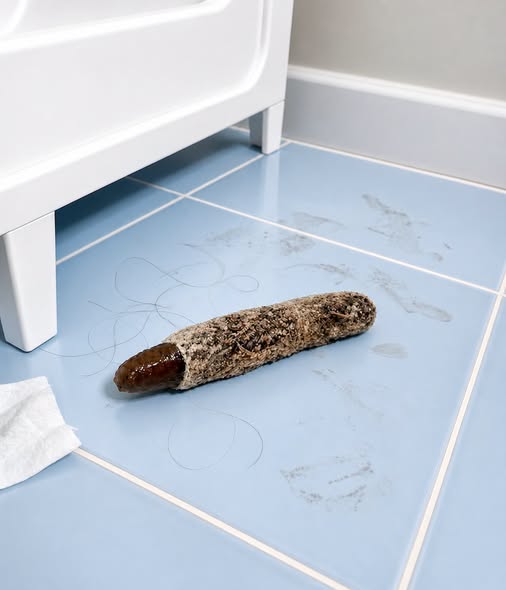
The Tiny Architect Living at Home: The Surprising Discovery Hidden in an Ordinary Apartment
Sometimes the most interesting discoveries are hiding in places we barely notice.
We tend to associate fascinating wildlife with forests, gardens, mountains, wetlands, and remote corners of the natural world. But nature doesn’t always stay outside.
Small creatures regularly share our surroundings.
They can live beneath porches, around windows, inside garages, among houseplants, or in quiet corners of buildings. Most of the time, they remain unnoticed because they are small, quiet, and active when people aren’t paying attention.
Then one day, something catches your eye.
A delicate structure appears in a corner.
At first, it looks like dust.
Then you notice the pattern.
Fine strands stretch from one surface to another, forming a surprisingly organized structure. The more closely you look, the more deliberate it appears.
It isn’t random.
It is the work of a tiny architect.
For many people, discovering a spider web inside an apartment produces an immediate reaction: clean it up.
But before reaching for a vacuum or duster, it can be worth taking a closer look.
The structure may reveal something fascinating about the animal that created it, the environment around your home, and the remarkable engineering abilities of creatures that are easy to overlook.
A Tiny Construction Project in the Corner
Spider silk is one of the most remarkable materials produced by animals.
Spiders manufacture silk in specialized structures called spinnerets located near the end of the abdomen. Depending on the species and situation, silk can be used to construct webs, make retreats, create egg cases, and provide other forms of support and protection.
That means the web you see in a quiet corner isn’t simply a collection of random threads.
It is the result of a biological process.
The spider produces silk and places it where the structure can serve a purpose.
For web-building species, that purpose is often connected to capturing prey.
The design varies considerably between species.
Some spiders create classic circular webs.
Others make tangled structures.
Some produce flat sheets.
Others construct funnel-shaped retreats.
Still others don’t build prey-catching webs at all.
This variety is one reason an unfamiliar web can be so difficult to identify.
Why an Apartment Can Become Suitable Habitat
An apartment may seem like an unlikely place for wildlife.
There are walls, windows, furniture, appliances, heating systems, and regular human activity.
Yet from the perspective of a small spider, a building can offer several useful features.
There may be sheltered corners that remain undisturbed.
There may be insects attracted to lights near windows.
There may be small gaps through which insects enter.
There may be quiet spaces behind furniture or in storage areas.
A web-building spider doesn’t necessarily need a large natural landscape.
It needs a suitable location and access to food.
Some spider species are well adapted to living around buildings. The University of Minnesota Extension notes that web-building spiders commonly construct webs in calm, undisturbed areas and that some species can survive and reproduce indoors.
That helps explain why an apartment can occasionally become home to a surprisingly efficient little hunter.
The Web Tells a Story
One of the easiest ways to learn about a spider is to study its web.
Not every spider produces the same type.
A classic orb web consists of radiating lines and concentric circles. It is the familiar design that many people associate with spiders.
But indoor spiders often create very different structures.
Common house spiders, for example, can build loose, tangled webs in protected areas.
Cellar spiders may create irregular webs in corners, particularly in dark or secluded parts of buildings.
Funnel weavers construct horizontal sheet-like webs with a funnel-shaped retreat where the spider can wait.
So when someone discovers an unusual web inside a home, the structure itself can provide an important clue.
The “Architect” Doesn’t Build for Decoration
Human beings tend to appreciate architecture for its appearance.
We admire bridges, towers, houses, and carefully designed buildings because they are functional and visually interesting.
A spider has a very different objective.
Its web is a tool.
The structure is designed to help the spider survive.
For many web-building spiders, the web functions as a way to intercept prey. The spider can remain nearby and respond when vibrations travel through the silk.
The University of Minnesota Extension explains that web-building spiders often have relatively poor eyesight and can rely on vibrations in the web to detect prey.
In other words, the web can function as an extension of the spider’s sensory environment.
The spider doesn’t necessarily have to chase every insect.
Instead, it creates a structure that helps bring information to it.
That is an impressive strategy for such a small animal.
Why the Web May Appear Overnight
A common experience is to notice a web that seemingly wasn’t there the day before.
There are several possible explanations.
The web may have been built during a period when people weren’t paying attention.
A spider may have moved into a previously unused location.
Lighting or weather conditions may have made an existing web easier to see.
Fine silk can be nearly invisible from certain angles, especially when it is clean and dry.
Morning light can suddenly reveal it.
Dust and moisture can also make strands more visible.
That can create the impression that a spider constructed an elaborate structure in a matter of minutes.
Sometimes it did.
Other times, the web was simply there all along.
Not Every Web Means a Large Spider
Another misconception is that a large web must belong to a large spider.
That’s not necessarily true.
Some spiders create surprisingly noticeable webs despite being relatively small.
Others produce delicate structures that are almost impossible to see until light catches them.
The size, shape, location, and density of a web can vary considerably.
This is why identifying a spider solely from the web can be difficult.
The spider itself provides additional information.
Its body shape, leg length, coloration, movement, and location can all help narrow down the possibilities.
The Quiet Residents of Household Corners
Many people rarely think about the tiny organisms living around their homes.
But buildings can support small communities of insects and other arthropods.
Spiders are part of that community.
Some hunt actively.
Others wait in webs.
Some wander indoors accidentally.
Others are well adapted to indoor conditions.
The distinction matters.
A hunting spider may enter a home while searching for food and then leave again.
A web-building species may establish itself in a quiet corner because the environment provides suitable shelter and prey.
The University of Minnesota Extension distinguishes between web-building spiders and hunting spiders, noting that many hunting species live outdoors and may enter buildings accidentally.
So finding a spider indoors doesn’t automatically mean that it has established a permanent colony.
What Attracts Small Predators Indoors?
Food is one important factor.
Spiders are predators, and insects are common prey.
If a building has plenty of insects, it may also provide opportunities for spiders.
Outdoor lighting can contribute indirectly.
Lights can attract flying insects.
Those insects may gather around windows, doors, balconies, or exterior walls.
A spider that finds a reliable supply of prey may have a good reason to remain nearby.
This is one reason outdoor lighting and insect activity can influence the number of spiders seen around buildings.
The spider isn’t necessarily attracted to the light itself.
It may be attracted to the food that gathers there.
Why Quiet Corners Matter
If you look around an apartment, you may notice that webs aren’t distributed evenly.
They tend to appear in certain locations.
Corners are common.
Ceiling edges can be useful.
Behind furniture can provide shelter.
Basements, storage areas, and other relatively undisturbed spaces can be especially attractive to some species.
The reason is simple.
A web is easier to maintain when it isn’t constantly disturbed.
Frequent movement, cleaning, airflow, and physical contact can destroy delicate silk structures.
A quiet corner provides a better opportunity for a web-building spider to establish itself.
The Web Is More Than a Trap
Spider silk has many uses beyond prey capture.
Spiders use silk for egg cases.
Some use it to construct shelters or retreats.
Young spiders can use silk to help disperse through the environment.
Some species use silk as a safety line.
This versatility is part of what makes spider silk so interesting from a biological perspective.
So when you see a web, you aren’t necessarily looking at a simple “trap.”
You’re looking at one part of a larger survival strategy.
What Makes Spider Silk So Interesting?
Silk is produced as a liquid and becomes a solid fiber after being released.
Spiders can produce different types of silk with different properties.
This allows them to use silk for different purposes.
Some silk needs to be strong.
Some needs to be sticky.
Some may need to be flexible.
Some may be used for structural support.
The spider’s body is effectively a biological manufacturing system capable of producing a material with several functions.
For a creature that may measure only a few millimeters or centimeters, that is an extraordinary capability.
The Difference Between a Web and a Retreat
Not every silk structure is intended to catch prey.
This is an important distinction.
Some spiders create a silk retreat rather than a traditional web.
For example, certain sac spiders construct tube-like silken shelters where they hide during the day. These structures aren’t the same thing as a prey-catching web.
If you see a small silk tube or enclosed retreat near a ceiling or wall, the spider may be using it as shelter.
This is another reason why calling every silk structure a “web” can be misleading.
What If the Web Is Very Messy?
A tangled web doesn’t necessarily indicate poor construction.
Different spider species have different strategies.
Cobweb spiders, for example, produce irregular, tangled webs.
These can look chaotic to humans.
But the structure is suited to the spider’s behavior.
The spider doesn’t need to create a perfectly symmetrical geometric pattern.
It needs a structure that helps it capture prey and survive.
The University of Minnesota Extension describes common house spiders as builders of loose, tangled webs in secluded areas.
So what looks like disorder to us may be perfectly functional from the spider’s perspective.
The Classic Orb Web
The opposite extreme is the orb web.
This is the structure most people picture when they hear the words “spider web.”
It has radial lines extending outward from a central area, combined with curved strands that form concentric patterns.
Orb weavers are generally associated with outdoor habitats such as gardens, fields, and landscapes rather than indoor rooms.
Their webs are especially noticeable because of their regular geometry.
When sunlight or moisture catches the silk, the web can become remarkably visible.
Why Dew Makes Webs Look Magical
A web that is almost invisible during the day can become obvious in the early morning.
Tiny droplets of moisture cling to the silk.
Each strand becomes outlined.
Suddenly, the structure looks almost like a delicate piece of glass sculpture.
The spider didn’t necessarily create a different web.
The conditions simply made the existing structure easier for humans to see.
This is one reason gardens and balconies can seem full of webs after cool mornings.
Is a Spider Inside the Home a Problem?
For most households, finding an occasional spider isn’t automatically a sign of a serious problem.
Spiders are predators that feed on other arthropods.
Many species are harmless to people.
The University of Minnesota Extension notes that most spiders are harmless to humans and that spiders rarely bite people.
That doesn’t mean every spider should be handled.
If you don’t know what species you’re looking at, the safest approach is simply to avoid touching it.
There is rarely a reason to pick up a spider with bare hands.
When You May Want to Remove a Web
Sometimes a web is simply in an inconvenient location.
It may stretch across a doorway.
It may collect dust near a ceiling.
It may appear around a frequently used window.
In those situations, removing the web can be reasonable.
A broom or vacuum can remove visible webbing.
The important thing is to avoid unnecessary chemical treatment when a simple physical solution is sufficient.
For occasional indoor spiders, integrated approaches that emphasize non-chemical methods are generally recommended.
Why You Shouldn’t Automatically Spray Everything
Seeing one web doesn’t necessarily mean you need insecticide.
In fact, using broad chemical treatments simply because you discovered a spider can be unnecessary.
First, consider why the spider is there.
Is there an insect problem?
Are windows or doors poorly sealed?
Is outdoor lighting attracting large numbers of insects?
Are there undisturbed areas where spiders can establish webs?
Addressing those factors can sometimes reduce indoor spider activity without relying heavily on chemicals.
The University of Minnesota Extension recommends approaches such as removing clutter, reducing insect food sources, repairing screens, sealing cracks, and physically removing webs or individual spiders when appropriate.
A Web Can Tell You About the Building
There is another interesting way to think about the discovery.
A spider web isn’t only evidence of a spider.
It can also provide clues about the environment.
If a particular corner repeatedly attracts webs, perhaps it is quiet and undisturbed.
If spiders gather near a window, insects may be entering there.
If webs are especially common near outdoor lights, insects may be congregating around those lights.
If a basement contains numerous webs, it may provide sheltered conditions that some spider species prefer.
The web can therefore act as a tiny biological indicator of what is happening around the building.
What Happens When You Clean the Web?
Removing a web doesn’t necessarily mean the spider has disappeared.
Depending on the species, the spider may build another one.
Some spiders can produce silk repeatedly.
Others may move to another location.
This is why simply removing visible webs may not completely eliminate spider activity if the underlying conditions remain suitable.
If a particular area repeatedly attracts spiders, look for the environmental reason.
The Importance of Identifying the Spider
If you are dealing with more than an occasional spider, identification can be useful.
Different species behave differently.
Some build webs.
Some actively hunt.
Some prefer outdoor habitats.
Some can survive indoors.
The University of Minnesota Extension provides examples of several types of spiders commonly encountered around buildings, including common house spiders, cellar spiders, funnel weavers, jumping spiders, and sac spiders.
Identification can help determine whether you are simply seeing an occasional visitor or a species that has established itself in a particular part of the building.
Why Tiny Creatures Matter
It can be easy to think of small household wildlife as insignificant.
But spiders occupy an important place in food webs.
They are predators.
They consume other arthropods.
They are also prey for other animals.
That means even a small spider participates in a larger ecological system.
The University of Minnesota Extension describes spiders as beneficial because of the large number of insects they eat.
A single spider may seem insignificant.
But millions of spiders across gardens, buildings, forests, fields, and other habitats collectively represent an important part of natural ecosystems.
The Hidden World Around Us
The most fascinating part of discovering a spider web inside an ordinary apartment may not be the web itself.
It’s the realization that another world exists around us.
While we work, sleep, cook, watch television, and go about our daily routines, tiny organisms are carrying out their own activities.
A spider may be building a shelter.
An insect may be searching for food.
A moth may be attracted to a light.
A small predator may be waiting quietly in a corner.
Most of these interactions happen without us noticing.
The apartment isn’t biologically empty.
It is simply operating at a scale we don’t usually pay attention to.
Why the “Tiny Architect” Description Fits
Calling a spider a tiny architect is more than a poetic expression.
Many spiders construct structures that are remarkably suited to their needs.
They select locations.
They produce silk.
They anchor strands.
They create structural patterns.
They use the finished structure to support survival.
The designs differ dramatically between species, but the underlying principle is consistent:
Build something that works.
The result can be a tangled corner web, a sheet, a funnel, an orb, or a small silk retreat.
Each design reflects a different lifestyle.
What You Can Learn From a Simple Web
A close look at a web can raise surprisingly interesting questions.
Why was this location selected?
What type of spider built it?
Is the structure designed to catch prey or provide shelter?
What insects are present nearby?
Is the area unusually quiet?
Is there a source of light attracting insects?
Is the spider likely to remain indoors?
What environmental conditions does the species prefer?
A small discovery can therefore lead to a much larger understanding of the environment.
When a Web Should Get Your Attention
Most ordinary spider webs are not cause for alarm.
However, if you repeatedly find large numbers of spiders or webs throughout a building, it may be useful to investigate the conditions supporting them.
Look for:
- Excessive insect activity
- Damaged window screens
- Gaps around doors
- Cracks around foundations
- Cluttered storage areas
- Undisturbed corners
- Outdoor lights attracting insects
- Vegetation directly touching the building
- Areas that remain consistently quiet
The goal is not necessarily to eliminate every spider.
Instead, it is to understand why they are there.
A More Balanced View of Indoor Spiders
People often have one of two extreme reactions to spiders.
Some are immediately frightened.
Others consider them completely harmless in every situation.
A more practical approach is somewhere in the middle.
Most household spiders are not dangerous to people, but individual species vary, and people should avoid handling unknown spiders.
At the same time, there is usually no reason to panic because a web appears in a corner.
A spider is generally there because the environment provides what it needs.
Understanding that can make the discovery less alarming and more interesting.
The Ordinary Apartment That Wasn’t Quite So Ordinary
The apartment may have looked completely ordinary.
Four walls.
Furniture.
Windows.
Doors.
Lights.
Nothing about it suggested that it contained anything unusual.
Yet somewhere in a quiet corner, a tiny creature had created an intricate structure using material produced by its own body.
No blueprint.
No measuring tape.
No tools.
No human assistance.
Just instinct, biology, and an environment that provided the right conditions.
That is what makes these discoveries so fascinating.
The apartment hadn’t changed.
The observer had simply noticed something that had been there all along.
Final Thoughts
A small web in the corner of an apartment can seem insignificant.
But look closely, and it becomes a glimpse into an entirely different world.
Spiders are highly specialized predators, and their silk can serve several important functions. Some build elaborate prey-catching webs, while others create shelters, retreats, or other silk structures.
The exact web you discover can depend on the species, the location, available prey, and environmental conditions.
So the next time you see a delicate structure stretching across a quiet corner, pause before immediately brushing it away.
Look at its shape.
Notice where it was built.
See whether the spider is nearby.
Consider what the web might tell you about the tiny ecosystem surrounding your home.
You may discover that your ordinary apartment is not quite as ordinary as you thought.
Somewhere in a forgotten corner, a tiny architect may be quietly carrying out one of nature’s oldest construction projects.
And unlike a human building, this one may disappear almost as quickly as it appeared—leaving behind only a few strands of silk and a reminder that fascinating wildlife can exist much closer to us than we realize.