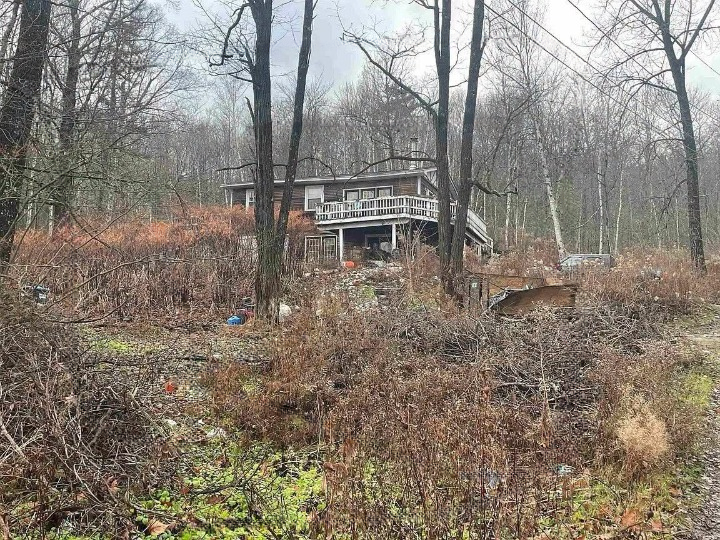
An unusual real estate opportunity is coming to public auction, offering investors, renovators, and value-focused buyers the chance to acquire a property with significant potential. Bidding is scheduled to open on April 20, 2025, and the property will be sold as-is, meaning the successful buyer will take responsibility for evaluating its condition and determining the best path forward.
For buyers who understand the auction process and are comfortable taking on a property that may require repairs or improvements, opportunities like this can be worth serious consideration. Rather than purchasing a fully renovated property at traditional market pricing, an auction buyer may have the opportunity to acquire an asset with room for improvement and future value creation.
An As-Is Investment Opportunity
The property is being offered in its current condition. Prospective buyers should therefore approach the opportunity with realistic expectations and be prepared for the possibility of renovation, maintenance, repairs, or other improvements.
An as-is sale can appeal to a wide range of buyers. Experienced investors may see potential for a rental property, while renovation specialists may be interested in improving the property and increasing its market value. Other buyers may prefer a longer-term strategy, holding the property while the surrounding market develops.
However, potential should never be confused with guaranteed profit. Every auction purchase involves financial considerations, and buyers should independently evaluate whether the property makes sense for their particular investment strategy.
No In-Person Viewings
One of the most important details of this auction is that no in-person property inspections or viewings are permitted.
Privacy and legal regulations prevent prospective buyers from entering or viewing the property before bidding. As a result, interested parties will need to rely on available public records, auction documentation, property information, and other legally accessible sources when evaluating the opportunity.
This restriction makes due diligence especially important.
Buyers should avoid assuming that the property will meet their expectations based solely on photographs, descriptions, or limited public information. When a physical inspection is unavailable, careful research becomes an essential part of the purchasing process.
What Buyers Should Research
Before placing a bid, prospective buyers should gather as much information as possible about the property and the surrounding area.
Important factors may include:
- Current and historical property taxes
- Outstanding liens or other financial obligations
- Zoning classifications and permitted uses
- Utility availability and access
- Ownership and title history
- Property boundaries and recorded easements
- Local housing-market conditions
- Recent comparable sales
- Estimated renovation and maintenance expenses
- Potential rental income
- Insurance considerations
- Applicable building codes and restrictions
Understanding these details can help a buyer estimate the property’s potential value and determine a maximum bidding amount.
Buyers should also consider costs that may not be immediately obvious. Renovation expenses can increase quickly, particularly when a property has been vacant, neglected, or otherwise unavailable for inspection. Legal, financing, closing, insurance, taxes, and ongoing maintenance costs should also be included in any investment calculation.
Potential for Renovation and Value Creation
For the right buyer, the property’s as-is condition may represent an opportunity rather than simply a disadvantage.
Renovation-focused investors often search for properties where improvements can increase usability, appearance, rental potential, or resale value. Depending on the property’s circumstances and applicable regulations, improvements could potentially include modernization, repairs, landscaping, energy-efficiency upgrades, or other renovations.
A successful investment, however, begins with a realistic budget.
Prospective buyers should estimate the total acquisition cost, anticipated renovation expenses, holding costs, and potential resale or rental value before deciding how aggressively to bid.
The goal should not simply be to win the auction.
The goal should be to acquire the property at a price that makes sense.
Who May Be Interested?
This opportunity may appeal particularly to several types of buyers.
Real estate investors may view the property as a potential addition to a rental or long-term investment portfolio.
Renovation specialists may be interested in purchasing an as-is property where improvements could potentially create additional value.
Experienced auction buyers may appreciate the opportunity to compete through a public bidding process rather than a traditional property sale.
Long-term investors may also consider the property if they believe the surrounding market has favorable future prospects.
Regardless of experience level, every bidder should understand that auction purchases can carry different risks and obligations than conventional real estate transactions.
Registration and Auction Requirements
Anyone interested in participating should register through the official auction platform and carefully review all available documentation before bidding.
Auction rules can vary, so prospective buyers should pay close attention to registration deadlines, acceptable payment methods, deposit requirements, buyer premiums, closing timelines, financing restrictions, and any other terms specified by the auction provider.
Having financing or sufficient cash available may be particularly important. Auction properties are commonly sold to the highest qualified bidder, and successful buyers may be expected to complete the transaction according to strict deadlines.
For that reason, bidders should understand exactly what they are agreeing to before submitting an offer.
A Property Full of Possibilities
With bidding scheduled to begin April 20, 2025, this auction represents an opportunity for buyers willing to approach the process with patience, preparation, and disciplined decision-making.
The property’s lack of viewing access makes research more important than ever. Buyers should rely on verified information, investigate potential risks, understand the auction terms, and establish a bidding limit before the auction begins.
There is no guarantee that an auction property will produce a profit, and prospective buyers should consider seeking appropriate legal, financial, tax, or real estate advice before making a commitment.
Still, for an experienced buyer with a clear strategy, an as-is property can provide an interesting opportunity to acquire an asset and potentially create value through renovation, management, or long-term ownership.
The winning bidder will not simply be purchasing a property.
They will be purchasing a possibility.
And with careful research, realistic financial planning, and strategic bidding, that possibility could become a valuable addition to the right real estate portfolio.