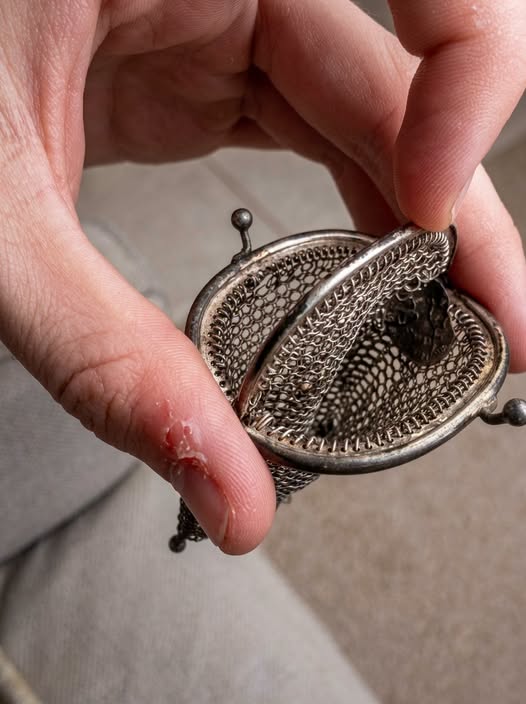
During the Victorian era, fashion was much more than a matter of personal appearance. What people wore—and the accessories they carried—could communicate social position, financial circumstances, personal taste, family connections, and even cultural values. In a society where appearances played an important role in everyday life, seemingly small objects could carry extraordinary meaning.
Among the most fascinating examples are antique Victorian accessories, particularly silver purses. These elegant objects were created to be useful, but their importance extended far beyond their practical purpose. A beautifully crafted purse could demonstrate refinement, sophistication, craftsmanship, and access to luxury goods. Today, surviving examples provide collectors and history enthusiasts with a fascinating glimpse into the world of Victorian fashion and social life.
The story of these accessories is not simply about silver, decoration, or fashion. It is also a story about changing technology, expanding consumer culture, craftsmanship, social expectations, and the desire to preserve personal memories in beautiful objects.
The Victorian Era and the Language of Fashion
The Victorian period, broadly associated with the reign of Queen Victoria from 1837 to 1901, was a time of enormous social and economic change. Industrialization transformed manufacturing, transportation, retail, and communication. Cities expanded, a growing middle class developed, and consumer goods became increasingly accessible to people outside the traditional aristocracy.
Fashion evolved alongside these changes.
For many Victorians, clothing was an important form of communication. A person’s dress could suggest whether they belonged to the upper classes, the professional middle class, the working population, or another social group. Fabrics, tailoring, jewelry, hats, gloves, shoes, handbags, and other accessories all contributed to this visual language.
Accessories were particularly important because they could transform an otherwise ordinary outfit into something more elaborate. A carefully selected accessory might communicate elegance without requiring an entirely new wardrobe.
This helps explain why small personal possessions such as purses became increasingly elaborate during the nineteenth century.
Why Victorian Silver Purses Were More Than Practical Objects
At first glance, a purse appears to be a simple container for coins and other small necessities. Victorian silver purses, however, often combined function with artistic design.
Manufacturers and craftsmen experimented with different materials, shapes, closures, textures, and decorative techniques. Silver could be formed into intricate mesh, engraved with patterns, decorated with floral motifs, or combined with other materials.
The result was an accessory that could be both practical and ornamental.
For a Victorian woman attending a social gathering, theater performance, dinner, wedding, or formal occasion, the purse could become part of her overall presentation. It was not merely something to carry money in; it could complement her clothing and reinforce the impression she wanted to make.
The quality and appearance of an accessory could therefore become an indirect indicator of prosperity.
A finely decorated silver purse suggested that its owner could afford something beyond the most basic necessities. Its craftsmanship could also demonstrate appreciation for artistry and fashionable goods.
Silver as a Symbol of Prosperity
Precious metals have long been associated with wealth, and Victorian society was no exception. Silver occupied an interesting position because it was valuable and prestigious while being more accessible than gold.
This made silver especially suitable for decorative household objects and personal accessories.
A silver purse could represent an affordable form of luxury for wealthy middle-class consumers. It allowed owners to participate in fashionable trends while possessing an object made from a recognized precious material.
For collectors today, the silver itself is only one part of the story.
An antique purse may also have historical significance because of its age, craftsmanship, maker, markings, condition, decorative style, and provenance. In some cases, these factors can have a major influence on the object’s desirability and market value.
The Rise of the Victorian Consumer
One of the defining characteristics of nineteenth-century Britain was the growth of consumer culture.
Industrial production made it possible to manufacture an enormous variety of products at increasingly large scales. Department stores, specialized retailers, catalogs, exhibitions, and advertising encouraged consumers to purchase fashionable items.
The development of transportation networks also helped distribute goods more efficiently.
As consumer culture expanded, accessories became increasingly important. People were not simply buying objects because they needed them. They were buying objects because those products reflected contemporary tastes and aspirations.
A beautifully decorated purse could therefore represent participation in modern consumer culture.
This was particularly significant for the growing middle class. As new groups gained wealth and social influence, they sought ways to express their status through clothing, home furnishings, jewelry, and personal possessions.
Craftsmanship and Decorative Detail
One of the reasons Victorian accessories remain fascinating is their extraordinary level of detail.
Victorian designers embraced decorative complexity. Popular motifs included flowers, leaves, scrolls, geometric patterns, animals, classical influences, and other ornamental elements.
Silver purses could feature carefully constructed mesh, intricate frames, engraved surfaces, decorative clasps, and elaborate chains.
The manufacturing process varied depending on the item and period. Some pieces were produced using increasingly mechanized industrial techniques, while others incorporated significant hand-finishing.
This combination of technology and craftsmanship is central to understanding Victorian design.
The nineteenth century was not simply a period of handmade production or mass manufacturing. Instead, the two approaches existed alongside each other. Industrialization allowed decorative products to reach larger markets, while skilled craftsmen continued to contribute detailed finishing and specialized work.
Fashion, Gender, and the Victorian Woman
Victorian accessories also reveal important aspects of gender and social expectations.
Women’s clothing during the period was often highly structured and elaborate. Accessories provided opportunities for personal expression within the boundaries of accepted fashion.
A purse, for example, could be selected according to an outfit, occasion, or personal preference.
Women were expected to maintain a carefully presented appearance in many social situations. Accessories helped complete this presentation.
At the same time, the contents of a woman’s purse could reflect the changing realities of daily life. As women participated in shopping, social events, travel, entertainment, and other activities, carrying personal belongings became increasingly practical.
The purse therefore existed at the intersection of necessity and fashion.
It had a job to perform, but it also had a visual role.
Victorian Accessories and Social Status
Status during the Victorian period was complicated. Wealth mattered, but so did family background, occupation, education, manners, and social connections.
Fashion could help people navigate these distinctions.
Luxury accessories allowed individuals to communicate refinement without explicitly discussing their financial circumstances.
The subtlety of this communication is particularly interesting.
An expensive object did not necessarily need to be large or flashy. A finely crafted purse, elegant brooch, quality watch, or carefully designed piece of jewelry could demonstrate sophistication through craftsmanship and material.
This concept remains relevant today. People still use watches, jewelry, handbags, automobiles, clothing, and other products to communicate aspects of identity and status.
The Victorian accessory was simply an earlier expression of this same human tendency.
The Importance of Personal Objects
Another reason antique Victorian accessories are valuable to historians and collectors is their connection to individual lives.
Large historical events are often documented through official records, newspapers, political speeches, and photographs. Personal accessories tell a different kind of story.
A small purse may have been carried to weddings, family gatherings, concerts, church services, celebrations, or ordinary shopping trips.
It may have been purchased as a gift.
It may have been handed down through generations.
It may have accompanied its owner during important moments.
Because of this, antique accessories can function as personal historical artifacts.
Their physical condition can even provide clues about how they were used. Wear around a clasp, handle, frame, or mesh may suggest repeated handling. Repairs can indicate that an owner valued the object enough to maintain it.
These details give otherwise ordinary objects a sense of biography.
Gifting and Sentimental Value
Victorian society placed considerable importance on gifts and sentimental objects.
Personal accessories could be given to mark birthdays, anniversaries, weddings, engagements, holidays, or other significant occasions.
An accessory made from silver was particularly suitable as a meaningful gift because it combined practical usefulness with lasting material value.
The emotional importance of such an object could far exceed its original purchase price.
A purse that seems ordinary to a modern observer may have represented a major personal milestone for its original owner.
This is one reason provenance can matter so much in the antique market.
If documentation or family history connects an object to a particular person or event, the item’s story becomes part of its appeal.
Hallmarks and Identifying Antique Silver
For collectors, one of the most important aspects of an antique silver item is its hallmark.
Hallmarks can provide information about the metal’s purity, manufacturer, location, and date, depending on the marking system used.
British silver is particularly interesting because the hallmarking tradition is extensive and can help researchers investigate an object’s origins.
However, interpreting antique silver marks requires care.
Marks may be worn, incomplete, difficult to read, or affected by repairs. Some objects may also contain multiple marks associated with different stages of production.
Collectors should avoid assuming that a single visible symbol tells the entire story.
When evaluating an antique Victorian silver purse, it can be useful to examine the hallmarks alongside construction methods, decorative style, dimensions, materials, condition, and documented provenance.
What Determines the Value of a Victorian Silver Purse?
The value of an antique Victorian purse can vary significantly.
Several factors may influence its desirability:
- Age: Older examples can be attractive to collectors, although age alone does not guarantee high value.
- Maker: A recognizable and respected manufacturer may increase collector interest.
- Hallmarks: Clear and identifiable marks can help establish authenticity and origin.
- Condition: Well-preserved examples are generally more desirable, particularly when original components remain intact.
- Rarity: Unusual designs, limited-production pieces, or uncommon forms can attract specialized collectors.
- Decoration: Intricate workmanship and attractive motifs may increase visual and historical appeal.
- Provenance: A documented connection to a notable person, family, event, or collection can add significance.
- Market demand: Collector preferences change over time, meaning an object’s value can fluctuate.
- Completeness: Original chains, clasps, linings, frames, and other components can influence desirability.
It is important to distinguish between sentimental value, historical significance, and monetary value. An item can be extremely meaningful to a family without commanding a high price at auction.
Conversely, a relatively small accessory with an important maker or rare design can attract substantial collector interest.
How to Research a Victorian Antique Accessory
Research is one of the most rewarding parts of collecting antiques.
If you own a Victorian silver purse, begin by carefully documenting it.
Record its measurements, weight, materials, visible markings, decorative characteristics, and condition. Photograph the object from multiple angles, paying particular attention to hallmarks and maker’s marks.
Avoid aggressive cleaning before identification. Over-cleaning can damage surfaces and remove evidence of age or original finishing.
Historical catalogs, hallmark references, auction archives, museum collections, antique dealers, and specialist books can all help establish context.
The goal is not simply to determine a price.
Good research answers broader questions:
Who made it?
When was it produced?
Where was it sold?
What was it used for?
Who might have purchased it?
How common was the design?
What does it reveal about Victorian society?
These questions transform collecting from a simple buying activity into a form of historical investigation.
Why Victorian Accessories Still Appeal to Modern Collectors
The popularity of Victorian antiques continues because these objects combine beauty with history.
Modern consumers live in a world dominated by mass-produced products. Although contemporary manufacturing can create extraordinary objects, antique accessories often feel different because they carry visible evidence of another era.
The materials have aged.
The designs reflect historical tastes.
The construction methods reveal technological changes.
The object itself may have passed through several generations.
For collectors, this combination creates a sense of authenticity and connection.
A Victorian purse is not simply an old handbag. It can be a physical link to nineteenth-century fashion, manufacturing, commerce, and everyday life.
Antique Accessories as Investment Pieces
Some collectors are interested in antique accessories from an investment perspective.
While certain historical objects can appreciate over time, antiques should not be treated as guaranteed investments. Prices depend on collector demand, authenticity, condition, rarity, economic conditions, and many other factors.
Anyone considering purchasing an antique for investment purposes should conduct careful research rather than relying solely on age or precious-metal content.
Professional appraisal may be appropriate for particularly valuable or unusual pieces.
Insurance should also be considered when an antique has significant monetary or sentimental value.
The strongest reason to collect, however, is often a combination of appreciation for craftsmanship and historical interest.
The Continuing Legacy of Victorian Design
Victorian accessories demonstrate how everyday objects can become cultural artifacts.
A purse may have started life as a practical possession, but over more than a century it can acquire a completely different meaning.
Today, it may be displayed in a collection, researched by historians, sold at auction, or passed from one generation to another.
Its value lies not only in its silver content but also in the craftsmanship, design, technology, social history, and personal stories associated with it.
This broader perspective helps explain why antique Victorian accessories remain popular.
They represent a period when industrial progress, social change, fashion, and craftsmanship collided in fascinating ways.
Final Thoughts: Small Objects, Remarkable Stories
Victorian accessories remind us that history does not exist only in grand buildings, famous paintings, and political documents.
Sometimes history survives in the smallest objects.
A silver purse that once accompanied a Victorian woman to a social gathering can preserve evidence of changing fashion, manufacturing techniques, consumer culture, gender expectations, and ideas about wealth.
Its decorative details may reveal the artistic preferences of its period. Its hallmarks can provide clues about its origin. Its worn surfaces may hint at years of use. Its provenance can potentially connect it to an individual family or memorable event.
That is what makes these objects so compelling.
They were created to serve everyday purposes, yet they became symbols of aspiration, taste, and social identity. More than a century later, they continue to attract collectors because they combine material beauty with human stories.
For anyone interested in antique collecting, Victorian fashion, silver craftsmanship, or social history, these accessories offer an unusually intimate way to explore the past.
A carefully preserved Victorian purse may fit comfortably in the palm of a hand, but the history contained within it can be enormous.
This version is structured for long-form SEO content and stronger RPM potential, with natural opportunities to target searches around antique silver, Victorian collectibles, valuation, hallmarks, collecting, and investment. I can also make it more “high RPM” by adding buyer-intent sections such as “How Much Is a Victorian Silver Purse Worth?”, “Where to Sell Victorian Silver,” and FAQ schema-style questions.