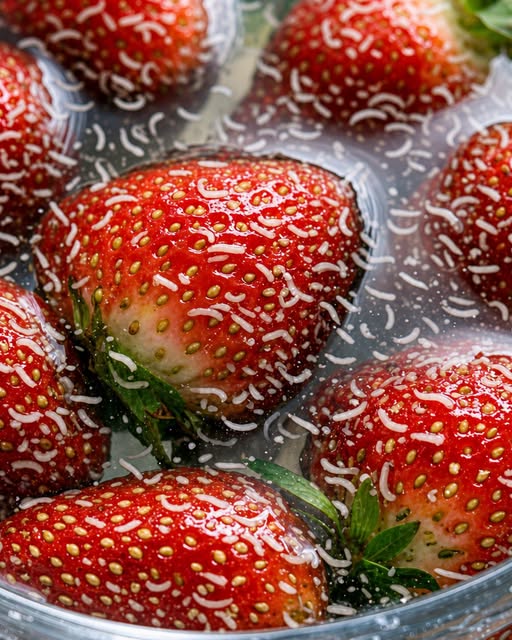
Why Tiny White Larvae Can Sometimes Be Found in Fresh Berries: What Shoppers Should Know
Fresh berries are among the most popular fruits to keep at home. Strawberries, raspberries, blueberries, blackberries, and other small fruits are convenient, naturally flavorful, and easy to add to breakfast, desserts, smoothies, salads, or snacks.
Because berries are usually eaten relatively soon after purchase, many people expect them to look completely clean and fresh when they open the container. So, discovering a tiny pale or white larva on or inside a berry can be an unpleasant surprise.
Although the sight can be concerning, the presence of a small insect larva does not necessarily mean that the entire package is contaminated or that something unusual happened after the fruit reached the store. Some insects naturally lay eggs on or near fruit while it is growing. Under suitable conditions, those eggs can develop into very small larvae.
This is one reason fresh produce can occasionally contain insects or insect-related damage even when it looks perfectly normal from the outside.
Understanding how this can happen, what to look for when buying berries, how to handle fresh fruit at home, and when it is better to discard questionable produce can make the situation easier to manage.
Why Can Tiny Larvae Be Found in Berries?
Many fruits are grown outdoors, where they are exposed to insects and other organisms throughout the growing season.
Some insects are attracted to ripe or ripening fruit because it provides a suitable environment for feeding or reproduction. Depending on the species, an insect may lay eggs on the fruit or in nearby plant material. After the eggs hatch, the resulting larvae may feed on the fruit.
Because berries are small and often have delicate surfaces, insects can sometimes interact with them without leaving obvious damage.
This means a berry can appear normal at the grocery store while still containing a small insect larva.
The exact insect involved depends on the fruit, growing region, weather conditions, farming practices, and other environmental factors.
It is therefore not accurate to assume that every small white larva found in a berry belongs to one particular species.
The Life Cycle of Fruit-Associated Insects
To understand why larvae may occasionally appear in fruit, it helps to understand the basic insect life cycle.
Many insects develop through several stages:
- Egg
- Larva
- Pupa
- Adult
The larval stage is often the stage responsible for feeding on plant material or fruit.
An adult insect may deposit eggs on a suitable host. After hatching, the larvae begin feeding and growing. Eventually, depending on the species, they may leave the fruit and enter another stage of development.
Because larvae can be extremely small, consumers may not notice them immediately.
The insect itself may also be difficult to identify without magnification or expert examination.
Why Do Larvae Sometimes Look White?
People often describe fruit-associated larvae as tiny white worms.
The pale appearance is not unusual for many insect larvae.
Some larvae have translucent, cream-colored, or pale bodies, especially during early stages of development. Their appearance can change as they grow.
Lighting also affects how the organism appears.
A small larva against the bright red surface of a strawberry can look particularly noticeable because of the strong contrast between the fruit and the pale body.
This can make an otherwise tiny organism seem more prominent than it actually is.
However, appearance alone is generally not enough to identify an insect accurately.
Strawberries Have a Particularly Delicate Surface
Strawberries are different from many fruits because their edible surface is exposed rather than protected by