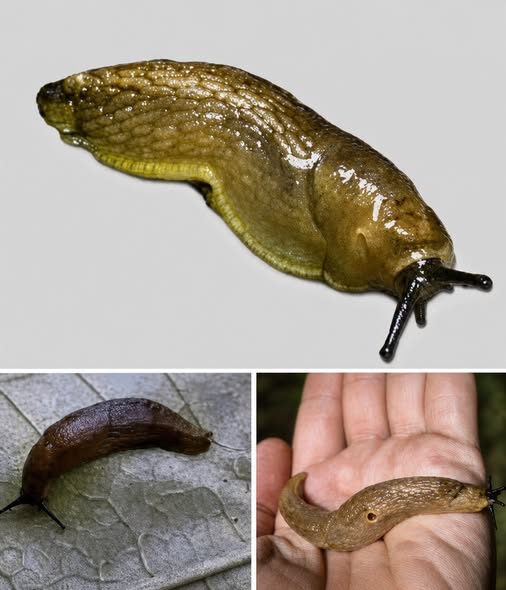
Why Is a Slug Coming Into Your House? What It May Really Tell You About Your Home and Garden
Have you ever walked into your kitchen, bathroom, hallway, or garage and unexpectedly spotted a small slug slowly making its way across the floor?
For many people, the immediate reaction is surprise. Slugs are usually associated with gardens, flower beds, damp soil, and rainy evenings—not the inside of a home. Finding one indoors can therefore feel strange, especially when you cannot immediately figure out where it came from.
Some online stories suggest that a slug appearing inside your home has a deeper meaning or represents some kind of unusual sign. In reality, there is a much simpler explanation in most cases: the slug is usually looking for moisture, shelter, food, or a route through a protected environment.
That does not mean finding a slug inside your house is completely meaningless. It can provide a useful clue about the conditions around your property.
A slug indoors may encourage you to look more closely at areas where moisture collects, gaps around doors and windows, vegetation growing close to the foundation, mulch beds, crawl spaces, drains, or other sheltered areas. In some situations, repeated sightings can even point toward an underlying moisture or drainage issue that deserves attention.
Slugs are soft-bodied land mollusks that depend heavily on moisture. They are particularly active in cool, damp conditions and commonly hide during daylight hours. Garden specialists note that slugs often shelter beneath leaves, mulch, boards, stones, plant debris, containers, and other protected objects.
So, rather than viewing an indoor slug as a mysterious omen, it can be more useful to think of it as a tiny biological clue.
Here is what a slug may actually be telling you.
A Slug Usually Follows Moisture
One of the most important facts to understand about slugs is their dependence on moisture.
Unlike animals with protective shells or dry outer coverings, slugs have soft bodies that can lose water relatively easily. Their mucus helps protect them from drying out and allows them to move across different surfaces.
This is why slugs tend to be most active during cool, damp periods.
Rainy weather can create ideal conditions for slug activity. After rainfall, the ground becomes moist, plants remain wet, and many hiding places become comfortable for these creatures.
If your property has consistently damp areas, slugs may become more common.
That could include:
- Poorly drained garden beds
- Shaded areas beside the house
- Wet mulch
- Dense vegetation
- Leaking outdoor faucets
- Water collecting near the foundation
- Damp crawl spaces
- Areas beneath decks
- Wet compost
- Piles of leaves or plant debris
- Gaps that provide sheltered routes into the home
When a slug eventually appears indoors, it may simply have followed a damp path from an outdoor habitat.
Extension specialists have specifically noted that slugs can move from yards toward damp areas around a house and may accidentally end up inside through openings or cracks.
That makes moisture one of the first things worth investigating.
Why Would a Slug Enter a House?
A slug does not understand the concept of a house in the way humans do.
It is not deliberately entering because it wants to live with you.
Instead, it is responding to environmental conditions.
A slug may encounter an opening around a door, window, foundation, pipe, crawl-space vent, or another structure. If the conditions on the other side are favorable, it may continue moving.
The entrance could be surprisingly small.
Slugs are soft-bodied animals and can move through narrow spaces that might appear insignificant to a person.
This is why simply seeing one slug inside does not necessarily mean there is a large infestation.
In many situations, the animal may have wandered inside accidentally.
However, repeated sightings are different.
If you see slugs inside your home regularly, it is worth asking why they are repeatedly finding a suitable route indoors.
That is when the slug becomes useful as a clue.
The Location of the Slug Can Provide a Clue
Where you find the slug may help you understand where it came from.
For example, finding one near an exterior door could suggest that it entered through a gap underneath the door or around the frame.
Finding one near a bathroom might make you want to inspect damp areas, although the slug does not necessarily mean there is a plumbing problem.
Finding one in a basement or crawl space may be more closely related to moisture because those areas can provide cool, protected conditions.
Finding several near a back entrance could suggest that vegetation, mulch, or damp soil outside the entrance is creating a favorable environment.
The location alone cannot prove the source, but it can help guide your inspection.
What Does a Slug in the Kitchen Mean?
Finding a slug in the kitchen can be particularly unpleasant.
However, there is no reason to assume that the appearance has a hidden or supernatural meaning.
Instead, consider what makes the kitchen attractive from an environmental perspective.
Kitchens can contain moisture from:
- Sinks
- Dishwashers
- Wet floors
- Condensation
- Plumbing connections
- Leaks beneath cabinets
- Damp cleaning materials
- Water left around appliances
Food odors may also be present.
Slugs are not necessarily attracted to kitchens specifically, but if one has already entered the house, it may continue moving through different areas.
If you find one in the kitchen, check around the sink cabinet, exterior doors, nearby windows, and floor-level gaps.
You should also inspect for unexplained dampness.
If everything is dry and you never see another slug, the incident may simply have been an isolated event.
What If You Find a Slug in the Bathroom?
Bathrooms naturally contain more moisture than many other rooms in a home.
That makes them worth checking when an indoor slug appears there.
Look around:
- Floor-level gaps
- Areas beneath cabinets
- Pipe openings
- Exterior doors or windows
- Damp corners
- Areas around plumbing fixtures
- Cracks where the wall meets the floor
Again, finding a slug does not automatically mean you have a plumbing leak.
There are many ways a slug can enter a home.
But repeated sightings combined with unexplained dampness deserve attention.
A persistent moisture problem can contribute to many household issues, so identifying and correcting the source is generally beneficial regardless of whether slugs are involved.
What If You Find One in the Bedroom?
A bedroom slug may seem especially unusual because bedrooms are generally not associated with gardens.
In this situation, the animal may simply have traveled from another part of the home.
Check the route it may have taken.
For example, if the bedroom is near:
- A balcony
- A patio
- A garden
- An exterior wall
- A ground-level door
- A damp basement
- A crawl space
there may be an indirect route into the room.
You do not necessarily need to assume there is a problem with the bedroom itself.
The important question is where the slug may have entered the building.
Why Slugs Are More Common After Rain
If you notice more slugs after rainy weather, you are observing a normal pattern.
Moist conditions make it easier for slugs to move without drying out.
Garden extension resources explain that slugs are generally most active at night and under cool, damp conditions. They may hide during the day beneath vegetation, mulch, debris, stones, boards, or other protected objects.
After rain, the landscape effectively becomes easier for them to navigate.
This is why you may suddenly notice shiny trails on sidewalks, patios, garden beds, or leaves.
Those trails are one of the easiest signs of slug activity.
What Does a Slime Trail Tell You?
A shiny trail on the floor or outside your house can provide another useful clue.
Slugs produce mucus as they move. The mucus helps them glide across surfaces and helps reduce moisture loss.
When the trail dries, it can become visibly shiny.
If you notice a trail leading toward an exterior door, crack, wall, or another opening, you may be able to identify a possible route.
This can be more useful than simply removing the slug and forgetting about it.
Follow the trail if possible.
Look for:
- Gaps beneath doors
- Cracks around frames
- Openings around pipes
- Foundation cracks
- Crawl-space access points
- Areas where vegetation touches the house
- Damp soil immediately outside the wall
You may discover that the slug has been following a surprisingly predictable path.
Slugs Are Not Insects
Another interesting fact is that slugs are not insects.
They are mollusks.
They belong to the same broad animal group as snails, although slugs lack the prominent external shell that people associate with snails.
Their soft bodies and dependence on moisture explain many of their behaviors.
They are also equipped with specialized mouthparts that allow them to rasp plant material.
This is one reason gardeners often notice irregular holes in leaves when slugs are active.
Why Your Garden May Be Attracting Slugs
If you repeatedly find slugs around your property, inspect the garden before focusing entirely on the house.
Certain landscaping conditions create excellent slug habitat.
For example, dense vegetation can keep the soil cool and moist.
A thick layer of organic material can provide shelter.
Boards, stones, containers, and other objects sitting directly on the ground can create protected spaces underneath.
Poor drainage can also keep the soil wet for long periods.
The University of Minnesota Extension recommends reducing overly damp and sheltered conditions, improving air circulation, removing excessive debris, and addressing drainage when slug activity becomes a problem.
That does not mean your garden needs to become completely dry.
Healthy gardens need moisture.
The goal is to avoid unnecessary, continuously wet hiding places.
Check Around the Foundation
One of the most useful inspections you can perform is around the outside perimeter of your house.
Walk around the foundation after rainfall and look for areas where water remains for unusually long periods.
Pay attention to:
- Wet soil
- Puddles
- Dense ground cover
- Thick mulch
- Leaves accumulated against the wall
- Garden beds touching the foundation
- Leaking outdoor faucets
- Downspout discharge
- Damaged drainage systems
The area immediately next to your foundation can become a convenient pathway for small creatures.
If vegetation and mulch are pressed directly against the building, they can provide both shelter and moisture.
Creating some separation between landscaping and the structure may reduce these conditions.
Oregon State University Extension specifically recommends removing plants and mulch immediately against the foundation and checking potential moisture sources when slugs repeatedly enter a home.
Inspect Doors and Windows
A door that appears tightly closed to you may still have enough space underneath for a small slug to pass.
Inspect exterior doors carefully.
Look at:
- Door sweeps
- Thresholds
- Corners
- Frame gaps
- Damaged weather stripping
- Cracks near the floor
Windows can also provide potential routes, particularly if they are located close to the ground or surrounded by damp landscaping.
Replacing damaged weather stripping or sealing appropriate gaps can help reduce unwanted entry from many small outdoor creatures—not just slugs.
What About the Crawl Space?
Crawl spaces deserve special attention because they can provide exactly the environment slugs prefer.
They are often:
- Dark
- Cool
- Sheltered
- Close to the ground
- Potentially damp
If a crawl space has excess moisture, it may become attractive to various organisms.
If you repeatedly find slugs inside the house and your home has a crawl space, inspect the area for moisture sources.
Look for:
- Plumbing leaks
- Standing water
- Damp soil
- Wet insulation
- Poor ventilation
- Leaking exterior fixtures
- Organic debris
- Gaps leading outdoors
If you are uncomfortable entering the crawl space or suspect a significant moisture problem, consider having it professionally inspected.
Slugs Can Actually Play a Role in Nature
Although gardeners may not appreciate slugs eating their plants, it is important to remember that they are part of the natural ecosystem.
Slugs consume plant material and decaying organic matter, contributing to decomposition.
They can also serve as food for various animals.
Depending on the region, predators may include birds, frogs, beetles, shrews, and other wildlife.
This means the presence of a slug outdoors is not automatically a sign that something is wrong.
A healthy garden can contain many small organisms that people rarely notice.
The problem arises when slug populations become large enough to damage plants or when individual animals repeatedly enter the home.
Why Gardeners Sometimes Have Serious Slug Problems
A few slugs in a garden are normal.
A large population can be frustrating.
Slugs can feed on seedlings, leaves, flowers, fruits, and vegetables. Young plants can be particularly vulnerable because even moderate feeding may significantly affect their development.
Common signs include:
- Irregular holes in leaves
- Ragged-looking foliage
- Damage concentrated close to the ground
- Missing seedlings
- Shiny trails
- Slugs hiding under leaves or objects
Because slugs often feed at night, gardeners may not immediately see the animals responsible.
A plant can appear healthy in the evening and show noticeable damage the following morning.
How to Reduce Slug Activity Naturally
If slugs are becoming a problem, start by changing the environment rather than immediately reaching for chemicals.
One of the simplest approaches is to reduce unnecessary moisture.
Water plants when they need it, but avoid keeping the surface of the garden wet for extended periods.
Morning watering can be useful because it gives leaves and soil more time to dry before nighttime, when slugs are more active.
You can also improve air movement.
Dense plants and heavy ground cover can create shaded, humid conditions.
Thinning overcrowded growth can make the environment less comfortable for slugs.
Remove Hiding Places
Take a careful look around your garden.
Objects resting directly on moist soil can become daytime shelters.
These may include:
- Boards
- Pots
- Stones
- Containers
- Garden decorations
- Excess leaves
- Dense mulch
- Plant debris
You do not need to remove every natural feature from your garden.
Instead, concentrate on areas where slug activity is clearly occurring.
Removing unnecessary shelters can make the environment less attractive.
Improve Drainage
If an area of your garden remains wet long after surrounding soil has dried, investigate the reason.
Possible causes include:
- Compacted soil
- Poor grading
- Blocked drainage
- Excessive irrigation
- Water flowing from a downspout
- Heavy shade
Improving drainage can benefit plants while also making the area less favorable to slugs.
However, avoid making major landscape changes without understanding the cause of the water problem.
Do Not Rely on a Single Method
Slug management usually works best when several small measures are combined.
For example, you might:
- Reduce unnecessary moisture.
- Remove hiding places.
- Improve air circulation.
- Keep vegetation from touching the foundation.
- Inspect potential entry points.
- Monitor activity at night.
- Protect especially vulnerable plants.
Extension specialists commonly recommend an integrated approach rather than relying on one technique.
This approach is more practical because slug populations are influenced by their surroundings.
Should You Use Salt on a Slug?
Salt is sometimes suggested as a quick way to deal with slugs.
However, it is generally better not to make salt your routine control method.
Large amounts of salt can damage soil and plants, particularly if repeatedly applied to garden beds.
There are more sensible approaches for managing slug habitat.
If you discover one slug indoors, simply removing it and addressing its likely entry point is usually more appropriate than spreading substances around the home.
What About Slug Baits?
Commercial slug-control products exist, but they should be treated as pest-control products rather than casual household remedies.
If you decide to use one, read and follow the product label carefully.
Consider children, pets, wildlife, edible crops, and the location where the product will be applied.
The most appropriate solution depends on the species, environment, and severity of the problem.
For many homeowners, environmental changes and physical exclusion are good first steps.
Does One Slug Mean You Have an Infestation?
Not necessarily.
This is an important distinction.
Seeing one slug does not prove that dozens are hiding somewhere in your house.
The animal may have wandered inside accidentally.
If you remove it and never see another, there may be nothing more to do beyond checking obvious entry points.
Repeated sightings are more informative.
For example, if you discover slugs indoors several times over a few weeks, especially in the same area, investigate the route more carefully.
Look for a common entry point.
Check whether outdoor conditions are particularly damp.
Inspect nearby landscaping.
And consider whether the building has a moisture problem.
When Should You Be More Concerned?
You do not need to panic because you found a slug.
However, repeated indoor sightings can justify further investigation.
Pay particular attention if:
- You find slugs frequently.
- Several appear in the same location.
- You notice persistent moisture.
- You discover unexplained water damage.
- There is a damp crawl space.
- The foundation remains wet.
- Outdoor vegetation is heavily overgrown against the building.
- You see numerous slime trails.
- Your garden has extensive slug damage.
The slug itself is usually not the main concern.
The surrounding conditions may be.
A Simple Home Inspection Checklist
If you find a slug inside, walk through this checklist.
Step 1: Remove the slug
Use a piece of paper, container, or gloves to move it outside if appropriate.
Wash your hands afterward.
Step 2: Look for a trail
A shiny trail may help you determine the direction from which it traveled.
Step 3: Inspect nearby doors
Check underneath doors and around their frames.
Step 4: Examine the exterior
Look directly outside the area where you found the slug.
Check for mulch, plants, leaves, stones, or damp soil.
Step 5: Look for moisture
Check for leaks, condensation, puddles, or persistently wet areas.
Step 6: Inspect the foundation
Look for cracks and gaps that may provide routes indoors.
Step 7: Monitor the situation
If another slug appears, note where you found it.
Patterns can be useful.
What Slugs Can Teach Us About Our Environment
Perhaps the most interesting thing about finding a slug indoors is not that it has some hidden meaning.
It is that small animals can reveal environmental conditions we may otherwise overlook.
Humans spend much of their time indoors and may not notice subtle changes around a property.
A slug, however, responds immediately to moisture, temperature, shelter, vegetation, and available pathways.
Its presence can therefore prompt us to look at our surroundings more carefully.
If slugs suddenly become common after several rainy days, that makes sense.
If they repeatedly appear near one entrance, investigate that entrance.
If they are concentrated around a damp section of the garden, examine the drainage.
If they repeatedly emerge from a crawl space, investigate the moisture conditions there.
The animal is not delivering a mysterious message.
It is responding to its environment.
A More Realistic Way to Think About the “Meaning” of a Slug
There is nothing wrong with enjoying symbolic interpretations of nature as part of folklore, storytelling, or personal reflection.
But it is important to distinguish symbolism from scientific explanation.
There is no established scientific evidence that a slug appearing in someone’s house predicts good luck, bad luck, financial changes, visitors, illness, or other future events.
Those interpretations belong to folklore or personal belief rather than established biology.
The practical meaning is much simpler:
A slug has probably found conditions that allow it to survive and move through the area.
That could mean moisture.
It could mean shelter.
It could mean food nearby.
It could mean an easy entry point.
Or it could simply be an accident.
Understanding that difference makes the story more useful for homeowners.
Why This Small Discovery Can Be Helpful
Instead of immediately seeing an indoor slug as something disgusting or frightening, consider it an opportunity to inspect your property.
You may discover that:
- A downspout is directing water toward the foundation.
- A door sweep is damaged.
- Mulch has become too thick.
- Leaves have accumulated against the wall.
- A garden bed stays wet.
- A crawl space has excess moisture.
- Vegetation has become too dense.
- A small exterior gap needs sealing.
Even if the slug itself is harmless and disappears, correcting these conditions can improve the overall environment around your home.
What To Do If You Keep Finding Them
If slugs continue appearing indoors, take a systematic approach.
First, identify the room where they appear most often.
Then inspect the closest exterior wall.
Look outside.
Search for moisture and shelter.
Check doors and windows.
Follow visible trails.
If the pattern points toward a crawl space, basement, foundation gap, or persistent moisture problem, address that underlying condition.
If you cannot identify the source and the problem continues, a qualified pest-control or building professional may be able to identify the entry route.
The goal should be exclusion and environmental management rather than simply dealing with individual slugs one at a time.
The Bigger Lesson
A slug entering your home is not necessarily a warning, a bad omen, or a mysterious sign.
It is an ordinary natural event that can sometimes reveal something interesting about your surroundings.
These small creatures are highly influenced by moisture and shelter. Their activity often increases under cool, wet conditions, and they commonly hide during the day before becoming active at night.
So the next time you see a slug crossing your floor, there is no need to panic.
Instead, ask a few practical questions:
Where did it come from?
What conditions attracted it?
Is there moisture nearby?
Is there an opening that needs attention?
What is happening outside the house?
Those questions are much more useful than trying to predict what the slug supposedly means for your future.
Final Thoughts
Finding a slug in your home can certainly be surprising, but in most situations there is a straightforward environmental explanation.
Slugs need moisture and protection from drying conditions. They are commonly associated with damp soil, shaded gardens, plant debris, mulch, stones, boards, and other sheltered locations. When they appear indoors, they may have followed a damp route through a small opening or simply wandered inside.
One isolated slug is usually not a reason to assume you have a serious household problem.
Repeated appearances, however, are worth investigating.
Rather than focusing on the slug itself, focus on the conditions around it.
Check the garden.
Look around the foundation.
Inspect doors and windows.
Look for moisture.
Clear unnecessary debris.
Improve drainage where appropriate.
Keep vegetation from creating a damp pathway directly against the house.
And monitor the situation after making changes.
In many cases, reducing moisture and eliminating convenient hiding places can make an area considerably less attractive to slugs.
Most importantly, there is no scientific reason to believe that an indoor slug predicts a particular event in your life. Its presence is better understood as a small example of how wildlife responds to the environment.
And perhaps that is the most interesting lesson of all.
Sometimes, an unexpected visitor does not need to carry a mysterious message.
Sometimes, it simply gives you a reason to look more closely at the world around your home.