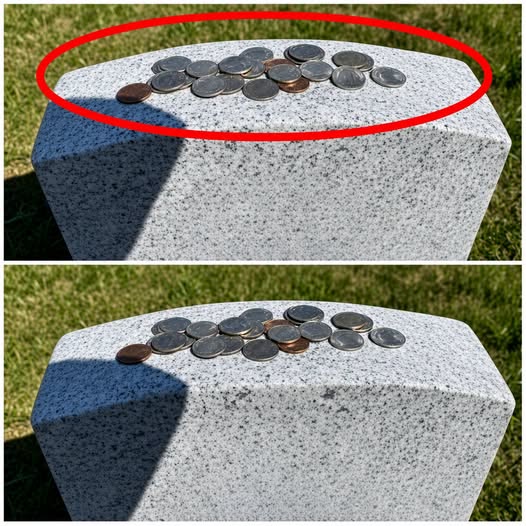
Why Do People Leave Coins on Gravestones? The History and Meaning Behind the Tradition
If you have ever visited a cemetery, especially one containing military graves, you may have noticed something small resting on top of a gravestone.
A coin.
At first, it may seem like an ordinary object that someone accidentally left behind. But in many cemeteries, coins placed on graves are intentional. They can represent remembrance, respect, friendship, gratitude, or simply a quiet way of saying that someone has not been forgotten.
The tradition is particularly familiar in connection with military cemeteries and veterans’ graves in the United States. Different coins can carry different meanings, although the exact interpretation can vary depending on the community, family, organization, or individual leaving it.
The practice is interesting because it doesn’t require a long message.
A small object can communicate something meaningful without the visitor saying a word.
But where did this tradition come from?
Why coins?
And does every coin placed on a gravestone have the same meaning?
The answers are more complicated than many popular explanations suggest.
A Small Gesture With a Long History
People have been leaving objects at graves for thousands of years.
Ancient burial traditions around the world have included flowers, food, personal possessions, religious objects, and coins.
Coins themselves have appeared in burial practices for centuries.
In some ancient cultures, coins were associated with beliefs about the journey of the dead. One well-known example comes from ancient Greek mythology, in which coins were traditionally associated with payment for Charon, the figure said to carry souls across the river separating the world of the living from the realm of the dead.
However, the modern practice of placing a coin directly on a gravestone, particularly as a sign that someone visited or remembered the deceased, is different.
It developed within more recent cultural traditions.
That distinction is important.
The ancient use of coins in burial customs and the modern military-grave tradition are not necessarily the same practice.
They simply share the use of a small metal object as part of remembrance.
The Tradition in Military Cemeteries
The practice is especially associated with military graves in the United States.
Visitors to veterans’ cemeteries may encounter pennies, nickels, dimes, quarters, or other coins resting on headstones.
Over time, a commonly repeated interpretation developed around the different denominations.
According to this tradition:
- A penny can mean that someone visited the grave.
- A nickel can indicate that the visitor and the deceased attended boot camp together.
- A dime can signify that the visitor served with the deceased in some capacity.
- A quarter can represent that the visitor was present when the deceased died.
These meanings are widely circulated and are often included in explanations of military cemetery customs.
However, they should not be treated as universal rules.
There is no single official code governing every coin left at every military grave.
People may use the coins differently, and some visitors may simply leave whatever denomination they happen to have.
The important point is that the coin represents a connection.
The visitor came.
They remembered.
They wanted to leave something behind.
Why a Coin?
A coin is small, durable, inexpensive, and widely available.
That makes it particularly suitable for a symbolic gesture.
A visitor may not have flowers.
They may not know the family.
They may not want to write a message.
A coin provides a simple alternative.
It can be placed quietly on the stone and left there without requiring any explanation.
Coins also have another useful characteristic.
They endure.
Flowers eventually fade.
Paper can deteriorate.
Food disappears.
A metal coin can remain visible for much longer.
That physical durability makes the object a natural symbol of remembrance.
The Penny
The penny is often described as the simplest form of the tradition.
A person who leaves a penny may simply be saying:
“I was here.”
That message may seem small, but visiting a grave is itself meaningful.
The visitor could have stayed home.
Instead, they made the effort to come to the cemetery.
They stood beside the grave.
They remembered the person.
The penny becomes a physical reminder of that visit.
It doesn’t necessarily indicate a close personal relationship.
The visitor might have been a relative.
A friend.
A fellow service member.
A neighbor.
Or someone who simply wanted to pay their respects.
The Nickel
The traditional interpretation of a nickel is more specific.
It can represent a connection through military training, particularly boot camp.
The idea is that the person leaving the coin and the deceased shared an important early experience.
Military training can create strong bonds between people.
Even individuals who don’t remain close after service may remember the experience for the rest of their lives.
A nickel can therefore symbolize shared beginnings.
But again, this isn’t a universal rule.
A visitor may leave a nickel simply because they have one in their pocket.
The meaning comes from the person making the gesture.
The Dime
A dime is commonly associated with someone who served with the deceased.
Military service often creates relationships that are difficult to explain to people who have never experienced it.
Service members may spend months or years together.
They train together.
Work together.
Travel together.
Face demanding situations together.
Those shared experiences can create lifelong memories.
For someone returning to visit the grave of a former colleague or friend, leaving a dime can serve as a quiet acknowledgment of that connection.
The Quarter
The quarter is traditionally given a particularly significant interpretation.
It can indicate that the person leaving it was present when the deceased died.
That would make the coin a deeply personal symbol for those who use the tradition in this way.
However, as with the other denominations, there is no universal requirement that a quarter must carry this meaning.
The interpretation is part of a commonly shared custom rather than a formal cemetery regulation.
This distinction matters because traditions often change as they move from one community to another.
Is the Coin Tradition Official?
One of the most common misunderstandings about the practice is the idea that there is an official military system requiring visitors to use particular coins for particular relationships.
There generally isn’t.
The meanings associated with pennies, nickels, dimes, and quarters are best understood as traditional interpretations.
They are cultural conventions.
They may be familiar to many veterans and families, but they aren’t universal instructions.
Someone leaving a coin doesn’t necessarily intend to communicate a specific message based on its denomination.
The most reliable interpretation is often the simplest one:
Someone visited and wanted to leave a sign of remembrance.
Coins and Veterans
Military cemeteries often create a special environment for remembrance.
Many graves belong to people who served during different periods of history.
Some served during peacetime.
Others served during major conflicts.
Some completed long careers.
Others served for only a few years.
Visitors may come to honor relatives, friends, comrades, or people they never personally knew.
This creates a unique relationship between the living and the dead.
A person may walk through rows of graves and recognize names associated with a particular war or generation.
Leaving a coin can be a simple way to acknowledge that history.
Why the Practice Feels So Personal
A cemetery is already a quiet environment.
Visitors tend to speak softly.
They may walk slowly.
They may stop at individual graves.
They may bring flowers or photographs.
They may clean the headstone.
They may say a prayer.
Or they may simply stand there for a few moments.
A coin fits naturally into this environment because it is unobtrusive.
The gesture doesn’t demand attention.
There is no need for a large arrangement or elaborate ceremony.
The visitor places the coin down and leaves.
That simplicity can make the tradition particularly meaningful.
The Connection Between Memory and Objects
Humans have always used physical objects to represent memories.
A photograph can remind someone of a person.
A wedding ring can represent a relationship.
A handwritten letter can preserve someone’s words.
A military medal can represent years of service.
A coin can function in a similar way.
It is not valuable because of its monetary worth.
It is valuable because of what the person associates with it.
A quarter is worth only a small amount financially.
But if someone places that quarter on the grave of a person they served beside, its symbolic value can be much greater.
The object becomes connected to memory.
The Role of Military Brotherhood
Military culture has often emphasized loyalty, shared experience, and remembrance of those who served.
Veterans may maintain relationships decades after leaving active service.
Some attend reunions.
Some participate in veterans’ organizations.
Others visit memorials or cemeteries.
A coin can become part of that broader culture of remembrance.
It is a quiet acknowledgment that service created connections that did not necessarily disappear when military life ended.
For someone visiting the grave of a former service member, the gesture can communicate respect without requiring a conversation.
Coins as a Sign of Visitation
The most broadly understandable meaning is visitation.
A coin can simply mean:
“I came to see you.”
This is particularly meaningful when a grave receives few visitors.
A family member may discover several coins and realize that other people have remembered the person.
That knowledge can provide comfort.
It shows that the deceased’s life had an impact beyond the immediate family.
Even someone who has been gone for many years may still be remembered by former friends, coworkers, classmates, or fellow service members.
What Happens to the Coins?
In cemeteries where the practice is common, staff may periodically collect coins from graves.
This can be necessary for maintenance.
Coins left outdoors can eventually become scattered by weather, animals, landscaping equipment, or visitors.
Cemetery workers may gather them during routine groundskeeping.
The exact procedure varies by cemetery.
Some may collect the coins and handle them according to local practices.
Others may leave them in place for a period of time.
Visitors should always follow the rules of the particular cemetery.
A cemetery may have guidelines regarding what can be placed on graves.
Respecting Cemetery Rules
Although leaving a coin is usually a simple gesture, visitors should remember that cemeteries have maintenance requirements.
Objects can interfere with lawn care.
They can become hazards for workers.
They can be moved by weather.
They can damage monuments.
Different cemeteries also have different policies concerning decorations and personal items.
Before leaving anything at a grave, visitors should respect the cemetery’s rules.
The purpose of remembrance is to honor the person without creating unnecessary problems for the grounds or other visitors.
Not Every Coin Has a Hidden Message
Popular stories about cemetery coins sometimes make the tradition sound like a secret code.
That can be misleading.
The meanings associated with denominations are interesting, but not every visitor follows them.
Someone might leave a penny simply because it is the only coin they have.
Another person might leave a quarter because they want to leave something.
Someone else may intentionally follow the traditional military interpretations.
There is no way to know the exact meaning of an individual coin unless the person who left it explains it.
That is an important reminder when discussing cultural traditions.
Customs often exist in multiple versions.
They can vary across generations and communities.
A Tradition Passed Between Generations
Traditions survive when people teach th