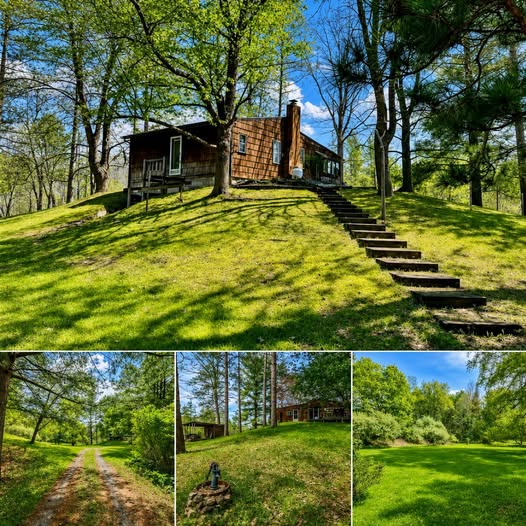
A Private Wooded Retreat on 11 Scenic Acres
Finding a property that combines a spacious parcel of land, mature trees, privacy, and access to established infrastructure can be increasingly difficult. For buyers who appreciate a quieter setting while still wanting practical options for the future, a wooded property can offer a particularly interesting combination of lifestyle and flexibility.
This 11-acre parcel provides an opportunity to enjoy a natural environment while considering a range of possible uses. Surrounded by mature woodland and located within the Victor School District, the property may appeal to buyers looking for a private homesite, a recreational retreat, or land that can be evaluated for future development.
Rather than being defined by a single purpose, the property offers room for different ideas.
A future homeowner could envision a house surrounded by trees and open space. Someone looking for a weekend retreat could appreciate the separation from more densely developed neighborhoods. A buyer interested in land ownership may prefer to preserve much of the property in its natural condition while considering improvements over time.
As with any acreage purchase, the exact possibilities depend on zoning, access, utilities, environmental conditions, permits, and local regulations. Still, the combination of size, wooded surroundings, and location makes this type of property worth a closer look.
Eleven Acres of Natural Surroundings
The first thing that stands out about the property is its size.
Eleven acres provide considerably more space than a typical residential lot.
That additional land can change the experience of owning a home.
Instead of looking directly into a neighboring property, residents may have trees and natural surroundings between themselves and nearby homes. There may be room for walking paths, gardens, outdoor recreation, or simply maintaining a large portion of the property as woodland.
Mature trees also give the land a sense of established character.
Unlike newly planted landscaping, older trees create an environment that has developed over many years. Their height and density can provide shade, seasonal variation, and a natural backdrop for a future home.
For buyers who enjoy spending time outdoors, the woodland may become one of the property’s most important features.
Privacy Without Giving Up Location
Privacy is often one of the main reasons people consider acreage.
A larger property can provide a sense of separation that is difficult to achieve on a small suburban lot.
That doesn’t necessarily mean being completely isolated.
The property is associated with the Victor School District, providing an important connection to an established community and its educational system.
This creates an interesting balance.
A buyer may be able to enjoy a more private residential setting while remaining connected to nearby services, roads, schools, businesses, and other community amenities.
The exact distance to individual services should always be verified before purchasing, but the location offers an alternative to both densely developed neighborhoods and extremely remote rural properties.
The Appeal of Mature Woodland
Trees can influence the character of a property in many ways.
During spring and summer, the landscape can provide shade and greenery.
In autumn, the changing foliage can transform the appearance of the property.
During winter, the absence of leaves can reveal different views through the woodland and change the amount of natural light reaching the ground.
This seasonal variety is one of the advantages of owning a wooded parcel.
The property does not look exactly the same throughout the year.
For someone who enjoys observing nature, gardening, photography, hiking, or simply spending time outside, that changing landscape can become an important part of everyday life.
Designing a Home Around the Landscape
One of the most appealing possibilities with a property like this is the opportunity to design a home around the existing environment.
Rather than purchasing an existing house and adapting to its location, a future owner may be able to consider how a new residence could fit into the landscape, subject to applicable approvals and site conditions.
The placement of the house could influence privacy, sunlight, views, driveway access, and outdoor living areas.
A home positioned among mature trees could have a very different character from one built on an open suburban lot.
Large windows could take advantage of woodland views.
A deck or patio could create an outdoor living area.
A garden could be positioned where sunlight is appropriate.
Walking paths could connect different parts of the property.
These are possibilities rather than guaranteed features, and a buyer would need to determine what local regulations and site conditions allow.
Existing Infrastructure Can Be Important
Another factor that can make acreage more practical is existing infrastructure.
When evaluating undeveloped or partially developed land, buyers typically need to consider access roads, electricity, water, wastewater systems, drainage, internet availability, and other utilities.
If infrastructure is already present or accessible near the property, some aspects of future planning may be simpler.
However, the presence of infrastructure does not automatically mean that a particular building plan is approved.
Buyers should verify the location and capacity of utilities, available connections, easements, road access, and any costs associated with extending services.
A professional site evaluation can also help determine whether the intended use is realistic.
Understanding the Victor School District
The property’s location within the Victor School District may be particularly relevant to families considering a future residence.
School districts can be an important factor when people choose where to live.
Families often consider school boundaries, transportation, educational programs, extracurricular activities, and the overall community surrounding a school system.
However, school district boundaries can change, and individual properties should always be verified with the appropriate local authority before making a purchase decision.
For a family considering building a home, confirming the current school assignment would be an important step in the evaluation process.
A Potential Homesite
For someone searching for land on which to build a home, 11 acres provide considerably more flexibility than a conventional residential lot.
There may be room to consider the orientation of the house, driveway placement, landscaping, outdoor areas, and preservation of natural features.
A buyer could potentially create a property that feels more like a private estate while maintaining a connection to the surrounding community.
But building on wooded land requires careful planning.
Trees may need to be removed in selected areas.
The soil must be evaluated.
Drainage needs to be considered.
The location of utilities must be established.
Road access has to meet local requirements.
Setback rules and zoning restrictions may affect where a home can be placed.
These factors are part of the normal due diligence process for acreage.
Recreational Possibilities
Not every buyer will immediately want to build a large home.
An 11-acre wooded property could also appeal to someone looking for recreational space.
Depending on local rules and the property’s physical characteristics, owners may enjoy walking through the woods, observing wildlife, creating trails, spending time outdoors, or establishing designated areas for recreation.
The possibilities will depend heavily on zoning and land-use regulations.
Still, the amount of space allows activities that would be difficult on a small residential parcel.
For people who value outdoor space, acreage can become an extension of the home itself.
A Place for Gardening
Gardening is another possibility that may appeal to future owners.
Wooded land doesn’t automatically provide ideal conditions for every type of garden, but the property may contain areas where sunlight and soil conditions are suitable.
A future owner could consider a vegetable garden, flower beds, native plants, or landscaping designed around the existing trees.
Gardening on a larger property also allows experimentation.
Instead of limiting planting to a small backyard, an owner may have room to create different areas for different purposes.
Before planting, however, it is important to understand sunlight patterns, drainage, soil quality, deer or other wildlife activity, and local restrictions.
Preserving the Natural Character
One of the advantages of purchasing wooded land is that a buyer doesn’t necessarily need to develop every part of it.
Some owners prefer to leave much of their acreage untouched.
Maintaining woodland can provide a natural setting while reducing the need to landscape large areas.
It can also preserve the property’s existing character.
Selective clearing may create a homesite while leaving the surrounding trees intact.
This approach can produce a balance between development and conservation.
Again, the appropriate approach depends on the owner’s goals and local environmental and zoning requirements.
The Importance of Land Access
Access is one of the first things any acreage buyer should investigate.
A property can look attractive on a map but still present practical challenges if the road connection is complicated.
Potential buyers should determine whether the property has direct legal access to a public road or relies on an easement.
They should also understand who is responsible for maintaining access roads.
During winter or periods of heavy rain, road conditions can become especially important.
These details may not be obvious from photographs or a brief property description.
A site visit and review of the relevant property documents can provide much more useful information.
Utilities and Building Considerations
Acreage buyers should also investigate utilities before assuming that construction will be straightforward.
Questions may include:
Is electricity already available?
Where is the nearest connection point?
Is municipal water available?
If not, would a private well be necessary?
Is a public sewer system available?
If not, can the property support a septic system?
What internet services are available?
Are there restrictions related to utility easements?
Each question can affect the cost and feasibility of building.
A property that appears inexpensive may require significant infrastructure work.
Conversely, existing infrastructure can sometimes reduce the complexity of development.
The important thing is to verify rather than assume.
Evaluating the Land Before Building
Before purchasing acreage for a future home, buyers may want professional assessments.
A survey can establish property boundaries.
A soil evaluation can provide information relevant to construction and wastewater systems.
A builder or engineer can examine potential building locations.
A utility provider can explain connection requirements.
Local authorities can clarify zoning and permitted uses.
These steps may seem time-consuming, but they can prevent expensive surprises later.
Land purchases require a different kind of due diligence than buying a finished house.
The property itself becomes part of the project.
The Value of Space
One of the biggest differences between acreage and conventional residential property is the amount of usable and visual space.
Eleven acres can provide room for separation.
There can be areas for trees, gardens, outdoor activities, storage, and future plans.
Even if an owner uses only a small portion of the property regularly, the surrounding acreage can influence how the home feels.
Instead of seeing neighboring houses immediately outside every window, the owner may experience a stronger connection to the natural landscape.
That sense of space is difficult to recreate once an area becomes heavily developed.
A Property for Different Stages of Life
A large parcel can also change with its owner’s needs.
A young family may initially focus on building a home.
Later, they may establish a garden or recreational area.
As children grow, the outdoor space can provide room for different activities.
Eventually, the owner may prefer a quieter lifestyle centered around the natural surroundings.
The flexibility of acreage can therefore be valuable even when the owner’s plans change.
The key is understanding what the land can realistically support.
Considering Long-Term Ownership
Some buyers approach land with a long-term perspective.
Instead of immediately developing the entire parcel, they may use only part of it while maintaining the remainder as natural space.
This approach can allow owners to make improvements gradually.
A driveway can be established.
A homesite can be developed.
Landscaping can be added over time.
Additional outdoor improvements can follow as the owner’s budget and needs allow.
However, buyers should avoid assuming that land will automatically increase in value.
Real estate values depend on many factors, including location, market conditions, zoning, infrastructure, demand, taxes, and broader economic circumstances.
A property should therefore be evaluated based on its actual characteristics rather than guaranteed future appreciation.
The Importance of Zoning
Zoning is one of the most important factors to investigate before purchasing land.
The fact that a property contains 11 acres does not necessarily mean that every conceivable use is permitted.
Local regulations may determine:
- Whether a home can be built
- How many structures are allowed
- Required setbacks
- Access requirements
- Agricultural uses
- Outbuildings
- Environmental restrictions
- Tree removal
- Subdivision possibilities
- Recreational activities
Buyers should confirm the current zoning designation with the appropriate local authority.
If a specific future use is important to the purchase decision, it should be verified in writing whenever possible.
Property Taxes and Maintenance
Large properties can also involve ongoing expenses that buyers should consider.
Property taxes are one factor.
Maintenance is another.
Wooded land may require occasional tree work.
Roads and driveways need maintenance.
Drainage systems may require attention.
Fences, if installed, may need repairs.
A large property can also require more time to inspect and maintain than a typical residential lot.
These responsibilities aren’t necessarily disadvantages, but they are part of owning acreage.
Understanding them beforehand helps buyers plan realistically.
Living With Nature
One of the most attractive aspects of a wooded property is the opportunity to experience nature close to home.
Birds may become regular visitors.
Seasonal changes become more noticeable.
Trees provide shade and habitat.
Rain and wind sound different when surrounded by woodland.
Morning sunlight can filter through branches.
In autumn, the landscape can change dramatically.
For people who enjoy natural surroundings, these details can become part of everyday life.
The experience is different from living in a densely developed neighborhood.
The Balance Between Privacy and Convenience
Acreage properties often require a balance.
More land can provide privacy.
But greater privacy can sometimes mean longer distances to stores, services, schools, or public transportation.
That is why location matters.
A property can provide a private environment without being extremely remote.
The Victor School District connection is one element that may appeal to buyers who want acreage while remaining part of an established community.
Prospective buyers should still calculate actual travel times to the places they visit most frequently.
A Blank Canvas With Real-World Conditions
It is tempting to describe undeveloped land as a blank canvas.
In one sense, that is true.
The owner m