When Children Face Life in Prison: The Difficult Questions Behind Juvenile Sentencing
The American criminal justice system has long faced difficult questions about how to respond when children commit serious crimes. Among the most debated issues is whether someone who commits an offense as a minor should ever receive a prison sentence that offers no possibility of release.
These cases sit at the intersection of public safety, accountability, childhood development, and the possibility of rehabilitation. They also raise a fundamental question: how should the law balance the seriousness of a crime with the fact that a young person’s life, judgment, and understanding of consequences are still developing?
For victims and their families, serious offenses can cause devastating and permanent harm. For young defendants, a sentence imposed during childhood can determine the course of their entire adult lives. Understanding both realities is essential to a thoughtful discussion of juvenile justice.
Why Juvenile Sentencing Remains Controversial
The United States has a large correctional system, and the treatment of young offenders has attracted sustained attention from legal experts, researchers, and human rights organizations.
One especially controversial punishment is life imprisonment without the possibility of parole for a crime committed by a minor. Such a sentence means that, under the terms imposed, the individual has no ordinary opportunity to seek release through parole.
Critics argue that imposing this punishment on children fails to account adequately for their developmental stage and capacity for change. Supporters of severe sentences emphasize the seriousness of certain offenses, the need to protect the public, and the lasting impact on victims and their families.
The debate is not simply about whether wrongdoing deserves consequences. It concerns what those consequences should be when the person responsible was still a child.
Childhood, Development, and Decision-Making
Children and teenagers do not necessarily evaluate risk, pressure, or long-term consequences in the same way adults do. Their judgment continues to develop, and they may be more susceptible to peer influence, emotional reactions, and immediate rewards.
These differences do not mean that young people cannot understand right from wrong or that every juvenile offense should be treated lightly. Rather, they help explain why age and developmental circumstances can be relevant when courts determine responsibility and punishment.
Researchers and advocates also point to the circumstances some young defendants experience before entering the justice system. Exposure to violence, unstable housing, neglect, abuse, and limited access to support can affect a child’s development and available choices.
Such experiences do not automatically explain or excuse a criminal act. Each case has its own facts, and the impact of a person’s background must be assessed carefully. However, understanding those circumstances can help courts and communities consider appropriate responses and identify ways to prevent future harm.
The Difference Between Direct Participation and Accomplice Liability
Another difficult issue involves the different roles people may play in a criminal offense.
In some cases, a defendant directly causes a victim’s death. In others, a person may be convicted under laws that hold participants responsible for a crime even when they did not personally carry out every act involved.
The legal standards governing these situations vary by jurisdiction and offense. Questions may include what the defendant intended, what they knew, how they participated, and whether the applicable law permits responsibility for another person’s actions.
For young defendants, these distinctions can have substantial consequences. Critics of particularly broad forms of accomplice liability argue that courts must carefully consider an individual’s actual role rather than treating every participant as equally responsible without examining the evidence.
Victims’ families, meanwhile, may understandably focus on the overall harm caused by the crime and the need for accountability.
A fair legal process must examine the applicable law, the evidence, and each defendant’s circumstances before determining guilt and punishment.
The Case of Lionel Tate
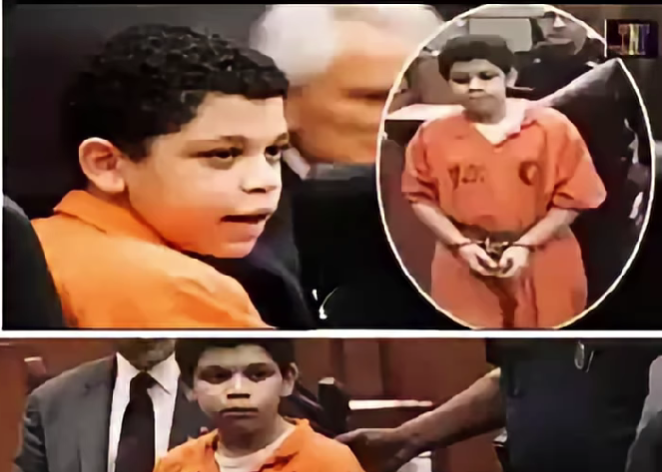
One widely discussed example in the American debate over juvenile punishment is the case of Lionel Tate, who was 12 years old when six-year-old Tiffany Eunick died in Florida in 1999.
Tate was accused of causing the child’s death while imitating professional wrestling moves. The case attracted national attention because of his age and the extraordinary severity of the punishment initially imposed.
In 2001, Tate received a life sentence without parole after being convicted of first-degree murder. The sentence prompted extensive public discussion about whether a child that young should face the same kind of punishment associated with the most serious adult criminal cases.
The case subsequently went through additional legal proceedings, and Tate’s original sentence was overturned. He later entered a plea agreement and received a different sentence.
His case became a prominent example in debates about the prosecution of children as adults, the role of developmental maturity in sentencing, and the limits of punishment for juvenile offenders.
It also demonstrated why a case must be understood through its full legal history rather than a single headline. Initial verdicts, appeals, plea agreements, and later court decisions can substantially change the legal outcome.
Can a Young Person Change?
One of the central questions in juvenile sentencing is whether the law should account for the possibility that a young person may mature and change substantially over time.
Supporters of rehabilitation argue that children have a greater capacity for development than many adults and that their future behavior cannot always be predicted reliably from an offense committed during adolescence.
They point to education, counseling, stable relationships, vocational training, and other interventions that may help young people develop better decision-making skills and prepare for life beyond incarceration.
However, rehabilitation does not erase the harm suffered by victims. Nor does it guarantee that every person will change. The challenge for the justice system is to evaluate both the seriousness of an offense and the evidence relevant to an individual’s development and future risk.
A system that considers rehabilitation can still impose serious consequences. The question is whether those consequences should permanently eliminate every opportunity for a young offender to demonstrate meaningful change.
How the Law Has Evolved
The legal treatment of juvenile life sentences has changed significantly over time, particularly in cases involving offenses committed by minors.
In the United States, Supreme Court decisions have placed constitutional limits on certain severe punishments for juvenile offenders.
In Roper v. Simmons (2005), the Court ruled that the death penalty cannot be imposed for crimes committed by people who were under 18 at the time of the offense.
In Graham v. Florida (2010), the Court prohibited life without parole for juveniles convicted of non-homicide offenses.
In Miller v. Alabama (2012), the Court ruled that mandatory life-without-parole sentences for juvenile homicide offenders violate the Eighth Amendment’s prohibition on cruel and unusual punishment. The decision did not categorically prohibit every discretionary juvenile life-without-parole sentence.
Later, in Montgomery v. Louisiana (2016), the Court held that the Miller rule applied retroactively to cases that were already final.
These decisions reflect the legal significance of age when considering the harshest punishments. They also show that juvenile sentencing remains a complex area of law, with important distinctions based on the offense, the sentence imposed, and the procedures followed by the court.
Anyone researching a particular case should consult current legal sources because state laws, resentencing procedures, and individual case outcomes can differ.
Remembering Victims While Discussing Reform
Discussions about juvenile justice must not overlook the people harmed by crime. Victims and their families may experience grief, trauma, financial hardship, and lasting uncertainty. Their needs deserve attention and meaningful support.
At the same time, considering a young defendant’s age and potential for rehabilitation does not require minimizing the victim’s suffering. Accountability and rehabilitation are not necessarily mutually exclusive goals.
Victim-support services, access to counseling, clear communication during court proceedings, and opportunities for families to be heard can help ensure that the human consequences of crime remain central to the process.
A responsible justice system must take serious harm seriously while applying the law fairly to the person accused or convicted.
Prevention Matters as Much as Punishment
By the time a serious criminal case reaches sentencing, many opportunities for early intervention may already have passed. That is why prevention is an important part of the broader discussion.
Families, schools, social workers, and community organizations can help identify young people who need support before their difficulties escalate. Access to mental health services, safe housing, education, mentoring, and constructive activities may help reduce some of the pressures that contribute to harmful behavior.
No single program can prevent every crime, and responsibility for an offense cannot simply be transferred to a person’s environment. Nevertheless, communities can take practical steps to reduce risk while helping young people build safer and more stable futures.
A Difficult Balance Between Justice and Second Chances
Cases involving children who receive extremely severe sentences often provoke strong reactions because they challenge familiar ideas about punishment and fairness.
For victims, justice may mean recognition of the harm suffered and protection from further danger. For society, it includes public safety and the consistent application of law. For juvenile defendants, it raises questions about maturity, responsibility, and whether a person should be defined forever by conduct committed during childhood.
There are no simple answers that resolve every case. The facts, the severity of the offense, the defendant’s role, and the applicable legal standards all matter.
What remains essential is a careful process grounded in evidence rather than assumptions. Children who commit serious offenses must be held accountable under the law, but their age and capacity for development are also important considerations.
The debate over juvenile sentencing ultimately asks society to consider not only what punishment is deserved, but also what justice should accomplish—and whether a system can protect the public, respect victims, and still recognize the possibility of change.