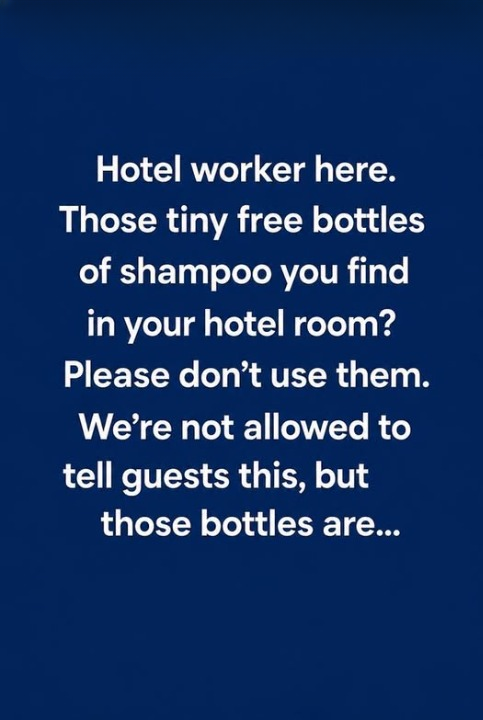
After a long day of traveling, few things feel better than entering a clean hotel room and taking a warm shower. The bed has been neatly prepared, fresh towels are stacked in the bathroom, and a collection of miniature toiletries is waiting beside the sink.
Those tiny bottles of shampoo, conditioner, body wash, and lotion may seem like small luxuries. They are convenient, neatly packaged, and usually included in the price of the room. For travelers who want to pack lightly, hotel toiletries can eliminate the need to carry several containers through an airport.
However, convenience does not mean every product is appropriate for every guest. Before opening a hotel shampoo bottle or using a wall-mounted dispenser, it is worth taking a moment to inspect the product and consider its ingredients.
This does not mean hotel toiletries are inherently unsafe. Properly sealed products supplied by a reputable hotel are generally intended to be safe for ordinary use. The more realistic concerns involve damaged packaging, personal allergies, sensitive skin, unclear labels, improperly maintained dispensers, and the environmental cost of disposable plastic.
A few simple checks can help travelers make a better decision without turning an ordinary hotel amenity into a source of unnecessary fear.
Begin With the Packaging
Before using a miniature bottle, look at its condition.
A properly prepared toiletry should appear clean and undamaged. If the bottle has a safety seal, check that it is intact. The cap should fit correctly, and there should be no unexplained leakage, cracks, residue, or unusual discoloration around the opening.
Some hotel bottles do not have an obvious foil seal. Depending on their design, they may use a cap that shows evidence when opened. Others may simply be replaced between guests according to the property’s housekeeping procedures.
If a bottle looks partly used or appears to have been opened, do not use it. Contact the front desk and politely request a replacement. Most hotels will provide another bottle or an alternative product without difficulty.
Travelers should also avoid assuming that a bottle is safe merely because it appears full. If the texture, smell, or color seems unusual after opening it, the safest choice is to stop and ask for a new product.
A strange appearance does not necessarily mean someone intentionally interfered with the bottle. Heat, age, improper storage, or a damaged package can affect a cosmetic product. Nevertheless, guests are not required to use something that looks questionable.
Read the Label When Possible
Many people use hotel shampoo without looking at the ingredients. This may not cause a problem for the average guest, but people with sensitive skin, allergies, scalp conditions, or fragrance sensitivities should be more careful.
Hotel toiletries often contain fragrances designed to create a pleasant, memorable experience. Unfortunately, a fragrance that smells luxurious to one person may irritate another person’s skin or trigger discomfort.
Shampoos may also contain cleansing agents, botanical extracts, preservatives, dyes, or conditioning ingredients that a traveler does not normally use.
If the bottle includes an ingredient list, review it before applying the product. People with known allergies should look specifically for ingredients they have been advised to avoid.
A miniature bottle may not always provide enough space for a complete, easy-to-read label. The ingredients may instead appear on the cardboard packaging or be available through the manufacturer’s website. Guests can also ask hotel staff for more information.
If the ingredients cannot be confirmed and you have a history of serious reactions, using your own familiar product is the more sensible option.
Try a Small Amount First
Even when a shampoo contains no known allergens, a new formula may behave differently from the one you use at home.
It might leave your hair dry, make your scalp feel uncomfortable, or irritate skin around your forehead and neck. This is particularly relevant for people with eczema, psoriasis, color-treated hair, or a sensitive scalp.
Consider testing a very small amount before using the product extensively. If you notice burning, intense itching, swelling, hives, or another unexpected reaction, rinse the product away and stop using it.
Mild dryness is different from a serious allergic response, but either can be a reason to return to your regular toiletries. Seek appropriate medical assistance if symptoms are severe, spread quickly, interfere with breathing, or do not improve.
Do not mix several unfamiliar hotel products at once if you are concerned about sensitivity. Using the shampoo, conditioner, shower gel, lotion, and facial products together can make it difficult to determine which product caused a reaction.
What About Refillable Dispensers?
Many hotels have replaced individual bottles with larger wall-mounted dispensers. These systems may hold shampoo, conditioner, and body wash and are often secured to the shower wall.
The transition can reduce the number of disposable plastic containers used by a property. A single dispenser may serve many guests before it needs to be refilled, potentially reducing packaging and housekeeping waste.
However, the cleanliness of a refillable system depends on how it is designed and maintained.
A properly managed dispenser should be securely attached, clearly labeled, and cleaned according to appropriate procedures. Some modern systems use replaceable sealed cartridges rather than allowing staff to pour new liquid directly into an open container. This design can simplify maintenance and reduce handling.
Before using a dispenser, look for obvious damage. The container should not be cracked, loose, leaking, or unusually dirty. The pump should work normally, and the product should have a consistent texture and appearance.
If the dispenser can be opened easily by anyone or appears poorly maintained, it is reasonable to request individually packaged toiletries from the front desk or use products you brought with you.
Once again, visible damage does not prove that the contents have been deliberately altered. It simply means the product cannot be confidently evaluated, so requesting an alternative is a practical precaution.
Hotel Products May Not Suit Your Hair
Safety is not the only consideration. A general-purpose hotel shampoo may not provide the care your particular hair needs.
Someone with naturally dry or tightly curled hair may find a strongly cleansing shampoo too harsh. A guest with color-treated hair may prefer a sulfate-free or color-protective formula. People who use medicated shampoos for dandruff or another scalp condition should usually continue following the routine recommended by their healthcare professional.
Hotel conditioner may also be lighter than the product you normally use. It might not provide enough moisture or detangling support, especially after swimming in a chlorinated pool or spending time in salt water.
If your hair requires specialized care, bringing travel-sized versions of your regular products can prevent inconvenience. Refillable travel containers allow you to carry familiar toiletries without packing full-size bottles.
Remember to label those containers clearly. A small unmarked bottle can be difficult to identify once several similar liquids are packed together.
The Environmental Side of Miniature Bottles
The tiny shampoo bottle has become a symbol of hotel convenience, but it also represents a significant packaging challenge.
Each bottle requires plastic, a cap, a printed label, manufacturing, transportation, and eventual disposal. Even if a guest uses only a small portion, the container may need to be removed during housekeeping.
Recycling is not always straightforward. Small containers can be difficult for some recycling systems to process, and bottles containing leftover product may not be accepted. Local rules vary, so a recycling symbol alone does not guarantee that a container will be successfully recycled.
Refillable dispensers can reduce this waste when hotels maintain them responsibly. Some properties also use larger recyclable containers, compostable packaging, or programs that collect partially used soap for processing and donation.
Travelers can reduce waste by bringing reusable containers filled with products they already own. A solid shampoo bar is another option for some people because it can last through multiple trips and does not count as a liquid during airport screening in many circumstances. Travelers should still verify current transportation-security requirements for their location.
If you do use the complimentary bottles, take only what you genuinely need. Unopened items left in the room may be available for another guest, depending on hotel policy.
Should You Take Hotel Toiletries Home?
Many hotels expect guests to take small, individually packaged toiletries that have been placed in their rooms. Once opened, these products generally cannot be offered to another guest.
However, permission should not be assumed for full-size bottles, decorative containers, or dispensers attached to a wall. Those items are hotel property.
If you are uncertain, ask at the front desk. Hotel staff can explain which amenities are complimentary and which are intended to remain in the room.
Taking an opened miniature bottle home can reduce immediate waste if you intend to finish it. On the other hand, collecting hotel toiletries that will remain unused in a drawer does not offer much environmental benefit.
A Simple Hotel Bathroom Checklist
Before using any complimentary toiletry, take a few seconds to consider the following:
- Is the bottle or dispenser clean and undamaged?
- Is any available safety seal intact?
- Does the product have a readable label?
- Are you familiar with the ingredients?
- Do you have allergies or a sensitive scalp?
- Does the liquid look and smell normal?
- Is the dispenser securely closed and properly maintained?
- Would your own product be more suitable?
If anything concerns you, contact hotel staff. A professional hotel should take a reasonable request for replacement toiletries seriously.
There is no need to accuse anyone of wrongdoing. A straightforward explanation—such as “This bottle appears to be open” or “I have sensitive skin and need an ingredient list”—is usually sufficient.
Convenience With Reasonable Caution
The tiny bottles waiting in a hotel bathroom are not automatically something to fear. Millions of travelers use complimentary toiletries without experiencing a problem.
The better lesson is to avoid treating an unfamiliar cosmetic product as though it must be appropriate for everyone. Packaging can become damaged, ingredients can irritate sensitive skin, and refillable systems require responsible maintenance.
A brief inspection, an ingredient check, and an awareness of your personal needs can help you decide whether to use what the hotel provides.
Travelers who have allergies, specialized hair-care routines, or concerns about packaging may feel more comfortable carrying familiar products in reusable containers. Those who use hotel amenities can do so thoughtfully, reporting damaged packaging and avoiding unnecessary waste.
The goal is not to create anxiety about a routine shower. It is to make an informed choice.
Tiny shampoo bottles may look fresh and luxurious, but their size and presentation do not tell you everything. Taking a few seconds to check what you are using can protect your comfort, support your personal-care routine, and encourage more responsible travel.