The knock on my front door came without warning, interrupting an otherwise quiet Saturday afternoon.
When I opened the door, no one was there. The street looked peaceful, and I could not see anyone walking away. The only unusual thing was a woven basket resting neatly in the center of my welcome mat.
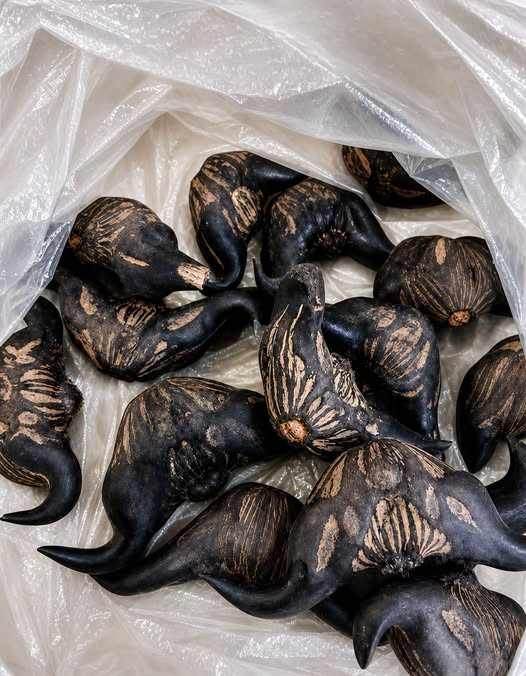
Inside it was an assortment of green vegetables unlike anything I had purchased from the supermarket.
They were pale green, slightly wrinkled, and shaped somewhat like large pears. A few had shallow grooves running from top to bottom, while others were almost perfectly smooth. Fresh leaves had been placed beneath them, making the basket look like a carefully arranged gift rather than an unwanted collection of garden leftovers.
There was no note, label, or explanation.
I picked up one of the vegetables and examined it closely. It felt firm and cool in my hand. It had no noticeable smell, and its thin skin looked too delicate to belong to a pumpkin or winter squash.
My first thought was that someone had delivered the basket to the wrong address.
I checked the porches of the houses beside mine, but there were no matching baskets waiting outside. I even looked at the house numbers to make sure I had not somehow become confused about where I lived.
Everything appeared normal.
I carried the basket inside and placed it on the kitchen counter. Then I took a photograph and sent it to my sister.
“Do you know what these are?” I asked.
Her response arrived almost immediately.
“Decorative pears?”
I laughed, but her guess was no better than mine.
An image search produced several possibilities. The vegetables resembled chayote, but they also looked somewhat like an unusual type of squash. One website suggested they might be cucumbers, while another showed a fruit with a similar shape that required completely different preparation.
That was when I decided not to taste anything until I knew exactly what I had received.
Unfamiliar produce can be exciting, but appearance alone is not always enough to identify it safely. Different fruits, vegetables, and ornamental plants may share similar colors and shapes. Some parts of an edible plant may also require special preparation, while other parts may not be commonly eaten.
The most sensible solution was to find the person who had left the basket.
Meeting the Neighbor Behind the Gift
Later that afternoon, I noticed my new neighbor, Mrs. Alvarez, working in her garden.
She had moved into the house next door several months earlier. We had exchanged friendly waves and brief greetings, but we had never had a real conversation. Most mornings, she was already tending her plants before I left for work.
Her backyard was one of the most impressive gardens in the neighborhood. Green vines climbed wooden frames along the fence, tomato plants filled raised beds, and small fruit trees stood in large containers around the patio.
I carried one of the mysterious vegetables outside.
“Mrs. Alvarez,” I called, holding it up, “did these happen to come from you?”
Her expression immediately brightened.
“Yes! You found the basket.”
She explained that she had knocked, but when I did not answer quickly, she assumed I might be busy and left the produce on the porch.
“What are they?” I asked.
“Chayote,” she replied. “They grew faster than my family could eat them, so I thought you might enjoy a few.”
I admitted that I had never cooked chayote before.
Instead of laughing at my lack of knowledge, she invited me into her garden and showed me the vine from which the vegetables had come.
The plant stretched across an entire wooden trellis. Broad leaves formed a thick green canopy, and several more chayotes hung beneath it.
Mrs. Alvarez explained that chayote is a member of the squash family. It is used in many cuisines and can be prepared in several ways. Its mild flavor allows it to absorb seasonings easily, and its texture can remain pleasantly firm when cooked correctly.
She sometimes sliced it into soups. On other occasions, she sautéed it with onions, garlic, and herbs. Her grandchildren enjoyed it roasted with a little olive oil.
“The easiest recipe is usually the best place to start,” she told me.
Before I left, she wrote down basic preparation instructions and offered me fresh cilantro from another part of her garden.
The unidentified basket on my doorstep had suddenly become something much more interesting: an invitation to experience food, tradition, and a neighbor’s generosity.
Preparing Chayote for the First Time
The following evening, I decided to cook two of the chayotes.
I washed them carefully under running water, removed any visible dirt, and dried them with a clean towel. Following Mrs. Alvarez’s instructions, I sliced each one lengthwise.
The inside was pale and crisp, with a soft seed in the center. The flesh reminded me of a combination of zucchini, cucumber, and a firm pear, although it had very little aroma.
Some people cook chayote with the skin intact, especially when it is young and tender. I peeled mine because the vegetables were fairly large and I wanted a softer texture.
Mrs. Alvarez had warned me that cutting raw chayote can sometimes leave a sticky residue on the hands. She suggested using gloves or rinsing my hands during preparation. Her advice proved helpful because a thin film began forming on my fingers as I peeled the second one.
I cut the flesh into small pieces and sautéed it with olive oil, chopped onion, and garlic. Once it began to soften, I added a little salt, black pepper, and fresh cilantro.
The result was simple but surprisingly satisfying.
Chayote did not have the strong flavor I had expected from such an unfamiliar-looking vegetable. Instead, it was mild, fresh, and slightly sweet. The pieces absorbed the garlic and seasonings while retaining a gentle crunch.
I served it alongside roasted chicken and rice. Even my husband, who initially approached the dish with considerable suspicion, returned for a second helping.
The next morning, I visited Mrs. Alvarez and returned her basket.
“It was wonderful,” I told her.
She smiled as if my approval mattered more than I expected.
“My mother grew chayote when I was a child,” she explained. “Whenever the vines produced too much, she gave baskets to everyone nearby. She said a garden becomes more valuable when it feeds more than one household.”
That statement stayed with me.
Why Unfamiliar Food Can Feel Intimidating
Many people hesitate when they encounter produce they do not recognize. The concern is understandable. Familiar foods come with instructions we learned from our families, recipes, restaurant meals, or years of experience.
We know whether an apple should be peeled, how to remove the seeds from a pepper, and when a banana is ripe. An unfamiliar vegetable does not provide those same reassuring signals.
Several questions immediately arise:
Is the skin edible?
Does it need to be cooked?
Which parts should be removed?
How should it be stored?
What should it smell or feel like when fresh?
These questions should not be treated as foolish. Asking them is a responsible part of trying something new.
When receiving unknown produce, begin by asking the person who supplied it for its name and preparation method. If that is impossible, consult a reliable source, such as a local agricultural extension service, produce specialist, experienced grocer, or credible food reference.
Avoid eating a plant based only on a social-media photograph or an uncertain identification from a stranger online. This is particularly important for wild mushrooms, berries, herbs, or plants collected outside a cultivated garden. Some unsafe species can resemble edible varieties closely.
Once the produce has been confidently identified, look for preparation guidance from trustworthy culinary or agricultural sources. Wash it properly, check for signs of spoilage, and introduce it in a modest amount if it is completely new to you.
People with food allergies, digestive conditions, or special dietary needs may also wish to consult a healthcare professional before adding an unfamiliar ingredient to their diet.
Curiosity and reasonable caution can exist together.
A Garden That Connected Two Homes
After that first basket, Mrs. Alvarez and I began speaking regularly.
She taught me how to prepare chayote soup with carrots and potatoes. I shared a loaf of banana bread with her. She gave me tomatoes during the summer, and I brought her homemade jam in the autumn.
Eventually, she helped me build a small raised garden bed in my backyard.
I had never considered myself good at gardening. My previous attempts to grow herbs had produced little more than dry soil and disappointment. Mrs. Alvarez showed me how to observe sunlight, improve drainage, and water plants according to their needs rather than according to a rigid schedule.
We planted lettuce, peppers, and three tomato plants.
Not everything survived. One pepper plant disappeared after a particularly determined rabbit found its way through the fence. Another plant struggled during an unusually hot week.
But the tomatoes grew.
When the first one ripened, I placed it in a small basket and left it on Mrs. Alvarez’s porch.
This time, I included a note:
“My first harvest. Thank you for helping it grow.”
A few minutes later, she knocked on my door with tears in her eyes and insisted that we slice the tomato and share it immediately.
Sitting at my kitchen table, we sprinkled a little salt over the fresh slices and laughed at how one small vegetable had somehow become a celebration.
More Than a Basket of Produce
The original basket contained only a handful of chayotes, yet it gave me much more than several meals.
It introduced me to a food I might otherwise have ignored at the market. It taught me that unfamiliar ingredients do not need to be intimidating when approached with curiosity and reliable information. Most importantly, it helped transform a polite but distant neighbor into a genuine friend.
Small acts of generosity are easy to underestimate. A person may believe they are simply sharing extra vegetables, returning a borrowed tool, or offering directions. To someone else, that gesture may open the door to a conversation, a tradition, or a sense of belonging.
Food is especially powerful in this way. Recipes carry memories of childhood, family gatherings, migration, celebration, and home. Asking someone how they prepare a familiar ingredient gives them an opportunity to share part of their history.
That does not mean we should consume unidentified items without caution. Proper identification and safe preparation remain important. But once those questions have been answered, unfamiliar produce can become an opportunity rather than a problem.
If you discover an unexpected basket on your doorstep, begin by finding out who left it and what it contains. Ask questions. Learn how the ingredients are normally prepared. Thank the person who shared them.
Then, if everything has been identified and handled safely, consider trying a recipe.
You may discover a new favorite food.
Or, as I did, you may discover that the most meaningful thing inside the basket is not the produce itself. It is the quiet message behind it:
“I grew more than I need, and I thought of you.”