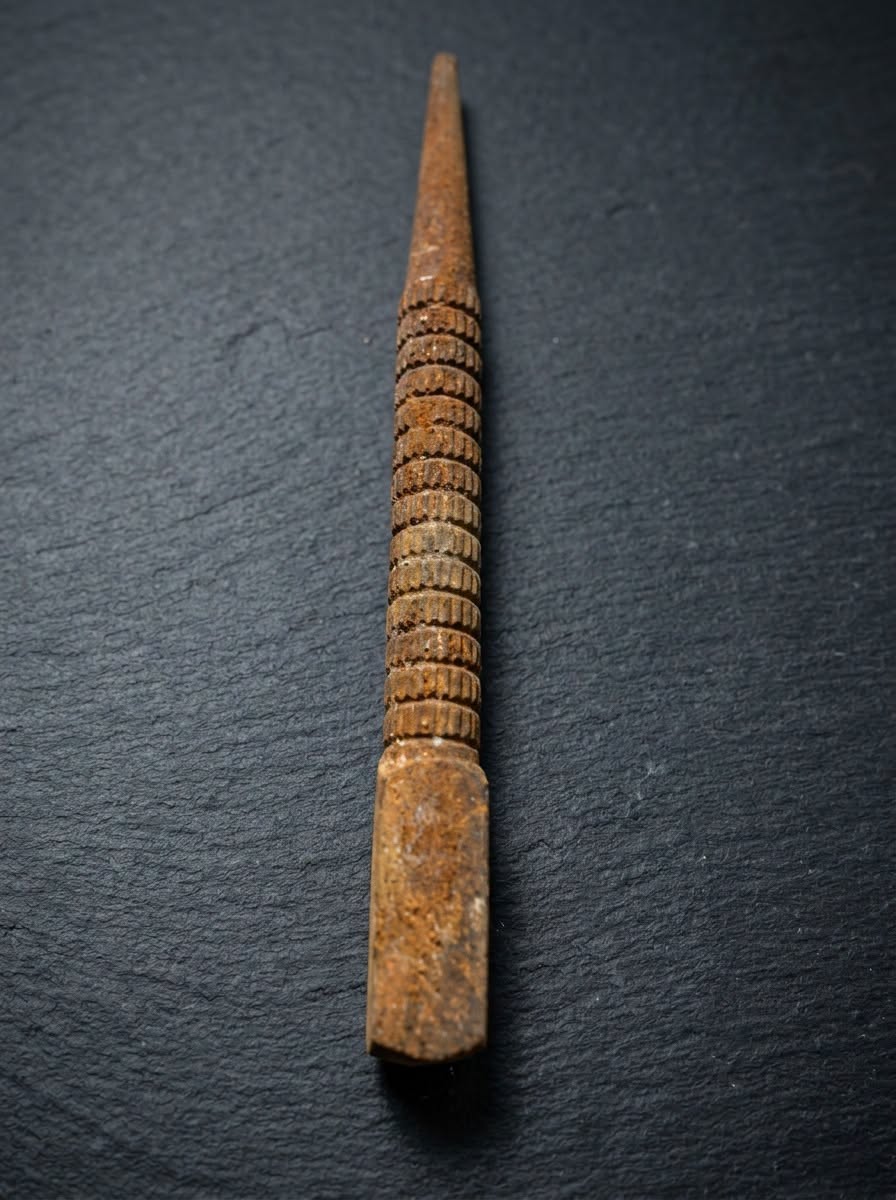
The Vintage Nail Punch: The Small Workshop Tool That Still Has a Place in Modern DIY
The sound was simple: a short metallic tap followed by another.
For generations, that sound was part of workshops, garages, sheds, and home renovation projects. It could be heard while someone repaired a piece of furniture, finished a woodworking project, or made a small adjustment to something around the house.
Among the many tools that produced those familiar sounds was one particularly simple instrument: the nail punch.
Small enough to fit comfortably in a hand and uncomplicated in appearance, a nail punch was never the most impressive tool in a toolbox. It didn’t have an engine, a complicated mechanism, or an expensive price tag.
Yet it served an important purpose.
For many woodworkers, carpenters, furniture repairers, and DIY enthusiasts, a nail punch was one of those tools that quietly made certain jobs easier and cleaner.
Today, modern power tools and specialized equipment have transformed the way many people work with wood. Even so, the basic nail punch remains useful because its purpose has not really changed.
Sometimes a simple tool continues to be valuable precisely because it does one job well.
What Is a Nail Punch?
A nail punch is a small hand tool designed to help drive a nail below the surface of wood or another suitable material.
It generally has a narrow metal shaft with a shaped tip and a larger end designed to be struck with a hammer.
The basic process is straightforward.
A nail is first driven close to the desired depth using a hammer. Once the nail head is nearly flush with the surface, the nail punch is placed against the head.
A light hammer tap then pushes the nail slightly below the surrounding surface.
The resulting small indentation can later be filled with wood filler, putty, or another appropriate material when a smooth finish is desired.
The tool doesn’t replace a hammer.
Instead, it works alongside one.
That simple distinction is important because the nail punch is designed for precision rather than brute force.
Why Would Someone Push a Nail Below the Surface?
At first glance, driving a nail below the surface might seem unnecessary.
If the nail is already holding the pieces of wood together, why continue?
The answer often has to do with appearance.
When woodworking projects are intended to have a clean finished surface, visible nail heads can be distracting.
Furniture makers and carpenters have traditionally used various techniques to make fasteners less noticeable.
A nail punch allows the nail head to sit slightly below the surface, creating a small recess.
That recess can then be filled.
After sanding and finishing, the nail can become much less noticeable.
This technique has been used in everything from trim work to furniture repair.
The Design Is Remarkably Simple
One reason vintage nail punches remain interesting is that their design is so uncomplicated.
There isn’t much that can go wrong mechanically because there are few moving parts.
The tool is essentially a shaped piece of metal designed to transfer force from a hammer to a nail head.
That simplicity is one of its greatest strengths.
A modern tool can be impressive because of its technology.
A traditional hand tool can be impressive for the opposite reason.
It may have been designed decades ago and still perform exactly the same basic function today.
Different Sizes for Different Nails
Nail punches are not necessarily one-size-fits-all tools.
They can come in different diameters and lengths, allowing users to work with different nail sizes.
A small punch can be useful when working with smaller finishing nails.
A larger punch may be more appropriate for heavier fasteners.
The tip needs to fit the nail head reasonably well.
If the punch is too large, it may leave an unnecessarily large mark around the nail.
If it is too small, it may slip or concentrate force in an unsuitable way.
Choosing the right size is therefore part of using the tool effectively.
The Difference Between a Nail Punch and a Nail Set
The terms “nail punch” and “nail set” are sometimes used interchangeably, depending on the region and manufacturer.
In general, both refer to tools used to drive nail heads below a material’s surface.
There can be differences in shape, size, and intended application, however.
A nail set is commonly associated with finishing work, while “punch” can describe a broader range of tools used for driving, marking, or positioning.
The exact terminology isn’t always consistent.
What’s most important is understanding the function of the particular tool rather than relying solely on its name.
Why Finish Carpentry Benefits From Small Tools
Large tools tend to receive most of the attention in woodworking.
Saws cut material.
Drills create holes.
Sanders smooth surfaces.
Routers shape edges.
But smaller hand tools often provide the precision needed to finish the job properly.
A nail punch is a good example.
It doesn’t perform the main construction task.
Instead, it helps with the final details.
That distinction is common throughout woodworking.
A project may be built with large machines, but the final appearance can depend on small adjustments made by hand.
Vintage Workshops Relied Heavily on Hand Tools
Before modern cordless tools became common, many household repairs and woodworking projects depended almost entirely on manual tools.
A typical workshop might contain a hammer, handsaw, screwdrivers, chisels, planes, files, clamps, measuring tools, and several small specialty tools.
There was no battery to charge.
There was no motor to maintain.
There was simply the tool, the material, and the person using it.
That style of work required patience and technique.
The user had to understand how much pressure to apply and where to apply it.
A nail punch fit naturally into that environment.
The Familiar Rhythm of Hammer and Punch
There is something distinctive about working with traditional hand tools.
The process is slower than using a power tool, but it can also provide greater awareness of what is happening.
A hammer strike gives immediate feedback.
The user can feel the resistance of the material.
They can see whether the nail is moving correctly.
They can adjust their position after each strike.
That feedback is one reason experienced woodworkers continue to appreciate hand tools.
The goal isn’t always maximum speed.
Sometimes control is more important.
Why Small Tools Were Often Built to Last
Older tools were frequently designed with durability in mind.
A good-quality metal hand tool could be used repeatedly for years.
Because a nail punch has such a simple construction, there are relatively few components that require maintenance.
There is no electrical system.
There is no battery.
There are no gears or complicated mechanisms.
A quality steel punch can remain useful for decades if it is stored properly and used for its intended purpose.
That durability explains why vintage examples can still appear in old workshops, toolboxes, estate collections, and antique tool markets.
How a Nail Punch Is Used
Using a nail punch is relatively straightforward, but precision matters.
First, the nail is driven into the wood until the head is close to the surface.
The punch is then positioned over the nail head.
The user holds the punch securely and gives the opposite end a controlled tap with a hammer.
The goal is not to drive the nail deeply into the wood.
Instead, the goal is to create a small recess just below the surrounding surface.
The amount of force required depends on the material and the nail.
Soft wood may require very little force.
Harder materials may respond differently.
The important thing is to avoid striking harder than necessary.
Why Technique Matters
A simple tool can still require practice.
If the punch is held at an angle, it can slip from the nail head.
If too much force is used, the punch may create a larger indentation than intended.
If the punch is the wrong size, the result may be uneven.
Experienced users tend to rely on controlled strikes rather than powerful ones.
The hammer does the work.
The person provides direction and judgment.
That is one of the basic principles of traditional hand-tool work.
Preparing the Surface Afterward
Once the nail has been recessed, the resulting hole can be filled.
For painted wood, a suitable filler can help create a smooth surface.
For stained or naturally finished wood, the process may require more attention because the filler needs to blend appropriately with the surrounding material.
After the filler dries, it can be sanded.
The surface can then be painted, stained, or otherwise finished according to the project.
The final result can make the original nail almost impossible to notice.
Why Finish Work Can Take Longer Than Construction
People unfamiliar with woodworking sometimes assume that building something is mostly about cutting and assembling pieces.
In reality, finishing can take considerable time.
Edges need to be cleaned.
Surfaces need to be sanded.
Small imperfections need attention.
Fasteners may need to be concealed.
Gaps may need filling.
Coatings may require multiple applications.
A tiny tool such as a nail punch can therefore play a role in a much larger finishing process.
It is one small step among many.
The Tool’s Role in Furniture Repair
Nail punches aren’t limited to new construction.
They can also be useful when repairing older furniture.
A loose trim piece, decorative molding, or wooden component may contain nails that need to be repositioned.
In some cases, a punch can help restore the fastener without creating unnecessary damage around it.
However, older furniture requires caution.
Antique pieces may use unusual construction methods or fragile materials.
Before making repairs, it’s important to understand how the furniture was assembled.
A modern repair technique isn’t always appropriate for an older or historically significant piece.
Why Vintage Tools Are Appealing to Collectors
Old tools have become popular among collectors and enthusiasts.
Part of the appeal is historical.
A worn hammer or punch can represent decades of practical work.
Scratches and marks can tell a story about how the tool was used.
The appeal is not necessarily based on rarity or monetary value.
Sometimes collectors simply appreciate the craftsmanship.
Older tools can also provide an interesting connection to earlier generations of tradespeople.
A tool that once belonged to a carpenter’s workshop may have been passed down through a family.
Even if it is no longer used regularly, it can still have sentimental value.
Signs of a Well-Made Vintage Tool
When examining an older nail punch, several characteristics can indicate quality.
The metal should be appropriately hardened for its intended use.
The working tip should be intact and reasonably shaped.
The shaft should not be significantly bent.
The striking end should be in acceptable condition.
Heavy mushrooming around the striking surface can be a concern with older metal hand tools because repeated hammering can deform the metal.
Any vintage tool intended for actual use should be inspected carefully before being put back into service.
Patina Versus Damage
Collectors often appreciate the natural aging of old tools.
Surface discoloration, minor scratches, and a darker finish can create what is commonly called patina.
Patina can be part of a tool’s character.
But there is an important difference between cosmetic aging and structural damage.
Deep cracks, severe corrosion, deformation, or damaged striking surfaces can affect safety and usability.
A tool can look beautifully old while still requiring careful inspection.
Vintage doesn’t automatically mean better.
The value of an older tool often comes from its combination of history, craftsmanship, condition, and usefulness.
Hand Tools in the Modern Workshop
Modern workshops look very different from those of previous generations.
Cordless drills and impact drivers have become common.
Power sanders can prepare surfaces quickly.
Electric saws can cut materials with impressive speed.
Computer-controlled machines can perform highly precise work.
Yet hand tools haven’t disappeared.
In many cases, modern workshops use both traditional and modern equipment.
A power tool may handle the main task while a hand tool takes care of the final details.
This combination provides both efficiency and control.
Why Some Woodworkers Still Prefer Hand Tools
There are several reasons people continue to use traditional tools.
One is control.
A hand tool can make very small adjustments.
Another is accessibility.
You don’t need electricity or a charged battery.
There is also the matter of noise.
Hand tools are generally quieter than powered equipment.
For small jobs, setting up a large power tool may simply be unnecessary.
A nail punch, hammer, and a few other basic tools can handle certain finishing tasks efficiently.
A Useful Tool for DIY Projects
You don’t need to be a professional carpenter to benefit from a nail punch.
Homeowners and DIY enthusiasts may encounter situations where nails need to be recessed.
Examples include repairing wooden trim, restoring furniture, making simple shelves, or working on decorative woodworking projects.
Because the tool is inexpensive and compact, it can be a practical addition to a basic toolbox.
The important thing is understanding its intended purpose and using it carefully.
Safety Still Matters
Although a nail punch is a small hand tool, it should still be used responsibly.
Always keep your hands positioned so that a missed hammer strike doesn’t cause injury.
Wear appropriate eye protection when hammering, especially when working with materials that could produce fragments.
Inspect the tool before use.
Avoid using a damaged punch.
Make sure the nail and material are appropriate for the project.
And use controlled hammer strikes rather than excessive force.
Simple tools can be safe when used correctly, but no tool should be treated carelessly.
Why the Tool Has Survived
The nail punch has survived because its basic purpose remains relevant.
Technology can make many tasks faster.
It cannot completely eliminate the need for small finishing adjustments.
Whenever a person wants a nail head slightly below a wooden surface, there is still a practical reason to use a tool designed for that purpose.
The design doesn’t need to change dramatically because the task itself hasn’t changed dramatically.
That is one of the most interesting characteristics of traditional hand tools.
Their usefulness isn’t necessarily tied to the technology of their era.
The Beauty of Simple Tools
Modern products often compete through featur