Introduction: The Sound of Loss
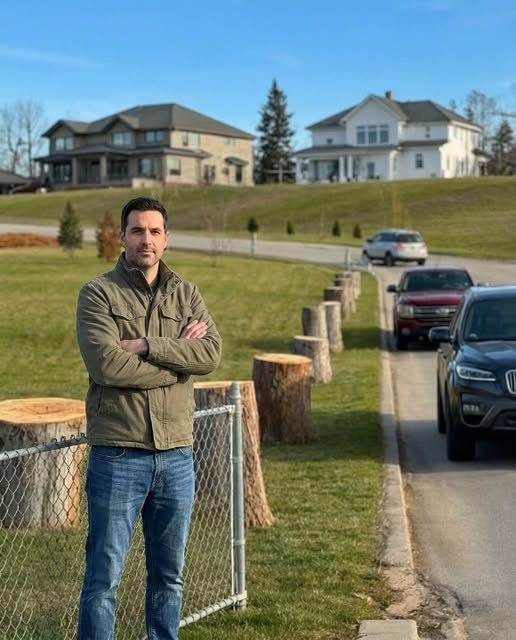
The first tree didn’t fall with enough noise to warn me. There was no polite knock on the door, no advance notice, and no digital message signaling that something irreplaceable was about to be taken away. Only later, when I returned home from an errand, did the sudden, jarring absence hit me. Where a lush, decades-old canopy had once filtered the afternoon sunlight and provided a natural sanctuary for local birds, there was now only an empty, glaring gap of sky and a scattering of pale sawdust whitening the grass.
It takes decades for a tree to grow tall, strong, and deeply rooted into the earth. It takes a chainsaw mere minutes to erase it.
When a neighbor or a hired crew cuts down trees on or near your property line without permission, the immediate reaction is rarely just anger—it is a profound sense of violation. Trees are not mere landscaping accessories; they are living anchors of our homes, offering privacy, shade, ecological value, and emotional comfort. Discovering them wrongfully destroyed launches a complex journey through property law, neighborly conflict, and personal reflection.
The Value of Trees: More Than Just Wood and Leaves
To understand why unauthorized tree removal hurts so deeply, one must first recognize what trees actually contribute to a property. Long before any legal dispute arises, trees perform invaluable work quietly in the background:
-
Privacy and Buffer Zones: Mature trees act as natural living fences, shielding backyards from prying eyes, busy street traffic, and unsightly views. Losing them instantly exposes your private life to the surrounding neighborhood.
-
Environmental and Climate Benefits: Trees moderate local temperatures by providing shade, reduce stormwater runoff through their extensive root systems, and clean the air by absorbing carbon dioxide.
-
Financial Property Value: Real estate experts consistently note that mature, healthy trees can increase a property’s market value by anywhere from 5% to 20%. They make a home look established, cared for, and aesthetically complete.
-
Ecological Habitats: Birds, squirrels, pollinators, and beneficial insects rely on trees for food, shelter, and nesting grounds. When a tree falls, an entire micro-ecosystem is disrupted.
Unraveling the Conflict: Why Do Neighbor Disputes Happen?
Property line disputes are among the oldest and most bitter neighborhood conflicts. When it comes to trees, misunderstandings generally stem from a few common causes:
1. Blurred Boundaries and Misguided Assumptions
Many property owners simply do not know where their exact land boundaries lie. Fences are often built years prior in the wrong spot, and older survey markers can become obscured or lost over time. A neighbor might hire a tree service, point vaguely toward a tree, and assume—often incorrectly—that because branches overhang their side, the entire trunk belongs to them.
2. Desire for Sunlight and Views
As neighborhoods age, trees grow larger. A tree planted decades ago might eventually block a neighbor’s solar panels, garden sunlight, or scenic view. Instead of initiating an open, polite conversation to discuss trimming or pruning, some property owners take matters into their own hands, ignoring the legal boundaries altogether.
3. Fear of Property Damage
Concerns over falling branches, cracking sidewalks, or clogged gutters can create anxiety. While a property owner does have the legal right to trim branches that cross over onto their property line, that right almost never extends to trespassing or destroying a tree whose trunk sits on someone else’s land.
The Legal Reality: Understanding Property Lines and Timber Trespass
When unauthorized tree removal occurs, it moves past a simple matter of bad etiquette and enters the realm of property law. Depending on local municipal codes and state laws, cutting down someone else’s tree can carry severe legal and financial consequences.
Determining True Ownership
The golden rule of property tree law is straightforward: ownership follows the trunk. If the entire trunk of the tree sits on your side of the property line, the tree belongs entirely to you. Even if massive limbs stretch out over your neighbor’s yard, they do not own the tree.
If a tree sits directly on the boundary line (known as a boundary tree), it typically belongs jointly to both property owners, meaning neither party can legally cut it down or severely damage it without mutual consent.
Legal Recourse and Damages
In many jurisdictions, cutting down someone else’s trees is classified as “timber trespass” or vandalism. The legal remedies can be substantial:
-
Treble Damages: In numerous states, laws allow homeowners to sue for triple the actual appraised value of the destroyed trees.
-
Professional Appraisal Costs: Certified arborists can calculate the replacement value of a mature tree—factoring in its species, size, health, and age—which can easily run into thousands or tens of thousands of dollars per tree.
-
Restoration Expenses: Courts can order the offending party to pay for mature tree replacement, landscaping repair, and site cleanup.
Navigating the Aftermath: Steps to Take If Your Trees Are Cut Down
Discovering unauthorized tree removal is emotionally draining, but taking methodical, calm steps is essential if you wish to pursue a resolution or legal remedy:
-
Document Everything Immediately: Take clear, high-resolution photographs and videos of the stump, the surrounding area, the property line, and any debris left behind. If the chopped wood is still on-site, do not let it be discarded.
-
Obtain a Professional Land Survey: Hire a licensed land surveyor to establish official boundary markers. Having indisputable proof of where the property line lies removes any guesswork from future negotiations.
-
Consult a Certified Arborist: Bring in an independent arborist to assess the damage. They can determine the exact species, health prior to removal, and financial replacement value of the lost trees, providing an official report that holds weight in legal settings.
-
Review Local Ordinances: Check city codes or homeowner association (HOA) rules. Many municipalities have strict tree preservation ordinances that require permits for removing trees of a certain size, regardless of who owns the land.
-
Evaluate Communication vs. Legal Action: Decide whether to approach the neighbor directly, involve local authorities, or consult a real estate attorney. In many cases, sending a formal letter through legal counsel yields a serious response and a path toward financial compensation without requiring a protracted court battle.
Conclusion: Rebuilding and Moving Forward
The loss of a mature tree alters the landscape of your home forever. It changes how the light hits your windows, how the wind sounds against your walls, and how secure your private space feels. While no financial settlement or legal judgment can instantly restore a fifty-year-old oak or maple, understanding your rights provides a sense of control and justice.
Ultimately, the lesson left behind in the sawdust is one of boundaries, respect, and communication. It reminds us that clear property lines exist for a reason—to protect our peace, our investments, and the natural beauty we cultivate around our homes.