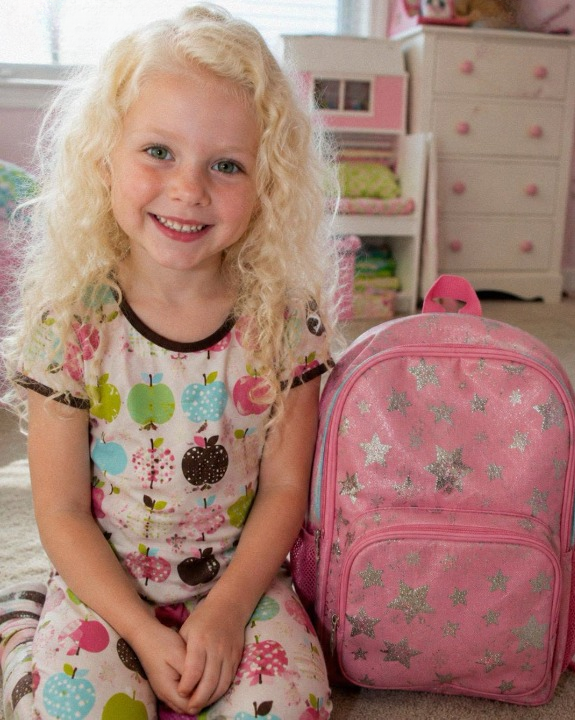
It was a crisp Tuesday morning fifteen years ago when my five-year-old daughter, Caroline, walked through the front doors of her kindergarten building for the last time. My husband had dropped her off right at the main entrance, watching her small figure walk inside with her bright pink backpack—patterned with yellow stars—bouncing against her shoulders. She never went anywhere without that backpack. It was her favorite possession in the world, holding her drawing pads, her favorite crayons, and her small stuffed animal.
Around lunchtime, my world came to a sudden, catastrophic end.
I received a frantic phone call from Caroline’s teacher. Her voice was shaking so violently that I could barely decipher her words over the receiver. She told me that during outdoor recess on the school playground, Caroline had simply vanished. One moment the children were playing near the sandbox, and the next, when the teachers lined everyone up to go back inside, Caroline was nowhere to be found.
The teacher kept repeating through her tears that she had only looked away for a single second.
The police arrived within minutes, initiating a massive search that eventually expanded to involve federal investigators, search dogs, and hundreds of local volunteers. But in those days, security cameras around elementary schools were few and far between. The single camera covering the parking lot yielded no clear footage, and the playground itself sat in a blind spot behind the gymnasium.
When investigators searched Caroline’s classroom, all of her belongings were still sitting neatly inside her assigned cubby—her extra jacket, her lunchbox, her rainy-day shoes. Everything was there except for her star-covered pink backpack.
There were no witnesses. No tire marks. No suspicious vehicles reported in the area. There was absolutely nothing to indicate how a five-year-old girl could disappear into thin air in broad daylight.
In the months and years that followed, my husband and I stopped truly living; we simply existed. The overwhelming grief acted like a slow, suffocating fog that settled over our home. We couldn’t bear the thought of moving to a new city or changing our phone numbers, terrified that if Caroline ever tried to find her way home, we wouldn’t be there to answer. We left her bedroom completely untouched for fifteen long years. Her small bed remained neatly made with her floral duvet, her storybooks sat on the wooden shelves, and her art projects remained taped to the closet door.
Every single day, my heart felt like an open wound. On bad days, I would sit on the floor of her untouched bedroom, wrap myself in one of her old baby blankets, and stare out the window, trying to visualize what she would look like as a young woman. Was she happy? Was she safe? Was she even still alive?
Then came yesterday afternoon.
A sudden, violent rainstorm had rolled into our neighborhood, darkening the sky and drenching the streets. I hurried up the front driveway, shielding my head with a newspaper, when I nearly tripped over a damp cardboard box sitting directly in the middle of our front porch.
It was a medium-sized package wrapped in heavy brown paper. I brought it inside, setting it down on the entryway table while my husband walked out of the kitchen with a pair of scissors.
“Did you order something?” he asked, looking at the box with confusion.
“No,” I replied, shaking my head. “I assumed it was something you bought.”
We searched the outside of the box for a shipping label, a postage stamp, or a sender’s name. There was nothing—no return address, no tracking number, not even a handwritten name. Someone had walked up our porch steps in the rain and placed it right at our door by hand.
Curiosity quickly gave way to a strange, inexplicable knot of tension in my stomach. My husband carefully sliced through the tape holding the cardboard flaps together.
I reached inside, pulled back the protective paper, and nearly fainted on the spot. My knees buckled, and my husband had to catch me around the waist to keep me from falling to the floor.
Lying at the bottom of the box was the exact same pink backpack covered in yellow stars.
It was old, faded, and worn down by time. The fabric was stained with dirt, and the bottom corner had a small tear in the seam, but there was no mistaking it. It was the backpack Caroline had carried on the morning she disappeared fifteen years ago.
With trembling hands, I reached out and unzipped the main compartment. Inside, wrapped in a clear plastic sleeve to protect it from moisture, was a thick white envelope containing several handwritten pages on lined notebook paper.
My hands shook so severely that my husband had to help me unfold the paper. As I looked down at the neat, elegant handwriting, the very first lines of the letter made me burst into tears:
“Mom, Dad… if you are reading this, it means I am finally safe, and I am on my way home to you. You won’t believe what happened on the playground that day. It WASN’T an accident, and I wasn’t stolen by a stranger. The person who took me was someone you know VERY well…”
I sank onto the living room sofa, holding the paper close to my chest as my husband read the rest of the letter aloud through his own quiet tears.
The letter revealed that on that fateful Tuesday, a woman Caroline recognized had walked up to the low perimeter fence surrounding the kindergarten playground. It was Aunt Sarah—my husband’s estranged sister, who had cut ties with our family years earlier after a bitter personal dispute and had subsequently moved out of state.
Sarah had called Caroline over to the fence, holding up a small puppy and telling the five-year-old girl that her parents had sent her to pick her up for a special surprise. Trusting her own aunt, little Caroline had grabbed her pink backpack from the bench, slipped through a gap in the wooden fence, and gotten into Sarah’s car without making a sound.
Sarah had taken Caroline across state lines, raising her under a completely fabricated identity in a quiet, rural town hundreds of miles away. Over the years, Sarah had spun a web of elaborate lies, telling Caroline that her real parents had abandoned her and that she had stepped in to save her. Isolated from news and social media during her childhood, Caroline had grown up believing the false narrative she was fed.
It wasn’t until Caroline turned twenty last month, while going through old storage boxes in Sarah’s attic, that she stumbled upon a hidden wooden chest. Inside, she found her original birth certificate, old newspaper clippings about her missing person case, and dozens of printouts of the search notices my husband and I had posted online over the past decade.
In that single, shattering moment, the reality of her life came into sharp focus. She realized that the aunt she trusted had stolen her life away, and that the parents who loved her had spent fifteen years grieving her loss.
The final paragraph of the letter read:
“I ran away from her house three days ago. I dropped my backpack off at your door because I wanted you to know I was real, that I remembered, and that I never stopped loving you. I am currently at the local police station down the street with the investigators, helping them issue an arrest warrant. Please come meet me. I’m ready to come home.”
My husband and I didn’t say a word. We threw on our coats, grabbed the keys, and ran out into the pouring rain toward the car. The fifteen-year nightmare wasn’t erased, and the path to healing would take time, but as we drove toward the station, the dark silence that had filled our lives for a decade and a half was finally broken by hope.