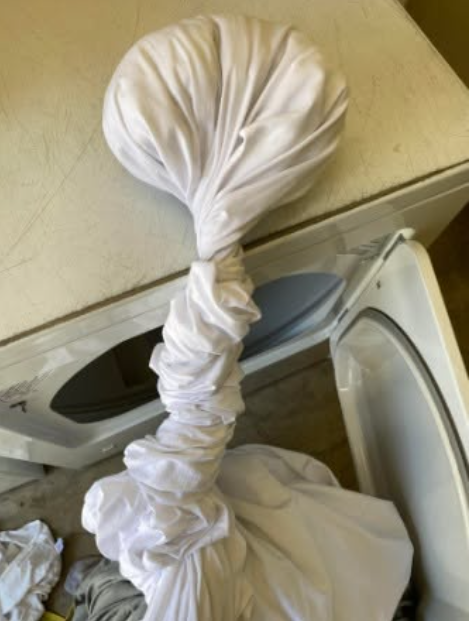
f you’ve ever opened your dryer expecting fresh, fluffy bed sheets only to find a giant tangled bundle that’s still damp in the middle, you’re definitely not alone.
For years, I dealt with the same frustrating problem.
Every laundry day seemed to end the same way. I’d carefully wash my sheets, transfer them to the dryer, wait for the cycle to finish, and then open the door to discover what looked like a giant fabric knot. One fitted sheet would somehow wrap itself around everything else, trapping moisture inside and preventing the load from drying evenly.
The result?
Damp sheets.
Extra drying cycles.
Wasted energy.
And a lot of unnecessary frustration.
At first, I assumed this was simply part of washing bedding. But after talking with friends, reading laundry tips, and experimenting with different methods, I discovered that there are actually several simple ways to prevent sheets from bunching up in the dryer.
If you’re tired of pulling out a giant tangled mess every time you do laundry, these practical solutions may help make laundry day much easier.
Why Sheets Ball Up in the Dryer
Before fixing the problem, it helps to understand why it happens.
Bed sheets are large pieces of fabric. As the dryer tumbles, corners and edges can twist around one another. Fitted sheets are especially likely to create problems because their elastic edges naturally grab onto other fabrics.
Once one sheet wraps around another, airflow becomes restricted.
The outside layers may dry normally while the center remains damp.
That’s why you often find sheets that feel dry on the outside but still hold moisture deep inside the bundle.
The goal is to maximize airflow and prevent fabrics from wrapping together.
Fortunately, there are several easy ways to do exactly that.
Don’t Overload the Dryer
One of the most common causes of tangled sheets is simply putting too much into the dryer at once.
It may seem efficient to dry all bedding together, but overcrowding limits movement and airflow.
When sheets don’t have enough room to tumble freely, they become much more likely to twist into knots.
Try reducing the size of your load.
Even if it means running an additional cycle, allowing sheets enough space to move often results in faster and more even drying.
Many people are surprised to discover that smaller loads frequently finish drying sooner than overloaded ones.
Shake Out Sheets Before Drying
This simple step takes only a few seconds but can make a noticeable difference.
Before placing sheets in the dryer, give each one a vigorous shake.
Shaking helps separate fabric layers and removes folds created during the wash cycle.
When sheets enter the dryer already untangled, they’re less likely to form large bundles later.
Many laundry professionals recommend this step because it improves airflow from the very beginning of the drying process.
Add Dryer Balls
Dryer balls have become increasingly popular for good reason.
These reusable laundry tools help separate fabrics during the drying cycle.
As they bounce around inside the dryer, they create space between items and improve airflow.
This reduces tangling while often helping clothes and bedding dry more efficiently.
Wool dryer balls are especially popular because they are reusable and require no chemicals or added fragrances.
Many people find that adding three to six dryer balls significantly reduces sheet bunching.
Pause and Rearrange Mid-Cycle
If your dryer consistently creates sheet bundles, try stopping the cycle halfway through.
Open the door.
Pull the sheets apart.
Shake them out.
Then restart the dryer.
While this approach requires a little extra effort, it can dramatically improve drying performance.
Sometimes a quick interruption is all that’s needed to prevent sheets from locking themselves into a giant knot for the remainder of the cycle.
Dry Sheets Separately
One mistake many people make is combining sheets with towels.
It seems convenient, but towels and sheets behave differently during drying.
Towels are heavier and can contribute to twisting and bunching.
When possible, dry sheets by themselves.
This allows them to move more freely and reduces opportunities for tangling.
Many homeowners find that separate loads produce better results and reduce drying time overall.
Use the Right Dryer Setting
High heat isn’t always the answer.
In some cases, extremely hot settings can cause fabrics to wrinkle and bunch more aggressively.
Consider using a medium heat setting if your dryer offers one.
Slower, gentler drying sometimes helps sheets tumble more naturally without twisting into large knots.
Every dryer is different, so experimenting with settings may help you find the most effective combination for your particular machine.
Don’t Let Sheets Sit in the Washer
Another surprisingly common cause of tangled bedding occurs before the dryer even starts.
When wet sheets sit in the washing machine for extended periods, they can twist tightly together during the spin cycle.
The longer they remain there, the more set those twists become.
Try transferring sheets to the dryer as soon as the wash cycle finishes.
Doing so often reduces tangling before it even begins.
Mix Large and Small Items Carefully
Some people find success by adding a few smaller lightweight items to sheet loads.
The smaller items can help interrupt twisting patterns and improve airflow.
However, avoid mixing heavy items like large bath towels or blankets.
The goal is to promote movement, not create additional opportunities for tangling.
Every laundry setup is slightly different, so you may need to experiment to see what works best in your household.
Clean Your Dryer Regularly
Believe it or not, dryer maintenance can also affect drying performance.
A clogged lint filter or restricted vent reduces airflow throughout the machine.
Reduced airflow means fabrics remain damp longer and have more time to twist together.
Make it a habit to:
- Clean the lint filter after every load.
- Check exterior vents regularly.
- Ensure airflow remains unrestricted.
Proper maintenance helps the dryer perform efficiently and may reduce sheet-related frustrations.
Consider Sheet Material
Certain fabrics are more prone to tangling than others.
Lightweight microfiber sheets often behave differently than cotton sheets.
High-thread-count bedding may twist differently than flannel bedding.
If you’ve recently changed sheet materials and noticed more tangling, the fabric itself may be contributing to the problem.
Understanding how your bedding behaves can help you choose the best drying techniques.
A Simple Routine That Works
After years of trial and error, I finally settled on a simple routine:
- Shake sheets before placing them in the dryer.
- Use several wool dryer balls.
- Avoid overloading the dryer.
- Dry sheets separately from towels.
- Remove sheets promptly when the cycle ends.
The difference has been remarkable.
Instead of finding a giant damp knot at the end of every cycle, I usually pull out evenly dried sheets that are ready to fold immediately.
Why Small Laundry Habits Matter
Laundry may not be the most exciting household task, but small improvements can save surprising amounts of time and frustration.
Something as simple as preventing sheets from balling up can:
- Reduce drying time
- Improve energy efficiency
- Minimize wrinkles
- Extend fabric life
- Make laundry day easier
Sometimes the smallest adjustments produce the biggest improvements.
Final Thoughts
If your sheets always come out of the dryer tangled, damp, and wrapped around each other, don’t worry—it’s a very common problem.
Fortunately, a few simple habits can make a huge difference.
Giving sheets room to move, using dryer balls, shaking them out beforehand, and drying them separately are among the easiest and most effective solutions.
The next time laundry day arrives, try one or two of these methods.
You may be surprised by how much smoother—and less frustrating—the process becomes.
After all, there’s nothing quite like climbing into a bed made with fresh, clean sheets that actually dried properly the first time.