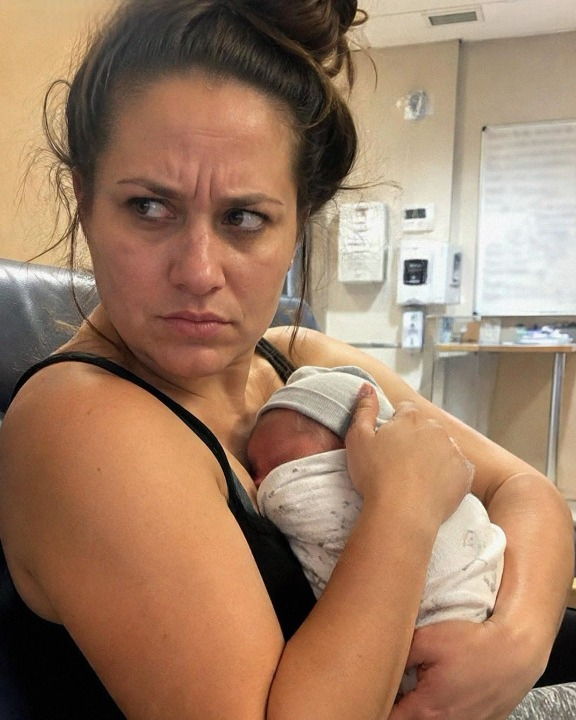
At first, I honestly tried not to be offended. When my son, Daniel, and his wife, Lauren, welcomed their baby daughter, Sophie, just six days earlier, I felt a swell of joy so fierce it took my breath away. She was my very first grandbaby, and I had been counting down the months like a child waiting for Christmas morning. I had already bought stacks of tiny cotton pajamas, lovingly knitted a pale yellow blanket that took me nearly three months of late-night stitching to finish, and cleared my schedule entirely so I could be there to support them during those fragile first weeks.
Then, an email arrived in my inbox with the subject line: Visitor Guidelines & Protocols for Baby Sophie.
I opened it expecting a sweet update or perhaps a gentle reminder about washing hands. Instead, I found a formal, bulleted PDF document formatted like a corporate compliance manual. Lauren had meticulously outlined a staggering twenty-four rules for anyone stepping foot inside their home. No perfume. No unannounced arrivals. No holding the baby for more than twenty consecutive minutes. No flash photography. Mandatory quiet hours. A specific list of approved conversation topics that explicitly banned unsolicited parenting advice, nostalgia about how “things used to be done,” or any references to my own experiences raising Daniel.
I blinked at the screen, trying to laugh it off as postpartum anxiety taking the wheel. First-time parents are notoriously high-strung, and I wanted to be a source of grace and patience. I checked off every single item, prepared to follow every protocol just to hold my granddaughter for five minutes.
Then I reached the final rule at the very bottom of the page, written in bold, underlined text:
Rule 24: Maternal grandmother (Helen) is strictly limited to a maximum 45-minute visit per week, must remain seated on the designated armchair by the hallway, and is explicitly prohibited from bringing any handmade items, blankets, or clothing, as they present an unregulated material hazard to the infant.
The air rushed out of my lungs. The handmade blanket I had spent three months pouring my heart into—the soft, pale yellow heirloom meant to welcome our family’s newest generation—was explicitly outlawed, cast aside as a hazard. It wasn’t about safety; it was a targeted exclusion, a deliberate message that I was viewed as a threat rather than a grandmother.
My hands shook as I reached for my phone, but before I could even dial Daniel’s number to ask what this meant, my phone buzzed violently against the kitchen counter. It was a text message from Daniel himself.
“Mom, I just saw the list Lauren sent you. I am so, so sorry. Don’t buy a ticket, don’t drive over. I just told her that if my mother isn’t welcome in this house with respect, then neither am I. We’re canceling the visit. Pack your bags, Mom—you’re coming over to our place instead, because I am not letting my wife treat you like a criminal.”
My breath hitched as I read the words, a mixture of deep sorrow for my son’s strained marriage and an overwhelming wave of validation washing over me. Within an hour, Daniel had packed a bag, put Sophie in her car seat, and walked out of the house, refusing to tolerate the toxic wedge Lauren was trying to drive between our family.
When they arrived at my front door a short while later, Daniel looked exhausted, carrying the weight of a boundary finally drawn in blood and concrete. But when he handed little Sophie into my arms, wrapped snugly inside the forbidden yellow knitted blanket, the suffocating tension in the room dissolved.
The situation sparked a difficult reckoning for the young couple in the weeks that followed, requiring honest therapy and a complete dismantling of the control Lauren had tried to exert. It taught us all that while boundaries are essential for new parents, weaponizing an infant to push away loving family members will ultimately break the very foundation a family needs to survive. Sophie grew up knowing her grandmother’s warmth, wrapped in a blanket spun from pure love, proving that no amount of rules can ever isolate a family from the enduring power of genuine devotion.