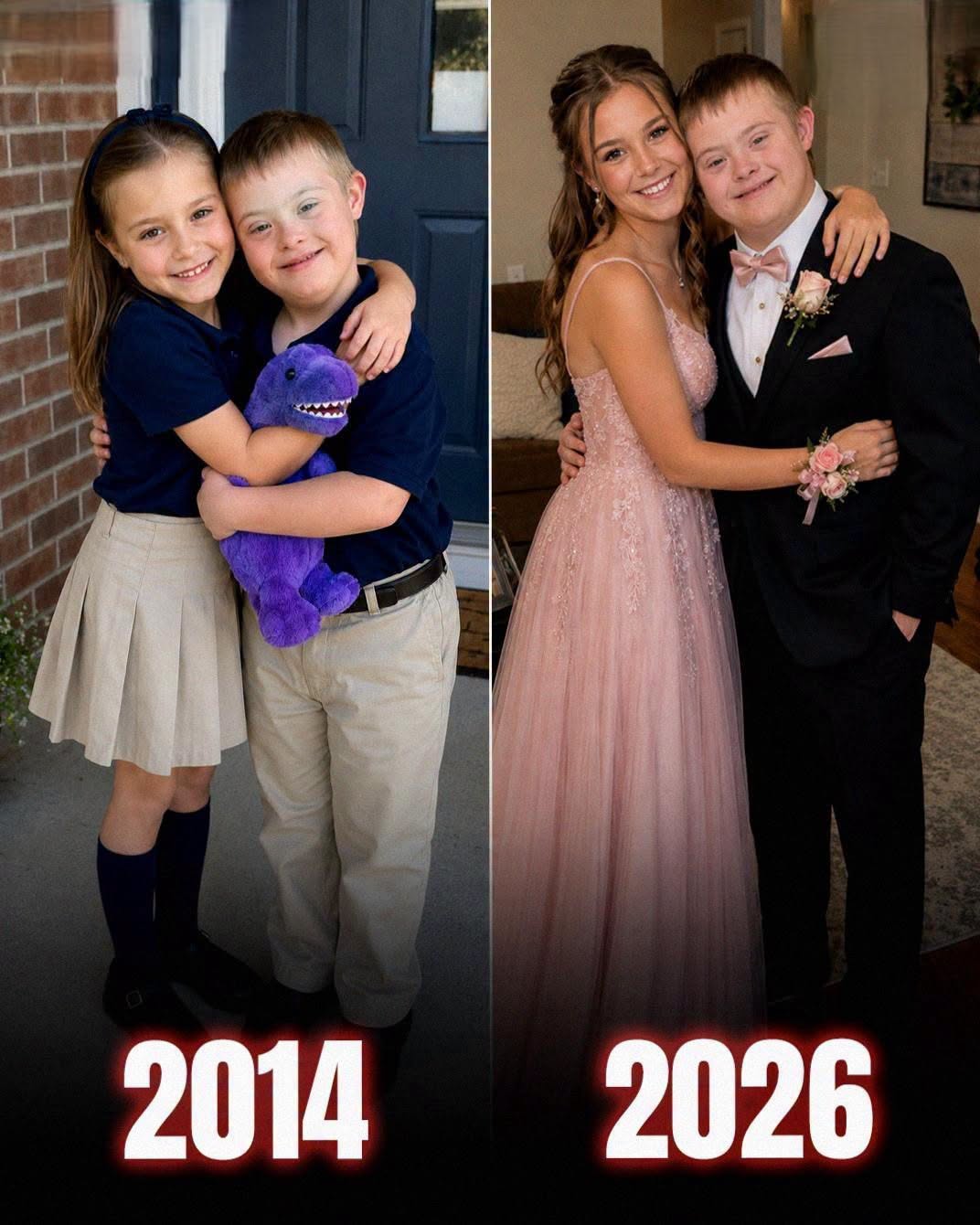
There is a pure, unclouded sincerity in childhood friendships that life rarely duplicates later on. At six years old, you do not judge people by their social standing, their appearance, or the arbitrary labels society hands out. You connect over simple truths—a shared disdain for the sun-dried raisins packed into school lunches, an absolute fascination with massive prehistoric dinosaurs, and an unshakeable allegiance on the playground.
That was how Noah and I became best friends on our very first day of first grade.
Noah had Down syndrome, but to a six-year-old mind, that medical classification meant nothing. He was simply the funniest kid in the room. He was fiercely stubborn, possessed an uncanny photographic memory for baseball statistics dating back decades before we were even born, and had a hilarious habit of delivering brutal, unvarnished honesty. Whenever I proudly showed him my art class sketches, he would squint, tilt his head, and inform me with total earnestness that my drawings looked “like potatoes with arms.” I loved him for it.
Our friendship weathered the typical storms of growing up. We survived being placed in different homeroom classes, the quiet heartache of my parents’ bitter divorce, his endless, exhausting attempts to teach me how to throw a proper slider in baseball, and my first devastating teenage heartbreak. On the night of that breakup, Noah had shown up uninvited on my front porch holding two pints of mint chocolate chip ice cream, flashing his signature heart-melting grin, and delivering a profound piece of teenage wisdom: “I told you that guy was an idiot anyway.”
So when senior prom finally rolled around, going together didn’t feel like fulfilling some dusty, forgotten childhood charity pact. Noah was my best friend, my confidant, and my favorite person in the world. There was quite literally nobody else I would rather share that milestone with.
The Promise Made at Six
The origin of our prom night stretched all the way back to Mrs. Gable’s sunlit first-grade classroom. One afternoon, our teacher had excitedly announced to the class that she was getting engaged and would be getting married over the summer break.
While the rest of the children erupted into a chaotic debate about multi-tiered wedding cakes and what color dress the bride should wear, Noah had stood straight up on his plastic chair and proudly announced to the room that his own future wedding would feature entirely chocolate cake and “no slow, boring songs.”
A boy sitting across the table—older, louder, and already practicing casual cruelty—snickered meanly.
“Who’s going to marry you, Noah?” the boy mocked. “Nobody wants to marry someone like you.”
At six years old, I didn’t fully comprehend the ugly weight behind those words, but I saw the bright, infectious smile instantly vanish from Noah’s face, replaced by a look of profound confusion and hurt.
A fierce, protective wave surged through my chest. “That’s stupid!” I snapped across the table, slamming my crayon down. “Somebody will love Noah.”
Noah turned his head, looking at me with wide, serious eyes. “Would you?”
I smiled softly, tossing my pigtails. “Maybe. But first, we have to go to prom together.”
“What’s prom?” he asked, tilting his head.
“A big dance when we’re almost grown-ups.”
Noah had immediately extended his small hand, hooking his pinkie finger around mine with absolute, solemn reverence. “Promise?”
“Promise,” I answered.
Twelve years later, Noah still remembered every single syllable of that pact.
The Night of the Dance
When senior prom night finally arrived, the excitement in our house was palpable. The doorbell chimed right on schedule at six o’clock. When I opened the front door, there stood Noah, looking remarkably sharp in a tailored charcoal suit and a crooked silk bow tie, holding a wrist corsage of white roses and grinning like he had just won the World Series.
My mom stepped out from the kitchen holding her camera, wiping her hands on a dish towel with a welcoming smile.
The second she laid eyes on Noah standing on the porch holding the flowers, her cheerful demeanor instantly shattered.
The bright smile froze on her face and completely vanished. For several long, agonizing seconds, she simply stared at Noah with an expression of profound, haunting shock—as if she were looking at a ghost stepping out of her past. Then, recovering her composure with visible effort, she forced a tight smile, told him I was almost ready, and abruptly turned around, gesturing for me to follow her upstairs.
I was standing at my vanity mirror fastening my pearl earrings when Mom slipped into my bedroom and quietly locked the heavy wooden door behind her.
“Mom? What’s wrong?” I asked, turning around, confused by the sudden tension.
She looked pale, her breathing shallow. She walked over, grabbed my hands, and sat me down on the edge of the bed.
“You can go with Noah tonight,” she said, her voice uncharacteristically brittle. “You can go to the dance and have a wonderful time. But only under one condition.”
I let out a nervous, breathless laugh. “What, do I have to be home by midnight? Is that it?”
“No,” she whispered, her hands trembling violently against mine. “The condition is that before you walk out that door, you have to hear the truth I’ve owed you for eighteen years.”
A cold spike of dread pierced my stomach. “What truth, Mom? What are you talking about?”
She took a deep, shuddering breath, a single tear spilling over her eyelashes and tracing a path down her cheek.
“About him,” she murmured, glancing toward the closed bedroom door where Noah was waiting downstairs. “And about our past.”
The Confession That Changed Everything
My blood ran cold. The ambient noise of the evening seemed to fade into a hollow, buzzing vacuum.
Mom began to talk, her voice unravelling a history I never knew existed. She explained that long before I was born, before she met my father, she had given birth to a baby boy during a terrifying, isolated period of her life—a baby born with special needs whom she was forced, under unbearable financial and familial pressure, to place into a specialized regional care facility. A baby boy she had never truly forgotten, and whose loss had haunted her every single day.
As she choked out the details of dates, medical records, and the uncanny, unbelievable series of circumstances that had brought our lives together years later, the puzzle pieces violently clicked into place.
Noah wasn’t just my best friend who happened to live down the street. The universe, in its quiet, mysterious machinery, had woven our paths together long before first grade.
When Mom finished her confession, the room was suffocatingly silent. My heart pounded against my ribs like a trapped bird. I looked down at my prom dress, then toward the door, realizing that the boy waiting downstairs holding white roses wasn’t just someone who shared my hatred of raisins—he was a tether to a history I never knew was mine.
Wiping my own tears, I stood up, walked over to the door, unlocked it, and prepared to step into a future that would never look the same again.