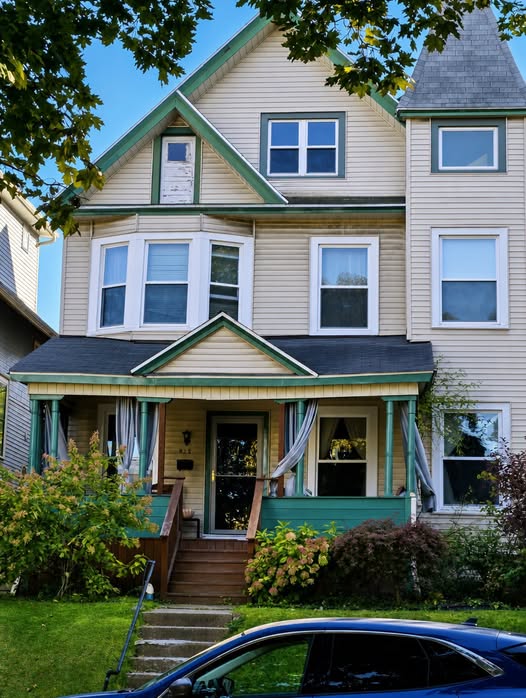
The Overlooked Details That Made Early 1900s Homes Feel So Different
Have you ever caught the smell of freshly cut grass on a warm summer evening and suddenly remembered a place from childhood?
Perhaps the scent takes you back to an old porch, a wooden floor, an open window, or a backyard where evenings seemed to last forever. Sometimes, it isn’t a major event that creates those memories. It is a small detail—the sound of a screen door closing, the feel of an old railing, or the way sunlight entered a room.
Early 1900s homes were filled with details like these.
Many houses built during that period had features that may seem unusual or unnecessary to people today. Yet those details often reflected the way families lived before modern heating, cooling, electrical systems, and household technology became commonplace.
Walking through an older home can therefore feel like stepping into another era.
Homes Designed Around Everyday Life
At the beginning of the twentieth century, houses were designed with the technology and lifestyles of the time in mind.
Electricity was becoming increasingly available, but it had not yet transformed every household. Central air conditioning was not part of ordinary domestic life. Refrigeration was developing, plumbing systems varied, and many household tasks required considerably more manual work than they do today.
As a result, architecture played an important role in making homes comfortable.
Windows were especially important.
Large windows allowed daylight into rooms and provided ventilation during warmer months. Families could open windows to encourage air movement rather than relying on modern cooling systems.
Porches also served a practical and social purpose. They provided a shaded outdoor area where people could sit, talk, read, or simply enjoy the evening.
The Importance of Fresh Air
Before modern air-conditioning systems became widespread, natural ventilation was one of the simplest ways to make a home more comfortable.
Older houses often included windows positioned to encourage airflow through different parts of the building. High ceilings were also common in many architectural styles, creating more vertical space within rooms.
These features weren’t necessarily designed simply for appearance. They were connected to the practical realities of daily life.
During warm weather, families could open windows and doors to encourage a breeze. In cooler weather, fireplaces and other heating methods became important sources of warmth.
The house itself was part of the strategy for managing the indoor environment.
Porches Were More Than Decorations
When people look at photographs of early twentieth-century homes, one feature often stands out: the porch.
Today, a porch may be viewed primarily as an architectural detail. In the past, however, it could be an important part of family life.
A shaded porch provided a place to sit outside while remaining close to the house. Families could spend summer evenings there, greet neighbors, read newspapers, or watch children playing nearby.
Before television, smartphones, and other forms of digital entertainment became part of everyday life, simply sitting outside could be an ordinary way to spend an evening.
That is one reason old photographs of families gathered on porches can feel so familiar despite being more than a century old.
Wooden Floors and Practical Materials
Wood was another important feature of many homes from the period.
Wooden floors were durable, repairable, and widely available in many regions. Different types of wood were used depending on location, cost, and the style of the house.
Over time, floors could develop scratches, worn areas, and changes in color. Rather than making the house feel less interesting, these signs of use can contribute to its historic character.
Other materials commonly found in older houses included brick, stone, plaster, tile, and decorative metalwork.
Many of these materials were selected for both practical and aesthetic reasons.
Small Features That Modern Homeowners May Miss
The most interesting details in an old house are sometimes the smallest ones.
A doorway may have a different shape than a modern doorway. A staircase might contain a hand-carved railing. A window could have several individual panes rather than one large sheet of glass.
There may also be built-in cabinets, transom windows, decorative vents, unusual hinges, or small storage spaces.
To a modern homeowner, some of these features might appear strange.
But when considered in their historical context, they often make more sense.
Older homes were constructed around the needs, materials, technologies, and habits of their time.
Why Old Houses Can Feel So Nostalgic
There is also an emotional reason people are drawn to historic houses.
The materials themselves can create a sense of familiarity. Wood develops a particular appearance with age. Old glass can produce different reflections from modern windows. A well-used staircase may show subtle evidence of generations of everyday activity.
Even smells can trigger memories.
The scent of wood, soil, grass, old books, fireplaces, or a garden after rain can bring back experiences that have nothing to do with the building itself.
That connection between physical surroundings and memory is one reason historic homes can feel surprisingly personal, even when we have never lived in them.
Preserving the Character of Older Homes
People who own historic houses often face a balance between preservation and modern comfort.
Modern electrical systems, insulation, plumbing, heating, and cooling can make an older property more practical while still allowing original architectural features to remain.
The goal isn’t always to make an old house look completely new.
In many cases, preserving details such as original doors, floors, windows, moldings, fireplaces, and built-in cabinetry helps maintain a connection to the building’s history.
Careful restoration can therefore combine modern living with historical character.
Looking at Old Homes With Fresh Eyes
An early 1900s house may look ordinary from the outside, but a closer look can reveal countless details that tell us how people once lived.
The size of the windows, the arrangement of rooms, the presence of a porch, the materials used for floors, and even the placement of doors can provide clues about everyday life more than a century ago.
What seems unusual today may once have been completely practical.
And perhaps that’s what makes historic homes so fascinating.
They aren’t simply old buildings. They are records of changing technology, family life, architecture, and culture.
The next time you walk past an older house, take a closer look. A small architectural feature that seems insignificant may have been designed for a very practical reason—and it could tell you more about the people who once lived there than you might expect.