Ink, Culture, and Hidden Codes
Tattoos have evolved from ancient tribal markers and rebellious subculture badges into mainstream high art. Today, walking into a tattoo parlor is as common as visiting a hair salon, with people permanently etching everything from family portraits and floral masterpieces to minimalist geometric lines onto their skin. We live in an era where body art is celebrated as a profound form of personal expression and storytelling.
However, beneath the vast ocean of artistic self-expression lies a secret underground language. For centuries, incarcerated individuals, street organizations, and global criminal syndicates have used tattoos as a visual shorthand—a permanent badge of allegiance, a record of criminal history, or a warning to rivals.
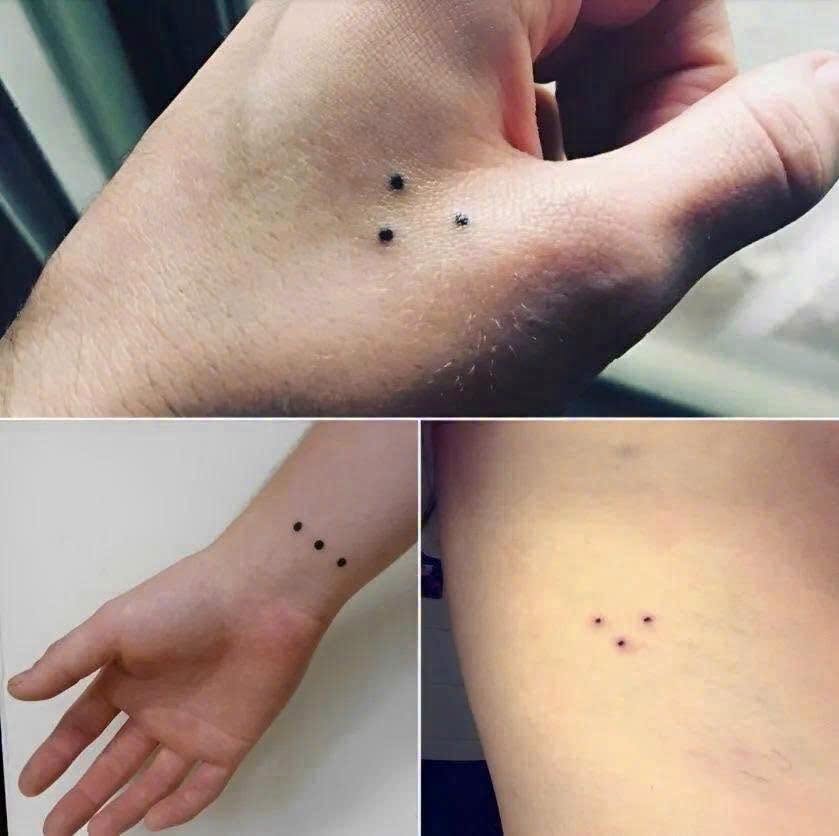
Among the myriad symbols found in the world of correctional institutions, few carry as heavy a warning as a simple, unassuming geometric mark: the three-point tattoo, usually inked near the outer corner of the eye or between the thumb and forefinger. While it might look like a simple minimalist design to the untrained eye, encountering someone bearing this mark in the real world is often described by law enforcement and former gang outreach workers as a clear signal to keep your distance. What does this mysterious tattoo mean, and why does its presence evoke such intense caution? Let us dive deep into the hidden history of prison subcultures to uncover the truth.
The Anatomy of the Mark: What is the Three-Point Tattoo?
Unlike sprawling back pieces or full-sleeve tattoos that take dozens of hours and professional equipment to complete, prison tattoos are traditionally improvised. Using melted plastic from chess pieces or toothbrushes for pigment, sharpened staples or guitar strings for needles, and small electric motors salvaged from cassette players, inmates tattoo themselves behind bars under harsh, unsanitary conditions.
The three-point tattoo—often styled as three small dots arranged in a triangle—is typically small and discrete. Its most common locations are:
-
The outer corner of the eye (the “crow’s feet” area).
-
The web of skin between the thumb and index finger.
Because of its minimalist nature, some naive observers mistake it for a religious symbol representing the Holy Trinity, a mathematical nod to geometry, or simply a botched, unfinished design. But in the ecosystem of street gangs and prison politics, shape and placement matter immensely.
Decoding the Meaning: “Mi Vida Loca”
In the vast majority of Western correctional systems—particularly within Hispanic street gangs and the notorious prison organizations influenced by them—the three dots symbolize a specific phrase: “Mi Vida Loca”, which translates from Spanish to “My Crazy Life.”
The three points represent the three primary destinations associated with this dangerous lifestyle:
-
The Hospital (from violence, injuries, and street brawls).
-
The Prison Cell (the inevitable legal consequence of criminal enterprise).
-
The Graveyard (the ultimate, tragic end of a high-risk existence).
By tattooing these three dots onto their skin, the wearer is making a permanent, lifelong declaration. They are proudly—and often defiantly—announcing that they have fully embraced a life outside the boundaries of mainstream law, order, and conventional society. It is a psychological badge of honor that says, I do not fear consequences, and I am bound to this brotherhood for life.
The Broader World of Gang Tattoos
To truly understand why the three-point tattoo commands such vigilance, it helps to contextualize it within the broader dictionary of institutional body art. Prisons and transnational gangs use tattoos as walking police records and identification cards:
While a civilian might look at these designs purely through an aesthetic lens, those who work within the criminal justice system read them like an open book.
The Danger: Why Caution is Advised
When people hear the hyperbolic advice to “run as far as you can” upon seeing a three-point tattoo, it is rarely meant as a literal sprinting instruction. Instead, it is a metaphor for situational awareness and risk management.
Why should you exercise extreme caution?
-
Association with High-Risk Activity: Individuals who sport institutional markings like the three dots have typically spent significant time immersed in violent subcultures. Even if an individual has left that lifestyle behind, the residual habits, rivalries, and volatile social circles often follow them.
-
Unpredictability: The lifestyle of “Mi Vida Loca” is defined by chaos, quick-tempered reactions, and survivalist mentalities. In high-stress situations, individuals trained in prison survival mechanisms may respond with disproportionate aggression.
-
Target Identification: In the theater of street politics, being associated with or appearing friendly toward someone bearing specific gang tattoos can inadvertently pull an innocent bystander into rival crossfire or local turf disputes.
Separating Myth from Reality: Can People Change?
It is vital to approach this topic with nuance and empathy. Human beings are not permanently trapped by their pasts, and thousands of former gang members successfully transition out of criminal lifestyles every single year.
Organizations like Homeboy Industries and various community rehabilitation programs are filled with men and women who wear the very tattoos discussed here—including three dots, teardrops, and intricate gang insignia—while dedicating their lives to peace, youth mentorship, and lawful work. Many of them undergo painful laser removal treatments, while others keep their ink as a stark, permanent reminder of where they came from and how hard they fought to escape.
Therefore, seeing a tattoo is an indicator of history, not an absolute prophecy of current behavior. The wisdom behind the warning is not about judging or hating the individual; it is about protecting your personal safety through sharp observation and smart boundaries.
Conclusion: The Value of Situational Awareness
In a complex world, symbols matter. Just as we read traffic signs to avoid accidents or check weather reports before stepping out into a storm, understanding the hidden markers of street and prison subcultures helps us navigate urban environments with greater safety and awareness.
The three-point tattoo serves as a stark reminder that beneath the surface of everyday society exists an underground web of history, struggle, and survival. While you do not need to panic or flee in terror at the sight of three simple dots, recognizing what they represent allows you to practice smart situational awareness, maintain healthy boundaries, and respect the heavy, complex stories written on the skin of those who have lived life on the absolute edge.