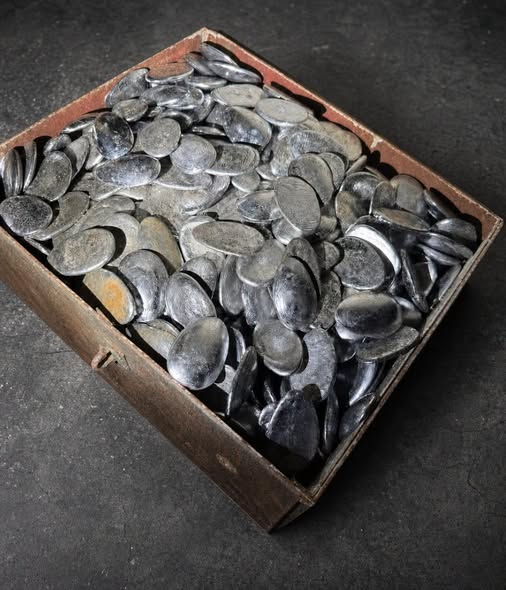
The Forgotten History of the Cast-Iron Spoon Bullet Mold
Old tools often have a way of creating more questions than answers.
You might discover one in an attic, shed, barn, garage, or an old box of household items and immediately wonder what it was designed to do. Some objects look familiar at first glance but turn out to have served a very different purpose from what their shape suggests.
A particularly interesting example is the cast-iron spoon-shaped bullet mold.
At first, it can look like an unusually heavy kitchen utensil. Its solid construction and spoon-like form may make someone wonder whether it was used for cooking, measuring, or another household task.
Its real purpose, however, was connected to an important part of earlier firearms history.
Before the widespread availability of modern factory-made ammunition, people who used firearms often had to make or prepare their own ammunition. Among the tools developed for that purpose were molds used to cast lead projectiles.
The spoon-shaped design is a fascinating reminder of a period when ammunition production could be a practical household skill.
What Is a Spoon Bullet Mold?
A spoon bullet mold is a type of casting tool designed to help form small lead projectiles.
Traditional molds were commonly made from durable materials, including iron, because the casting process involved molten metal and repeated heating.
The spoon-like shape is what makes these particular objects so recognizable.
Rather than looking like the modern equipment most people associate with ammunition production, the tool resembles an oversized metal spoon or ladle.
Its unusual appearance reflects the practical design philosophy of earlier tools.
The goal wasn’t necessarily to make something attractive.
The goal was to create an object that could withstand repeated use and help a person produce a consistent shape.
Why Would Someone Need to Make Their Own Bullets?
To understand why such a tool existed, it helps to look at how firearms were supplied in earlier periods.
Modern ammunition is manufactured commercially in large quantities.
A shooter today can generally purchase cartridges that have already been assembled to standardized specifications.
That was not always the case.
For many historical firearms, particularly muzzleloading weapons, ammunition preparation could be part of normal ownership.
A firearm owner might keep lead, casting equipment, powder, patches, and other supplies available.
Instead of purchasing finished ammunition for every use, the owner could produce projectiles as needed.
This made tools such as molds valuable pieces of equipment.
A Different Era of Firearms
The spoon mold belongs to a period when firearms technology was considerably different from today’s systems.
Many older firearms used round lead balls rather than the elongated projectiles associated with modern cartridges.
These balls had to be produced in appropriate sizes for the firearm.
A mold provided a relatively simple way to create them.
The exact design of a mold could vary depending on the firearm, the projectile required, and the period in which it was manufactured.
That is one reason historical molds can look very different from one another.
Why Cast Iron Was Useful
Cast iron was a practical material for tools that needed to tolerate considerable heat and repeated handling.
A mold used for casting lead needed to maintain its shape while being exposed to elevated temperatures.
It also needed to be sturdy enough to survive repeated use.
Iron provided durability.
The substantial weight of an old cast-iron tool can therefore be one of the clues that it was designed for a demanding task rather than ordinary kitchen use.
This is also why an old object that resembles a spoon may feel noticeably heavier and more robust than a conventional household utensil.
The Spoon Shape
The spoon-like appearance is probably the feature that creates the most confusion.
Modern molds are often designed in ways that make their purpose immediately recognizable.
Historical tools were frequently more straightforward.
A spoon-shaped mold could combine several useful functions into one compact object.
The bowl-like portion could form part of the casting cavity, while the handle provided a practical way to hold the tool.
The design reflects an era when tools were often made for durability and utility rather than appearance.
How Casting Worked
The basic concept behind a projectile mold is relatively simple.
A piece of lead would be heated until it became molten.
The liquid metal could then be introduced into the mold.
Once the metal cooled and solidified, the resulting projectile could be removed.
The mold could then be used again.
Although the concept sounds straightforward, successful casting required care.
The metal had to be heated appropriately, the mold had to be handled safely, and the finished projectile needed to have a suitable shape and size.
Historical users would have developed practical experience with these processes through repeated use.
Why Lead Was Commonly Used
Lead was widely used for projectiles because it is relatively dense and can be shaped or cast more easily than many other metals.
Its properties made it suitable for the manufacturing methods available during earlier periods.
Lead could be melted and poured into molds without requiring the extremely high temperatures associated with many other metals.
That made it practical for individuals who needed to produce projectiles using relatively simple equipment.
Today, however, lead exposure is recognized as a significant health concern.
Historical casting practices should therefore be understood in their period context rather than treated as modern household activities.
A Tool Connected to Self-Sufficiency
One of the more interesting aspects of historical bullet molds is what they reveal about self-sufficiency.
People living in earlier periods often repaired, manufactured, or modified many of the things they used.
Households could include tools for producing food, maintaining equipment, working with wood, processing materials, and preparing supplies.
A projectile mold fits into that broader pattern.
Rather than depending entirely on a commercial supply chain, a firearm owner could maintain some of the necessary equipment personally.
This was particularly useful in rural areas or during periods when manufactured supplies were difficult to obtain.
Why Old Tools Can Be Misidentified
Historical objects are often difficult to identify because their functions aren’t always obvious from their appearance.
An old iron tool may look like something used in a kitchen.
Another may resemble agricultural equipment.
A third may appear to be part of a machine.
Without context, it is easy to make an incorrect assumption.
This is why identifying an antique object should involve more than looking at its shape.
The material, dimensions, markings, construction, location, and surrounding objects can all provide important clues.
Context Can Be Extremely Valuable
Suppose an unusual cast-iron object is found in an old farmhouse.
Nearby, there might also be woodworking tools, blacksmithing equipment, agricultural implements, or other historical household objects.
That context can help establish how the object was used.
Likewise, an object found alongside old firearms-related equipment could have a very different interpretation from an object discovered in a kitchen.
Historical identification is often like putting together a puzzle.
Each individual clue may be small.
Together, they can provide a much clearer picture.
Looking at Construction Details
Collectors and historians often pay close attention to the construction of old tools.
The quality of the casting can reveal something about how the object was manufactured.
Surface texture may provide clues about its age or production method.
Wear patterns can show where the tool was held or repeatedly used.
Any markings, initials, numbers, or symbols can also be important.
Even the shape of the handle can help distinguish one type of historical tool from another.
These details are particularly useful when several objects have similar appearances.
The Importance of Historical Firearms Equipment
Tools connected with firearms history provide insight into more than weapon technology.
They also reveal information about manufacturing, transportation, trade, household skills, and everyday life.
A small mold may tell us that a person had the knowledge and equipment necessary to prepare ammunition.
That suggests something about the practical responsibilities associated with firearm ownership during the period.
Historical objects like these therefore have value beyond their physical appearance.
They are small pieces of a much larger story.
From Household Necessity to Historical Curiosity
A tool that was once ordinary can become fascinating generations later.
The person who originally owned a spoon bullet mold probably didn’t consider it unusual.
It was simply equipment.
Like a hammer, cooking utensil, or agricultural tool, it existed because someone needed it.
Today, however, changes in technology have made many of these objects obsolete.
That transformation gives them a different kind of value.
They become historical artifacts that he