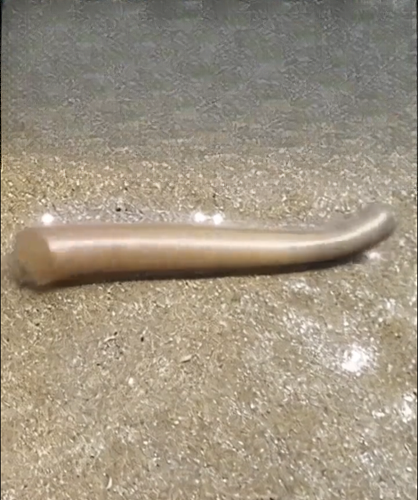
Strange Trumpet-Shaped Structures in the Sand: Discover the Fascinating World of Marine Tube-Building Worms
“I never knew something so unusual could be hiding beneath the sand.”
That was the kind of thought that often came to mind whenever I remembered the strange little structures we used to discover during childhood trips to the beach.
At first glance, they looked like tiny sculptures created by nature. Some resembled narrow funnels, others looked like miniature trumpets, and a few appeared to have been carefully arranged in the sand by someone with an unusually creative imagination.
They were easy to overlook if you weren’t paying attention.
But once someone pointed them out, it became difficult not to wonder about them.
What were they?
Were they made by insects, small marine animals, or some mysterious process beneath the beach?
And why did some of them look so remarkably organized?
One particularly interesting group of marine creatures responsible for unusual structures in sandy and muddy environments are tube-building worms. Several species construct protective tubes or burrows using materials available in their surroundings. Depending on the species and habitat, these structures can appear as small openings, raised tubes, branching formations, or delicate funnel-like shapes.
Among the fascinating examples are marine worms belonging to groups commonly known as polychaetes.
Their structures offer a wonderful introduction to the complexity of coastal ecosystems and the surprising ways animals adapt to life beneath the surface.
What looks like a simple collection of strange shapes in the sand may actually be evidence of an active underwater habitat.
Let’s explore how these structures form, which creatures may be responsible for them, and why they are worth appreciating.
What Are Trumpet Worm Nests?
The expression “trumpet worm nests” is sometimes used informally to describe unusual tube-like or funnel-shaped structures found in sandy coastal environments.
However, it is important to understand that not every trumpet-shaped formation belongs to the same species.
Marine tube-building worms include several different groups, and their structures can vary considerably.
Some create permanent or semi-permanent protective tubes.
Others live in burrows beneath sand or mud.
Certain species use grains of sand, shell fragments, mucus, or other surrounding materials to construct their homes.
The resulting structures may look like tiny architectural formations.
A tube can provide shelter from predators, help protect the animal from moving sediment, and create a stable space in which it can feed and carry out other essential activities.
Some tube-building worms extend parts of their bodies beyond the entrance to collect food particles from the surrounding water.
Others use specialized feeding structures to gather organic material from nearby sediment.
The precise construction method depends on the species.
What makes these creatures particularly interesting is that they manage to create functional homes without tools, manufactured materials, or complicated equipment.
They use their own biological abilities and whatever suitable materials are available in their environment.
The Fascinating World of Marine Tube-Building Worms
Marine worms belong to several different animal groups.
Among the best-known are polychaetes, a diverse group of segmented marine worms found in oceans and coastal habitats around the world.
The name polychaete refers to their many bristles, which are often visible along the sides of their bodies.
These bristles, known as chaetae, help with movement, anchoring, and other functions depending on the species.
Polychaetes occupy a wide variety of habitats.
Some move freely across the seabed.
Others burrow through sediment.
Some live inside protective tubes attached to rocks, shells, or other surfaces.
A number of species are especially skilled at constructing elaborate tube-like homes.
Their structures may be made from:
- Fine sand grains.
- Small pieces of shell.
- Organic particles.
- Mucus secretions.
- Sediment collected from the surrounding environment.
The materials are arranged in ways that help create a protective structure.
Although these tubes may appear simple, their construction reflects highly specialized adaptations that have developed over long periods of evolution.
Why Do These Worms Build Tubes?
For animals living in coastal environments, protection is an important part of survival.
The seabed can be a challenging place.
Water currents move sediment.
Waves can disturb loose material.
Predators search for small animals beneath the surface.
Environmental conditions can change throughout the day.
A protective tube provides a place where a worm can remain sheltered while still accessing the resources it needs.
There are several reasons why tube-building is useful.
1. Protection From Predators
Many small marine animals are vulnerable to predators.
Fish, crabs, larger invertebrates, and other seabed animals may feed on worms.
A protective tube can make it more difficult for predators to reach the animal.
Some worms retreat deeper into their tubes when disturbed.
Others remain anchored within their structures.
The tube does not guarantee complete protection, but it can provide an important defensive advantage.
2. Stability in Moving Sediment
Sandy and muddy habitats are constantly changing.
Water movement can shift sediment from one place to another.
Without a stable shelter, a small animal could be displaced or exposed.
A tube anchored within the seabed provides a more secure environment.
Some species construct tubes that extend above the sediment surface, while others remain almost completely hidden.
3. Access to Food
Tube-building worms have developed different ways of feeding.
Depending on the species, they may collect organic particles from the water or consume material found within the surrounding sediment.
Some use specialized feeding tentacles or other structures to gather food.
Their tubes allow them to remain protected while carrying out these activities.
4. A Suitable Environment for Daily Activities
A tube can also provide a stable location for essential biological processes.
The animal may use it as a place to rest, feed, or withdraw when conditions become unfavorable.
For species living in environments with changing water movement, this shelter can be especially valuable.
How Are Marine Worm Tubes Constructed?
One of the most remarkable aspects of tube-building worms is the way they use surrounding materials to create protective structures.
Different species follow different construction methods.
Some produce mucus that helps bind sediment particles together.
Others incorporate sand grains and shell fragments into the walls of their tubes.
The construction process can be highly specialized.
Collecting Suitable Materials
The first requirement is access to appropriate building material.
Marine sediment contains a mixture of particles of different sizes.
These may include fine sand, coarser grains, shell fragments, and organic debris.
A worm may collect material from its immediate surroundings and use it to strengthen its tube.
The size and type of particles can influence the appearance and texture of the finished structure.
Binding the Particles Together
Some species produce mucus or other secretions that help hold the particles in place.
This creates a more stable structure than loose sediment alone.
The material may become compacted into a narrow tube or irregular protective covering.
Maintaining the Structure
A marine tube is exposed to the surrounding environment.
Currents, waves, sediment movement, and biological activity can affect its condition.
Some worms can repair or extend their tubes when necessary.
This ability helps them maintain a suitable shelter despite changing environmental conditions.
The result is a structure that may appear surprisingly organized despite being constructed from ordinary materials found on the seabed.
Why Do Some Worm Tubes Look Like Tiny Trumpets?
The shape of a tube can vary depending on the species and the surrounding conditions.
Some structures have relatively narrow openings.
Others have wider entrances that resemble small funnels.
A trumpet-like appearance may develop when the upper portion of a tube expands outward.
In certain species, the exposed opening may help with feeding, water movement, or interaction with the surrounding environment.
However, it would be inaccurate to assume that every funnel-shaped structure found on a beach has the same biological purpose.
Different animals can produce similar-looking structures.
Even structures made by the same species may vary according to sediment type, water movement, and local environmental conditions.
This is why careful observation is important when identifying marine organisms.
A photograph may reveal the general shape of a structure, but a reliable identification often requires additional details.
These may include:
- The location where the structure was found.
- Whether it was exposed at low tide.
- The type of sediment surrounding it.
- Its approximate size.
- Whether there were multiple structures nearby.
- Whether an animal was visible inside or around the opening.
Such observations can help marine biologists and naturalists narrow down possible explanations.
The Role of Sand in Marine Life
Sand may appear lifeless when viewed from a distance.
However, coastal sediment is often home to an extraordinary variety of organisms.
Small worms, crustaceans, mollusks, microorganisms, and other animals live within or around the sediment.
Some remain close to the surface.
Others burrow much deeper.
These organisms form an important part of marine ecosystems.
They contribute to nutrient cycling, sediment processing, and the movement of organic material.
Many are also an important food source for larger animals.
The seabed is therefore much more than a simple layer of sand.
It is a complex habitat containing numerous interacting organisms.
Tube-building worms are one example of how animals use this environment in highly specialized ways.
Their structures can also provide clues about the biological activity taking place beneath the surface.
How Tube-Building Worms Contribute to Coastal Ecosystems
Although individual worms may be small, their activities can have wider environmental effects.
Marine ecosystems depend on the interactions between organisms and their surroundings.
Tube-building worms participate in several important processes.
Sediment Movement and Mixing
Animals that live within sediment can influence its physical structure.
As they move, feed, and maintain their burrows, they may disturb surrounding particles.
This process is often referred to as bioturbation.
Bioturbation can influence how oxygen and nutrients move through sediment.
It may also affect the distribution of organic material.
Different species produce different effects depending on their size, behavior, and abundance.
Nutrient Cycling
Organic matter accumulates on the seabed.
This material may include microscopic organisms, decaying plant matter, and other biological remains.
Sediment-dwelling animals interact with this material through feeding and burrowing.
Their activities contribute to the broader cycling of nutrients within marine environments.
Supporting Food Webs
Many tube-building worms become food for larger marine animals.
Fish and other predators may feed on them directly or disturb their tubes while searching for prey.
Their presence therefore contributes to the movement of energy through coastal food webs.
Creating Small Habitat Features
Some tube structures alter the immediate surface of the sediment.
They can create small differences in texture and physical structure.
Depending on the species and location, these features may influence nearby organisms.
In this way, even relatively small animals can contribute to the complexity of their habitat.
Why Childhood Memories of Nature Stay With Us
For many people, childhood memories of beaches and coastal environments remain vivid.
A family holiday, a visit to a rocky shoreline, or an afternoon spent exploring tidal pools can introduce experiences that remain interesting for decades.
Children often notice things adults overlook.
A small shell becomes a treasure.
A moving crab becomes a fascinating discovery.
An unusual pattern in the sand becomes a mystery that needs solving.
The natural world offers endless opportunities for questions.
What lives beneath