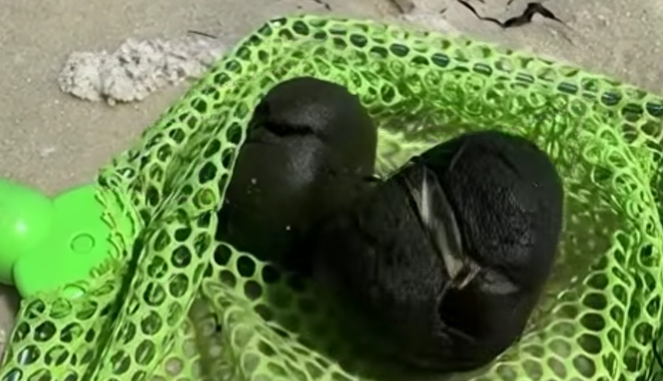
Mysterious Discoveries Along the Beach: The Surprising Natural Explanations Behind Unusual Coastal Finds
A day at the beach is usually filled with simple pleasures. The sound of waves reaching the shore, the warmth of the sun, the feeling of soft sand beneath your feet, and the excitement of discovering something interesting along the water can turn an ordinary afternoon into a memorable experience.
For many people, beach visits are also opportunities to explore nature.
Children search for colorful seashells, families walk along the shoreline, and curious visitors examine the small details left behind by the changing tide. Sometimes, the discoveries are familiar. A smooth stone, an unusual shell, a piece of driftwood, or a collection of tiny crabs can easily attract attention.
But occasionally, something appears on the beach that nobody immediately recognizes.
It might be a strange cluster of transparent material, an unusual pattern in the sand, a collection of small rounded objects, or a mysterious structure that seems almost too organized to have formed naturally.
These unexpected discoveries can quickly become the subject of conversation.
What is it?
Where did it come from?
Could it be an animal, a plant, a mineral formation, or something left behind by the ocean?
The truth is that coastal environments are full of fascinating natural processes. Many objects that appear mysterious at first have perfectly reasonable scientific explanations.
Some are connected to marine animals. Others are created by changing tides, currents, weather, or the natural movement of sediment.
Understanding these discoveries can make a beach visit even more interesting.
Instead of simply looking at an unusual object and walking away, we can begin to appreciate the remarkable natural systems that created it.
Let’s explore some of the most fascinating things people may encounter along the shoreline and discover the science behind them.
Why Beaches Are Full of Surprises
Beaches are constantly changing environments.
Unlike many landscapes that remain relatively stable over short periods, coastal areas are shaped by the continuous interaction of water, wind, sunlight, temperature, and sediment.
Every wave carries material.
Some waves deposit sand and shells, while others remove them.
Strong currents can transport objects from distant locations, and storms may expose things that have remained buried beneath the seabed for months or even years.
This means that the appearance of a beach can change dramatically from one day to another.
A section of shoreline that looks completely ordinary in the morning might reveal interesting natural formations after the tide goes out.
The movement of water also brings marine organisms closer to the surface.
Small animals, seaweed, shells, and other biological material can become visible when the water recedes.
For children and adults who enjoy exploring, these changes create endless opportunities for discovery.
However, an important part of coastal exploration is learning to distinguish between objects that are harmless to observe and those that should be left untouched.
Not everything found on a beach is safe to handle.
Some marine organisms have defensive structures, while certain jelly-like animals can cause skin irritation.
The best approach is to observe unfamiliar discoveries carefully and avoid direct contact until their identity is known.
1. Strange Patterns Appearing in the Sand
One of the most common beach mysteries involves unusual patterns appearing across wet or dry sand.
Sometimes, these formations resemble tiny circles.
Other times, they look like winding lines, small mounds, or carefully arranged collections of sediment.
Although they may appear mysterious, many are created by natural biological activity.
The Work of Small Burrowing Animals
Numerous marine animals spend much of their lives beneath the sand.
These include worms, small crustaceans, and other organisms that create burrows for protection and feeding.
As they move through the sediment, they change its surface.
Some animals push sand outward, creating small piles around an opening.
Others leave winding trails as they travel beneath or across the surface.
The resulting patterns can reveal the presence of organisms that are otherwise difficult to see.
For example, lugworms create burrow systems in sandy and muddy coastal areas.
Their feeding activities can produce recognizable piles of processed sediment known as casts.
These small formations may look like miniature coils or irregular mounds.
They are evidence of biological activity beneath the surface.
Why These Patterns Matter
Burrowing animals contribute to important ecological processes.
Their movements can mix sediment and influence the movement of oxygen and nutrients.
This process is known as bioturbation.
It helps shape the physical and chemical conditions of the seabed.
The activities of small organisms may therefore influence the environment far beyond the individual burrow.
A simple pattern in the sand can be evidence of a much larger ecological process.
2. Unusual Clusters of Jelly-Like Material
Another discovery that often attracts attention is a transparent or gelatinous substance washed onto the beach.
It may resemble clear jelly, small bubbles, or clusters of soft material.
People sometimes mistake these objects for unusual eggs, artificial products, or unfamiliar marine animals.
In reality, several natural organisms and biological materials can create this appearance.
Jellyfish Remains
Jellyfish are among the most recognizable marine animals.
Their bodies contain a high proportion of water, making them appear soft and transparent.
When jellyfish wash onto shore, their appearance may change as they begin to dry out.
They can become flattened, translucent, or difficult to recognize.
Even when a jellyfish appears damaged or dead, it may still pose a stinging risk.
For this reason, it is best not to touch unidentified jellyfish or their remains.
Salps
Salps are fascinating marine animals that often attract attention because of their transparent bodies.
They belong to a group of free-floating tunicates and are commonly found in ocean waters.
Some species occur individually, while others form long chains of connected individuals.
When washed onto beaches, they may resemble clear gelatinous tubes or small transparent organisms.
Although they can look unusual, salps play a role in marine food webs and ocean carbon cycling.
They feed on tiny particles suspended in seawater.
Their bodies and waste products can contribute to the movement of organic carbon through the ocean.
Egg Masses and Other Biological Material
Some marine animals produce gelatinous egg masses.
Depending on the species, these may appear as clear clusters, ribbons, capsules, or soft structures.
Not every jelly-like object is an egg mass, however.
Accurate identification depends on its shape, location, and other visible characteristics.
Photographs and observations can help researchers determine what has washed ashore.
3. Small Shell Collections That Seem Almost Perfectly Arranged
A beach covered with seashells is a familiar sight.
But sometimes, shells appear in unusual arrangements that seem almost deliberate.
They may form narrow lines, small groups, or concentrated patches along the water’s edge.
These patterns are often created by wave movement and coastal currents.
How Waves Sort Shells
Waves carry sand, shell fragments, and other materials toward the shoreline.
As water moves back into the sea, it transports some particles while leaving others behind.
Different materials have different sizes, shapes, and weights.
This means that waves can sort objects according to how easily they move.
Lighter materials may travel farther.
Heavier shells and stones may remain closer to particular areas.
Over time, these processes can create visible bands of shells and other debris.
The Role of Tides
Tides also influence where beach materials accumulate.
As the water level rises and falls, different parts of the shoreline become exposed.
Objects may be deposited near the high-tide line or gathered along the water’s edge.
The location of these deposits can change depending on weather, wave conditions, and coastal geography.
A collection of shells that looks carefully arranged may simply be the result of thousands of small movements caused by the ocean.
4. Strange Tube-Like Structures Emerging From the Sand
Some of the most intriguing coastal discoveries are small tubes or funnel-shaped structures.
They may resemble miniature chimneys, narrow trumpets, or tiny towers emerging from the sediment.
In certain cases, they are associated with marine tube-building worms.
These animals belong to different groups of marine invertebrates, including several types of polychaete worms.
How Tube-Building Worms Create Their Homes
Some marine worms construct protective tubes using materials found in their surroundings.
These materials may include sand grains, shell fragments, and other sediment particles.
Certain species produce mucus that helps bind the materials together.
The finished tube provides a protected environment where the animal can live and carry out essential activities.
Depending on the species, the tube may extend above the sediment or remain almost entirely buried.
Some worms use specialized feeding structures to collect tiny particles from the surrounding water.
Others interact with the sediment in different ways.
Why Their Structures Look So Unusual
The shape of a marine worm tube depends on the species and its environment.
Some are narrow and cylindrical.
Others have wider openings or irregular outer surfaces.
A funnel-like shape may develop near the entrance.
However, not every tube-shaped object on a beach belongs to a worm.
Similar-looking structures can be created by other organisms or by physical processes.
This is why careful identification is important.
The discovery of a strange structure can be the beginning of an interesting investigation into the animals living beneath the sand.
5. Colorful Seaweed That Appears Overnight
Seaweed is another common source of unusual beach discoveries.
After storms or periods of strong currents, large quantities of seaweed may accumulate along the shoreline.
Some species are green.
Others are brown, red, or almost black.
Their appearance can vary depending on the amount of sunlight, water exposure, and the condition of the material.
Why Seaweed Washes Ashore
Seaweed grows in marine environments, where it attaches to rocks or other suitable surfaces or floats freely, depending on the species.
Strong waves and currents can detach pieces from their original locations.
These fragments may travel considerable distances before reaching land.
Storms can increase the amount of seaweed deposited on beaches.
The result may be a thick line of marine vegetation stretching along the shore.
Is All Seaweed Safe to Handle?
Not necessarily.
Many types of seaweed are harmless to observe, but beach material can contain other organisms, debris, or contaminants.
Some seaweed may also decompose and produce unpleasant odors.
It is sensible to avoid touching unfamiliar material, especially when it contains unidentified animals or unusual substances.
Local environmental advice should always take priority.
6. Tiny Holes That Appear Across the Shoreline
A beach may look smooth from a distance, but closer inspection can reveal thousands of tiny openings.
Some are created by animals living beneath the surface.
Others may result from water movement, escaping air, or changes in sediment.
Crabs and Their Burrows
Certain crabs spend time in burrows within sandy coastal habitats.
These burrows provide shelter from predators, environmental changes, and exposure.
Some species use the entrances as convenient places to retreat when disturbed.
The appearance of a burrow can vary according to the crab species and the condition of the surrounding sand.
Ghost Crabs
Ghost crabs are well-known inhabitants of sandy beaches in many tropical and subtropical regions.
They are often active during low-light periods and may create burrows above or near the high-tide line.
Their burrows can be quite noticeable.
A small mound of sand near an opening may provide a clue that a crab is living nearby.
These animals are adapted to life between land and sea.
Their ability to move quickly across the sand makes them fascinating to observe.
Other Burrowing Organisms
Many smaller animals also create holes in coastal sediment.
These include worms, mollusks, and other invertebrates.
Some openings may be feeding structures, while others are entrances to protective burrows.
The size and arrangement of the holes can provide useful clues, although identification often requires more information.
7. Mysterious Objects Left Behind After a Storm
Storms can transform beaches.
Large waves move sediment, uncover buried material, and transport objects from different parts of the coastline.
After a storm, visitors may discover unusual collections of shells, driftwood, seaweed, and natural debris.
Sometimes, objects that have remained underwater for a long time become visible.
Driftwood
Driftwood is one of the most familiar materials deposited by the ocean.
Pieces of trees and branches may enter rivers or coastal waters and eventually travel along the shoreline.
Water gradually changes their appearance.
Repeated exposure to waves can smooth rough surfaces and remove loose material.
Some pieces become pale and weathered.
Others retain darker colors and interesting textures.
Driftwood can provide habitat for small coastal organisms and contribute organic material to shoreline ecosystems.
Unusual Stones and Minerals
Waves can also uncover stones and mineral fragments.
Some may have unusual colors or patterns because of their geological composition.
Others may appear polished after repeated movement through sand and water.
Their appearance can make them seem mysterious, but many are ordinary geological materials shaped by natural processes.
Human-Made Objects
Not every object found after a storm is natural.
Unfortunately, beaches can also collect plastic, fishing equipment, packaging, and other discarded materials.
These objects may be transported over long distances by currents.
If visitors find potentially hazardous debris, they should avoid handling it and report it to the appropriate local authorities.
8. Small Moving Creatures Hidden Among the Sand
One of the most exciting parts of a beach visit is noticing that the apparently empty shoreline is actually full of life.
Small creatures may move quickly across wet sand, hide beneath rocks, or disappear into tiny openings.
Many are difficult to spot because their colors help them blend into their surroundings.
Sand Hoppers
Sand hoppers are small crustaceans commonly found in coastal environments.
They are especially associated with damp seaweed and organic material deposited along beaches.
When disturbed, they can jump rapidly.
This movement often surprises people who are unfamiliar with them.
Sand hoppers feed on decaying organic material and contribute to the breakdown of natural debris.
Small Shore Crabs
Young or small crabs may hide among rocks, shells, and seaweed.
Their colors often provide camouflage.
Some species spend much of their time close to the water, while others are adapted to more terrestrial coastal habitats.
Observing these animals without disturbing them is a simple way to learn about shoreline biodiversity.
Tiny Mollusks
Small snails and other mollusks may also be found along the shore.
Some cling to rocks.
Others live in sand or mud.
Their shells may be difficult to distinguish from ordinary beach debris.
Looking closely at the different shapes and patterns can reveal how diverse coastal life really is.
9. Natural Foam Appearing Along the Water’s Edge
White or cream-colored foam sometimes accumulates on beaches.
It may resemble soap bubbles or a substance produced by pollution.
Although pollution can create foamy water under certain circumstances, natural foam is also common.
How Natural Sea Foam Forms
Seawater contains dissolved organic material.
This material may come from algae, microscopic organisms, and decaying biological matter.
When waves agitate the water, air becomes mixed with these substances.
The result can be foam that gathers along the shoreline.
Wind and currents may move the foam into concentrated patches.
Its appearance can vary according to environmental conditions.
When Should Visitors Be Careful?
Not all beach foam should automatically be assumed to be natural.
Foam associated with unusual discoloration, chemical odors, dead fish, or nearby pollution incidents may require further investigation.
Visitors should avoid contact with suspicious material.
If there is concern about water quality, consult local environmental or public health authorities.
10. Beautiful Patterns Created by the Tide
The retreating tide can leave behind some of the most interesting patterns found on a beach.
Water may form narrow channels, curved lines, small pools, and delicate textures across wet sand.
These features are created by the movement of water and sediment.
Ripple Marks
Ripple marks are small ridges that form when moving water or wind transports sediment.
Their shape depends on the direction and strength of the movement, as well as the size of the particles.
They may appear as parallel lines or more complicated patterns.
Some are created by waves moving back and forth.
Others develop through currents flowing across the seabed.
Small Water Channels
As water drains away from the shoreline, it can create narrow channels.
These may branch into smaller pathways.
The resulting patterns can resemble miniature rivers.
Their positions change as the tide moves and the beach surface is reshaped.
Why These Patterns Are Important
Ripple marks and channels provide clues about the physical processes taking place along the shore.
Geologists and coastal scientists study these formations to understand sediment movement and changing environmental conditions.
What appears to be a decorative pattern is actually evidence of the ocean constantly reshaping the land.
11. Unusual Egg Cases and Protective Capsules
Another discovery that may attract attention is a small, leathery or translucent object found among beach debris.
Some marine animals produce protective egg cases that can eventually wash ashore.
Sharks and rays, for example, produce egg cases in species that lay eggs rather than giving birth to live young.
These structures are sometimes called mermaid’s purses.
They may have distinctive shapes and tendrils that help attach them to underwater vegetation or other surfaces.
What Do They Look Like?
Shark and ray egg cases vary according to the species.
Some are elongated.
Others have more rounded or rectangular shapes.
Certain examples have long extensions at their corners.
Their texture may be leathery rather than hard like a conventional shell.
Once empty, they can become weathered and washed onto the beach.
Why Are They Interesting?
These structures provide evidence of the reproductive strategies used by marine animals.
An egg case protects the developing embryo during an important stage of its life.
Its shape and structure are adapted to the needs of the particular species.
Finding one can be a fascinating educational opportunity.
However, not every dark or leathery object found along a shoreline is an egg case.
Photographs and expert identification can help avoid mistakes.
12. Why Some Beach Discoveries Look Like They Came From Another Planet
Nature sometimes creates shapes and textures that seem almost artificial.
A branching piece of coral, an unusual shell, a cluster of gelatinous organisms, or a weathered mineral can appear remarkably unfamiliar.
There are several reasons why this happens.
First, many marine organisms have evolved in environments that are very different from the ones humans experience on land.
Their shapes are adapted to underwater conditions.
Second, water changes the way materials look.
A wet shell may have brighter colors than a dry one.
Transparent organisms may become less recognizable after exposure to air.
Third, natural processes can create complex patterns without any deliberate design.
Repeated wave movement, mineral deposition, biological growth, and sediment transport can produce shapes that appear surprisingly organized.
This is one of the reasons nature is such a rich source of fascination.
The unfamiliar appearance of an object does not mean that it has an extraordinary origin.
Sometimes, the explanation is simply a biological or geological process that we have not encountered before.
13. How to Investigate an Unusual Beach Discovery
If you find something unfamiliar during a coastal visit, there are several simple ways to learn more about it.
The first step is to observe without disturbing it.
Take Clear Photographs
Photographs are often the easiest way to document an unusual discovery.
Try taking several pictures from different angles.
Include something familiar for scale, such as a ruler placed nearby without touching the organism.
A photograph of the surrounding habitat can also be useful.
Record the Location
The location may provide important clues.
An organism found on a rocky shore may be different from one discovered on a sandy tidal flat.
Record the general area and, if possible, the condition of the tide.
Notice the Surrounding Environment
Look at the nearby materials.
Are there shells, seaweed, stones, or other organisms?
Is the structure located near the waterline or higher up the beach?
Are similar formations present nearby?
These observations can help narrow down possible explanations.
Compare Reliable Identification Resources
Marine biology guides, natural history publications, and university resources can provide useful information.
Local coastal organizations may also be able to identify unusual finds.
For important or potentially hazardous discoveries, rely on qualified experts rather than guesses from social media photographs.
Avoid Unnecessary Handling
Do not pick up unfamiliar jelly-like organisms, animals with bristles, or objects that may be hazardous.
Some marine species can cause irritation even when they appear inactive.
Taking a photograph is usually the better choice.
14. The Importance of Responsible Beach Exploration
Exploring the natural world is enjoyable, but it should be done carefully.
Coastal habitats support many small organisms that are easily damaged.
A single overturned rock may expose animals to sunlight and drying conditions.
Excessive digging can disturb burrows.
Removing living shells or organisms can affect local habitats.
Responsible exploration helps preserve the environment for future visitors.
Here are some simple practices worth following:
- Leave living marine animals where you find them.
- Avoid breaking shells that may still contain living organisms.
- Do not disturb burrows unnecessarily.
- Keep plastic and other waste away from the shoreline.
- Observe unfamiliar creatures without touching them.
- Respect protected habitats and local collection rules.
- Supervise children around waves, rocks, and tidal pools.
- Be aware of changing tides and coastal weather.
The aim should be to discover and learn without damaging the environment.
15. What Children Can Learn From Unexpected Beach Discoveries
A strange object on a beach can become the beginning of a wonderful learning experience.
Children naturally ask questions when something catches their attention.
They may wonder why a shell has a particular shape, how a small animal moves, or why certain patterns appear in the sand.
Adults can encourage these questions without needing to know every answer immediately.
In fact, admitting that something is unfamiliar can make the learning experience even more interesting.
Parents and teachers can encourage children to:
- Draw unusual natural objects.
- Compare different types of shells.
- Observe how the shoreline changes with the tide.
- Identify common coastal animals using field guides.
- Learn about marine food chains.
- Understand why beach habitats need protection.
- Keep a simple nature journal.
These activities help develop observation skills and an appreciation for science.
They also encourage patience.
Rather than immediately searching for a quick answer, children can learn to examine evidence and consider different explanations.
That is an important part of scientific thinking.
16. Why Coastal Ecosystems Deserve Our Protection
Beaches are more than recreational destinations.
They are important parts of larger coastal ecosystems.
Sand dunes, tidal flats, rocky shores, salt marshes, and nearby marine habitats support a wide variety of life.
These environments provide feeding grounds, shelter, and breeding areas for many species.
They also help protect coastlines from some of the effects of waves and storms.
However, coastal environments face several pressures.
Plastic pollution can harm marine animals.
Habitat destruction can reduce suitable living areas.
Changes in water quality can affect organisms throughout the food web.
Climate change and rising sea levels can also influence coastal environments.
Protect