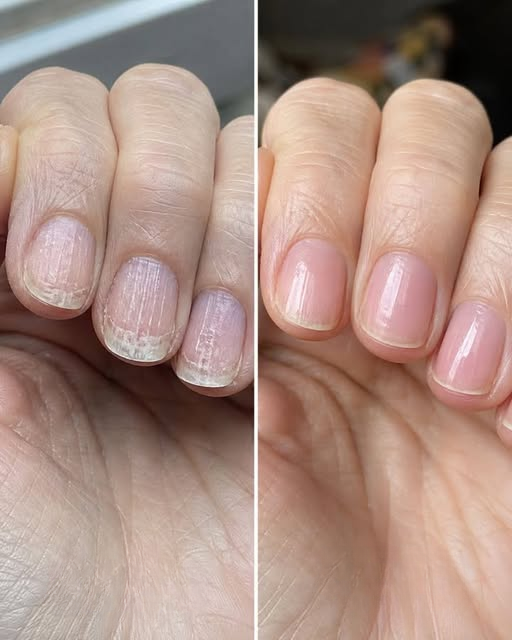
Healthy nails often reflect good daily care and overall wellness. While it’s normal for nails to develop small ridges or become a little drier with age, repeated exposure to water, harsh cleaning products, weather changes, or frequent manicures can sometimes leave them feeling brittle, peeling, or more prone to breaking.
The internet is full of videos promising instant results with a single homemade mixture or overnight treatment. While some moisturizing ingredients may temporarily improve the appearance of dry nails, there is no scientifically proven soak that permanently eliminates nail ridges or instantly repairs damaged nails.
The good news is that many people can improve the look and feel of their nails through consistent care, gentle habits, and proper hydration.
Let’s explore what causes brittle nails, why ridges develop, and practical ways to support stronger, healthier-looking nails over time.
Understanding Why Nails Become Brittle
Nails are made primarily of a protein called keratin.
Although they appear hard, nails are actually made up of multiple thin layers that can separate or weaken under certain conditions.
Common reasons nails become brittle include:
- Frequent hand washing
- Repeated exposure to water
- Dry weather
- Household cleaning products
- Acetone-based nail polish removers
- Aging
- Repeated nail trauma
- Nutritional factors in some cases
Because many different factors influence nail health, improvement usually comes from addressing daily habits rather than relying on one product.
What Are Vertical Nail Ridges?
Vertical ridges are thin lines that run from the base of the nail toward the tip.
For many adults, these ridges become more noticeable with age.
In many cases, they are a normal part of aging and do not indicate a serious problem.
However, if ridges appear suddenly, become severe, or are accompanied by pain, discoloration, or changes in nail shape, it’s a good idea to consult a healthcare professional.
Why Do Nails Peel?
Peeling nails usually occur when the outer layers separate.
This may happen because of:
- Frequent wet-to-dry cycles
- Repeated use of harsh soaps
- Excessive filing
- Nail biting
- Picking at polish
- Chemical exposure
Gentle nail care often helps reduce further damage.
A Moisturizing Nail Soak
While no soak can permanently remove ridges or repair all nail problems, soaking dry nails in a moisturizing solution may temporarily soften the skin around the nails and improve their appearance.
One simple option some people enjoy includes:
- Warm water
- A few drops of a gentle, fragrance-free moisturizing oil such as mineral oil or a cosmetic-grade plant oil
- A short soak of about 5 to 10 minutes
After soaking, gently dry your hands and apply a moisturizing hand cream or cuticle oil to help lock in hydration.
Remember, this is intended for cosmetic care and is not a medical treatment.
Moisturize Your Hands Regularly
Healthy nails often begin with healthy skin.
Applying moisturizer after washing your hands may help reduce dryness around the nails and cuticles.
Look for creams containing ingredients such as:
- Glycerin
- Shea butter
- Ceramides
- Petrolatum
- Hyaluronic acid
Consistent moisturizing is often more helpful than occasional intensive treatments.
Protect Your Hands During Household Chores
Cleaning products and prolonged exposure to water may contribute to nail dryness.
When washing dishes or using household cleaners, consider wearing protective gloves.
This simple habit may help reduce repeated exposure to moisture and chemicals.
Avoid Using Nails as Tools
Many people use their nails to:
- Open packages
- Scrape labels
- Pry open lids
These activities place unnecessary stress on the nail plate and increase the likelihood of splitting or breaking.
Whenever possible, use appropriate tools instead.
Trim Nails Regularly
Keeping nails neatly trimmed may reduce accidental snags and breaks.
Use clean nail clippers and gently smooth rough edges with a fine nail file.
Avoid aggressive filing back and forth, which may weaken the nail.
Give Nails a Break
If you regularly wear nail polish, gel polish, or artificial nails, allowing occasional breaks may help reduce repeated exposure to certain products and removal processes.
This doesn’t mean manicures are harmful for everyone, but moderation and proper application techniques can support healthier nails.
Nutrition and Nail Health
Because nails are made from protein, maintaining a balanced diet supports normal nail growth.
Foods that contribute important nutrients include:
Lean Protein
Protein provides the building blocks needed for healthy nail formation.
Examples include:
- Fish
- Poultry
- Eggs
- Beans
- Lentils
- Tofu
Fruits and Vegetables
Colorful produce supplies vitamins and minerals that support overall health.
Healthy Fats
Foods containing healthy fats may support skin and nail health as part of a balanced diet.
Examples include:
- Nuts
- Seeds
- Avocados
- Olive oil
Whole Grains
Whole grains provide important nutrients while contributing to overall dietary balance.
Stay Hydrated
Adequate hydration supports many body systems.
Although drinking more water alone won’t instantly transform nails, staying well hydrated contributes to overall skin and tissue health.
Avoid Picking at Cuticles
Cuticles help protect the area where new nail growth begins.
Picking or cutting them aggressively may increase irritation or the risk of infection.
Instead, gently moisturize the cuticle area and avoid unnecessary manipulation.
Common Nail Myths
Myth 1: Nail Polish Prevents Nails from Breathing
Nails are made of dead keratin cells and do not “breathe.”
However, frequent polish removal—especially with strong acetone—may contribute to dryness.
Myth 2: One Ingredient Can Instantly Repair Brittle Nails
No single ingredient permanently repairs damaged nails overnight.
Healthy nails grow gradually over time.
Consistency matters far more than quick fixes.
Myth 3: White Spots Always Mean Calcium Deficiency
Small white spots are often caused by minor nail trauma rather than nutritional deficiencies.
Persistent or widespread changes should be discussed with a healthcare provider if they cause concern.
When Should You Seek Medical Advice?
While many nail changes are harmless, consult a healthcare professional if you notice:
- Sudden changes in nail color
- Painful swelling
- Thickened nails
- Nails separating from the nail bed
- Persistent cracking despite good care
- Dark streaks appearing without injury
- Changes affecting only one nail
These symptoms deserve professional evaluation rather than self-treatment.
Healthy Nail Growth Takes Time
Fingernails typically grow only a few millimeters each month.
Because of this, noticeable improvement often takes several months.
Patience and consistency are important.
Daily moisturizing.
Gentle handling.
Balanced nutrition.
Protection from harsh chemicals.
These habits gradually support healthier-looking nails.
Building a Simple Nail Care Routine
A practical routine may include:
Morning
- Apply hand cream after washing.
Throughout the Day
- Wear gloves during cleaning.
- Avoid using nails as tools.
Evening
- Massage moisturizer or cuticle oil into nails and surrounding skin.
Weekly
- Trim nails if needed.
- File gently.
- Inspect for any changes.
Small daily habits often provide better long-term results than occasional intensive treatments.
Final Thoughts
Dry, brittle nails, peeling layers, and vertical ridges are common concerns, especially as people age or experience repeated exposure to water and household products. While online “miracle” remedies often promise instant results, healthy nails usually improve through consistent care rather than a single homemade mixture.
Moisturizing regularly, protecting your hands during household chores, maintaining a balanced diet, staying hydrated, and practicing gentle nail care can all contribute to healthier-looking nails over time. If nail changes are sudden, painful, or persistent, consulting a healthcare professional is the best way to identify any underlying causes.
Healthy nails are rarely the result of one product or one treatment. Instead, they reflect the cumulative benefits of daily care, patience, and overall wellness. With a consistent routine and realistic expectations, you can support stronger, smoother nails that continue to look and feel their best.