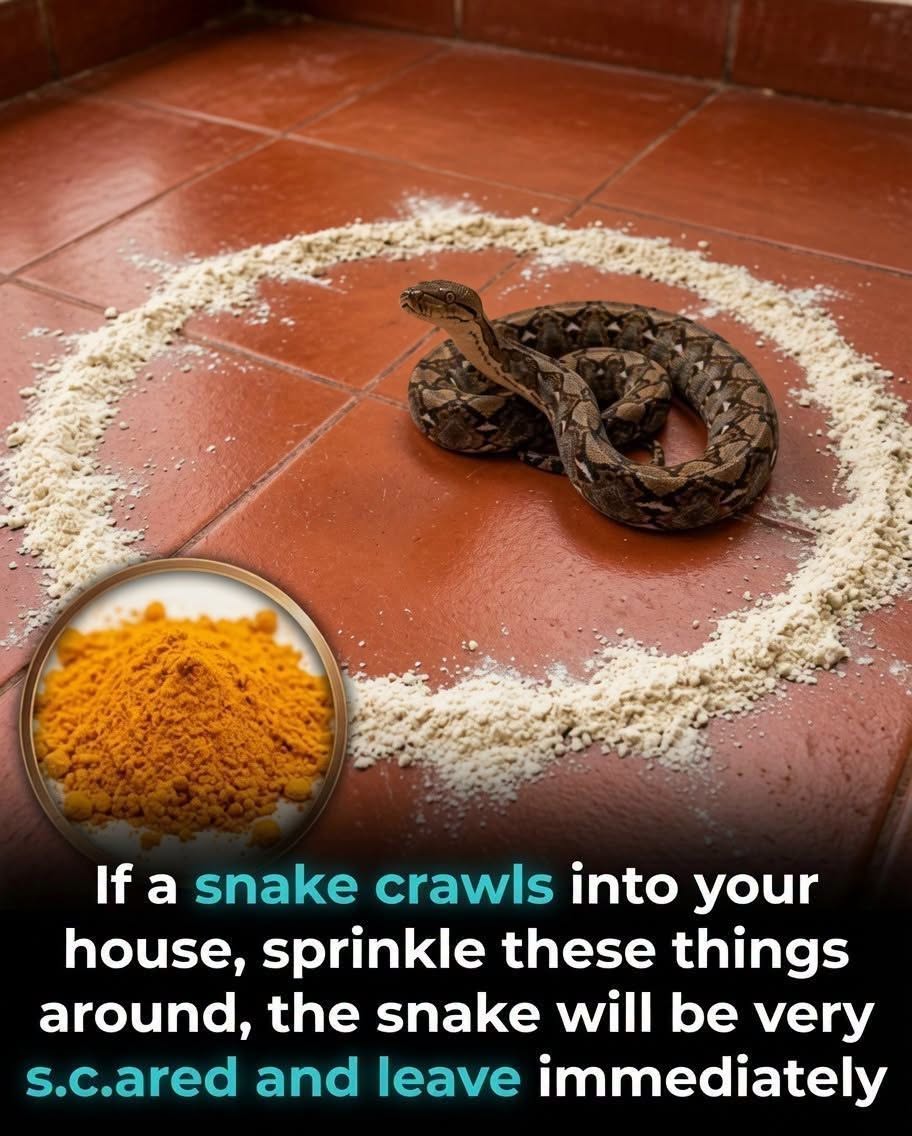
Finding a snake near your home can be an unsettling experience, especially when you aren’t expecting to see one.
For many people, the first reaction is to look for something that will immediately make the animal leave.
However, there is an important point to remember: no household substance can guarantee that a snake will stay away.
Different snake species behave differently, and what works in one situation may have little effect in another.
The most reliable way to reduce the chances of snakes entering a home is to make the property less attractive to them in the first place.
That means reducing hiding places, limiting access points, managing food sources, and keeping outdoor areas tidy.
Some commonly discussed household substances and scents may discourage snakes temporarily, but they should not be treated as guaranteed solutions.
More importantly, homeowners should avoid dangerous chemicals or methods that could harm people, pets, wildlife, or the snake itself.
Why Snakes May Come Near Homes
Snakes generally aren’t looking for trouble.
If one appears around a house, there is usually a reason.
The property may offer food, shelter, water, warmth, or a convenient place to move through.
A garden with dense vegetation can provide hiding places.
Wood piles can create sheltered spaces.
Tall grass can attract small animals.
And rodents can provide an accessible food source.
In other words, a snake may not be interested in the house itself.
It may simply be following the conditions around it.
Understanding this can help homeowners focus on prevention rather than relying entirely on strong-smelling substances.
Keep the Yard Neat
One of the simplest preventive measures is maintaining the area immediately surrounding the home.
Tall grass, thick weeds, piles of leaves, discarded materials, and dense vegetation can provide hiding places for wildlife.
Keeping grass trimmed and removing unnecessary clutter can make the area less appealing as a shelter.
Pay particular attention to spaces close to walls, doors, garages, sheds, and other structures.
You don’t need to turn your yard into a completely empty space.
The goal is simply to reduce unnecessary hiding spots and make the property easier to inspect.
Remove Unnecessary Wood and Debris
Stacks of firewood, boards, bricks, unused building materials, and other piles can create sheltered spaces.
These areas may attract insects, rodents, and other small animals.
Once prey animals become established, predators may follow.
If you keep firewood outside, store it neatly and, where practical, keep it raised from the ground.
Avoid creating large, undisturbed piles directly against the house.
Regularly moving and organizing outdoor materials can make the area less suitable for wildlife to hide.
Pay Attention to Rodents
Food availability is one of the biggest factors that can attract predators.
If mice or rats are regularly present around your property, snakes may find the area attractive.
Reducing rodent activity can therefore be an important part of snake prevention.
Keep food waste secured.
Don’t leave pet food outside overnight.
Clean up spilled birdseed.
Store animal feed in appropriate containers.
Inspect sheds and storage areas for signs of rodents.
By addressing the underlying food source, you may reduce the reasons for snakes to visit.
Seal Gaps Around the House
Snakes can enter surprisingly small openings.
Check around doors, windows, foundations, pipes, vents, garages, and other potential access points.
Look for cracks or gaps where the outside connects to the interior of the building.
Door sweeps can help close gaps beneath exterior doors.
Appropriate mesh or screening can also be useful around vents and openings.
The exact repair method depends on the size and location of the opening.
The key idea is simple: if you don’t want wildlife entering the house, make it difficult for them to find an opening.
Don’t Rely Only on Strong Scents
Online discussions often recommend substances with strong odors as snake deterrents.
You may see suggestions involving various household products, essential oils, spices, or other strongly scented materials.
Some people report that certain scents discourage snakes in particular situations.
However, there is no universal household substance that reliably prevents every snake species from entering a property.
Snakes use a variety of sensory cues, and environmental conditions can influence their behavior.
A scent that seems noticeable to humans may not have the same practical effect on a snake.
Therefore, these methods should be considered optional measures rather than a guaranteed solution.
Be Careful With Mothballs and Similar Products
One common piece of advice online is to use mothballs to keep snakes away.
This is not a good general-purpose solution.
Mothballs are pesticides designed for specific uses, and they can be harmful if misused.
They may also pose risks to children, pets, and other animals.
Using a pesticide in a way that isn’t permitted by its label can create unnecessary hazards.
Instead of scattering chemical products around a yard, focus on physical exclusion and habitat management.
These approaches are generally more practical and avoid exposing your household to unnecessary chemicals.
What About Essential Oils?
Certain essential oils are sometimes promoted online as natural snake repellents.
The evidence for many of these claims is limited, and effectiveness can vary.
A strong scent may discourage an animal temporarily in some circumstances, but it shouldn’t be considered a reliable barrier.
Essential oils can also be hazardous to pets, particularly when concentrated.
Cats and other animals can be sensitive to certain oils.
If you decide to use any scented product around your property, read the safety instructions carefully and consider the animals and children who may come into contact with it.
Natural does not automatically mean harmless.
Why Habitat Management Is More Reliable
Think of snake prevention as a property-management problem rather than simply a scent problem.
If a yard provides shelter, food, and easy access, removing one smell may not make much difference.
But if you reduce the available food and hiding places and seal potential entrances, you’ve changed the environment itself.
This can be a much more practical strategy.
For example, trimming vegetation can reduce hiding spots.
Removing clutter can eliminate sheltered areas.
Controlling rodents can reduce available prey.
Sealing gaps can prevent entry.
Together, these measures address several factors at the same time.
What to Do If You Find a Snake Indoors
If a snake is already inside your home, don’t panic.
Keep your distance.
Do not attempt to grab it.
Do not corner it.
And don’t try to handle an unfamiliar snake to determine whether it is dangerous.
If possible, keep children and pets away from the area.
Close doors to other rooms so the animal has fewer places to move.
If you can safely do so, provide an exit route to the outdoors without approaching the snake.
In many cases, contacting a local wildlife professional or appropriate animal-control service is the safest option.
This is especially important if you live in an area where venomous snakes occur.
Don’t Assume You Know the Species
Some snakes can look surprisingly similar to one another.
A harmless species may be mistaken for a dangerous one, or vice versa.
Color and markings aren’t always enough for an inexperienced observer to identify a snake correctly.
For that reason, avoid getting close simply to take a better photograph.
Your safety should come first.
If identification is necessary, a photograph taken from a safe distance may be useful to a local wildlife expert.
Keep Pets Safe
Dogs and cats may try to investigate or chase snakes.
That can create a dangerous situation for both animals.
If your pet frequently explores tall grass, wood piles, or other secluded areas, keep an eye on them.
At night, outdoor lighting can also help you see where your pet is walking.
If you suspect your pet has been bitten, contact a veterinarian immediately and follow professional instructions.
Do not attempt to treat a potentially serious bite with home remedies.
Make Your Home Less Attractive to Wildlife
Snake prevention is part of a broader approach to wildlife management.
The same steps that discourage snakes may also reduce encounters with rodents and other unwanted animals.
Keep garbage containers secured.
Clean up fallen fruit.
Avoid leaving food outdoors.
Maintain vegetation.
Inspect outbuildings.
Repair damaged screens.
Close unnecessary openings.
These habits can make your property less attractive to a wide variety of wildlife.
Water Sources Can Matter
Snakes need access to suitable environments, and some species are particularly associated with moist areas.
Leaking outdoor faucets, irrigation problems, clogged gutters, standing water, and poorly drained areas can contribute to wildlife activity.
Check your property for unnecessary water accumulation.
Repair leaks.
Keep gutters functioning properly.
Make sure water doesn’t collect around foundations.
You don’t need to eliminate every source of moisture—especially if you maintain a garden—but reducing unnecessary water accumulation can help manage wildlife activity.
Gardens Require Special Attention
Gardens can sometimes attract the animals that snakes hunt.
Birds, rodents, frogs, insects, and other small creatures may be drawn to plants and food sources.
This doesn’t mean you need to remove your garden.
Instead, maintain it carefully.
Avoid allowing vegetation to become excessively dense right next to the house.
Clean up fallen produce.
Store gardening supplies neatly.
Inspect areas beneath pots and equipment.
A tidy garden is easier to monitor and can provide fewer places for animals to hide.
Don’t Harm the Snake
If a snake appears around your home, the safest response is usually to create distance rather than trying to kill or capture it.
Many snakes are harmless and play useful ecological roles.
They can help control rodents and other small animals.
Killing a snake may also put you at greater risk if you need to approach it.
If you aren’t certain what species you’re dealing with, don’t take unnecessary chances.
Professional wildlife removal can be the best option for an animal that has entered a building or is in a difficult location.
When Professional Help Makes Sense
You should consider contacting a qualified wildlife professional if snakes repeatedly appear around your home.
Frequent sightings may indicate that the property offers particularly favorable conditions.
A professional can help identify possible entry points and environmental factors.
They may also be able to determine what species are present and recommend appropriate exclusion measures.
If venomous species are known to live in your region, professional assistance is particularly important.
Prevention Is Better Than Panic
The most useful approach to snake encounters is preparation.
Know what species are common in your area.
Keep outdoor areas maintained.
Reduce potential food sources.
Seal openings.
Keep children and pets away from unfamiliar wildlife.
And know who to contact if an animal enters your home.
These steps can make an unexpected encounter much less stressful.
A Practical Checklist for Homeowners
If you’re concerned about snakes around your property, start with these simple tasks:
- Trim excessive grass and vegetation near the house.
- Remove unnecessary piles of wood, boards, leaves, and outdoor debris.
- Store firewood neatly and, where appropriate, off the ground.
- Reduce rodent activity by securing food and waste.
- Keep pet food indoors whenever possible.
- Repair cracks and gaps around the home’s exterior.
- Check doors and windows for openings.
- Maintain screens and vents.
- Fix outdoor leaks and areas of unnecessary standing water.
- Keep sheds and garages organized.
- Avoid using pesticides or chemical products in ways that are not permitted by their labels.
- Keep children and pets away from unfamiliar snakes.
- Contact a qualified wildlife professional if a snake enters the home or repeatedly appears nearby.
Final Thoughts
Seeing a snake near your home can certainly be surprising, but there is no need to rely on dramatic claims or potentially dangerous homemade solutions.
Some commonly discussed scents or household substances may discourage certain animals temporarily, but there is no universal substance that guarantees snakes will stay away.
A better strategy is to make your property less attractive and less accessible.
Keep the yard maintained.
Reduce hiding places.
Manage rodents and other potential food sources.
Seal gaps around the building.
Keep outdoor areas organized.
And if a snake does enter your home, prioritize safety and seek professional assistance when necessary.
Most importantly, remember that snakes are part of the natural environment.
The goal isn’t necessarily to eliminate them from the world around your home.
The goal is to reduce unnecessary encounters and create a safer environment for your family, pets, and local wildlife.
With a little preparation and regular property maintenance, you can significantly reduce the chances of an unexpected snake encounter becoming a major problem.