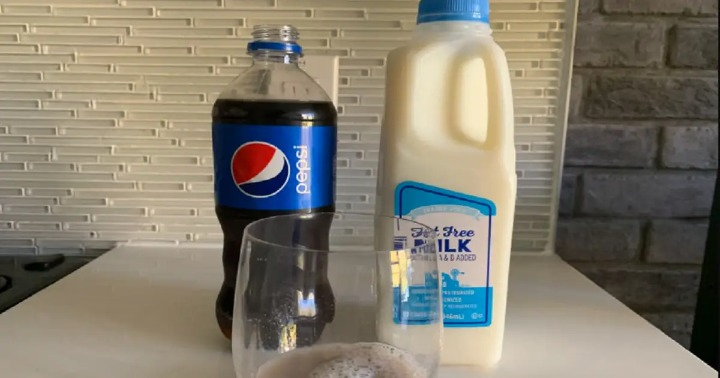
Pepsi and Milk: Why This Unusual Drink Combination Is Getting Attention
Introduction: A Surprisingly Different Way to Enjoy Pepsi
Food trends have always introduced people to unexpected combinations. Sometimes these combinations become popular because they offer a completely new flavor experience. Other times, they attract attention simply because people cannot imagine how two very different ingredients could possibly work together.
One unusual drink combination that has sparked curiosity is Pepsi mixed with milk.
At first, the idea may sound unusual. Pepsi is a sweet, fizzy soft drink with a recognizable cola flavor, while milk is creamy, smooth, and relatively mild. They seem to belong to two completely different categories of beverages.
However, combining them creates a drink with a surprisingly different appearance, texture, and taste.
The mixture is sometimes compared to a traditional ice cream float because the creamy ingredient changes the character of the carbonated beverage. Depending on the proportions and preparation method, the result can be sweet, slightly tangy, creamy, and refreshing.
For some people, the combination brings back memories of old-fashioned soda fountains. For others, it is simply an interesting kitchen experiment worth trying once.
The idea is not entirely new. Combining carbonated soft drinks with dairy products has appeared in different forms over the years, particularly in nostalgic American soda-shop culture. Nevertheless, social media has helped introduce unusual drink combinations to a much wider audience.
Pepsi with milk is a good example of how an ordinary kitchen experiment can become an interesting conversation about flavor, texture, personal preferences, and food creativity.
But what actually happens when Pepsi and milk are mixed? Why does the mixture sometimes change appearance? Does it taste good? And what is the easiest way to prepare it at home?
Let’s explore the ingredients, the science behind the combination, and a few practical ways to experiment with this unusual beverage.
1. Where Did the Idea of Mixing Soda and Milk Come From?
The idea of combining soda with dairy products is not completely new.
For decades, traditional American soda fountains served drinks that combined carbonated beverages with ice cream, milk, or flavored syrups.
One of the best-known examples is the ice cream float.
A traditional float is usually made by adding a scoop of ice cream to a glass of carbonated soft drink. As the ice cream begins to melt, it creates a creamy mixture with bubbles and a sweet, dessert-like flavor.
Another related beverage is the classic milkshake, which combines milk with ice cream and flavoring ingredients.
Although Pepsi with milk is not exactly the same as either drink, it follows a similar idea: combining the sweetness and carbonation of soda with the smooth texture of dairy.
Different people have experimented with these combinations using cola, root beer, chocolate milk, flavored syrups, and other ingredients.
The results depend heavily on the type of soda and dairy product used.
Some mixtures create a smooth dessert-like beverage, while others develop visible separation or a slightly unusual texture.
This variety is part of what makes the combination interesting.
Rather than being a completely new invention, Pepsi with milk is another example of the creativity that has always existed in soda culture.
2. What Happens When Pepsi and Milk Are Combined?
One of the first things people notice when mixing Pepsi with milk is that the appearance changes.
The dark cola color becomes lighter, producing a creamy brown or caramel-colored drink.
Depending on the amount of milk added, the mixture may look similar to a light chocolate beverage.
However, appearance is only one part of the experience.
Pepsi contains carbonated water, sweeteners, acidity regulators, flavorings, and other ingredients that give it its characteristic taste.
Milk contains water, proteins, fats, lactose, and minerals.
When these ingredients come together, several interactions take place.
The acidity of the cola can affect milk proteins, particularly casein.
Milk proteins normally remain dispersed in the liquid, helping create its familiar smooth appearance.
When the acidity increases, some proteins can lose their stability and begin to gather into small clusters.
This process is known as coagulation.
As a result, the mixture may develop tiny particles or a slightly separated appearance.
The exact result depends on the milk, the soda, the temperature, and the quantities used.
This is one reason why some people prefer using cold ingredients and adding the milk slowly.
A gradual approach can help make the mixture easier to observe and control.
3. Why Does Milk Sometimes Curdle When Added to Pepsi?
Curdling is one of the most interesting aspects of the Pepsi-and-milk experiment.
Milk contains proteins that respond to changes in acidity.
When an acidic ingredient is added, the proteins can begin to aggregate.
This is similar to what happens when milk is used in certain traditional cooking processes.
For example, lemon juice or vinegar can be added to milk to help separate the curds from the liquid when making fresh cheese.
Cola beverages are acidic, so adding milk can create a similar effect to varying degrees.
The result is not necessarily dangerous simply because it looks different.
However, the texture may become unpleasant for people who expect a completely smooth drink.
The separation can become more noticeable if the mixture is left standing for a long period.
For this reason, Pepsi with milk is generally best treated as an immediately prepared novelty beverage rather than something to prepare in advance and store.
If the mixture develops an unpleasant smell, unusual appearance beyond the expected separation, or has been left unrefrigerated for too long, it should not be consumed.
Understanding the chemistry makes the drink less mysterious.
What looks like a strange reaction is simply an interaction between the ingredients.
4. What Does Pepsi With Milk Actually Taste Like?
The taste is subjective, but several characteristics can be expected.
Pepsi provides the familiar sweetness and cola flavor.
Milk adds creaminess and reduces the sharp impression of carbonation.
Together, they produce a beverage that can taste somewhat similar to a melted cola float.
The dairy ingredient may also soften some of the stronger flavor notes in the soda.
However, the result is not identical to a milkshake or an ice cream float.
A traditional milkshake is thicker because it contains ice cream.
Pepsi with milk is generally much thinner and retains some of the original carbonation.
Some people enjoy the balance between sweet cola and creamy milk.
Others find the combination unusual because they are not accustomed to tasting dairy alongside a carbonated soft drink.
There is no universally correct opinion.
Taste preferences depend on individual expectations, the ingredients used, and the proportions.
Someone who enjoys creamy soda floats may find the mixture appealing.
Someone who prefers crisp, uncomplicated soft drinks may prefer Pepsi on its own.
The only way to know whether the combination suits your taste is to try a small amount.
5. How to Make Pepsi With Milk at Home
One reason unusual drink combinations attract attention is that they are often easy to prepare.
You do not need expensive equipment or specialist ingredients.
A small glass, cold Pepsi, and milk are enough for a basic experiment.
Ingredients
- 150 milliliters of chilled Pepsi
- 30–50 milliliters of cold milk
- A few ice cubes, if desired
Preparation
- Begin by placing the chilled Pepsi in a clean glass.
- Slowly pour a small amount of cold milk into the glass.
- Observe how the color and texture change.
- Add a little more milk if you prefer a creamier flavor.
- Stir gently if needed.
- Taste a small amount immediately.
The important thing is to start with a small quantity.
You can always adjust the proportions, but adding too much milk immediately may produce a texture you do not enjoy.
Because the acidity of Pepsi can affect the milk proteins, do not expect the mixture to remain perfectly smooth in every preparation.
It is also best not to prepare a large quantity before discovering whether you like the taste.
6. Choosing the Right Milk for the Combination
The type of milk used can influence the final drink.
Different milk products contain different amounts of fat, protein, and other components.
These differences can affect both the texture and flavor.
Whole Milk
Whole milk contains more fat than reduced-fat varieties.
Its richer flavor may create a creamier impression when combined with Pepsi.
People who enjoy dessert-style beverages may prefer this option.
However, the acidity of the cola can still cause protein separation.
Reduced-Fat Milk
Reduced-fat milk has a lighter consistency.
It may produce a less rich beverage, allowing more of the cola flavor to remain noticeable.
Some people may prefer this balance because it does not feel as heavy.
Skimmed Milk
Skimmed milk contains very little fat.
The result may taste less creamy than a mixture prepared with whole milk.
Its texture can be quite different, especially when the acidity of the soda affects the milk proteins.
Lactose-Free Milk
Lactose-free milk may be an option for people who have difficulty digesting lactose.
However, lactose-free products still contain