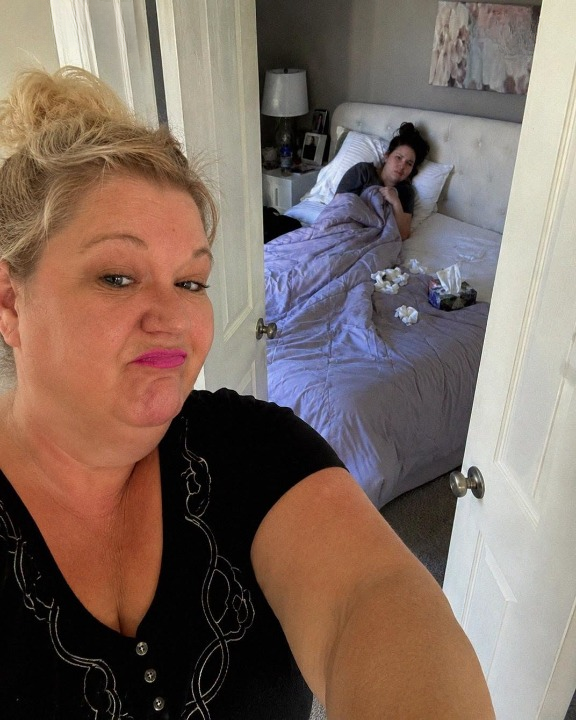
I am normally the kind of person who is awake before the alarm.
Most mornings, I’m out of bed by six.
I make coffee, pack my husband Nathan’s lunch, check whether there is laundry to start, and usually answer at least a few work emails before seven.
I’m not saying that because I think waking up early makes me better than anyone else.
It’s simply my routine.
So when I was still asleep at eleven thirty one Tuesday morning, there was a very good reason.
I was sick.
Not slightly tired.
Not avoiding responsibilities.
Actually sick.
The night before, my temperature had climbed above 102 degrees. I had chills so intense I wore two blankets, and every cough made my ribs ache.
Nathan wanted to take the day off to stay with me.
I refused.
“You have that meeting,” I told him.
“I can cancel.”
“I’m going to sleep all day anyway.”
He reluctantly agreed to go to work.
Before leaving, he placed water, medicine, tissues, and my phone on the bedside table.
Then he pointed at me.
“Don’t get up and start cleaning.”
“I won’t.”
“I’m serious.”
“I know.”
“No laundry.”
“Fine.”
“No dishes.”
“Nathan.”
“No trying to answer forty emails because you feel guilty.”
I smiled weakly.
“Go to work.”
He kissed my forehead.
“Rest.”
That was exactly what I planned to do.
Around eleven that morning, I finally fell into a deep sleep.
Then my bedroom door suddenly opened.
I woke with a start.
My mother-in-law, Patricia, stood in the doorway.
For a moment, I genuinely thought I was dreaming.
“Patricia?”
She had a spare key to our house, but it was supposed to be used only for emergencies.
She looked at the clock.
“It’s almost noon.”
I blinked.
“Yes?”
“Nathan is at work.”
“I know.”
“And you’re still in bed?”
My head was pounding.
“I’m sick.”
She stepped farther into the room.
Only then did she seem to notice the medicine, used tissues, thermometer, and glass of water beside me.
Instead of showing concern, she frowned.
“We all get sick.”
I stared at her.
“Okay.”
“That doesn’t mean everything stops.”
I was too exhausted to argue properly.
“My doctor told me to stay in bed.”
Patricia made a dismissive sound.
“Doctors tell everyone to rest.”
“Because sometimes people need rest.”
She crossed her arms.
“When I was raising Nathan, I still cooked dinner no matter how tired I was.”
I closed my eyes.
“Patricia, please. I really don’t feel well.”
“You should at least get up, take a shower, and straighten the house.”
I looked around.
The house wasn’t even messy.
But Patricia had always been one of those people who believed resting was suspicious.
If you weren’t actively cleaning, cooking, working, or organizing something, she assumed you were lazy.
Then she did something that made my stomach drop.
She pulled out her phone.
“What are you doing?”
“Nothing.”
She pointed it toward me.
“Patricia, don’t take my picture.”
She snapped one anyway.
I sat up.
“I’m serious. Delete that.”
She looked at the screen.
“You look perfectly comfortable to me.”
“I’m sick!”
She walked away.
Ten minutes later, my phone started buzzing.
I opened Facebook.
There it was.
A photograph of me in bed, pale, exhausted, hair messy, tissues scattered on the nightstand.
Patricia had written:
“Good morning to everyone who actually gets up, works, and takes care of their family instead of sleeping until noon.”
She didn’t use my name.
She didn’t need to.
Several relatives recognized our bedroom.
The comments started almost immediately.
Some people laughed.
Others wrote things like:
“Must be nice!”
“Wish I could sleep that late.”
One person asked if I was ill.
Patricia responded:
“Apparently she’s ‘sick.'”
That hurt more than the original post.
I wasn’t ashamed of being ill.
I was embarrassed that someone had entered my bedroom without permission, photographed me at one of my most vulnerable moments, and turned it into entertainment.
I started crying.
Then I became angry.
I typed a reply.
Deleted it.
Typed another.
Deleted that too.
When Nathan came home that evening, he found me sitting on the couch wrapped in a blanket.
He immediately knew something was wrong.
“What happened?”
I handed him my phone.
Nathan read his mother’s post.
His expression changed.
He scrolled through the comments.
Then he became very quiet.
“Say something,” I told him.
“I will.”
“Call her.”
He shook his head.
“Not yet.”
“Nathan, she came into our bedroom.”
“I know.”
“She took a picture after I told her not to.”
“I know.”
“Then she humiliated me online.”
Nathan put the phone down.
“Please don’t respond tonight.”
I stared at him.
“Why?”
“Because right now, anything we say will turn into another argument about how she was only joking.”
“She wasn’t joking.”
“I know.”
He took my hand.
“Trust me.”
I didn’t particularly want to.
But I did.
For the next several days, Nathan said almost nothing about Patricia.
The Facebook post eventually disappeared.
I wasn’t sure whether Patricia deleted it herself or whether someone convinced her to remove it.
Either way, she didn’t apologize.
By Friday, my fever was gone.
I was still tired, but I was finally starting to feel normal again.
Then, early Saturday morning, Nathan gently shook my shoulder.
“Honey.”
I opened one eye.
“What time is it?”
“Four forty-five.”
I stared at him.
“Are you serious?”
“Get dressed.”
“Why?”
He was already wearing jeans and holding his car keys.
“Please come with me.”
“Where?”
“You’ll see.”
Twenty minutes later, we were parked outside Patricia’s house.
I looked at him.
“No.”
He smiled slightly.
“Yes.”
“What are we doing?”
“Teaching Mom something about perspective.”
Nathan had an emergency key to Patricia’s house.
She had given it to him years earlier in case she ever fell or needed help.
Just like the key she had used to enter our house.
Nathan unlocked the front door quietly.
I grabbed his arm.
“If you’re planning to photograph your mother asleep and post it online, I’m leaving.”
He looked almost offended.
“Absolutely not.”
“Good.”
“I’m trying to prove a point, not become her.”
That reassured me.
We walked quietly down the hallway.
Nathan stopped outside Patricia’s bedroom.
Then he knocked.
Loudly.
Patricia woke almost immediately.
“What?”
Nathan knocked again.
“Mom!”
The door opened.
Patricia stood there wearing a robe, hair messy, completely confused.
“Nathan? What are you doing here?”
He looked at his watch.
“It’s almost five.”
She stared at him.
“Yes!”
“You’re still sleeping?”
Her mouth fell open.
“What?”
Nathan walked toward the kitchen.
“Come on. You should get breakfast started.”
Patricia followed him.
“Have you lost your mind?”
“I thought people who care about their families get up and start working.”
She stopped.
Then she looked at me.
Understanding began to appear on her face.
“Oh, very funny.”
Nathan remained completely serious.
“I’m not joking.”
“Nathan, it is five in the morning.”
“So?”
“I’m retired!”
“And?”
Patricia looked increasingly irritated.
“I don’t have any reason to be awake!”
Nathan nodded.
“Exactly.”
Silence.
He continued.
“Your circumstances are different from ours. Just because you’re asleep doesn’t mean you’re lazy.”
Patricia crossed her arms.
“I never said sleeping makes someone lazy.”
Nathan pulled out his phone.
Then he showed her a screenshot of her deleted Facebook post.
She turned red.
“That was different.”
“How?”
“She was sleeping until noon.”
“Because she had a 102-degree fever.”
Patricia looked at me.
“I didn’t know it was that bad.”
I finally spoke.
“You saw the thermometer.”
She looked away.
Nathan continued.
“You came into our house using an emergency key when there was no emergency.”
Patricia said nothing.
“You entered our bedroom.”
Silence.
“She told you not to take a picture.”
Patricia’s expression tightened.
“I shouldn’t have posted it.”
“No,” Nathan said. “You shouldn’t have taken it.”
That seemed to surprise her.
He wasn’t yelling.
That somehow made the conversation more serious.
“The part that bothers me most isn’t even the Facebook post,” Nathan said.
Patricia frowned.
“What is?”
“You saw my wife sick in bed and your first instinct was to criticize her.”
Patricia looked uncomfortable.
“I was raised differently.”
“That’s not an excuse.”
“In my day, you didn’t lie around just because you didn’t feel well.”
Nathan shook his head.
“This isn’t about generations.”
He pointed toward the hallway.
“If I walked into your bedroom whenever I wanted because I had a key, would you like that?”
“No.”
“If I photographed you while you were sleeping?”
“Of course not.”
“If I posted it online and invited relatives to joke about how lazy you were?”
Patricia’s face softened.
“No.”
“Then why was it acceptable when you did it to my wife?”
For once, Patricia had no immediate answer.
I had known her for fourteen years.
That might have been the first time I’d seen her truly speechless.
Finally, she looked at me.
“I didn’t think of it that way.”
I nodded.
“That’s the problem.”
She sighed.
“I thought I was making a joke.”
“At my expense.”
“I know.”
“And when I told you I was sick, you didn’t believe me.”
Patricia looked down.
“I’m sorry.”
I wasn’t expecting that.
Nathan wasn’t either.
She continued.
“I shouldn’t have entered your room.”
I waited.
“And I definitely shouldn’t have taken the photograph.”
Another pause.
“Or posted it.”
I nodded.
“Thank you.”
Then Nathan held out his hand.
Patricia frowned.
“What?”
“The spare key.”
Her eyes widened.
“You can’t be serious.”
“I am.”
“But what if there’s an emergency?”
“Then we’ll decide later who should have a key.”
She looked offended.
“You’re taking away my key?”
“Temporarily.”
“Because of one mistake?”
“Because an emergency key only works if we can trust that it’s used for emergencies.”
Patricia looked at me.
I didn’t say anything.
Finally, she walked to a small bowl near the front entrance.
She picked up our key and handed it to Nathan.
“Fine.”
Nathan put it into his pocket.
Then he smiled.
“Great. Now that we’re all awake, how about breakfast?”
Patricia stared at him.
“Make it yourself.”
I burst out laughing.
Even Patricia eventually smiled.
We didn’t magically become best friends that morning.
What happened still bothered me.
But something changed afterward.
Patricia stopped commenting on what time I woke up.
She stopped offering unsolicited opinions about how often I cleaned.
Most importantly, she stopped treating access to our home as if it were access to our private lives.
A few weeks later, she came over for dinner.
This time, she rang the doorbell.
I noticed.
Nathan noticed too.
Patricia handed me a small bag.
Inside was a new robe.
I raised an eyebrow.
“What’s this?”
She looked embarrassed.
“For the next time you’re sick.”
Then she quickly added:
“Not that I’m planning to photograph you.”
I laughed.
“Good.”
She smiled.
“And there’s soup in the car.”
That was Patricia’s version of an apology.
Not perfect.
But sincere.
Looking back, I’m glad Nathan didn’t retaliate by doing exactly what his mother had done.
Public humiliation would only have created another fight.
Instead, he gave her something more uncomfortable.
Perspective.
For five minutes before sunrise, Patricia experienced what it felt like to have someone enter her private space, question why she was resting, and act as though she needed to justify herself.
And once she understood how ridiculous that felt, she couldn’t defend what she’d done to me anymore.
There is nothing wrong with helping family.
There is nothing wrong with giving someone an emergency key.
But access doesn’t erase boundaries.
And being family doesn’t mean you get to decide when someone else deserves privacy, rest, or basic respect.
Sometimes people don’t understand a boundary when you explain it.
Sometimes they only understand when you calmly show them why the boundary exists.