By six o’clock that evening, I had run out of excuses for my family.
That morning, I told myself everyone was simply busy.
My husband, Brad, left early for an important meeting. Our oldest son, Pete, rushed out the door because he was late for work. Mike spent twenty minutes searching the house for his gym bag, while Justin complained that we had run out of his favorite cereal.
Not one of them wished me a happy birthday.
At first, I tried not to take it personally. People forget things when they are distracted, and our house had been unusually hectic that week.
By lunchtime, however, my phone was still silent.
There were no messages from Brad or the boys. There was no delivery at the door, no card on the kitchen counter, and no indication that anyone remembered what day it was.
I began inventing explanations for them.
Maybe they were pretending to forget so they could surprise me later. Perhaps Brad had secretly made dinner reservations. Maybe the boys were coordinating something and had been told not to contact me.
I carried on with my day while holding on to that small possibility.
In the afternoon, I began preparing fresh pasta with my favorite tomato and basil sauce. I set the table, chilled a bottle of sparkling cider, and arranged the birthday balloons I had ordered earlier that week.
It may seem strange that I bought my own decorations, but after nineteen years of marriage, I had learned that celebrations happened in our home because I planned them.
I remembered every birthday, anniversary, school event, medical appointment, and family gathering. I chose the presents, ordered the cakes, wrapped the gifts, and made everyone’s favorite meals.
That evening, I hoped someone else had made a plan for me.
At exactly six o’clock, my phone vibrated.
It was a message from Brad.
“Hey, I’m taking the boys to that Renaissance festival they’ve been talking about. We’ll probably be home late. I’ll bring you something. Just make dinner for yourself.”
I read the message twice.
“Are you serious?” I replied.
Brad answered almost immediately.
He said I was always encouraging him to spend more time with the boys. Now that he had finally organized an evening with them, he did not understand why I was upset.
“Relax,” he wrote. “Watch one of your shows and enjoy the quiet house.”
There was still no mention of my birthday.
I turned off the stove.
Then I removed the balloons one at a time. As I deflated them and placed them in the trash, I felt embarrassed for having believed there might be a surprise.
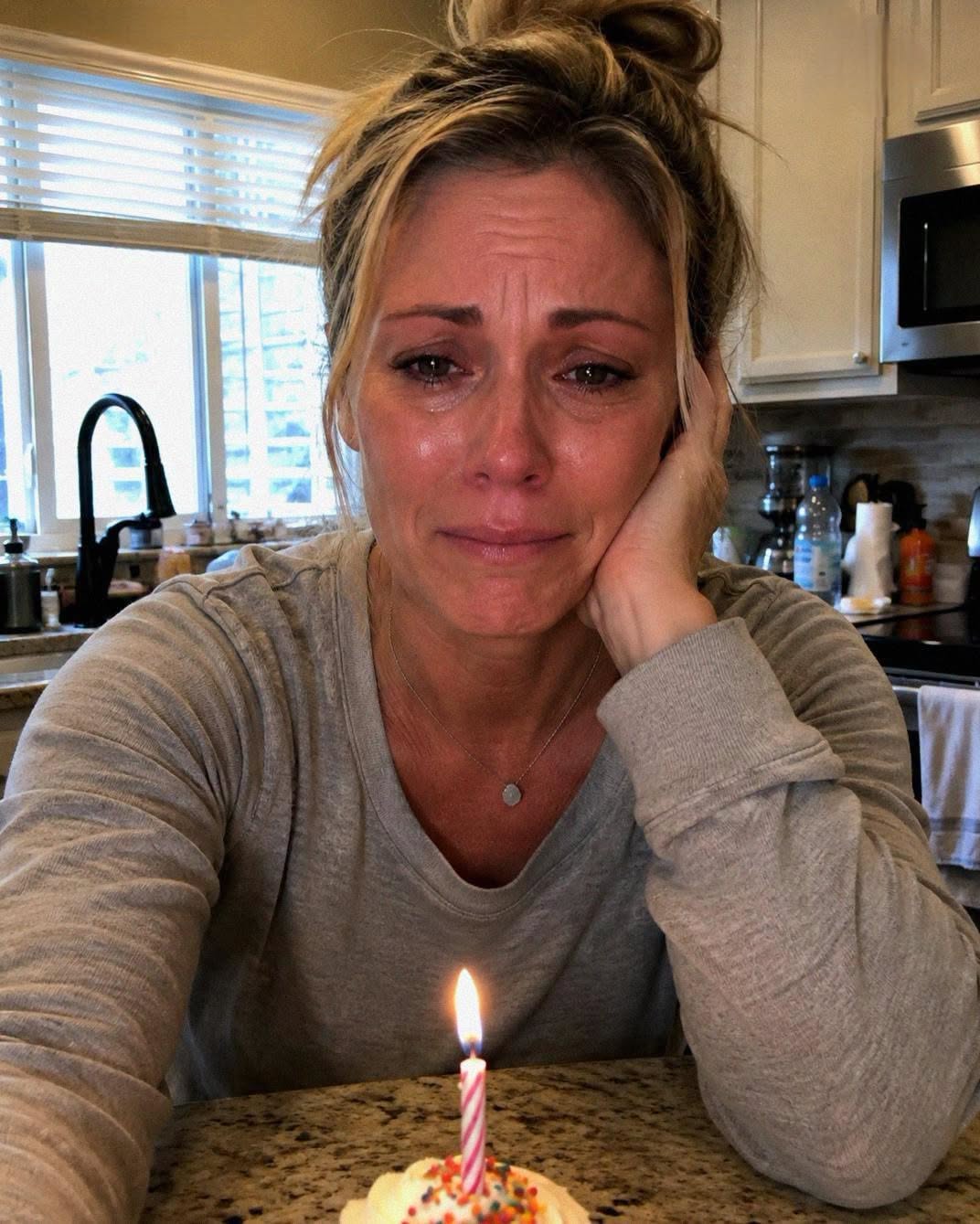
Earlier that day, I had bought myself a single vanilla cupcake. I placed it on the table, pushed a small candle into the frosting, and lit it.
“Happy birthday, Sophie,” I whispered.
That was when the tears came.
It was not about receiving an expensive present. I did not need jewelry, a luxury vacation, or an elaborate party.
I wanted the four people I had cared for throughout my adult life to remember me for one day.
For nineteen years, I had made birthdays in our house feel special.
Brad loved beef Wellington, so I spent hours preparing it for him. Pete always requested fried chicken with mashed potatoes. Mike wanted homemade pizza, and Justin expected an enormous three-layer chocolate cake.
Even when I was tired or unwell, I did my best to make their celebrations memorable.
Yet on my birthday, I was sitting alone in the kitchen with one cupcake.
As I looked around the empty room, I began thinking about the person I had been before marriage and motherhood.
Before Pete was born, I had trained as a chef.
I was good at it too.
My mentor, Evelyn, once told me that I had a natural understanding of flavor that could not be taught. I could taste a dish and immediately recognize what it needed. During culinary school, I dreamed about opening a small restaurant where people could enjoy familiar meals prepared with care.
Then I became pregnant.
Brad and I decided that I would stay home for a few years. We believed it was the best choice at the time, and I did not regret being present for our sons while they were young.
But those few years quietly became nineteen.
Whenever I mentioned returning to work, there was another reason the timing was wrong.
The boys needed transportation.
Childcare was expensive.
Brad’s work schedule was unpredictable.
Someone needed to manage the house.
Something always seemed more urgent than my career.
Once the boys became older and more independent, I began researching food trucks. It felt like a realistic way to return to cooking professionally without immediately taking on the costs of a traditional restaurant.
I developed menus, calculated ingredient costs, studied local permit requirements, and visited several food-truck events. This was not a passing fantasy. I had created a detailed business plan.
My family never took it seriously.
Brad called it an unnecessary risk.
Pete asked whether people would really pay for food I made.
Mike wanted to know who would prepare dinner if I worked evenings.
Justin laughed and said I already spent all day cooking, so there was no reason to buy a truck just to do more of it.
I had laughed along with them at the time, pretending their comments did not hurt.
Sitting alone on my birthday, I no longer found any of it amusing.
I opened the records for our family savings account.
Over the years, money from that account had been used for many large purchases. Brad had withdrawn funds for the down payment on a newer car. Pete had borrowed money to buy a motorcycle. We had paid Mike’s sports expenses and purchased an expensive gaming computer for Justin.
Every time, we described the expense as an investment in the family.
I had contributed to those savings in ways that were not always listed on a paycheck. I managed our household, stretched our budget, prepared nearly every meal, and provided years of unpaid care that allowed Brad to focus on his career.
I stared at the account balance.
Then a simple thought occurred to me.
I was part of this family too.
For months, I had been watching the listing for a used food truck. It had been owned by a couple who retired from the catering business. The truck had moderate mileage, a recently serviced engine, two refrigerators, a flat-top grill, and a stainless-steel preparation area.
I knew exactly what needed to be repaired and what I would change first.
The price had recently been reduced, and the seller required a deposit to reserve it. The deposit would come from the portion of our savings that Brad and I had previously agreed could be used for personal development or future business opportunities.
I opened the listing again.
My business plan was in a folder beside the computer. I reviewed the numbers one last time. Even after paying the deposit, our emergency savings would remain untouched.
I entered the payment information.
The confirmation button appeared on the screen.
For about thirty seconds, I could not click it.
I could already hear Brad’s objections.
“It’s irresponsible.”
“You don’t need it.”
“You should think about the family.”
Strangely, that last imagined objection made the decision easier.
I had spent nineteen years thinking about my family.
For once, I needed to think about Sophie.
I clicked the button.
A confirmation page appeared.
My heart raced as I stared at it. I felt frightened, guilty, and almost nauseous. Beneath all those emotions, however, was something I had not felt in years.
Excitement.
For the first time that day, I smiled.
I picked up my cupcake and took another bite.
Then my phone rang.
Brad’s name appeared on the screen. Apparently, the bank notification reached him before I had finished eating.
I answered.
I could hear music and crowds in the background. One of the boys was laughing nearby.
Brad did not even say hello.
“What did you just do?” he demanded.
“I placed a deposit on the food truck.”
“You spent our savings without asking me?”
“I used the business-development portion of our savings. I left the emergency fund untouched.”
“That money belongs to the family.”
“So do I, Brad.”
He became quiet.
I continued before he could interrupt me.
“You used more than that for your car. We helped Pete buy a motorcycle. We funded Mike’s sports programs and Justin’s computer. I supported every one of those decisions because they mattered to the people I love. This truck matters to me.”
“This isn’t the same,” he argued. “Those were things we discussed.”
“I tried to discuss the food truck with all of you. You laughed.”
Brad sighed.
“Can we talk about this when I get home?”
“Of course. Enjoy the festival.”
I was about to end the call when he suddenly asked why I sounded so upset.
I looked at the half-eaten cupcake and the deflated balloons in the trash.
“Do you know what day it is?” I asked.
There was a long silence.
The background noise seemed to fade.
Then I heard Brad whisper something to the boys. Their laughter stopped.
“Sophie,” he said slowly.
“Yes?”
“I’m so sorry.”
That apology confirmed what I already knew. There had been no surprise dinner, hidden present, or secret plan.
They had forgotten.
Less than an hour later, the front door opened.
Brad and the boys walked into the kitchen carrying flowers, a hurriedly purchased cake, and a souvenir from the festival. I appreciated the effort, but I could not pretend it erased the day.
“We really messed up,” Pete said.
Mike placed the cake on the counter.
Justin looked at the deflated balloons in the trash and lowered his head.
“I’m sorry, Mom.”
I thanked them for coming home, but I told them we needed to have a serious conversation.
For years, our family had treated my time, labor, and ambitions as if they were endlessly available. They expected meals to appear, appointments to be remembered, and celebrations to be organized without considering the person doing all that work.
“I love caring for you,” I said. “But being your wife and mother cannot be the only thing I am allowed to become.”
Brad tried to explain that he never intended to hold me back.
“Intentions are not enough,” I replied. “Every time I mentioned returning to work, you gave me another reason to wait. When I created a realistic plan, you dismissed it before reading it.”
I placed my business plan on the table.
“If you believe the truck is a poor investment, then read this. Look at the costs, permits, menu, and projected income. Discuss the facts with me. But you are not allowed to laugh at my dream anymore.”
Brad read the entire plan that night.
The following morning, he apologized again—this time not only for forgetting my birthday, but for failing to recognize how much of myself I had placed on hold.
The food truck arrived three weeks later.
I named it “Sophie’s Second Course” because it represented the second chapter of my working life. Evelyn, my former mentor, helped me refine the opening menu. We focused on fresh pasta bowls, toasted sandwiches, seasonal soups, and one rotating dessert.
Starting the business was not easy.
The truck needed repairs that were more expensive than expected. My first permit application was returned because I had completed one section incorrectly. On opening day, it rained for four hours, and fewer than twenty customers appeared.
But I did not quit.
I adjusted the schedule, promoted the truck at local events, partnered with nearby offices, and introduced online preorders. Gradually, customers returned. Some brought friends. Positive reviews began appearing online.
Pete helped me create a website. Mike handled deliveries on busy weekends. Justin designed a simple menu board, and Brad began shopping for ingredients with me on Saturday mornings.
Their support did not excuse the way they had treated my dream before, but it showed that they were capable of changing.
Six months after my lonely birthday, Sophie’s Second Course was invited to provide food at the same Renaissance festival Brad and the boys had attended that night.
The line outside the truck stretched across the event grounds.
At one point, Brad stepped inside and handed me an envelope. Inside was a birthday card signed by all four of them, even though my next birthday was still months away.
On the front, they had written:
“We’re putting it on the calendar early.”
I laughed, but then Brad became serious.
“We should never have needed a bank notification to remember that you matter,” he said.
He was right.
Buying the truck did not magically solve every problem in our family. We still had difficult conversations about money, responsibilities, and the division of work at home. I also learned that pursuing a dream required more than courage. It required preparation, patience, and the willingness to make mistakes.
However, the purchase changed something important.
For nineteen years, I had introduced myself as Brad’s wife or the boys’ mother. I was proud to be both, but those roles were not the complete definition of who I was.
I was also a chef.
I was a business owner.
I was a woman whose goals deserved the same consideration as everyone else’s.
My family forgot my birthday that year, but the experience forced all of us to remember something more important: caring for a family should never require one person to disappear inside it.
Sometimes the most meaningful gift is not something another person gives you.
Sometimes it is the decision to stop postponing the life you still want to build.