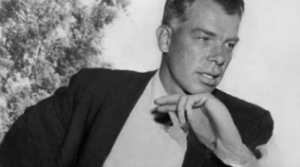
Lee Marvin and “Wandering Star”: The Unexpected Song That Became a UK Chart Success
In the history of popular music, some of the most memorable chart moments come from artists who were not primarily known as musicians.
One of the most unusual examples arrived in 1970, when Hollywood actor Lee Marvin found himself at the top of the UK Singles Chart with a song from the western film Paint Your Wagon.
The song was “Wand’rin’ Star,” a reflective number written by Alan Jay Lerner and Frederick Loewe for the 1969 musical film. Marvin performed the song as his character, Ben Rumson, a wandering prospector whose outlook on life was closely connected to the landscape and freedom of the American West.
Marvin was not a conventional recording artist.
He wasn’t known for polished pop vocals, elaborate performances, or a traditional music career. His voice was deep, rough, and immediately recognizable. That distinctive delivery became one of the reasons the recording stood out.
At a time when the British charts were filled with rock, pop, soul, and other contemporary sounds, the success of “Wand’rin’ Star” offered an unusual reminder that audiences could connect with a recording for reasons that had little to do with conventional vocal technique.
The song’s success also demonstrated the power of film, character, storytelling, and personality in popular music.
Lee Marvin Was Already a Major Film Star
By the time “Wand’rin’ Star” reached audiences, Lee Marvin had already established himself as one of Hollywood’s most recognizable actors.
Born in New York City in 1924, Marvin developed a career that included a wide variety of film roles.
He became particularly associated with characters who were tough, reserved, intimidating, or morally complicated.
His screen presence was distinctive.
Marvin had a deep voice, a serious expression, and a physical presence that made him immediately recognizable.
He could play dramatic characters without relying on excessive dialogue.
That background became important when he performed “Wand’rin’ Star.”
The song did not require a traditionally trained pop vocalist.
Instead, it benefited from the character Marvin had created on screen.
His voice sounded like the voice of a weathered western character rather than a studio singer attempting to imitate one.
That helped make the recording memorable.
The Song Came From Paint Your Wagon
“Wand’rin’ Star” was part of the soundtrack to Paint Your Wagon, a musical western released in 1969.
The film starred Lee Marvin, Clint Eastwood, and Jean Seberg.
The story was set during the California Gold Rush and combined elements of western adventure with musical theater.
The unusual combination of actors and musical numbers gave the production a distinctive character.
Lee Marvin played Ben Rumson, a rough-edged prospector whose worldview was shaped by years of traveling through the American West.
“Wand’rin’ Star” suited the character.
The song expresses the perspective of someone who values movement and independence rather than settling permanently in one place.
Instead of sounding like a conventional love song or dance record, it feels more like a character reflecting on his way of life.
That connection between song and character was important to its appeal.
A Voice That Didn’t Sound Like a Typical Pop Record
Popular music often places considerable emphasis on vocal range, pitch accuracy, smoothness, and technical control.
Marvin’s performance worked differently.
His voice was low, weathered, and conversational.
He did not try to transform himself into a conventional singer.
Instead, he delivered the song in a style that sounded natural for the character he played.
That quality gave “Wand’rin’ Star” a distinctive identity.
The recording was not trying to compete with powerful vocal performances.
It was telling a story.
The roughness of Marvin’s voice became part of the recording’s character.
Rather than distracting listeners, it helped create an atmosphere.
The song sounded like it belonged to the world of the film.
The 1970 Chart Success
The most surprising part of the story came when “Wand’rin’ Star” became a major hit in the United Kingdom.
The song reached No. 1 on the UK Singles Chart in 1970.
That achievement was notable because Marvin was primarily recognized as an actor rather than a recording artist.
The success also arrived during a period when popular music was changing quickly.
The late 1960s and early 1970s brought major developments in rock, soul, singer-songwriter music, progressive rock, and pop.
Against that background, a western ballad performed by a Hollywood actor stood out.
Its success showed that audiences were not limited to one particular musical style.
A song could become popular because of its melody, its story, its association with a film, or the personality of the person performing it.
In Marvin’s case, several of those factors came together.
Why the Song Connected With Listeners
There was something straightforward about “Wand’rin’ Star.”
The song presented a clear character and a clear point of view.
The narrator is drawn toward movement and open spaces.
The idea of wandering is central to the song’s identity.
That theme fit naturally with the western setting of Paint Your Wagon.
But it also had broader appeal.
The idea of wanting freedom, avoiding routine, or searching for a place that feels right is something many people can understand.
Listeners don’t necessarily have to be prospectors in the American West to recognize the emotion behind a song about moving forward and refusing to be tied to one location.
That universality helped the song work beyond the movie itself.
The Power of a Memorable Character
One reason “Wand’rin’ Star” remains interesting is that it is difficult to separate Marvin’s performance from his screen persona.
When listeners hear his voice, they don’t simply hear a singer.
They hear Lee Marvin.
His voice carries the same qualities that made him recognizable in films.
This is an important part of entertainment history.
Sometimes an audience connects with a performer because of the person rather than the technical qualities of the performance.
A famous actor can release a song and immediately bring an existing audience to it.
Likewise, a musician who appears in a film can bring musical fans into a movie.
Entertainment industries have always overlapped in this way.
Western Films and Music
Western movies have a long relationship with music.
Songs can establish a setting, introduce a character, communicate emotions, or create a sense of place.
The wide landscapes associated with western cinema often work particularly well with music.
A simple melody can reinforce images of mountains, deserts, open plains, horses, ca