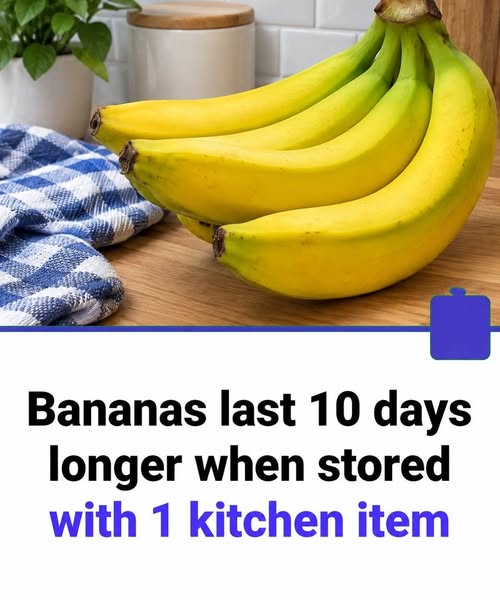
Bananas are one of those foods that seem incredibly simple to store—until you buy a bunch that looks perfect at the grocery store and then discover that they have started developing brown spots just a few days later.
For years, I simply placed bananas on the kitchen counter and thought that was the only way to store them. Sometimes they stayed in good condition for several days. Other times, they seemed to ripen much faster than expected.
Eventually, I decided to change my routine and pay closer attention to how I was storing them.
The difference was more noticeable than I expected.
It turns out that where and how bananas are kept can affect how quickly they ripen, and a few simple changes can make them easier to manage.
If you regularly buy bananas, understanding the basics of storage can help you reduce unnecessary food waste and get more use out of every bunch.
Why Do Bananas Ripen So Quickly?
Bananas are a type of fruit that continues to ripen after being harvested.
As they ripen, their color changes from green toward yellow, and their texture becomes softer and sweeter.
One important factor is ethylene, a naturally occurring plant hormone involved in the ripening process of many fruits.
Bananas produce ethylene as they ripen, and the gas can contribute to further ripening when it accumulates around nearby fruit.
This is one reason the location of your banana bunch can matter.
Keeping bananas in a warm area with limited airflow may produce a different result from keeping them somewhere cooler and better ventilated.
My Old Banana Storage Routine
My old method was simple.
I would bring home a bunch of bananas, put them on the kitchen counter, and leave them there.
There was nothing particularly wrong with this approach when I planned to eat the bananas quickly.
The problem appeared when I bought more than I could finish in a few days.
The bananas would gradually become softer.
Then the peel would develop more brown spots.
Eventually, some of them would become so ripe that I would either have to use them for baking or decide that they were no longer appealing enough to eat.
That experience made me realize that buying bananas is only half the process.
Knowing how to store them is just as useful.
The First Change I Made
Instead of leaving the bunch wherever there happened to be room on the counter, I started paying more attention to its surroundings.
I moved the bananas away from areas that were especially warm, such as spots directly next to appliances that produce heat.
I also tried to keep them away from direct sunlight.
This small change made the storage area more suitable for keeping the fruit at a more moderate temperature.
It is important to remember that bananas do not respond well to every type of cold storage at every stage of ripeness, so the ideal approach can depend on how ripe they already are and how quickly you plan to eat them.
Separate Bananas When You Need Them
Another method some people use is separating individual bananas from the bunch.
This can make sense if you do not plan to eat the entire bunch at the same time.
Instead of allowing every banana to ripen together, separating them gives you more flexibility in how you use them.
You can eat the ripest fruit first while allowing the others to continue ripening.
This is particularly useful for households where different people prefer bananas at different stages of ripeness.
Some people like them when the peel is bright yellow and the fruit is still relatively firm.
Others prefer bananas that have developed brown spots and a softer texture.
Separating the fruit can make it easier to manage those preferences.
What About Wrapping the Stems?
You may have seen the popular suggestion of covering or wrapping the stems of bananas.
The idea is related to ethylene production and the way the fruit ripens.
Some people find that covering the stem area can help slow the visible progression of ripening, although the results can vary depending on the bananas, storage conditions, and other factors.
If you decide to try this approach, it is best viewed as one small part of overall storage rather than a guaranteed solution.
Temperature, airflow, humidity, and the ripeness of the fruit can all influence how quickly bananas change.
Don’t Put Unripe Bananas in the Refrigerator
One of the most common questions about banana storage is whether they should go in the refrigerator.
For green or unripe bananas, refrigeration is generally not the best choice because cold temperatures can interfere with normal ripening.
The peel may also darken significantly in the refrigerator.
That darker appearance does not necessarily mean the fruit inside has spoiled, but it can make the banana look less appealing.
Once bananas are sufficiently ripe, refrigeration can be useful for slowing further ripening, particularly if you are trying to keep them from becoming overly soft.
The peel may still turn darker, but the fruit inside can remain usable for longer.
A Dark Peel Does Not Always Mean Spoiled Fruit
This is an important distinction.
Banana peels naturally change as the fruit ripens.
Brown or dark spots can appear even when the inside remains perfectly suitable for eating.
Instead of judging the fruit only by the color of the peel, check the banana itself.
Look for unusual odors, significant leakage, mold, or other obvious signs of spoilage.
If the fruit looks and smells normal inside and has simply become softer and sweeter, it may still be useful.
Very ripe bananas can be particularly convenient for smoothies, pancakes, muffins, banana bread, and other recipes.
Keep Bananas Away From Certain Fruits
Because bananas produce ethylene, storing them alongside other ethylene-sensitive produce can influence how quickly some fruits and vegetables ripen.
This does not mean that you need to separate every type of produce in your kitchen.
However, if you notice that certain fruits are consistently ripening much faster than expected, consider whether they are being stored together.
Learning which fruits produce and respond to ethylene can help you organize your kitchen more effectively.
Think About How Quickly You Will Eat Them
There is no single storage method that is perfect for everyone.
The best approach depends on your household and how quickly you eat bananas.
If you eat several bananas every day, you may not need to do much beyond keeping them in a suitable location on the counter.
If you only eat one or two every few days, you may benefit from using different storage methods at different stages of ripeness.
For example, you might keep the bananas at room temperature while they are still firm and then use cooler storage once they have reached the level of ripeness you prefer.
The goal is not to stop ripening completely.
The goal is to manage it.
Buy Bananas at Different Stages of Ripeness
Another simple strategy is to avoid buying an entire bunch at exactly the same stage of ripeness.
If you have the option, choose some bananas that are ready to eat and others that are slightly greener.
That way, you do not end up with an entire bunch reaching peak ripeness at the same time.
This can be especially helpful for larger households.
Instead of having six or seven bananas that all need to be eaten immediately, you can spread their use over several days.
What to Do With Very Ripe Bananas
Even if your storage method does not work perfectly, very ripe bananas do not necessarily need to be thrown away.
In fact, ripe bananas can be excellent ingredients.
Their natural sweetness makes them useful in:
-
Banana bread
-
Muffins
-
Smoothies
-
Pancakes
-
Oatmeal
-
Homemade frozen treats
-
Baked desserts
If you know you will not use ripe bananas immediately, you can also freeze peeled bananas for later use.
Freezing changes the texture, so thawed bananas may be softer than fresh ones, but they can work extremely well in smoothies and baking.
The Biggest Lesson I Learned
The biggest change was not one magical trick.
It was simply becoming more aware of the conditions in which I was storing the fruit.
Bananas are living produce, and their ripening process naturally continues after you bring them home.
Once I started considering temperature, airflow, sunlight, surrounding produce, and the ripeness of the bananas, it became easier to plan when I would eat them.
That meant fewer bananas reaching the point where I felt I had to use them immediately.
A Simple Banana Storage Routine
If you want a straightforward routine, start with a few basic steps.
Keep unripe bananas at room temperature in a suitable location away from excessive heat and direct sunlight.
If you want to slow the process as the bananas become ripe, consider moving them to a cooler location appropriate for their stage of ripeness.
Separate bananas when it makes sense for your household.
Keep an eye on the fruit rather than relying only on peel color.
And if several bananas become very ripe at once, consider freezing them or using them in a recipe rather than automatically throwing them away.
Final Thoughts
I originally thought banana storage was one of those everyday kitchen tasks that did not require much thought.
But changing a few simple habits made it easier to manage the fruit I bought and reduced the number of bananas that became overripe before I had a chance to use them.
There is no single method that will keep bananas fresh indefinitely, and results can vary depending on the temperature, humidity, ripeness, and conditions in your kitchen.
Still, paying attention to how bananas ripen can make a noticeable difference.
So the next time you bring home a bunch, think about where you place it.
Instead of automatically leaving it in the warmest or most convenient spot, consider the surrounding conditions and how quickly you expect to eat the fruit.
A small change in your storage routine may help you enjoy your bananas at the stage you prefer—and make it easier to use the entire bunch instead of wasting part of it.