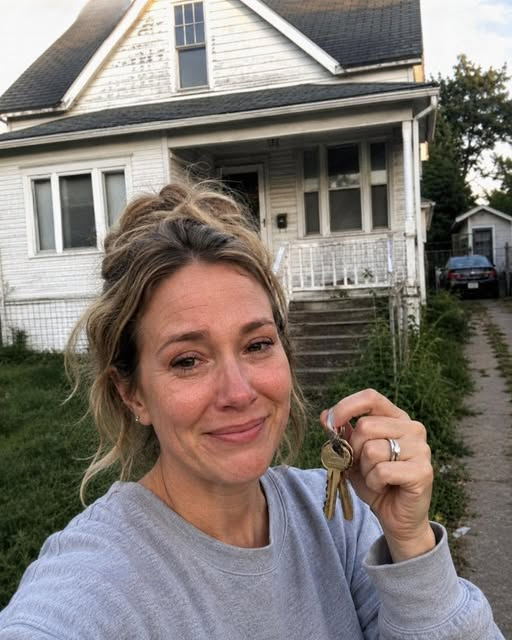
I was standing in my childhood kitchen with cold takeout noodles in one hand and a box cutter in the other when my mother called crying.
“Astrid,” she whispered, “please tell me you haven’t found it.”
I frowned.
“Found what?”
Behind the pantry shelves, part of the wall looked wrong. Too smooth. Too deliberate. As if someone had carefully hidden something there years ago.
Mom made a broken sound.
“The room,” she whispered. “The one your father made me promise to forget.”
And suddenly, I was sixteen again.
Standing barefoot in the rain while strangers carried our furniture onto the lawn.
We didn’t sell that house.
We lost it.
At least, that was the story I grew up believing.
My father, Drew, had missed too many mortgage payments. He ignored too many notices. He failed us.
I still remembered my younger brother Asher crying into a garbage bag filled with his school trophies while Mom stood frozen in the driveway.
“Where’s Dad?” Asher kept asking.
Dad stood on the porch staring at the floorboards.
Uncle Tom arrived late, carrying two coffees and no umbrella.
“Come on, Drew,” he told my father quietly. “Keep your chin up.”
Dad never looked at him.
Afterward, we moved into a tiny apartment above a laundromat. The floors shook whenever the dryers downstairs started running.
Mom stopped talking about the old house.
I never did.
I thought about it every time I paid a bill early. Every time I skipped something I wanted because I was afraid of running out of money. Every time I checked my bank account before bed.
People called me disciplined.
The truth was simpler.
I was terrified of becoming my father.
So when the old house eventually went up for auction after its previous owner died, I bought it before fear could stop me.
The auctioneer smiled when he handed me the paperwork.
“Planning to flip it?”
“No,” I said. “I’m taking my home back.”
That first night felt strangely familiar.
The house was smaller than I remembered. The wallpaper had faded. The porch swing was gone.
But the pantry door still stuck at the bottom.
I ran my hand across it.
“You missed a lot, Dad,” I whispered.
Later, while moving the pantry shelves, I noticed cold air coming through a narrow gap in the wall.
That’s when Mom called.
After she mentioned the hidden room, I couldn’t stop staring at it.
When we hung up, I grabbed an old hammer from the garage.
“I’m not sixteen anymore,” I muttered.
The first swing hurt my wrist.
The fifth broke through the drywall.
I aimed my flashlight inside.
There was a small room behind the wall.
Not a bedroom.
Not a hiding place.
A utility room filled with dusty boxes, a filing cabinet, and a single hanging bulb.
Then I saw the labels written in my father’s handwriting.
Mortgage.
Bills.
Tom.
My stomach tightened.
I opened the first box.
Inside were letters.
Most were from Uncle Tom.
Drew, I swear this is the last time.
Mom would have wanted us to look out for each other.
I can’t ask anyone else.
Beneath the letters were bounced checks, IOUs, payment plans, and handwritten notes from my father.
Tom missed March payment.
Mortgage due Friday.
Catherine says no more.
Then I found an envelope with my name on it.
For Astrid, when she’s old enough to understand.
I couldn’t open it.
Not yet.
For twenty years, I’d built my entire life around one painful truth:
My father lost our home because he was irresponsible.
Because he failed.
Because he chose badly.
That belief had shaped everything about me.
Now the hidden room was tearing it apart.
I called Mom.
“Come here.”
She arrived wearing slippers and an old cardigan.
The moment she saw the broken wall, she covered her mouth.
It was the exact gesture she’d made the day we lost the house.
“Tell me these aren’t what I think they are,” I said, holding up the letters.
Tears filled her eyes.
“Your father didn’t want you children involved.”
“I was involved when strangers carried my mattress onto the sidewalk.”
She sat beside the boxes.
“Your uncle was drowning,” she whispered. “Debt. Bad decisions. Pride. Your grandmother begged your father to help him.”
“And Dad destroyed us for him?”
“He thought every time would be the last.”
“And when it wasn’t?”
Mom looked away.
“He kept believing he could fix everything before you and Asher noticed.”
I laughed bitterly.
“We noticed when we moved above a laundromat.”
Then I asked the question that had been burning inside me.
“Did Uncle Tom ever tell anyone?”
Mom said nothing.
That silence was enough.
For twenty years, Uncle Tom had attended our birthdays, holidays, and Christmas dinners while we blamed Dad for everything.
And he had let us.
“You let me hate him,” I whispered.
Mom began crying.
“I thought silence kept the family together.”
“No,” I said. “Silence just decides who gets crushed underneath it.”
The next evening, we gathered in the kitchen.
Uncle Tom arrived carrying cheap flowers and wearing the same easy smile he’d always had.
He looked around proudly.
“Your dad would have been proud,” he said. “You finally cleaned up what he couldn’t.”
I stood.
Walked into the hidden room.
Then returned carrying the letters.
Tom’s smile vanished.
“Astrid…”
“The part of the story you forgot to tell.”
He immediately became defensive.
“Old letters don’t explain everything.”
“No,” I said. “But twenty-seven of them explain enough.”
I opened one.
“Tom, I cannot keep saving you and still keep my children safe.”
The room went silent.
Aunt Marlene stared at him.
“Is that true?”
Tom shook his head.
“Your father made his own choices.”
“Yes,” I replied. “He chose to drown trying to save his brother.”
Asher finally spoke.
“We carried our lives in garbage bags while you came over for Christmas pretending none of it was your fault.”
Tom’s face reddened.
“I never forced him!”
“No,” I said quietly. “You just kept taking.”
Mom wiped her tears.
“Drew didn’t lose the house alone,” she admitted. “And I let my children blame him because I was afraid to tell the truth.”
For once, Uncle Tom had nothing to say.
He left without taking the flowers.
Later that night, I finally opened Dad’s envelope.
Inside was one handwritten letter.
Astrid,
You always noticed when something was wrong. I’m sorry I let you believe the wrong thing was me. If you ever come back to this house, don’t keep this room closed.
I read it twice.
Then I picked up the hammer again.
By morning, the false wall was completely gone.
Sunlight poured into the hidden room for the first time in twenty years.
Asher came over with Chinese food and cheesecake. Together, we cleaned the shelves, displayed his recovered trophies, and framed Dad’s letter.
I had bought back the house my father lost.
But that wasn’t what I really recovered.
I recovered the truth.
And, after twenty years of silence, I finally gave my father back his name.