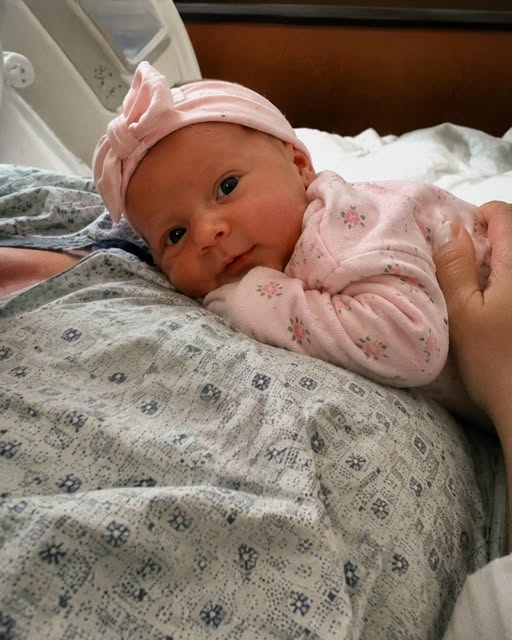
When my twin brother Ryan asked me to help him become a father, I didn’t answer immediately.
Not because I didn’t love him.
Ryan had been my closest friend for as long as I could remember. We were the kind of twins who could tell when something was wrong without saying a word. Growing up, we fought over ridiculous things—who got the front seat, who finished the cereal, whose turn it was to walk the dog—but when something serious happened, we always stood together.
After our parents passed away, that bond became even stronger.
I had my own little family by then. I was raising my eight-year-old son, Noah, and although life certainly wasn’t perfect, I understood the kind of love that comes with becoming a parent.
Ryan desperately wanted that.
So did his wife, Melissa.
They had been married for nearly seven years, and for most of that time, they had hoped to have a child.
At first, they didn’t talk much about their difficulties.
Whenever someone asked when they planned to start a family, Melissa would smile politely and say, “Hopefully someday.”
Ryan would change the subject.
But I knew my brother.
I knew how much those conversations hurt him.
Over the years, they visited doctors, explored different treatments, changed specialists, took breaks, tried again, and endured disappointment after disappointment.
Eventually, they were told that having a baby without help would be extremely unlikely.
Ryan called me that night.
He didn’t cry often.
That night, he did.
“I just wanted to teach my kid how to ride a bike,” he whispered.
I didn’t know what to say.
So I listened.
Months later, Ryan and Melissa invited me to dinner.
The evening began normally. Melissa made pasta, Ryan complained about his job, and Noah spent most of dinner explaining an elaborate video game to two adults who clearly didn’t understand it.
After dessert, Melissa became unusually quiet.
Then Ryan reached across the table and took her hand.
“There’s something we want to ask you,” he said.
I immediately knew it was important.
Melissa looked nervous.
“We’ve been talking with a fertility specialist,” she explained. “There may still be a possibility for us to have a biological child.”
I smiled.
“That’s wonderful.”
But neither of them smiled back.
Ryan swallowed.
“We would need a surrogate.”
The room went silent.
Then I understood.
“You’re asking me?”
“We’re only asking you to consider it,” Melissa said quickly. “You can say no. We won’t be angry. We won’t pressure you.”
Ryan nodded.
“I mean that.”
For several days, I thought about it.
I spoke with doctors.
I learned about the medical process, the emotional responsibilities, the legal arrangements, and the possible complications.
Most importantly, I talked to Noah.
He was young, but I wanted him to understand what was happening.
“So Uncle Ryan’s baby would grow in your belly?” he asked.
“That’s one way to explain it.”
He considered this carefully.
“And then you give the baby to Uncle Ryan?”
“Yes.”
He shrugged.
“Okay. Can we get pizza?”
Apparently, eight-year-olds process life-changing decisions differently than adults.
A few weeks later, I told Ryan and Melissa I would do it.
Melissa covered her mouth.
Ryan simply stared at me.
Then he stood up and hugged me so tightly I could barely breathe.
“You have no idea what this means to us,” he whispered.
I thought I did.
I was wrong.
The months that followed changed all of us.
After the medical procedures were completed successfully, we waited anxiously.
When the doctor finally confirmed the pregnancy, Melissa burst into tears.
Ryan hugged her.
Then he hugged me.
Then Melissa hugged me.
Then all three of us stood laughing and crying in a doctor’s office while the nurse patiently waited for us to calm down.
From that moment, Ryan became the most overprotective brother on Earth.
“Did you drink enough water?”
“Yes.”
“Did you take your vitamins?”
“Yes.”
“Are you getting enough sleep?”
“Ryan, it’s eleven in the morning.”
“Sleep is important.”
Melissa was even worse.
She researched everything.
Foods.
Exercise.
Sleep positions.
Baby development.
She sent me articles constantly until I finally threatened to block her number.
Despite the jokes, it was a beautiful time.
They came to every appointment they could.
The first time we heard the baby’s heartbeat, Ryan’s face completely changed.
He looked stunned.
“That’s her?”
The doctor smiled.
“That’s your baby.”
Ryan stared at the monitor.
I had never seen my brother look so happy.
At another appointment, we learned they were having a girl.
Melissa screamed.
Ryan laughed.
“A daughter,” he kept saying.
Within weeks, they had started preparing the nursery.
Melissa chose soft curtains and shelves filled with books.
Ryan assembled the crib himself, although he spent nearly five hours doing something the instructions claimed should take forty-five minutes.
He sent me a picture when he finished.
“Perfect,” I replied.
He wrote back:
“She’s going to sleep here.”
I could almost hear the pride in his words.
They chose the name Lily.
Ryan talked about taking her to the park.
Melissa bought tiny clothes.
They argued over which stroller to purchase.
They debated whether babies needed seventeen different blankets.
Everything felt right.
Then, during the final month of the pregnancy, Ryan changed.
At first, I barely noticed.
He still came to appointments.
He still called.
But there was something distant about him.
Sometimes I would catch him staring at nothing.
“Everything okay?” I asked one afternoon.
“Just tired.”
“Work?”
“Yeah.”
I believed him.
I shouldn’t have.
Two weeks later, I called Melissa.
“Is Ryan acting strange?”
There was silence.
“He’s stressed,” she finally said.
“About the baby?”
“I think becoming a father is suddenly feeling real.”
That seemed reasonable.
Plenty of expecting parents became nervous.
I told myself Ryan was simply frightened by how much his life was about to change.
The morning I went into labor, everything happened faster than expected.
Melissa and Ryan met me at the hospital.
Ryan was pale.
Melissa couldn’t stop moving.
She kept checking her bag even though everything they needed had already been packed.
Hours later, Lily arrived.
The room seemed to stop.
I heard her cry.
Then I heard Melissa crying.
A nurse carefully brought Lily closer.
Melissa covered her face with both hands.
“Oh my goodness,” she whispered.
Ryan stood beside her.
For a moment, neither of them seemed capable of speaking.
Lily was tiny.
Beautiful.
Wrapped in a hospital blanket with only her little face visible.
Melissa touched her cheek gently.
“She’s perfect.”
Eventually, the nurse placed Lily in Ryan’s arms.
That was the moment I had imagined for months.
My brother finally holding the daughter he had dreamed about for years.
At first, he smiled.
A shaky, emotional smile.
“Hey, Lily,” he whispered.
Then the nurse adjusted the blanket.
Lily moved slightly.
Part of her back became visible.
Ryan froze.
The smile vanished from his face.
I noticed immediately.
“Ryan?”
He didn’t answer.
His face had turned strangely pale.
“Ryan, what’s wrong?”
Melissa looked at him.
“What is it?”
He stared at Lily’s back.
There was a large, light-brown birthmark near her shoulder blade.
Nothing frightening.
Just an unusual patch of color.
But Ryan looked as though someone had delivered terrible news.
He handed Lily back toward the nurse.
“I can’t.”
Melissa frowned.
“What?”
Ryan stepped backward.
“I can’t take her home.”
For several seconds, I assumed I had misunderstood him.
“Ryan, what are you talking about?”
He shook his head.
“I can’t do this.”
My heart started pounding.
Melissa stared at her husband.
“This is our daughter.”
“I know.”
“Then hold her.”
“I can’t.”
Melissa’s voice grew louder.
“Why?”
Ryan pointed toward Lily.
“Look at her back.”
Melissa looked.
Then she looked at Ryan again.
“So?”
“That mark.”
“What about it?”
His hands were trembling.
I had never seen my brother look that terrified.
He lowered himself into a chair.
“There’s something I didn’t tell either of you.”
A terrible feeling settled in my stomach.
Melissa’s expression changed.
“What didn’t you tell us?”
Ryan looked at me.
Then at Lily.
Then finally at his wife.
“Three months ago, I found something in Mom’s belongings.”
After our parents died, Ryan and I divided their possessions slowly.
Neither of us could bring ourselves to empty the house immediately.
Some boxes had remained unopened for years.
“What does Mom have to do with this?” I asked.
Ryan rubbed both hands over his face.
“I found medical records.”
I stared at him.
“What records?”
“Dad’s.”
Our father had passed away years earlier after struggling with health problems that our mother never discussed in detail.
We had always believed his illness was complicated but not hereditary.
Apparently, that wasn’t the entire truth.
Ryan continued.
“Dad had a genetic condition.”
Melissa sat down.
I felt something cold move through me.
“What kind of condition?”
“One that can run in families.”
I stared at him.
“And you knew this three months ago?”
He nodded.
I couldn’t believe what I was hearing.
“Why didn’t you tell me?”
“Because I didn’t know what it meant.”
“You could have asked a doctor.”
“I did.”
The room became silent.
Melissa whispered, “What did the doctor say?”
Ryan closed his eyes.
“That there was a possibility I could carry the same genetic change.”
My knees suddenly felt weak.
“You got tested?”
“Yes.”
“When?”
“About six weeks ago.”
Melissa stared at him.
“And?”
Ryan didn’t answer immediately.
That silence told us enough.
“You tested positive?” she whispered.
Ryan nodded.
Melissa stood so quickly that her chair moved backward.
“You knew?”
“I found out recently.”
“You knew there might be a risk, and you didn’t tell me?”
“I was scared.”
“What about her?” Melissa demanded, pointing toward Lily.
“I didn’t know whether she’d inherited anything.”
“And what does the birthmark have to do with it?”
Ryan swallowed.
“Dad had one just like it.”
That was the moment I understood why Ryan had reacted the way he had.
I remembered seeing our father’s back when we were children.
He did have a similar mark near his shoulder.
I had completely forgotten about it.
Ryan hadn’t.
Melissa covered her mouth.
I looked down at Lily.
She was sleeping peacefully, completely unaware of the panic unfolding around her.
“Ryan,” I said quietly, “a birthmark doesn’t prove anything.”
“I know.”
“Then why would you say you can’t take her home?”
His voice cracked.
“Because I’m terrified.”
For the first time, I realized that Ryan wasn’t rejecting Lily because he didn’t love her.
He was panicking.
But that didn’t excuse what he had said.
I looked at him.
“You spent years praying for this child.”
“I know.”
“You built her room.”
“I know.”
“You watched every ultrasound.”
“I know.”
“And now you’re ready to walk away because you’re afraid she might someday face a health problem?”
Ryan looked at the floor.
Melissa was crying openly now.
“I can’t believe you hid this from me.”
“I thought I was protecting you.”
“Protecting me?”
“I knew how badly you wanted this baby.”
“And you think I would rather be lied to?”
“No.”
“That’s exactly what you did.”
A doctor entered after hearing that we had questions.
Ryan explained everything.
The doctor listened carefully.
Then she examined Lily.
Finally, she said something that changed the entire atmosphere in the room.
“A birthmark alone cannot tell us whether your daughter has inherited a genetic condition.”
Ryan looked up.
“But my father—”
“I understand the concern,” she said. “But you should not assume the worst based on appearance.”
Additional testing could provide answers.
There would be specialists.
There would be follow-up appointments.
There would be time.
But nothing about Lily’s birthmark automatically meant that she had inherited the condition Ryan feared.
Ryan stared at his daughter.
Slowly, his shoulders dropped.
He looked ashamed.
Melissa didn’t immediately forgive him.
Neither did I.
The issue wasn’t that Ryan had become frightened.
Anyone could understand fear.
The problem was that he had hidden important information from all of us.
Especially from Melissa.
Especially from me, when I had been carrying their child.
When the doctor left, I looked at my brother.
“You owe us the complete truth.”
He nodded.
And finally, he told us everything.
After discovering our father’s records, Ryan had contacted a specialist.
He had undergone testing without telling Melissa because he was convinced the results would be negative.
They weren’t.
He learned that he carried the same genetic variation.
But carrying it didn’t guarantee that Lily would inherit the condition or develop related problems.
Ryan had planned to tell Melissa.
Then he kept postponing it.
After the first day.
After the next appointment.
After the weekend.
After another ultrasound.
Every time he looked at the nursery, he became more afraid.
“What if she hates me someday?” he whispered. “What if I gave her something that makes her life harder?”
Melissa looked at him through tears.
“And walking away would make her life easier?”
Ryan lowered his head.
“No.”
“What were you going to do?” I asked. “Seriously?”
He wiped his face.
“I don’t know.”
That answer hurt more than anything.
The brother I trusted more than almost anyone in the world had allowed fear to control him.
I looked down at Lily.
Her tiny fingers were wrapped around one of mine.
“You don’t get to decide whether she’s worthy of being loved based on a possibility,” I said.
Ryan began crying.
“I know.”
“No. I don’t think you do.”
I had never spoken to my twin that harshly.
But I meant every word.
“You wanted to become a father. This is what being a father means. You don’t only show up when everything looks exactly the way you imagined.”
He nodded.
“You show up when you’re scared.”
Another nod.
“You show up when things are uncertain.”
He wiped his eyes.
“And you show up because she’s your daughter.”
For several minutes, nobody spoke.
Then Ryan slowly stood.
He walked toward Lily.
“Can I hold her?”
Melissa didn’t answer immediately.
Finally, she nodded.
I handed Lily to him.
Ryan held her much differently this time.
He wasn’t smiling.
He was crying.
He looked down at the little birthmark that had frightened him so badly.
Then he touched Lily’s head.
“I’m sorry,” he whispered.
Melissa started crying again.
Ryan looked toward her.
“I’m sorry to you too.”
Melissa crossed her arms.
“You have a lot of work to do.”
“I know.”
“I’m serious.”
“So am I.”
She stepped closer.
“We don’t hide things like this.”
“Never again.”
“And if Lily ever does have health problems?”
Ryan looked down at his daughter.
“Then we’ll handle them.”
“Together?”
“Together.”
Over the next several weeks, they attended appointments with specialists.
Tests were conducted carefully.
We waited.
Waiting was difficult.
Ryan barely slept.
Melissa tried to remain optimistic.
I spent most of my time recovering from the pregnancy while helping wherever I could.
Then the call finally came.
Lily had not inherited the specific genetic condition Ryan feared.
The birthmark was simply a birthmark.
Nothing more.
Ryan called me immediately.
I answered to the sound of my brother crying.
“She’s okay.”
I closed my eyes.
“She’s okay?”
“Yes.”
Relief swept through me.
But something interesting happened afterward.
Ryan didn’t return to being the same man he had been before Lily’s birth.
He changed.
The scare forced him to confront something much deeper than genetics.
He realized how quickly fear could turn into avoidance.
He also realized that becoming a parent wasn’t about receiving a perfectly predictable life.
It was about loving someone through uncertainty.
Ryan started seeing a counselor.
He apologized to Melissa repeatedly, but she told him apologies meant little without changed behavior.
So he changed his behavior.
He became more honest.
More open.
When something frightened him, he talked about it instead of hiding it.
And he became almost comically devoted to Lily.
He changed diapers.
He handled midnight feedings.
He learned how to install a car seat after watching what appeared to be every instructional video on the internet.
He sang terrible lullabies.
He took approximately four thousand photographs.
Whenever Lily sneezed, Ryan looked like someone had announced a national emergency.
Melissa often called me laughing.
“Your brother has checked the baby monitor nine times in ten minutes.”
“That sounds like Ryan.”
“He bought a second thermometer.”
“Why?”
“He said we needed a backup.”
“Of course he did.”
When Lily was three months old, I visited their house.
The nursery looked exactly as it had before her birth, except now it was actually being used.
Tiny clothes were stacked everywhere.
Toys filled baskets.
A stuffed rabbit sat beside the crib.
Ryan was sitting in the rocking chair with Lily asleep against his chest.
For a moment, I stood in the doorway without saying anything.
He looked peaceful.
Eventually, he noticed me.
“What?”
“Nothing.”
“You’re staring.”
“I was just remembering something.”
His expression changed.
He knew exactly what I meant.
“That day?”
I nodded.
Ryan looked down at his daughter.
“I think about it too.”
“Do you?”
“Every day.”
He became quiet.
“I almost let fear make the biggest decision of my life.”
I sat beside him.
“You were terrified.”
“That doesn’t make what I said okay.”
“No.”
He nodded.
“I don’t ever want Lily to know that the first thing I did when I saw her birthmark was panic.”
I considered that.
“Maybe someday you should tell her.”
His eyes widened.
“Why?”
“Because the story doesn’t end there.”
He looked confused.
“You panicked,” I said. “Then you learned something.”
Ryan looked at Lily.
“What?”
“That love isn’t the absence of fear.”
He smiled slightly.
“That’s surprisingly philosophical for someone who once microwaved a spoon.”
“I was twelve.”
“You still did it.”
We laughed quietly so we wouldn’t wake Lily.
Then Ryan became serious again.
“I don’t know how I can ever repay you.”
“For what?”
“For carrying her.”
“You don’t need to repay me.”
“You gave us a family.”
I shook my head.
“I helped.”
He smiled.
“You did more than help.”
Lily stirred in his arms.
Ryan immediately looked down.
She opened her eyes.
For a few seconds, father and daughter simply stared at each other.
Then she smiled.
It was probably gas.
Ryan insisted it was a real smile.
“You saw that?” he whispered.
“I saw.”
“She smiled at me.”
“She did.”
“Melissa!”
I laughed.
Some things about my brother would apparently never change.
Years have passed since that day.
Lily is now an energetic little girl who loves drawing, animals, pancakes, and asking questions that no adult knows how to answer.
Her birthmark is still there.
Ryan no longer looks at it with fear.
Sometimes Lily points to it and calls it her “special spot.”
Ryan tells her it’s part of what makes her unique.
Melissa and Ryan’s marriage survived the difficult beginning, but not because they pretended it never happened.
They talked about it.
They worked through it.
They rebuilt trust.
And Ryan kept his promise.
No more secrets.
As for me, becoming their surrogate changed my relationship with my brother in ways I hadn’t expected.
I had always seen Ryan as my protector.
My twin.
My best friend.
For the first time, I saw him as a deeply imperfect person capable of making a painful mistake.
But I also watched him take responsibility for it.
That mattered.
Because families aren’t strong simply because nobody makes mistakes.
They’re strong when people are willing to face the truth, repair what they damaged, and choose each other again.
Sometimes I think about that hospital room.
The fear.
Melissa crying.
Ryan stepping backward.
The moment he said he couldn’t take Lily home.
At the time, I thought everything we had worked for was falling apart.
Instead, it became the moment Ryan finally understood what being a parent required.
You don’t get guarantees.
You don’t get to know exactly what the future will look like.
You don’t get a promise that your children will never face challenges.
You simply get a person to love.
And then you decide, again and again, that whatever happens, you are going to show up.
Ryan almost forgot that lesson before his daughter was even a day old.
Thankfully, he remembered it in time.
And whenever I see him walking through the park with Lily sitting on his shoulders, laughing while he holds onto her little hands, I remember the terrified man standing in that hospital room.
Then I look at the father he became.
And I realize that sometimes the most important part of a family’s story isn’t the frightening moment when someone nearly walks away.
It’s what they choose to do after they turn around.