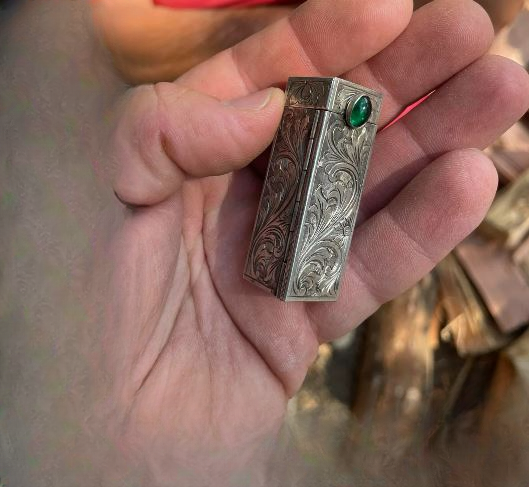
How Vanity Items Became Collectible Art: The History and Beauty of Vintage Cosmetic Accessories
Discover how antique lipstick cases, vintage compacts, perfume bottles, and other beauty accessories evolved from everyday personal items into treasured collectibles that reflect changing fashions, craftsmanship, and cultural history.
Introduction: When Everyday Beauty Became Art
Some of the most fascinating objects from the past are not large paintings, elaborate sculptures, or expensive pieces of furniture. They are the small objects people once carried in their handbags, placed on dressing tables, or used as part of their daily routines.
Vintage beauty accessories are excellent examples. An antique lipstick case, a decorative powder compact, or a finely crafted perfume bottle may appear simple at first glance, but each object can reveal something about the period in which it was made. Its materials, decorative details, shape, and construction offer clues about the tastes and technologies of its time.
For collectors, these items provide an opportunity to explore the relationship between design and everyday life. They combine practical function with visual appeal, showing how manufacturers transformed ordinary personal accessories into objects that people enjoyed using and displaying.
The history of beauty accessories also reflects broader changes in society. As cosmetics became more widely available, manufacturers experimented with new packaging, portable designs, decorative finishes, and convenient ways to store beauty products. Over time, these developments created a wide variety of objects that are now appreciated for their historical and artistic qualities.
Antique lipstick cases are particularly interesting because of their compact size and detailed construction. Some feature engraved metal surfaces, ornamental patterns, miniature mirrors, or carefully designed mechanisms. Others have simple, elegant shapes that demonstrate how attractive design can emerge from restraint rather than elaborate decoration.
Powder compacts, perfume bottles, vanity boxes, and cosmetic containers offer equally rich possibilities for collectors.
These objects are not valuable solely because they are old. Their appeal often comes from a combination of craftsmanship, condition, rarity, design, historical significance, and the stories associated with their use.
Understanding these qualities helps collectors appreciate vintage beauty accessories beyond their original purpose. It also provides a useful starting point for anyone interested in antiques, decorative arts, fashion history, or the evolution of personal grooming.
1. The Early History of Personal Beauty Accessories
The use of cosmetics and personal grooming tools dates back thousands of years. Different civilizations developed their own methods of applying pigments, caring for the skin, styling hair, and presenting themselves in public.
Historical beauty practices varied considerably according to geography, available materials, social customs, and cultural beliefs. People used containers to store powders, oils, fragrances, and other substances long before the development of modern cosmetic packaging.
These early objects were not necessarily designed for collecting. They served practical purposes, and many were made from materials available in their communities, including ceramic, glass, stone, wood, and metal.
However, some were decorated with considerable care. Their surfaces might feature painted designs, carved patterns, inscriptions, or ornamental shapes.
Such details demonstrate that personal care objects could carry meaning beyond their immediate function.
As trade networks expanded and manufacturing techniques developed, a wider variety of containers and grooming accessories became available. Different materials offered different advantages. Glass allowed users to see the contents of a container, while metal could provide durability and support intricate decoration.
Small boxes and containers also became part of the presentation of personal possessions. Their appearance could communicate taste, social position, or appreciation for fine workmanship.
The later development of specialized cosmetic packaging built on this long tradition of combining usefulness with decoration.
By studying these objects, collectors can trace changes in materials, design preferences, and attitudes toward personal appearance. They can also discover how everyday products reflected the practical needs and artistic styles of their respective periods.
2. The Rise of the Antique Lipstick Case
Among vintage beauty accessories, lipstick cases hold a distinctive place.
Modern lipstick packaging is often designed for mass production, portability, and convenience. Many contemporary cases use plastic or lightweight metal, with designs that emphasize branding and ease of use.
Earlier lipstick cases could be considerably more decorative.
As portable cosmetics became increasingly familiar, manufacturers created containers that protected the product while allowing it to be carried discreetly. The design needed to accommodate the lipstick mechanism, protect the contents, and remain easy to operate.
These requirements encouraged the development of compact, carefully engineered cases.
Some were produced in polished metal, while others featured engraved surfaces, enamel decoration, geometric patterns, or ornamental motifs. Certain designs emphasized elegance and symmetry, while others reflected the bold decorative styles popular during particular decades.
The appeal of these objects lies partly in their combination of engineering and artistry.
A lipstick case must function as a container, yet its small exterior provides an opportunity for decoration. The designer has limited space in which to create a visually pleasing object, making the relationship between proportion, material, and detail especially important.
For collectors, a well-preserved example can illustrate how manufacturers approached this challenge.
Different cases may reveal changes in opening mechanisms, tube construction, surface finishes, and decorative techniques. Comparing examples from different periods can help enthusiasts understand how cosmetic packaging evolved alongside fashion and manufacturing.
Not every old lipstick case is rare, and age alone does not guarantee significant value. Nevertheless, examples with distinctive designs, documented origins, unusual materials, or excellent condition can attract particular interest.
The most rewarding collections often include a variety of styles rather than relying exclusively on the oldest objects.
3. Craftsmanship in Miniature
One reason vintage cosmetic accessories appeal to collectors is the craftsmanship that can be found in objects small enough to fit inside a handbag.
Decorative metalwork, engraving, enamel, polished surfaces, and carefully fitted components can transform a simple container into a miniature work of design.
Creating a functional object at such a small scale requires attention to detail. Hinges must operate correctly, lids must align, and moving components must fit together without unnecessary friction.
Decorative features introduce additional challenges. Engraved patterns must follow the shape of the object, while enamel or other applied finishes require appropriate preparation and careful execution.
Some vintage accessories also incorporate mirrors, compartments, or small mechanical elements. These features make the objects more useful while increasing their visual and technical complexity.
The quality of craftsmanship is not always immediately apparent in a photograph. Collectors often examine an item closely to understand how its components fit together and how its decorative finish was applied.
The weight of a metal case, the smoothness of a hinge, and the clarity of an engraved pattern can all contribute to the overall impression of quality.
However, these characteristics should be considered alongside the object’s condition and authenticity. A heavy object is not automatically better made, and a decorative surface does not necessarily indicate an expensive original.
Reproductions can imitate historical styles, sometimes with considerable skill. Familiarity with construction techniques, materials, and period design helps collectors distinguish different types of objects more confidently.
The study of craftsmanship therefore provides both aesthetic enjoyment and practical knowledge.
It encourages collectors to look beyond a brand name or decorative appearance and consider how an object was actually made.
4. The Influence of Fashion and Changing Design Trends
Vintage beauty accessories reflect the broader design movements that influenced clothing, jewelry, furniture, and architecture.
The early twentieth century brought significant changes to decorative design. Art Nouveau favored flowing lines and natural forms, while Art Deco became associated with geometric patterns, strong symmetry, stylized ornament, and luxurious materials.
These movements influenced many types of personal accessories, although the exact designs and production dates varied by manufacturer and market.
A cosmetic case decorated with angular lines and repeating geometric shapes may reflect the visual language associated with Art Deco. Another accessory featuring flowing botanical patterns may evoke earlier decorative traditions.
Later decades introduced different preferences, including streamlined forms, colorful finishes, modern materials, and designs influenced by changing lifestyles.
The popularity of particular colors, patterns, and shapes also changed over time. A case that appears elaborate today may have been considered fashionable and modern when it was first sold.
For collectors, understanding these broader movements helps place individual objects within a wider historical context.
It can also prevent inaccurate dating. A design may resemble a particular artistic movement without having been produced during its most prominent period. Manufacturers sometimes revisited older styles, and decorative motifs continued to appear long after their original popularity had declined.
It is therefore helpful to compare an object with documented examples, manufacturer catalogs, advertisements, and other reliable historical references.
Fashion history adds another dimension to collecting because it explains why certain designs were popular in the first place.
A vintage cosmetic case is not merely an isolated object. It belongs to a larger world of clothing, accessories, manufacturing, advertising, and social expectations.
5. Powder Compacts: Functional Objects With Decorative Appeal
Powder compacts are among the most recognizable categories of vintage beauty accessories.
Historically, face powder was an important part of many cosmetic routines. Manufacturers developed compact containers that allowed users to carry powder more conveniently and apply it away from home.
Many compacts included a mirror, a powder compartment, and a puff. Their exterior surfaces could be decorated with metalwork, enamel, painted scenes, floral patterns, or geometric designs.
Some were understated and practical, while others were intended to look like jewelry or decorative accessories.
Their shapes varied widely. Round, oval, rectangular, and more unusual forms appeared in different markets and periods. Certain designs emphasized portability, while others focused on ornamental presentation.
Collectors often appreciate compacts because they provide a broad range of styles and prices.
A beginner might start with a simple metal compact in good condition. Another collector may focus on a specific manufacturer, decade, decorative technique, or regional design tradition.
The interior can be just as interesting as the exterior. Mirrors, hinges, powder compartments, and closures reveal how the object was intended to function.
Condition is particularly important. Mirrors may be cloudy or damaged, hinges may be loose, and decorative finishes may have worn away. These changes can affect both usability and collectible appeal.
The presence of original components can also be relevant, although replacements do not automatically make an object uninteresting.
A compact with a replacement mirror may still be attractive as an example of historical design, even if it is less desirable to collectors seeking untouched examples.
As with other antiques, the best approach is to assess the object as a whole rather than focusing on a single feature.
6. Perfume Bottles and the Art of Presentation
Perfume bottles occupy an important place in the history of decorative objects.
Fragrance has long been associated with personal expression, ceremonial practices, and social customs. As perfume production and distribution developed, bottles became an important part of how fragrance was presented to consumers.
Glassmakers and designers explored different shapes, colors, stoppers, and decorative techniques. Some bottles were relatively simple, while others featured elaborate forms intended to attract attention on dressing tables or shop displays.
The shape of a bottle could communicate elegance, modernity, luxury, or a particular brand identity.
Colored glass created visual interest, while cut or molded surfaces altered the way light moved through the object. Decorative stoppers sometimes became focal points in their own right.
Packaging also helped distinguish one fragrance from another. As commercial branding became more sophisticated, the bottle’s appearance became increasingly important to the overall presentation of the product.
For collectors, vintage perfume bottles offer opportunities to study glassmaking, industrial design, advertising, and the relationship between fragrance and visual culture.
Some enthusiasts collect empty bottles because they appreciate the design independently of the original perfume. Others prefer complete examples with labels, boxes, or other original packaging.
Completeness can matter, but it is not the only consideration. A beautifully designed bottle may remain interesting even when its original contents have disappeared.
Collectors should also be cautious about assuming that a bottle is rare simply because it looks unusual. Similar shapes may have been produced in large quantities, and some historical designs have been reproduced.
Manufacturer markings, documented examples, and reliable provenance can help establish a more accurate understanding of an item’s history.
7. Vanity Boxes and the Dressing Table
The dressing table was an important setting for many personal beauty rituals, and its accessories often combined practical storage with decorative design.
Vanity boxes, jewelry containers, brush holders, mirror stands, and small organizers helped keep personal belongings arranged and accessible.
Some were made from wood, while others incorporated metal, glass, porcelain, or decorative coverings. More elaborate examples might feature fitted compartments, lined interiors, ornamental handles, or coordinated accessories.
These objects demonstrate how personal care could become part of the presentation of a domestic interior.
A dressing table was not simply a place to store cosmetics. Depending on the household and period, it could also display perfume bottles, jewelry, hair accessories, letters, and other personal possessions.
The arrangement of these items reflected individual taste and the decorative fashions of the time.
Collectors interested in vanity accessories can therefore explore the relationship between personal grooming and interior design.
A small box may reveal the materials and decorative preferences of its era, while a larger vanity set may illustrate how manufacturers coordinated multiple objects into a unified visual style.
When evaluating a vanity box, collectors should inspect its structure, hinges, lining, handles, and interior compartments. Damage may be hidden beneath decorative coverings or inside drawers.
Older repairs are not necessarily a reason to reject an object, but they should be identified when possible.
A well-documented, carefully maintained vanity accessory can provide a tangible connection to the domestic life of an earlier period.
8. How Collectors Evaluate Vintage Beauty Accessories
Collecting vintage beauty accessories can be enjoyable for beginners and experienced enthusiasts alike. However, learning how to evaluate objects helps prevent disappointment and encourages more informed purchasing decisions.
Several factors are worth considering.
Age and historical context
An object’s age can be important, but it should not be the only measure of its appeal. A relatively recent accessory may be interesting because of its design, manufacturer, or connection to a particular cultural trend.
Reliable dating may involve examining markings, construction methods, packaging, advertisements, and comparable documented examples.
Condition
Condition affects appearance, durability, and often market value.
Collectors should look for cracks, corrosion, missing components, loose hinges, worn finishes, and signs of repairs. Damage should be assessed in relation to the object’s materials and intended use.
A small amount of wear may be consistent with age, while extensive structural damage can reduce desirability.
Rarity
Rarity depends on how many examples were produced, how many survive, and how frequently they appear in the market.
An unusual design is not necessarily rare. A common accessory in excellent condition may be easier to find than a scarce example with a complete original box.
Researching comparable objects helps clarify the distinction.
Design and craftsmanship
Some collectors prioritize artistic quality, while others focus on mechanical details, materials, or a particular design movement.
The most important qualities depend partly on personal preference.
An object does not have to be expensive to offer a rewarding collecting experience.
Provenance and documentation
Provenance refers to the documented history of an object’s ownership or origin. Receipts, original packaging, catalog references, and reliable historical records may help establish context.
However, stories supplied by sellers should not automatically be accepted as fact. Documentation should be evaluated carefully, particularly when a claim would substantially affect an item’s price.
Market comparisons
Before making a significant purchase, collectors can compare completed sales, consult reputable dealers, and examine auction records where available.
Asking prices are not the same as confirmed selling prices. Two apparently similar items may differ considerably in condition, authenticity, completeness, and market demand.
A thoughtful assessment combines several factors instead of relying on one dramatic claim.
9. Recognizing Authentic Vintage Items
The popularity of vintage-inspired design means that collectors may encounter reproductions, later versions, and objects described inaccurately.
Authenticity research is especially important when an accessory is presented as rare or unusually valuable.
Begin by examining any maker’s marks, stamps, logos, labels, or inscriptions. Compare their appearance and placement with reliable examples from the relevant manufacturer.
Look closely at construction. Materials, fastening methods, hinges, internal mechanisms, and decorative finishes may provide useful clues about how and when an item was made.
Pay attention to inconsistencies.
For example, a supposedly early object might contain construction details or branding that do not match documented examples from its claimed period. Such differences do not prove that the item is counterfeit, but they justify additional research.
Packaging can also help, although boxes and accessories may have been replaced or paired with objects that were not originally sold together.
Online photographs are useful for initial research, but they may conceal wear, repairs, and material differences. Whenever possible, inspect a valuable item in person or request clear photographs from multiple angles.
For expensive purchases, an experienced antiques dealer or specialist may be able to provide additional guidance.
Collectors should also remember that age, authenticity, and value are separate questions.
An object can be genuinely old without being rare. A rare object can have significant damage. An authentic accessory may be historically interesting even if its market price is modest.
Understanding these distinctions makes collecting more informed and enjoyable.
10. Caring for and Preserving Vintage Beauty Accessories
Preservation is an important part of collecting because inappropriate cleaning or storage can damage delicate materials.
The safest approach depends on the object.
Metal accessories may be vulnerable to corrosion, tarnish, and changes in their surface finish. Glass can break or develop scratches, while enamel may chip if exposed to impact. Mirrors, fabric linings, and paper labels may be especially fragile.
Avoid aggressive cleaning methods unless the material and finish are well understood.
Polishing compounds, abrasive cloths, strong solvents, and household cleaning products can remove original finishes or damage decorative details. A surface that appears dull may retain historical evidence that would be lost through excessive polishing.
For valuable or delicate pieces, consult a qualified conservator before attempting restoration.
Storage conditions also matter.
Objects generally benefit from a stable, clean environment away from excessive moisture, direct sunlight, and abrupt temperature changes. Soft protective materials can help prevent scratches, but storage materials should be suitable for the particular object.
Small accessories should be kept in a way that prevents them from rubbing against one another. Fragile glass bottles may require individual support to reduce the risk of breakage.
Collectors should also be careful with old cosmetic residues.
Historical beauty products may have unknown compositions, and antique containers can contain remnants that are unsuitable for handling or use. Avoid applying vintage cosmetics to the skin or opening unidentified products unnecessarily.
An antique lipstick case should generally be appreciated as a historical object rather than treated as a modern cosmetic container.
The goal of preservation is not always to make an object look new. It is to maintain its stability and retain as much original material and historical character as possible.
11. The Appeal of Collecting on a Budget
A rewarding collection does not need to begin with expensive antiques.
Many enthusiasts start by choosing a category that interests them and learning about its common forms before purchasing more unusual pieces.
For example, someone fascinated by Art Deco design might collect modestly priced powder compacts with geometric decoration. Another person may prefer perfume bottles, focusing on glass colors, shapes, and stopper designs.
A clear collecting theme can make research more manageable.
It also helps prevent impulse purchases based solely on appearance or a seller’s description.
Before buying an item, consider why it belongs in the collection. Does it represent a design period of interest? Does it demonstrate a particular manufacturing technique? Does it complement other pieces, or does it offer something entirely different?
A budget-conscious colle