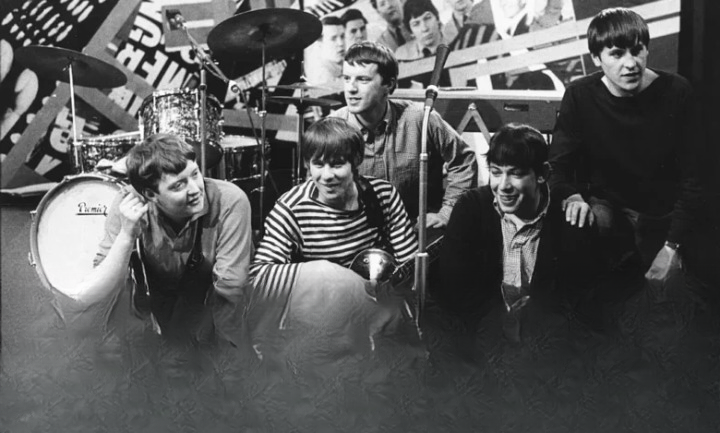
How The Animals’ “House of the Rising Sun” Helped Transform Folk Music and Rock in 1964
In the summer of 1964, a song with roots stretching deep into American folk tradition became one of the defining recordings of the British rock era.
The song was “House of the Rising Sun,” performed by the British group The Animals.
At first glance, it might seem like a straightforward story of a band recording an old folk song.
But The Animals’ version was much more significant than that.
Their recording demonstrated how a traditional song could be transformed through arrangement, performance, instrumentation, and production.
The result was a powerful recording that connected two musical worlds.
On one side was the traditional folk ballad, built around storytelling and repeated verses.
On the other was the emerging sound of 1960s rock, characterized by electric instruments, dramatic dynamics, and a new generation of performers who were reinterpreting older musical material.
The Animals brought those worlds together.
Their version became an international success and helped establish the idea that an old song could be completely reinvented for a new audience.
A Song Older Than Its Famous Recording
One of the most interesting things about “House of the Rising Sun” is that The Animals did not write the song.
Its exact origins remain uncertain.
The song belongs to a long tradition of folk music in which stories were passed from performer to performer and changed over time.
That makes identifying a single original author difficult.
Different versions existed before The Animals recorded theirs, and the lyrics varied depending on the performer.
The subject matter also changed between versions.
Some versions were sung from a woman’s perspective, while others used a male narrator.
This flexibility is common in traditional folk music.
Songs were not always treated as fixed compositions in the way modern recordings are.
Performers could change verses, melodies, arrangements, and even the perspective of the story.
Traditional Folk Music Was Built on Adaptation
Before modern recording technology, folk songs were frequently transmitted orally.
Someone learned a song from another performer.
They changed a line.
Another singer learned that version.
A new verse was added.
The melody might shift slightly.
Over many years, a song could develop numerous variations.
This makes traditional music difficult to trace.
There may not be one definitive version.
Instead, there can be a family of related versions.
“House of the Rising Sun” is an excellent example of this process.
Its history includes American folk traditions, blues influences, different lyric variations, and numerous recordings before The Animals made their famous version.
Earlier Recordings
The song had already been recorded by other artists before 1964.
One of the most important earlier versions came from folk singer Dave Van Ronk, whose interpretation influenced later performers.
Bob Dylan also recorded the song for his 1962 debut album.
These earlier versions were important because they helped establish the song within the American folk revival of the late 1950s and early 1960s.
The Animals would take that existing material and dramatically change its musical character.
Enter The Animals
The Animals were formed in Newcastle upon Tyne, England.
The group developed a reputation for a powerful sound influenced by American rhythm and blues.
At the center of the band was vocalist Eric Burdon, whose deep, intense voice became one of the defining elements of the group’s identity.
The lineup also included keyboard player Alan Price, whose organ playing became particularly important to the recording.
Other members contributed the electric guitar, bass, and drums that gave the arrangement its driving foundation.
The band had already been performing material influenced by American blues and rhythm and blues.
That background helped them approach “House of the Rising Sun” from a different direction than a traditional folk performer might.
The Arrangement Changed Everything
The most obvious difference between earlier folk versions and The Animals’ recording was the arrangement.
Instead of presenting the song as a relatively stripped-down folk performance, The Animals built an increasingly dramatic rock arrangement around it.
The organ immediately established a distinctive atmosphere.
The electric guitar added texture.
The rhythm section provided movement.
And Eric Burdon’s vocal delivery gave the song a powerful emotional character.
The arrangement was not simply louder.
It changed the way listeners experienced the story.
Alan Price and the Organ
The organ part became one of the recording’s most recognizable features.
At the time, the use of electric keyboards and organs in popular music was becoming increasingly important.
The instrument could fill a large sonic space while creating sustained chords that traditional acoustic instruments couldn’t easily reproduce in the same way.
In “House of the Rising Sun,” the organ contributes to the dramatic rise and fall of the arrangement.
It helps create tension before the vocals even begin.
The instrument became so closely associated with the recording that it is difficult to imagine The Animals’ version without it.
Eric Burdon’s Vocal Performance
Eric Burdon’s voice was another crucial element.
Rather than singing the song like a quiet folk ballad, Burdon delivered it with considerable intensity.
His voice sounded rough, emotional, and urgent.
That approach suited the darker subject matter.
The vocal performance also helped distinguish the recording from the folk versions that listeners might already have known.
The story became larger.
The emotional stakes felt more immediate.
The performance sounded like rock music, even though the underlying song came from an older tradition.
The Electric Guitar
Electric guitar also played an important role.
The instrument was becoming increasingly central to British rock music during the early 1960s.
Guitarists were drawing heavily from American blues and rhythm and blues while developing their own British interpretations.
In The Animals’ arrangement, the guitar works alongside the organ and rhythm section rather than simply accompanying the vocalist.
This created a fuller sound.
The result was neither purely folk nor purely blues.
It was a new combination.
The British Invasion
The Animals released “House of the Rising Sun” during the period now commonly associated with the British Invasion.
British groups were becoming enormously popular in the United States.
The Beatles had already made a major impact.
Other British bands soon followed.
The Rolling Stones, The Kinks, The Animals, The Yardbirds, and many others contributed to a rapidly changing international music scene.
American music had strongly influenced many of these British groups.
Ironically, British musicians were now taking elements of American blues, folk, and rhythm and blues and introducing them back to American audiences in new forms.
“House of the Rising Sun” was a particularly striking example of that process.
The Song Reached Number One
The Animals’ recording became a major commercial success.
It reached number one on the singles charts in both the United States and the United Kingdom in 1964.
That achievement gave the group an international audience and helped make the song one of the most recognizable recordings of the era.
The success also demonstrated that listeners were willing to embrace a traditional song when it was presented in a modern musical form.
Why the Recording Felt So Different
The difference wasn’t simply technological.
The recording’s impact came from the combination of several creative decisions.
The arrangement created a strong emotional arc.
The organ provided atmosphere.
The electric instruments supplied power.
The rhythm section created momentum.
Burdon’s vocal gave the song an unmistakable personality.
Each component contributed to the final sound.
That’s what makes the recording so useful as an example of musical reinterpretation.
Folk and Rock Were Not Completely Separate
It’s easy to imagine folk and rock as completely different musical categories.
In reality, the boundaries were much more flexible.
Rock musicians borrowed from blues.
Blues musicians borrowed from folk traditions.
Folk performers incorporated contemporary ideas.
Country music influenced rock.
Jazz influenced popular music.
The musical culture of the 1960s was built on these overlapping traditions.
The Animals’ recording demonstrated that a traditional folk song could become a rock hit without losing its basic identity.
The Importance of Storytelling
At its heart, “House of the Rising Sun” is a narrative song.
That storytelling tradition is central to folk music.
Rather than simply celebrating romance, dancing, or youthful excitement, the song tells a cautionary story about a place and the consequences associated with it.
The exact meaning of the “House of the Rising Sun” has been debated for decades.
Different historical interpretations have connected the phrase with different types of establishments.
Because the song evolved through oral tradition, its meaning isn’t necessarily fixed to one definitive explanation.
That ambiguity has contributed to its lasting fascination.
The Mystery Around the Title
One reason the song continues to attract historical discussion is the uncertainty surrounding the name “House of the Rising Sun.”
There have been various theories about what the phrase originally referred to.
Some interpretations associate it with establishments in New Orleans.
Others connect the phrase with older expressions and different types of venues.
The lack of a single definitive origin is part of what makes traditional folk songs difficult to document.
Rather than treating one theory as unquestionably correct, it is more accurate to acknowledge that multiple interpretations exist.
The Recording Changed the Song’s Audience
Before The Animals’ version, “House of the Rising Sun” belonged primarily to the folk and blues repertoire.
After 1964, it became a mainstream rock recording.
That change introduced the song to a much broader audience.
People who may never have listened to traditional folk recordings were suddenly hearing a version of the song on pop and rock radio.
This helped bridge generations of music.
Older traditional material could reach younger audiences through modern arrangements.
A Model for Future Musicians
The success of The Animals’ recording helped reinforce an important idea:
A song does not have to be new to sound new.
Musicians could take older material and transform it.
They could change the tempo.
Change the instrumentation.
Change the vocal style.
Change the emotional emphasis.
Change the arrangement.
The underlying melody and lyrics could remain recognizable while the overall experience became something very different.
This approach became common throughout popular music.
The 1960s and Musical Reinvention
The 1960s were a period of enormous experimentation.
Musicians were questioning established boundaries.
Recording technology was improving.
Electric instruments were becoming more prominent.
Young audiences were becoming more interested in music as a form of identity and expression.
Bands were experimenting with arrangements that would have been unusual only a few years earlier.
The Animals fit naturally into that environment.
Their version of “House of the Rising Sun” sounded modern because it reflected the changing musical vocabulary of the era.
Why the Song Still Sounds Distinctive
Many recordings from the 1960s now sound strongly tied to their era.
“House of the Rising Sun” is different in one important respect.
Its arrangement remains immediately recognizable.
The opening organ.
The guitar.
The rhythm.
Burdon’s voice.
The gradual development of intensity.
These elements create a recording with a strong identity.
Even listeners unfamiliar with the song’s history can often recognize the recording after hearing only a short section.
The Power of Dynamics
One of the recording’s strengths is its use of dynamics.
The song doesn’t simply remain at one level of intensity.
The arrangement builds.
The instruments interact.
The vocals become more emotionally forceful.
This gives the performance a sense of movement.
Dynamic contrast is one of the oldest techniques in music, but The Animals used it particularly effectively within a rock setting.
The result feels almost theatrical.
The Role of Recording Technology
Studio technology also mattered.
By the early 1960s, recording engineers had more tools for capturing electric instruments and vocals with greater clarity and impact.
The studio wasn’t simply a place to document a live performance.
It could help shape the final sound.
The Animals’ recording benefited from that evolving technology.
The combination of performance and production helped create a recording that sounded much larger than a simple folk arrangement.
A Song That Crossed Generations
One of the most remarkable aspects of “House of the Rising Sun” is how many generations have encountered it.
People who heard it on the radio in 1964 may have introduced it to their children.
Later musicians recorded their own versions.
Music students studied the arrangement.
Guitarists learned the progression.
Singers experimented with different interpretations.
The song continued moving through musical culture.
That is one of the defining characteristics of a durable song.
It can survive changes in fashion.
Cover Songs and Musical History
Cover versions are sometimes treated as less important than original compositions.
But music history demonstrates how valuable reinterpretation can be.
A cover can introduce an older song to a new audience.
It can change the emotional meaning.
It can inspire another musician.
It can become more commercially successful than an earlier version.
“House of the Rising Sun” is a particularly strong example.
The Animals didn’t create the song’s original folk tradition.
They created one of its most influential modern interpretations.
The Relationship Between American and British Music
The story also illustrates the complicated relationship between American and British popular music.
American blues, folk, country, and rhythm and blues strongly influenced British musicians.
British musicians then developed those influences into new styles.
Those styles were exported back to American audiences.
This exchange wasn’t one-directional.
It was a continuous conversation.
The Animals’ recording belongs directly to that conversation.
Why Folk Music Remains Relevant
Folk music survives partly because its stories are adaptable.
A song can be rearranged without losing its central narrative.
A new generation can interpret an old lyric through its own musical language.
That’s exactly what happened with The Animals.
The story was old.
The sound was new.
That combination gave the recording its distinctive identity.
The Legacy of The Animals
The Animals produced several memorable recordings during their career, and “House of the Rising Sun” became their signature song.
Its success helped establish the band as an important part of the British Invasion.
It also demonstrated the power of strong interpretation.
A band’s identity doesn’t always depend on writing every song from scratch.
Sometimes the most important creative achievement is discovering a song and understanding what it could become.
What Musicians Can Learn From the Recording
The Animals’ approach provides several lessons for mu