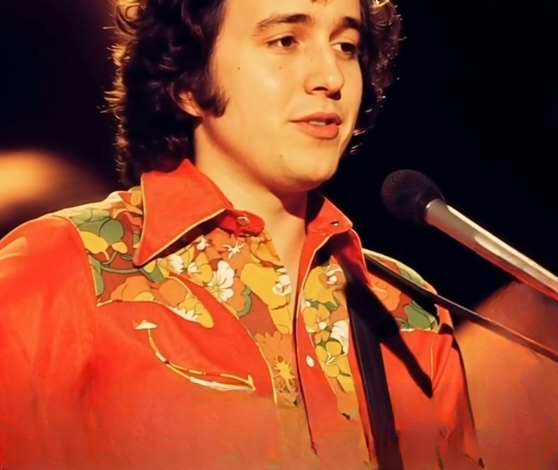
How Don McLean’s “Vincent” Became One of the Most Memorable Songs About Art and Emotion
When Don McLean released “Vincent” in 1971, the song offered a different kind of listening experience from many of the popular records of its era. While some chart hits relied on energetic performances, elaborate arrangements, or immediately recognizable hooks, McLean chose a quieter approach. With gentle acoustic instrumentation, carefully written lyrics, and a reflective vocal performance, he created a song that invited listeners to slow down and consider the relationship between art, emotion, and the life of an artist.
Known by its opening words, “Starry, Starry Night,” the song was inspired by the life and paintings of Vincent van Gogh, the Dutch artist whose work eventually became central to the history of modern art. McLean drew on the imagery associated with Van Gogh’s paintings to create a musical portrait that connected the artist’s visual world with themes of creativity, loneliness, misunderstanding, and the lasting value of artistic expression.
More than five decades after its release, “Vincent” remains one of Don McLean’s best-known recordings. Its continued appeal comes from the combination of historical inspiration, vivid imagery, a memorable melody, and a subject that still encourages discussion. The song does not simply recount events from Van Gogh’s life. Instead, it asks listeners to think about how people understand artists, how creative work can communicate experiences that words sometimes struggle to explain, and why recognition may arrive at a different time from the creation itself.
The Inspiration Behind “Vincent”
To understand the meaning of “Vincent,” it helps to look at the person who inspired it. Vincent van Gogh was born in the Netherlands in 1853 and became one of the most influential painters associated with the development of modern art. During his relatively short career as an artist, he produced an extraordinary collection of paintings, drawings, and letters.
His work included portraits, landscapes, still lifes, and scenes of everyday life. He often used expressive brushstrokes, vivid colors, and distinctive combinations of light and shadow. Rather than attempting to reproduce the world in a purely photographic way, Van Gogh frequently used color and form to communicate atmosphere, movement, and personal interpretation.
Some of his best-known paintings include The Starry Night, Sunflowers, Irises, and numerous portraits. These works are now displayed in museums and collections around the world, and their visual styles are widely recognized by audiences who may know little about the history of painting.
However, Van Gogh did not experience the widespread recognition that his work receives today during most of his lifetime. His career as a painter lasted only about a decade, and he faced financial difficulties, health challenges, and periods of social isolation. Although he maintained important relationships, particularly with his brother Theo, his professional success remained limited compared with the reputation he eventually acquired.
These circumstances have contributed to the enduring public interest in his life. His story raises questions about the relationship between artistic achievement and public recognition, as well as the difficulties that can arise when a person pursues a creative vision that is not widely understood by contemporary audiences.
Don McLean became interested in these aspects of Van Gogh’s story and found a way to express them through music.
How a Painting Inspired a Song
The immediate inspiration for “Vincent” was Van Gogh’s painting The Starry Night, completed in 1889 while the artist was staying at an asylum in Saint-Rémy-de-Provence, France.
The painting presents a nighttime landscape beneath a dramatic sky. Swirling patterns move across the heavens, bright stars stand out against deep blues, and a crescent moon illuminates the scene. A village appears below the sky, while a tall, dark cypress tree rises prominently in the foreground.
The composition is recognizable not only because of its subject but also because of the way Van Gogh represented movement and light. The sky seems active and expressive, while the village below appears comparatively still. The result is a landscape that feels both familiar and imaginative.
For McLean, the painting provided more than a collection of visual details. It offered a starting point for thinking about the artist behind the canvas.
The song uses descriptions associated with Van Gogh’s work to build an emotional connection between the listener and the painter. Rather than providing a conventional biography with dates, locations, and a sequence of historical events, McLean focuses on images and impressions.
This approach is one reason the song remains effective. Listeners do not need to know every detail of Van Gogh’s life to understand the central idea. The lyrics create a sense of looking at the world through the perspective of someone who sees beauty, complexity, and meaning in details that others might overlook.
The connection between painting and songwriting is especially important. Both forms of expression can communicate through atmosphere as much as through literal explanation. A painter can use color, shape, and light to establish a mood, while a songwriter can use melody, rhythm, and carefully chosen words to produce a similar effect.
In “Vincent,” these two artistic traditions come together. McLean translates the visual qualities of Van Gogh’s paintings into a musical experience, allowing the listener to imagine the scenes while also considering the person who created them.
Don McLean’s Approach to Songwriting
Don McLean was born in New Rochelle, New York, in 1945. He developed an interest in music at a young age and eventually became known as a singer-songwriter whose work often combines personal reflection with historical or cultural subjects.
His best-known song is “American Pie,” released in 1971. That recording became a major international success and established McLean as an important figure in popular music. Its extended narrative, memorable chorus, and references to American culture demonstrated his interest in writing songs that could support several layers of interpretation.
“Vincent” reveals another side of his songwriting. Rather than building a long narrative around a series of events, McLean uses a more concentrated structure. The song is focused, gentle, and reflective, with each musical and lyrical element contributing to the same central subject.
His writing does not depend on dramatic changes in volume or an elaborate instrumental arrangement. Instead, it relies on the strength of the melody and the relationship between the words and the music.
This restraint gives the recording room to develop naturally. The listener can focus on the imagery, follow the progression of the melody, and reflect on the meaning without being distracted by a dense arrangement.
McLean’s approach also demonstrates the value of choosing a specific point of view. He does not attempt to explain everything about Van Gogh. Instead, he selects details that help communicate his interpretation of the artist’s life and work.
That decision gives “Vincent” a sense of unity. Its imagery, musical arrangement, and emotional tone all point toward the same subject, creating a coherent experience from beginning to end.
A Song Built Around Visual Imagery
One of the most distinctive qualities of “Vincent” is its use of imagery. The song encourages listeners to picture a landscape, notice the colors and shapes within it, and consider how those details relate to the artist who created them.
This is particularly effective because Van Gogh’s paintings are known for their expressive visual language. His skies, fields, flowers, and portraits often feel intensely personal, even when the subject is an ordinary part of daily life.
McLean’s lyrics draw on this recognizable artistic world without turning the song into a technical discussion of painting. The descriptions remain accessible to listeners who have never studied art history.
The song’s opening establishes a visual setting, inviting the audience to imagine a star-filled night. From there, the writing moves between the appearance of the artwork and the life of the painter. The landscape becomes a way to discuss the person behind it.
This movement between image and biography is central to the song’s effect. A painting can be viewed as an independent work of art, but knowing something about the artist can change how an audience interprets it. Similarly, learning about Van Gogh’s life can lead listeners to notice different qualities in his paintings.
The song creates a connection between these two ways of looking. It encourages people to see the artwork and the artist as related, while leaving room for individual interpretations.
The use of imagery also gives the song a lasting quality. Historical details can become less familiar over time, but a well-chosen image can remain meaningful because people can connect it to their own experiences and emotions.
The Importance of the Musical Arrangement
The musical arrangement of “Vincent” is an essential part of its identity. The recording uses a gentle acoustic foundation that supports McLean’s vocal performance without overwhelming it.
The guitar provides a steady, flowing accompaniment. Its pattern helps establish the song’s reflective mood, while the melody moves with a natural ease that makes the performance feel conversational rather than theatrical.
This simplicity is deliberate in its effect. A more elaborate arrangement might have shifted attention toward instrumental performance, but the restrained approach keeps the focus on the words and their relationship to the melody.
The pacing is also important. The song does not rush through its ideas. Its measured tempo gives listeners time to absorb the imagery and consider the connections between Van Gogh’s life and artistic legacy.
McLean’s vocal delivery adds to this atmosphere. He sings with a clear, controlled tone that emphasizes the song’s reflective character. Rather than attempting to dramatize every line, he allows the melody to carry the emotion.
This approach helps the recording avoid feeling overly theatrical. The song remains intimate, as though the singer is sharing a personal interpretation with the listener rather than delivering a formal speech about an important historical figure.
The arrangement also demonstrates how musical simplicity can be highly effective. A song does not need a large ensemble, complicated production, or frequent changes in dynamics to create a strong impression. When the composition, performance, and subject work together, a restrained arrangement can be just as memorable as a more elaborate one.
The Meaning of Recognition and Artistic Legacy
One of the central themes associated with “Vincent” is the difference between creating meaningful work and receiving widespread recognition for it.
Van Gogh’s reputation grew substantially after his death. Today, his paintings are regarded as major achievements in the history of art, and his name is familiar to people across many countries. During his lifetime, however, he did not enjoy comparable commercial success.
This contrast has become a significant part of the public understanding of his story. It encourages reflection on how artistic reputations develop and why the importance of creative work is not always immediately recognized.
Artists work within particular historical and cultural environments. Their ideas may challenge established traditions, introduce unfamiliar techniques, or reflect experiences that audiences do not immediately understand. Public opinion can change as later generations encounter the work in different contexts.
Van Gogh’s paintings are now studied for their use of color, brushwork, composition, and emotional expression. They have influenced countless artists and continue to appear in exhibitions, books, documentaries, and educational materials.
“Vincent” approaches this legacy through a personal and accessible lens. Rather than presenting a detailed history of the art market or the development of modern painting, it focuses on the person whose work became important to later generations.
The song’s perspective encourages listeners to consider how easily a person’s contribution can be underestimated while they are still creating it. That idea applies beyond painting. Writers, musicians, inventors, designers, and other creative individuals may produce work whose influence becomes clearer only after time has passed.
At the same time, the story should not be reduced to a simple claim that all misunderstood artists will eventually become famous. Recognition depends on many factors, including the quality of the work, the cultural environment, access to audiences, and the efforts of people who preserve and share it.
Van Gogh’s legacy is distinctive because his paintings continued to attract attention after his death and became central to the history of modern art. McLean’s song helps introduce that story to audiences who might otherwise encounter it only in museums or art-history books.
Understanding the Song’s Emotional Tone
The emotional character of “Vincent” is one of its most recognizable features. The song combines admiration for the artist’s work with a reflective awareness of the difficulties associated with his life.
Its mood is gentle rather than dramatic. The music does not attempt to recreate historical events or present a detailed account of Van Gogh’s personal challenges. Instead, it invites listeners to think about the distance that can exist between a person’s inner world and the way other people perceive them.
That theme is not unique to artists. People in many circumstances struggle to explain their ideas, feelings, or experiences to others. Differences in personality, communication, background, and expectations can create misunderstandings even when no one intends to cause them.
Art can provide a way to bridge part of that distance. A painting, song, poem, or photograph allows its creator to communicate something that may be difficult to explain through ordinary conversation. Audiences can then interpret the work through their own experiences.
This process is rarely identical for every person. One listener may focus on the historical references in “Vincent,” while another may respond primarily to its melody or the relationship between beauty and sadness. Someone familiar with Van Gogh’s paintings may hear additional connections that a first-time listener does not notice.
These different responses are part of what makes the song enduring. It presents a clear central subject while leaving enough room for listeners to form their own interpretations.
The emotional tone also reflects McLean’s decision to approach Van Gogh with respect. The song does not treat the artist’s life as a collection of sensational details. It emphasizes his work