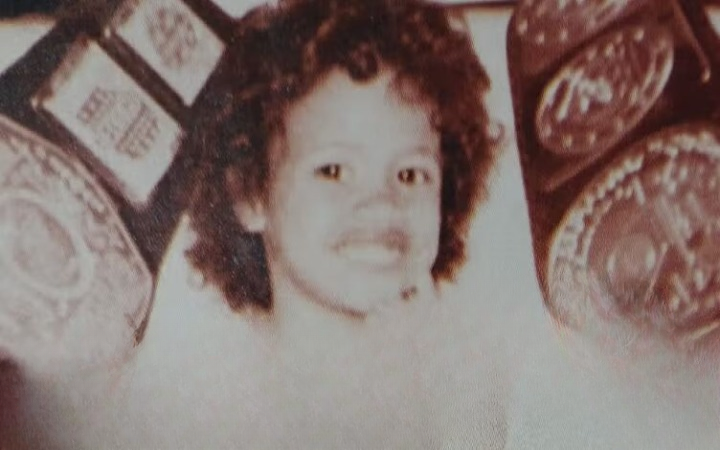
Dwayne Johnson’s Journey From Early Challenges to International Stardom
Long before major film premieres, successful movie franchises, and international recognition, Dwayne Johnson experienced periods of uncertainty while trying to determine his future. Today, audiences around the world recognize him as “The Rock,” a performer whose career has extended from professional wrestling into Hollywood films, television, business, and other entertainment ventures.
His public image is associated with confidence, physical fitness, humor, and determination. However, his path to becoming a globally recognized entertainer included financial difficulties, family changes, educational challenges, and the difficult transition from one professional ambition to another.
Johnson’s story is often presented as an example of personal reinvention. Although the popular version sometimes focuses on dramatic details, his career is better understood by looking at the experiences that influenced him, the opportunities he pursued, and the work required to establish himself in two highly competitive industries.
His journey also illustrates an important distinction: success rarely comes from one decision alone. It often develops through a combination of circumstances, preparation, support, setbacks, and the ability to recognize new opportunities when an earlier plan does not work out.
Growing Up in a Family Connected to Wrestling
Dwayne Douglas Johnson was born on May 2, 1972, in Hayward, California. His family had a strong connection to professional wrestling, a sport that would later become the foundation of his own public career.
His father, Rocky Johnson, was a professional wrestler who competed for many years. His maternal grandfather, Peter Maivia, was also involved in the wrestling business. Growing up around relatives who understood the demands of professional performance gave Johnson an early view of a world that combined athletic ability, travel, entertainment, and public attention.
However, having family connections to wrestling did not mean that a successful career was guaranteed.
Professional wrestling requires physical conditioning, performance skills, audience awareness, and the ability to work within a demanding schedule. The industry can also involve considerable uncertainty, particularly for performers trying to establish themselves.
Johnson’s early life was shaped by more than wrestling. His family moved at different points, and his father’s profession meant that the household experienced the practical realities of an occupation that often required travel and adaptation.
These experiences contributed to his understanding of work, competition, and the importance of maintaining discipline.
Although the wrestling business would eventually become central to his identity, Johnson did not begin life with a guaranteed path to international recognition. Like many young people, he had to explore his interests, deal with changing circumstances, and discover which direction best suited his abilities.
The Challenges of Adolescence
Johnson has spoken publicly about difficult experiences during his teenage years. His family faced financial uncertainty at different points, and he has described periods when he struggled with his emotions and behavior.
During adolescence, many people are trying to develop a sense of identity while managing expectations from family, school, and friends. When financial pressure or instability is added to these challenges, the process can become more complicated.
Johnson has discussed getting into trouble when he was younger, including involvement in incidents that brought him into contact with law enforcement. Some popular accounts repeat a specific claim that he was arrested eight times as a teenager. However, that exact figure should not be treated as established fact without a reliable source confirming the details.
What can be said more generally is that Johnson has acknowledged making mistakes while growing up and later described those years as a period from which he learned important lessons.
It is important to discuss such experiences without turning them into a simplified story about a young person being permanently defined by earlier behavior.
Adolescence is a time when people can make poor decisions without fully understanding the long-term consequences. Family circumstances, social influences, individual choices, and access to guidance can all affect how those years unfold.
For Johnson, the experiences he has discussed became part of the personal history he later shared with audiences. His public reflections often emphasize the value of recognizing mistakes and choosing a different direction.
Financial Uncertainty and Family Pressure
Financial difficulties can influence many parts of family life. They may affect housing, education, access to opportunities, and the sense of security people experience in their everyday routines.
Johnson has spoken about periods when his family faced financial strain. One widely repeated detail in stories about his early adulthood is that he had only a small amount of money after his football career reached an unexpected turning point. The often-cited figure is seven dollars, a detail that has become closely associated with his account of beginning again.
Although dramatic headlines sometimes present the figure as a complete explanation of his circumstances, the broader story is more useful than the number alone.
Johnson had invested considerable time and effort in pursuing football. When that plan did not develop as he had hoped, he had to reconsider what he could do next.
This was a difficult transition because an ambitious young athlete may build much of his identity around a particular goal. When that goal disappears, the challenge involves more than finding another job. It can also mean reassessing expectations, accepting disappointment, and developing a new plan.
Financial uncertainty can make that process more stressful. Without a clear next step, even someone with considerable talent may struggle to determine where to direct their energy.
Johnson’s later career shows how a change in direction can eventually lead to a new opportunity. However, that outcome was not automatic. It required him to identify a different professional path and begin building the skills necessary to succeed in it.
Discovering a Passion for Football
Before becoming widely known as a professional wrestler and actor, Johnson pursued American football.
He attended the University of Miami, where he played as a defensive lineman. The university had a highly regarded football program, and competing at that level required significant physical preparation, discipline, and commitment.
College football can provide athletes with opportunities to develop their abilities while continuing their education. It also places considerable demands on time and performance, as players must balance training, games, academic responsibilities, and competition for positions.
Johnson became part of a program where the standard of performance was high. His experience exposed him to a structured athletic environment and the demands of competing alongside talented players.
Football also provided an opportunity to develop habits that would later be useful in professional wrestling. Strength training, conditioning, teamwork, and the ability to prepare for demanding performances are relevant across many sports and entertainment settings.
However, success in one athletic environment does not guarantee a long-term professional career. Football players must contend with competition, injuries, team decisions, and the limited number of opportunities available at the highest level.
For Johnson, the sport offered valuable experience, but his eventual career would move in another direction.
The Disappointment of an Uncertain Future
One of the most challenging experiences in an athlete’s life can occur when a long-term ambition does not become reality.
A person may spend years training, competing, and imagining a future in professional sports. When opportunities fail to appear, the disappointment can affect confidence and make the next decision difficult.
Johnson’s football ambitions did not lead to the professional career he had hoped for. After college, he spent a brief period with the Calgary Stampeders of the Canadian Football League, but the opportunity did not develop into a lasting playing career.
This was an important turning point.
Rather than continuing indefinitely with a plan that was not working, Johnson began considering another way to use his athletic background and family connections.
His experience offers a practical lesson about career changes: a setback does not erase the abilities developed while pursuing the original goal.
Football had helped Johnson develop physical conditioning, competitive experience, and familiarity with high-pressure performance. These qualities could be applied elsewhere, even if the new field required additional training and a different understanding of success.
The transition was not necessarily easy, and it did not guarantee future recognition. It did, however, create an opening for him to explore a profession that had been part of his family background for years.
Returning to Wrestling
Professional wrestling became Johnson’s next major opportunity.
With guidance from his father and a family background in the business, he began training for a career in the ring. Although he possessed an athletic foundation, professional wrestling required skills that differed from those used in competitive football.
Wrestlers must combine physical movement with storytelling, timing, character development, and the ability to communicate with an audience. They perform within a structured entertainment format in which matches are designed to create drama and maintain audience interest.
The work can be physically demanding. Performers must prepare their bodies, learn safe movement techniques, and maintain the conditioning required for repeated performances and travel.
Johnson entered the industry during the 1990s, when professional wrestling was experiencing significant competition for audience attention.
His early character and presentation differed from the personality that would later make him famous. Like many performers, he had to discover which aspects of his personality worked best in front of a live audience.
This process took time. Public success did not arrive simply because he was athletic or came from a wrestling family.
He needed to develop a distinctive presence, learn how to communicate effectively with crowds, and become comfortable performing within the entertainment demands of the industry.
These early experiences helped lay the groundwork for his later transformation into one of professional wrestling’s most recognizable personalities.
From Rocky Maivia to The Rock
Johnson initially performed under the name Rocky Maivia, a name that reflected elements of his family history. His early character was presented in a positive, highly enthusiastic style.
However, audiences did not respond to every aspect of that presentation as the company had expected. Over time, Johnson’s character evolved, and he adopted the name “The Rock.”
The change was more than a new nickname. It marked a shift in how he communicated with audiences.
His performances became more confident, humorous, and self-aware. He developed a distinctive speaking style, using timing, facial expressions, memorable phrases, and direct interaction with the crowd.
These qualities helped distinguish him from other wrestlers.
Professional wrestling characters often need to communicate quickly. A performer may have only a short period to establish a personality, create a connection with the audience, and make a segment memorable.
Johnson became particularly effective at combining physical presence with verbal performance. His interviews and promotional appearances developed into a central part of his appeal.
He could deliver serious statements when a storyline required them, but he also understood the value of comedy and playful self-confidence.
This versatility helped expand his audience beyond people who watched wrestling primarily for athletic competition.
As his popularity grew, The Rock became a recognizable entertainment personality in his own right.
The Importance of Connecting With an Audience
A performer can possess physical talent and still struggle to build a lasting career if audiences