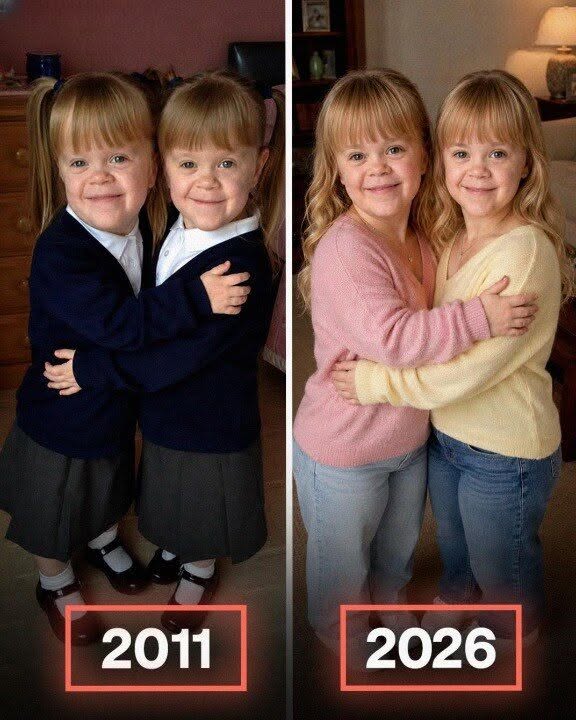
For fifteen years, my twin sister and I believed the same painful story about our mother.
We believed she had left us.
We believed she had chosen a different life.
And because the adults around us repeated that story for so long, we eventually stopped questioning it.
Until one ordinary afternoon, I overheard a conversation that made me wonder whether everything we had been told was wrong.
The truth didn’t arrive with a dramatic announcement.
It started with a few quiet words from someone who didn’t realize I was listening.
And once I heard them, I couldn’t look at my childhood the same way again.
The Last Morning I Saw My Mother
I was seven years old the last time I remember seeing my mother.
My twin sister and I were getting ready for school.
It was an ordinary morning.
There was nothing about it that suggested our lives were about to change.
Mom was helping my sister with her hair while I was struggling with my shoelaces.
She laughed when I complained that I couldn’t get the knot right.
Then she kissed both of us on the forehead.
“I’ll see you later,” she said.
Those were the last words she ever said to me that morning.
She drove us to school as she normally did.
I remember getting out of the car.
I remember waving.
And I remember believing that she would be there waiting for us when school ended.
She wasn’t.
Dad Came Instead
That afternoon, our father arrived to pick us up.
We immediately knew something was wrong.
He looked different.
He was unusually quiet, and he didn’t make the small jokes he normally made when we got into the car.
We asked where Mom was.
He hesitated.
Then he said something that I didn’t understand.
“Your mother isn’t coming.”
At seven years old, those words didn’t make sense.
We thought perhaps she was sick.
Maybe she had gone somewhere.
Maybe she would come home later.
We asked questions, but Dad didn’t give us the answers we wanted.
That night, we waited.
The next morning, we waited again.
Then another day passed.
And another.
Eventually, waiting became part of our lives.
The Story We Were Given
As children, we needed an explanation.
The adults around us gave us one.
We were told that our mother had left.
We were told she had made a decision to walk away from the family.
No one explained everything.
There were unanswered questions, but whenever my sister or I asked about them, the conversation usually ended quickly.
Eventually, a new person entered our lives.
Her name was Jean.
She became our stepmother.
At first, she seemed kind.
She tried to help us adjust.
She cooked meals.
She helped around the house.
She told us that she understood how difficult it was to lose a mother.
As children, we wanted to believe her.
We wanted someone to tell us that everything would eventually be okay.
Over Time, Things Changed
As the years passed, Jean’s behavior toward us changed.
The kindness we remembered from the beginning became less noticeable.
Whenever we asked questions about our mother, she often reminded us of the story we had already been told.
“She chose to leave,” Jean would say.
“You should be grateful for the people who stayed.”
We heard those words so often that eventually we stopped asking questions.
My sister and I began to believe that perhaps there was something wrong with us.
Maybe we hadn’t been good enough.
Maybe Mom had become tired of being our mother.
Children don’t always understand that adults can make complicated decisions for reasons children could never know.
Instead, children often blame themselves.
We did exactly that.
We Learned Not to Ask for Much
Growing up, my sister and I became extremely careful about asking for things.
We knew money was supposedly limited.
There were always reasons why we couldn’t have certain things.
We wore hand-me-down clothes.
We didn’t have elaborate birthday celebrations.
Family vacations were rare.
When we asked for something special, Jean would usually remind us that there were more important things to pay for.
“Money doesn’t grow on trees,” she would say.
We accepted it.
At least, we thought we did.
But as we became teenagers, we began noticing something that didn’t make sense.
Jean seemed to have money for herself.
There were new clothes.
Expensive-looking accessories.
Trips to salons and spas.
New electronics.
We didn’t understand it.
Still, we didn’t complain.
We had learned that questioning things often led to uncomfortable conversations.
Fifteen Years Passed
Eventually, we became adults.
Life moved forward.
My sister and I built lives of our own, but the question of our mother never completely disappeared.
There was always a small part of me that wondered where she was.
Was she alive?
Did she ever think about us?
Did she regret leaving?
Did she know what we had been told about her?
I rarely talked about those questions.
They were too painful.
Sometimes it was easier to accept the story than to admit that we didn’t really know the truth.
Then Came Mother’s Day
One Mother’s Day, my sister couldn’t visit Jean.
I decided to go instead.
I bought flowers on the way.
It felt strange.
I had spent years believing that Mother’s Day wasn’t really meant for me.
My biological mother was gone.
Jean had raised us, but our relationship had always been complicated.
Still, I thought bringing flowers might be a kind gesture.
When I arrived at the house, the front door wasn’t completely closed.
I called out.
No answer.
I stepped inside.
I could hear Jean talking in the kitchen.
She was laughing.
Her voice sounded lighter than usual.
I assumed she was speaking with a friend.
I was about to announce that I had arrived when I heard something that made me stop.
She mentioned my name.
I Stood Still in the Hallway
At first, I thought I had misunderstood her.
I stood quietly near the hallway.
Jean continued talking.
She was discussing my sister and me.
Then she said something that made my stomach drop.
She was talking about how neither of us had ever seriously questioned what we had been told about our mother.
I couldn’t move.
The flowers were still in my hand.
I remember thinking:
Why would she be talking about this?
For fifteen years, I had believed the story.
But suddenly, I wondered whether Jean had known more than she had ever admitted.
Then She Mentioned Our Mother
The conversation became quieter.
I could only hear parts of it.
But one thing was clear.
Jean was talking about our mother.
She mentioned something that happened around the time Mom disappeared.
Something I had never heard before.
I moved closer to the doorway so I could hear.
Then Jean said words that changed the way I understood my childhood.
She implied that our mother’s disappearance hadn’t happened in the simple way we had always been told.
There had been another part of the story.
A part that had been kept from us.
My hands began shaking.
I wasn’t sure whether I was hearing correctly.
I didn’t want to jump to conclusions.
But I knew I couldn’t simply walk away.
I Needed Answers
I left the house without confronting her that day.
I went home and called my sister.
At first, she thought something had happened to Jean.
Then I told her what I had heard.
There was silence on the other end of the phone.
Finally, she asked:
“Are you sure?”
I told her exactly what I had heard.
Not what I thought it meant.
Not what I wanted it to mean.
Just the words I could remember.
We agreed that we needed to be careful.
After fifteen years, emotions could easily turn fragments of a conversation into assumptions.
We needed facts.
We Started Looking Through Old Records
That weekend, my sister and I began searching through everything we still had from our childhood.
Photographs.
Letters.
Old school documents.
Family papers.
Anything that might help us understand what had happened.
We discovered things we had never paid attention to before.
There were gaps in the timeline.
There were dates that didn’t quite make sense.
There were documents we had never seen.
And then we found an old envelope.
It had our mother’s name written on it.
Neither of us remembered seeing it before.
Inside was a short letter.
It wasn’t enough to explain everything.
But it contained information that raised even more questions.
We Refused to Make Assumptions
At that point, it would have been easy to decide that we already knew the truth.
But we didn’t.
A suspicious conversation isn’t proof.
An old letter isn’t automatically proof either.
We needed to understand where the documents came from, when they were written, and whether the information could be confirmed independently.
That was difficult because emotions were involved.
For fifteen years, we had carried one version of our childhood.
Now another version was beginning to emerge.
And neither of us wanted to build our future around another assumption.
The Most Difficult Part Was the Uncertainty
The hardest thing wasn’t anger.
It was uncertainty.
If our mother truly had abandoned us, we needed to understand why.
If she hadn’t, we needed to know what had actually happened.
Either way, fifteen years of our lives had been shaped by a story we might not have fully understood.
My sister and I talked late into the night.
We remembered small things from childhood.
Things we had forgotten.
Comments adults had made.
Phone calls.
Arguments.
Unexpected visitors.
Moments that had seemed meaningless when we were children suddenly seemed worth remembering.
But we reminded each other not to turn memories into evidence.
Memory can change over time.
What we needed was documentation.
A Different Way of Looking at the Past
For years, I had thought that healing meant accepting that my mother had left us.
Now I understood that healing might also mean having the courage to ask difficult questions.
Maybe the answers would be painful.
Maybe they would confirm the story we had always believed.
Or maybe they would completely change our understanding of the past.
Either way, we deserved to know what could actually be established.
Not rumors.
Not assumptions.
Not a story repeated so many times that everyone eventually accepted it as fact.
We deserved the truth.
What Happened Next
My sister and I decided to speak with people who had known our family at the time.
We began carefully piecing together the timeline.
We also looked for official records that could help establish what happened during the years we had been too young to understand.
The process wasn’t easy.
Some people remembered things differently.
Some had forgotten important details.
Others were reluctant to talk.
But little by little, we began to understand that the story was more complicated than the one we had grown up hearing.
And there was still one question neither of us could answer.
Where was our mother?
The Question That Stayed With Me
That question became impossible to ignore.
For fifteen years, I had believed my mother had simply decided not to be part of our lives.
Now I realized that I had never actually been given the complete story.
I don’t know exactly where this investigation will lead.
I don’t know whether every suspicion will turn out to be justified.
And I don’t know whether the truth will bring the closure we have wanted since childhood.
But I do know something now that I didn’t know before.
The past isn’t always as simple as the version we are given when we’re too young to question it.
Sometimes there are missing pieces.
Sometimes there are misunderstandings.
And sometimes, the truth is hidden in details that nobody thinks to examine until many years have passed.
For fifteen years, my sister and I believed we knew why our mother disappeared from our lives.
Then, on an ordinary Mother’s Day, I overheard a conversation that made me question everything.
Now we are determined to separate fact from assumption and finally understand what happened.
Whatever the answer turns out to be, I know one thing for certain:
We spent enough years believing someone else’s version of our story. It’s time to discover the truth for ourselves.