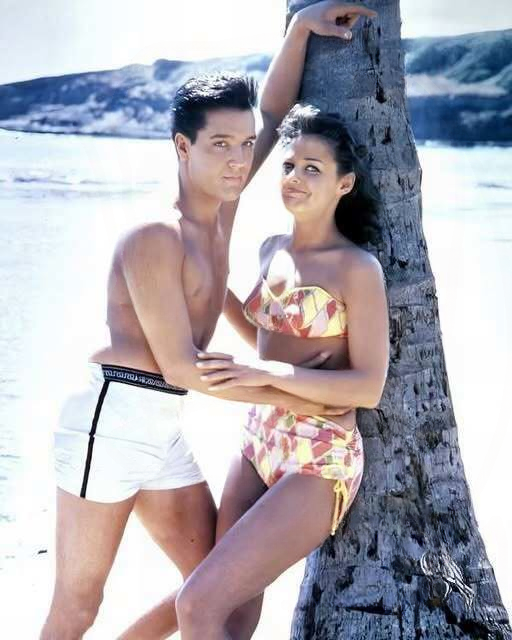
Elvis Presley and Blue Hawaii: 15 Fascinating Stories Behind His Beloved Hawaiian Movie
When Elvis Presley appeared in Blue Hawaii in 1961, audiences were treated to a delightful combination of tropical scenery, romance, comedy, and unforgettable music. The film quickly became one of the most recognizable productions of his Hollywood career, introducing moviegoers to a colorful world of beautiful beaches, Hawaiian traditions, family disagreements, and memorable musical performances.
Although Elvis was already an international music sensation, his success in Hollywood was becoming an important part of his professional life. By the early 1960s, he had established himself as a major movie star, and audiences were increasingly interested in seeing him perform on the big screen.
Blue Hawaii offered something different from many of his earlier productions. Instead of focusing primarily on military life or dramatic conflict, the film presented a relaxed tropical setting where Elvis could combine his musical talents with a lighthearted romantic story.
Released on November 22, 1961, the Paramount musical comedy was directed by Norman Taurog and produced by Hal B. Wallis. Elvis played Chadwick Gates, a young man returning to Hawaii after serving in the United States Army. Although his wealthy family expects him to join the family pineapple business, Chad has other plans for his future.
He would rather enjoy island life and work as a tour guide alongside his girlfriend, Maile Duval, played by Joan Blackman.
The story includes family disagreements, romantic misunderstandings, humorous situations, and plenty of opportunities for Elvis to perform.
However, there is much more to Blue Hawaii than its cheerful storyline. Behind the colorful scenery and memorable songs are interesting production decisions, unexpected casting developments, real Hawaiian locations, and musical achievements that helped make the movie an enduring favorite.
Let’s take a closer look at 15 fascinating aspects of this beloved Elvis Presley classic.
1. Blue Hawaii Was One of Elvis Presley’s Most Successful Movies
By the time Blue Hawaii arrived in theaters, Elvis Presley had already demonstrated that he could attract audiences beyond the music industry.
His earlier films, including Love Me Tender, Loving You, King Creole, and G.I. Blues, had helped establish his reputation as a successful screen performer.
However, Blue Hawaii became an especially important commercial achievement.
The film connected several elements that audiences enjoyed: Elvis’s music, an attractive cast, entertaining situations, and a beautiful location.
The combination proved extremely successful.
Although some critics were less enthusiastic about the film’s relatively simple storyline, moviegoers responded positively to its entertainment value.
The production demonstrated that audiences were happy to see Elvis in a lighthearted musical comedy.
Its commercial success also influenced the direction of his subsequent Hollywood career.
The movie became a model for several later productions that combined romantic comedy, exotic locations, and musical performances.
For fans, Blue Hawaii remains one of the defining examples of Elvis’s Hollywood period.
2. The Movie Was Originally Announced Under a Different Title
One interesting detail about the production is that Blue Hawaii was not the original title.
According to the American Film Institute’s production records, the project was initially announced under the name Hawaii Beach Boy.
The title was eventually changed to Blue Hawaii before filming began.
This change helped give the movie a more distinctive identity.
The new title also captured the atmosphere that the production wanted to communicate: tropical scenery, romance, music, and the relaxed feeling associated with a Hawaiian vacation.
The title became particularly memorable because it was closely connected to the movie’s musical identity.
For many viewers, the words Blue Hawaii immediately bring to mind Elvis, beautiful island landscapes, and the unforgettable songs featured in the film.
It is a small production detail, but it demonstrates how even the identity of a movie can evolve before audiences finally see it.
3. Hawaii Was More Than Just a Beautiful Background
One of the strongest features of Blue Hawaii is its use of real Hawaiian scenery.
Instead of relying entirely on studio sets, the production filmed important scenes on location.
The beautiful landscapes helped create an atmosphere that would have been difficult to reproduce convincingly on a soundstage.
Audiences were introduced to beaches, tropical vegetation, ocean views, and locations that gave the movie a distinctive visual character.
The Hawaiian scenery also played an important role in the storytelling.
The location helped explain why Chad Gates wanted to enjoy a relaxed island lifestyle rather than immediately accept the responsibilities expected by his family.
For the audience, the scenery became part of the entertainment.
The film offered a colorful escape from everyday life and allowed viewers to experience a version of Hawaii through the magic of cinema.
The location photography remains one of the reasons the movie continues to be visually appealing.
4. The Production Filmed in Several Real Hawaiian Locations
The Hawaiian setting was not created entirely through studio photography.
The production filmed in different locations across the islands, including areas of Kauai and Oahu.
The Hawaii Film Office lists Blue Hawaii among the feature films made in Hawaii during 1961.
One particularly recognizable location associated with the production is the Coco Palms Resort Hotel on Kauai.
Other filming locations included areas around Oahu, contributing to the movie’s varied scenery.
These real locations helped create the impression of a tropical world filled with natural beauty.
For modern viewers, discovering the locations used in the film can add another layer of enjoyment.
It is fascinating to compare the places seen on screen with their real-world surroundings.
Some locations have changed considerably over the decades, while others remain recognizable parts of Hawaii’s cultural and tourism history.
The movie therefore offers more than entertainment. It also preserves images of Hawaiian landscapes during an important period in American film history.
5. Joan Blackman Became Elvis’s Leading Lady
One of the most important casting decisions involved the role of Maile Duval.
The character became Chad Gates’s romantic partner and played a central role in the film’s storyline.
Joan Blackman was ultimately selected for the role.
Her performance provided a warm and engaging counterpart to Elvis’s character.
The chemistry between the two performers helped make the romantic storyline enjoyable without overwhelming the comedy and musical elements.
Interestingly, Blackman was not originally the first actress associated with the role.
Juliet Prowse, who had appeared opposite Elvis in G.I. Blues, had initially been cast as Maile.
However, contractual and production disagreements arose before filming, and the role was eventually recast.
Blackman stepped into the production and became an important part of the finished movie.
This casting development is one of the more interesting behind-the-scenes stories connected to Blue Hawaii.
It also reminds viewers that movie productions can undergo significant changes before the cameras begin rolling.
6. Angela Lansbury Played Elvis’s Mother
Another memorable casting choice was Angela Lansbury, who portrayed Sarah Lee Gates, Chad’s mother.
Lansbury was already an established actress with considerable experience in film and theater.
Her presence added another level of personality to the movie.
Sarah Lee is a wealthy and demanding woman who expects her son to accept a position in the family business.
Chad, however, has different ambitions.
He prefers the freedom of working as a tour guide and enjoying life in Hawaii.
This disagreement creates several humorous moments throughout the story.
Lansbury’s performance gives the character a strong personality without making her simply a one-dimensional antagonist.
The relationship between mother and son provides much of the film’s central comedy.
It is also interesting to remember that Lansbury was only about ten years older than Elvis in real life, despite playing his mother.
Her casting remains one of the movie’s most frequently discussed curiosities.
7. Elvis Played a Character Who Wanted a Different Kind of Life
The character of Chad Gates reflects a familiar theme in entertainment: the conflict between personal freedom and family expectations.
After completing his military service, Chad returns to Hawaii and wants to enjoy a more independent lifestyle.
His family expects him to become involved in the pineapple business, but he is not interested in following that path.
Instead, he takes a job as a tour guide.
This decision creates conflict with his mother, who believes that he should take advantage of the family’s business opportunities.
The disagreement is easy for audiences to understand because it represents a familiar experience.
Many people have faced situations in which their personal ambitions differ from what relatives expect of them.
Although the movie treats the subject humorously, it also gives Chad a clear motivation.
He wants to make his own decisions and build a life that reflects his interests.
Elvis’s relaxed screen presence makes the character particularly appealing.
The role allowed him to combine humor, romance, and music in a way that suited the film’s lighthearted atmosphere.
8. The Soundtrack Became One of Elvis’s Biggest Musical Successes
Music is at the heart of Blue Hawaii.
The soundtrack helped transform the movie from a simple romantic comedy into a memorable musical experience.
The album featured numerous songs performed by Elvis, including romantic ballads, upbeat numbers, and Hawaiian-inspired selections.
It became one of the most successful soundtrack albums of his career.
According to Paramount’s official film information, the album spent 20 weeks at the top of the Billboard 200.
That achievement demonstrated how closely audiences connected the movie with its music.
The soundtrack was not simply an additional promotional product.
It became a major part of the film’s identity and helped extend its popularity beyond the movie theater.
Even people who had not watched every scene could recognize the music associated with the production.
The soundtrack’s success also encouraged the continued use of music as a central attraction in Elvis’s later Hollywood films.
9. Can’t Help Falling in Love Became the Movie’s Most Famous Song
Perhaps the most memorable musical moment in Blue Hawaii is Elvis’s performance of “Can’t Help Falling in Love.”
The romantic ballad became one of the most beloved recordings of his entire career.
Its gentle melody and emotional lyrics made it particularly suitable for the film’s romantic atmosphere.
The song has remained popular long after the movie’s original release.
It became closely associated with Elvis and was eventually used as a memorable closing number during many of his later concerts.
The song’s lasting appeal comes from its simplicity and emotional warmth.
It is easy to understand why audiences connected with it.
Unlike some of the more energetic musical performances in the film, this song creates a quieter moment that allows Elvis’s voice to take center stage.
Its popularity helped ensure that Blue Hawaii would be remembered not only as a movie but also as an important musical milestone.
For many fans, hearing the opening notes immediately brings back memories of Elvis’s Hawaiian adventure.
10. The Film Featured More Than a Dozen Musical Numbers
Another interesting aspect of the production is the number of songs included in the movie.
Blue Hawaii featured approximately 14 musical numbers, giving Elvis plenty of opportunities to perform.
The songs represented different musical styles and moods.
Some were romantic and gentle, while others were more playful and energetic.
“Rock-A-Hula Baby” provided a lively musical moment, while “Can’t Help Falling in Love” offered a much more emotional experience.
The variety helped prevent the soundtrack from feeling completely repetitive.
It also made the movie attractive to audiences who wanted to see Elvis perform a mixture of familiar musical styles.
For the filmmakers, including numerous songs was an important part of the production’s entertainment formula.
The music helped maintain the film’s cheerful atmosphere and provided memorable moments between the main storylines.
The soundtrack remains one of the strongest reasons that the movie continues to attract Elvis fans.
11. Elvis’s Visit to Hawaii Was Connected to a Meaningful Charity Event
The production of Blue Hawaii also coincided with an important event in Elvis’s personal history.
Before filming began, Elvis participated in a charity benefit connected to the USS Arizona Memorial Fund.
The event took place in March 1961 and helped raise money for the memorial honoring those who lost their lives during the attack on Pearl Harbor.
According to historical production records, the benefit raised approximately $52,000.
This event is an interesting part of the story because it demonstrates that Elvis’s connection with Hawaii extended beyond the movie itself.
His visit was not simply about filming a Hollywood production.
He also participated in an effort connected to an important historical memorial.
The USS Arizona Memorial would become a significant site of remembrance in Hawaii.
Elvis’s involvement in the fundraising effort added another meaningful dimension to his visit.
For fans interested in his life beyond music and movies, this is an important detail worth remembering.
12. The Movie Was Filmed on a Tight Production Schedule
Producing a major Hollywood musical required careful planning.
The filmmakers needed to coordinate actors, musicians, technical crews, costumes, transportation, and location arrangements.
For Blue Hawaii, the production schedule included filming in Hawaii and additional work at the Paramount studio lot in California.
According to the American Film Institute, principal photography began on March 27, 1961, and the production was completed on May 23, 1961.
The location filming in Hawaii was completed in April before the production continued in Hollywood.
Director Norman Taurog had previously worked with Elvis on G.I. Blues, so the two were already familiar with one another’s working styles.
This previous collaboration likely helped the production move efficiently.
The AFI records also note that the film was completed three days ahead of schedule.
That was a notable achievement for a production involving extensive location work.
It demonstrates how important organization and coordination were to the successful completion of the movie.
13. The Film Helped Establish a Formula for Later Elvis Movies
The success of Blue Hawaii had an important influence on Elvis’s subsequent film career.
The production combined several elements that audiences clearly enjoyed.
There was a romantic storyline, attractive locations, light comedy, a recognizable supporting cast, and a soundtrack filled with Elvis performances.
These ingredients became familiar features of many of his later movies.
The formula was commercially successful, and studios had strong reasons to continue using it.
However, the growing emphasis on musical comedies also created limitations for Elvis as an actor.
He had previously appeared in more dramatic productions, including King Creole and Flaming Star.
Some fans and film historians have argued that the success of the lighter musical productions reduced opportunities for him to pursue more challenging dramatic roles.
This makes Blue Hawaii an important turning point in his Hollywood career.
It demonstrated his ability to attract large audiences, but it also helped establish a pattern that would shape many of his later screen appearances.
14. The Movie Helped Strengthen Elvis’s Connection With Hawaii
Elvis developed a strong personal connection with Hawaii over the years.
His visits to the islands were associated with vacations, film productions, and important charitable activities.
Blue Hawaii helped introduce the islands to an enormous international audience.
Its colorful landscapes and relaxed atmosphere made Hawaii an appealing destination for moviegoers.
The film also became part