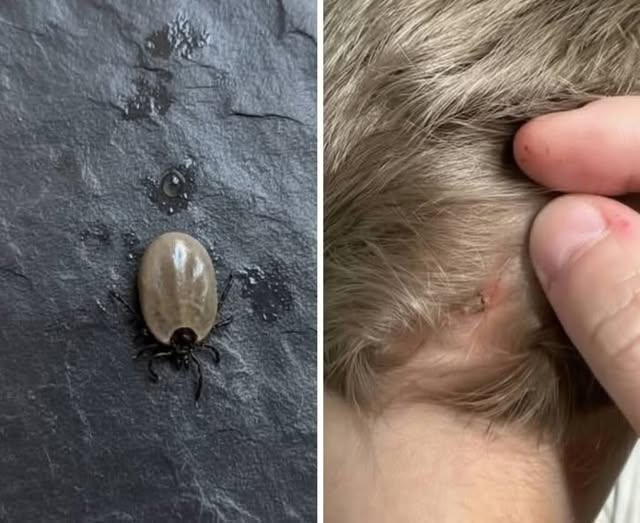
Finding something unexpected on your child can be unsettling, especially when it appears to be an insect or tiny crawling creature.
A parent may notice something unusual while brushing their child’s hair, washing their head, or simply checking the scalp. The immediate reaction is often to wonder what it could be, whether it came from the outdoors, and whether there is anything that needs to be done.
But identifying a tiny insect from a brief description or an unclear photograph isn’t always easy.
Many small insects and harmless outdoor organisms can look surprisingly similar. Lighting, hair color, the angle of a photograph, and the size of the object can all make identification more difficult.
For that reason, it is better not to immediately assume that every small bug found in someone’s hair is a particular pest or that it represents a health problem.
Instead, take a calm, methodical approach.
Start by Taking a Closer Look
If you notice something unusual on your child’s scalp, the first step is careful observation.
Look at the object without immediately touching or crushing it.
If possible, take a clear photograph using good lighting.
A close-up image can be particularly helpful if the object is still present.
Try to capture it from more than one angle.
Details such as the number of legs, body shape, color, approximate size, and whether it appears to be attached to the hair can help with identification.
However, even a photograph may not provide enough information for a definite answer.
Not Every Small Bug Is a Head Louse
One common assumption parents make is that any insect found in the hair must be a head louse.
That’s not necessarily the case.
Head lice are small parasitic insects that live primarily on the human scalp and feed on blood.
They are specifically adapted to living in human hair.
Other insects may occasionally become trapped in hair without actually living there.
For example, a small outdoor insect could land on someone’s head while they are outside and later become tangled in the hair.
This is why identifying the actual organism matters.
What Head Lice Typically Look Like
Head lice are quite small and can be difficult to see.
Adult lice are generally around the size of a sesame seed, while their eggs, commonly called nits, are considerably smaller.
Nits are attached firmly to individual strands of hair, usually relatively close to the scalp.
One useful distinction is that dandruff or loose debris often moves easily along the hair or falls away, while nits tend to remain attached.
Still, visual identification can be difficult.
If you suspect head lice, a healthcare professional or pharmacist can provide guidance on appropriate treatment and confirmation.
Other Things Can Resemble Insects
Hair can contain many things that look strange under bright light or magnification.
A small piece of plant material, dried skin, lint, or another type of debris may initially appear to be an insect.
Sometimes a tiny insect from the environment can become caught in hair.
This is why it is important to inspect the object carefully before reaching a conclusion.
If the object has already been removed, keeping it in a clean container or taking a detailed photograph may help someone with appropriate expertise identify it.
Ask Where Your Child Has Recently Been
Think about your child’s recent activities.
Have they spent time playing outdoors?
Have they visited a park, garden, farm, camping area, or wooded location?
Have they recently played with pets?
Have they attended school, daycare, or a group activity?
These details may provide useful context.
Many insects are associated with particular environments.
An insect found after outdoor play could simply be an environmental visitor rather than something that has established itself on the scalp.
Check the Scalp for Other Signs
If you find an unfamiliar bug, don’t focus only on the insect itself.
Take a moment to look at the scalp and hair.
Is there noticeable redness?
Are there areas of irritation?
Does your child complain about persistent itching?
Are there scratches or signs of repeated scratching?
Are there unusual spots or bumps?
These observations can provide useful information.
However, symptoms such as itching are not specific to one cause.
Dry skin, allergies, irritation from hair products, eczema, insect bites, and several other issues can cause similar sensations.
Avoid Panic
It can be tempting to search online and immediately assume the most alarming possibility.
That often makes the situation feel much worse.
A single unidentified insect does not automatically mean that your home has an infestation or that your child has a serious health problem.
Take a breath and gather information first.
If the object is still present, photograph it.
If it can be safely removed, place it somewhere secure for identification.
Then monitor your child’s scalp for any continuing symptoms.
Be Careful With Home Remedies
When parents become worried about insects, they may encounter many home remedies online.
Some recommendations involve strong chemicals, essential oils, household cleaning products, or substances that aren’t designed for use on children’s skin.
These approaches can cause irritation or other problems.
Don’t apply an unknown substance to your child’s scalp simply because someone online recommends it.
If you believe your child may have head lice or another pest-related issue, use products according to their instructions and seek advice from a pharmacist, pediatrician, or other qualified healthcare professional when necessary.
Don’t Share Personal Information Online
If you’re posting a photograph to ask for identification, remember that your child’s privacy matters.
You don’t need to include their name, school, location, or other identifying information.
A close-up photograph of the insect may be enough.
Avoid sharing unnecessary personal details.
This is particularly important when discussing children on public websites or social-media platforms.
When Professional Advice Can Help
If you cannot identify the insect or you’re concerned about your child’s symptoms, contacting a healthcare professional is a reasonable next step.
A pediatrician, pharmacist, dermatologist, pest professional, or qualified insect-identification service may be able to help depending on the situation.
Professional advice becomes especially useful if there is persistent itching, significant irritation, a rash, swelling, or other symptoms that don’t improve.
What If You Think It Might Be a Tick?
Ticks deserve special attention because they can attach to skin and may transmit certain infections depending on the species and location.
If you believe the object is a tick attached to the scalp or skin, avoid squeezing or crushing it.
Tick removal is generally performed carefully with fine-tipped tweezers by grasping the tick close to the skin and pulling steadily upward.
After removal, the area can be cleaned.
If you’re uncertain whether it is actually a tick or have difficulty removing an attached tick, seek medical advice.
Local health guidance can also be important because risks vary by region.
What If It Is Head Lice?
If inspection suggests head lice, don’t assume that everyone in the household automatically needs treatment.
Check household members according to current health guidance and follow the instructions for any recommended treatment.
Wash or clean relevant personal items as appropriate, but avoid excessive cleaning or the use of household pesticides.
Head lice are a common problem and do not indicate that a child or family has poor hygiene.
They can spread through close head-to-head contact, particularly among children.
The important thing is identifying the problem accurately and following appropriate treatment guidance.
Why Identification Matters
Different organisms require different responses.
A harmless insect accidentally caught in the hair may require nothing more than removal.
Head lice require an appropriate management approach.
A tick may require careful removal and attention to possible exposure.
A skin irritation may not involve an insect at all.
Treating the wrong problem can waste time and potentially irritate the scalp.
That’s why identification should come before treatment whenever possible.
Don’t Rely on a Single Online Photograph
Online image searches can be useful for generating possibilities, but they aren’t a substitute for professional identification.
Two different insects can look remarkably similar.
Conversely, the same species can appear different depending on its life stage, lighting, or angle.
If an image is blurry or lacks scale, identification becomes even more difficult.
If you post a question online, treat responses as suggestions rather than definitive diagnoses.
Keep the Situation in Perspective
Parents naturally want to protect their children.
Discovering an unfamiliar bug can trigger an immediate worry that something serious has happened.
But many encounters with insects are harmless.
Children spend time outdoors, play with animals, explore gardens, and interact with other children.
Occasionally, an insect may simply end up where it doesn’t belong.
The best response is informed rather than fearful.
A Simple Checklist for Parents
If you discover an unfamiliar bug on your child’s scalp, consider these steps:
- Stay calm and examine the object carefully.
- Take a clear photograph if possible.
- Note its approximate size, color, and shape.
- Determine whether it is attached to the hair or skin.
- Check whether your child has itching, irritation, or other symptoms.
- Think about recent outdoor activities and animal contact.
- Avoid applying unapproved chemicals or harsh home remedies.
- Seek professional identification if you’re uncertain.
- If the object appears to be an attached tick or your child develops concerning symptoms, contact a healthcare professional.
- Protect your child’s privacy if sharing photographs online.
The Most Important Thing to Remember
Seeing an unfamiliar insect on your child’s scalp can certainly be surprising.
But there is no need to immediately assume the worst.
A careful inspection can often provide useful clues, and professional guidance is available when identification is uncertain.
Most importantly, avoid treating an unidentified object based solely on a dramatic online claim.
What looks like one type of insect may turn out to be something entirely different.
Final Thoughts
The next time you notice a tiny bug or unusual object in your child’s hair, resist the urge to panic.
Take a clear photograph.
Look carefully at the scalp.
Consider your child’s recent activities.
Pay attention to any symptoms.
And when you’re unsure, ask an appropriately qualified professional rather than relying on guesses from the internet.
A tiny insect can be difficult to identify, especially when it is surrounded by hair and viewed without a scale.
The good news is that careful observation and the right advice can usually clarify what you’re dealing with.
Most importantly, remember that finding an unfamiliar bug does not automatically mean something is seriously wrong.
Stay calm, gather the facts, protect your child’s privacy, and choose the appropriate next step based on reliable information rather than fear.