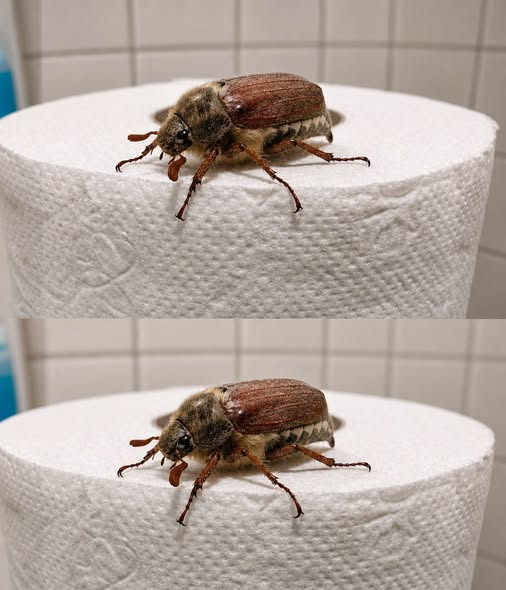
Decoding the Unknown: What to Do When You Discover an Unfamiliar Bug at Home
Finding an unfamiliar insect inside your home can be an unsettling experience.
You may notice something small moving across a wall, hiding beneath furniture, sitting near a window, or crawling across the floor. Your first reaction might be to reach for a spray, grab a tissue, or try to remove it as quickly as possible.
That reaction is understandable. Most people do not want an unexpected insect sharing their living space.
However, an unfamiliar bug does not automatically mean there is a serious problem.
Many insects that occasionally enter homes are harmless visitors. Some are attracted to light, warmth, moisture, food, or shelter. Others may simply wander indoors by accident. At the same time, certain insects can damage household materials, contaminate food, or cause discomfort, which is why identifying the situation before taking action can be useful.
The most helpful approach is not to panic.
Instead, pause, observe the insect carefully, and try to determine what you are dealing with.
Understanding where the insect was found, what it looks like, how it behaves, and whether you are seeing one individual or several can provide valuable clues.
Why an Unfamiliar Insect Can Cause So Much Concern
Humans naturally react strongly to things they cannot immediately identify.
An insect may be only a few millimeters long, yet its unfamiliar appearance can make it seem much more alarming than it actually is.
This is particularly true when the insect has an unusual shape, long antennae, many legs, wings, or a fast-moving body.
Without knowing what it is, it is easy to imagine the worst.
Some people immediately wonder whether it can bite.
Others worry that one insect means there may be dozens hidden elsewhere.
Someone might even assume that an unusual-looking insect must be dangerous.
Those conclusions are not necessarily accurate.
Appearance alone is often insufficient to determine whether an insect poses a meaningful household concern.
Instead of making assumptions, consider the available evidence.
Where did you find it?
Was it near a window?
Was it in a damp bathroom?
Was it around stored food?
Did it appear near a houseplant?
Was it in a basement or garage?
Was it flying, jumping, crawling, or remaining still?
These details can be surprisingly useful.
Start With Observation
Before attempting to remove an unfamiliar insect, take a moment to observe it from a safe distance.
You do not need to touch it.
You do not need to get extremely close.
Simply look carefully.
If possible, take a photograph from several angles. A clear image can make later identification much easier.
Pay attention to basic characteristics such as:
- Approximate size
- Body shape
- Number and appearance of legs
- Presence of wings
- Antenna length
- Body color
- Distinctive markings
- Whether the body appears smooth, hairy, segmented, or flattened
- How quickly it moves
- Whether it jumps, flies, crawls, or stays in one place
You may not know the scientific terminology for these features, and that is completely fine.
A simple description such as “small brown insect with long antennae found near the kitchen sink” can be more useful than simply calling it a “strange bug.”
Take a Clear Photograph
If you feel comfortable doing so, photography can be one of the easiest ways to document an unfamiliar insect.
Try to capture a sharp image in good lighting.
Avoid relying entirely on a heavily zoomed or blurry photograph. A clear picture of the whole insect is generally more useful.
If possible, take more than one photograph.
One image can show the overall shape, while another may reveal details such as the wings, antennae, legs, or markings.
Do not put yourself in an unsafe situation simply to obtain a better picture.
There is no reason to handle an unknown insect with your bare hands just to photograph it.
Your safety is more important than getting a perfect image.
Consider Where You Found It
Location is one of the most useful clues when trying to understand an unfamiliar insect.
Different insects are attracted to different environments.
For example, insects may be more noticeable around:
Kitchens
Kitchens contain food, moisture, warmth, and many potential hiding places.
Crumbs, food residue, overflowing trash, pet food, and improperly stored ingredients can attract certain insects.
If an unfamiliar insect appears repeatedly in a kitchen, check food storage areas and cleaning conditions.
Bathrooms
Bathrooms provide a humid environment.
Moisture around sinks, showers, drains, and plumbing can create conditions that are attractive to some small organisms.
If insects repeatedly appear in a bathroom, investigate moisture levels and possible leaks rather than assuming the insects appeared randomly.
Basements
Basements can provide darkness, humidity, and sheltered spaces.
Seasonal changes may also cause insects to become more noticeable.
A damp basement may be more attractive to certain insects than a dry, well-ventilated room.
Bedrooms
Finding an insect in a bedroom does not necessarily indicate a bedroom-specific problem.
It may have entered through a window, traveled from another room, or simply been attracted to indoor lighting.
Still, if you repeatedly find insects in bedding or around sleeping areas, documenting the pattern is worthwhile.
Garages and Storage Areas
Garages often contain cardboard boxes, stored clothing, wood products, gardening materials, and other objects that provide shelter.
Because these areas are less frequently disturbed, insects may remain unnoticed for longer periods.
One Insect Does Not Always Mean an Infestation
Perhaps the most important point to remember is that seeing one insect does not automatically mean your home is infested.
A single insect can enter through an open door, window, ventilation opening, crack, or another small access point.
Outdoor insects may occasionally wander indoors, especially when weather conditions change.
This is why context matters.
If you find one unfamiliar insect near a window and never see another, the situation may be very different from finding numerous insects every day in several rooms.
Frequency is an important clue.
Ask yourself:
How many have I seen?
How often are they appearing?
Are they always in the same room?
Are they concentrated around a particular source?
Are they alive, dead, or both?
Are you finding evidence of damage?
The answers can help determine whether you are dealing with an isolated visitor or something that deserves further investigation.
Look for Patterns Instead of Guessing
A useful way to investigate an insect problem is to look for patterns.
Suppose you notice several insects near a kitchen window.
Rather than immediately assuming there is a hidden colony somewhere inside the walls, inspect the surrounding area.
Is the window frequently left open?
Are there gaps around the frame?
Is there a nearby light that attracts flying insects at night?
Are there plants nearby?
Is there food or organic material close to the area?
Likewise, if insects are repeatedly appearing beneath a sink, check for moisture or plumbing problems.
Patterns can often tell you more than the appearance of one insect.
Do Not Immediately Reach for Chemical Sprays
When people see an unfamiliar bug, spraying it may feel like the quickest solution.
However, using an insecticide before identifying the problem may not always be necessary.
Chemical products should be used carefully and according to their labels.
There is little benefit in treating an entire room for an insect that may simply have wandered inside.
Unnecessary pesticide use can also expose household members, pets, and indoor surfaces to chemicals.
A better first step is often identification and basic prevention.
If the insect turns out to be a species that genuinely requires treatment, you can then choose an appropriate approach based on reliable information.
Physical Removal Can Be Enough
For an isolated insect, simple removal may be all that is needed.
Depending on the insect and your comfort level, you might use a container and a piece of paper to move it outside.
Alternatively, a vacuum cleaner can sometimes be used for insects that are on accessible floors or surfaces.
The appropriate method depends on the insect.
If you do not know whether an insect can sting, bite, or otherwise cause harm, avoid direct contact.
There is no need to take unnecessary risks.
Sealing Entry Points Can Reduce Future Encounters
If insects are repeatedly entering from outside, one of the most practical solutions is to reduce opportunities for them to get inside.
Inspect areas such as:
- Window screens
- Door frames
- Gaps beneath doors
- Cracks around windows
- Open vents
- Utility penetrations
- Damaged seals
- Gaps around pipes
Even relatively small openings can provide access to tiny insects.
Maintaining screens and weather stripping can therefore be a simple part of household pest prevention.
Keep Food Properly Stored
Food is another important factor.
Certain insects are attracted to accessible food sources, especially when ingredients are left exposed.
Consider storing pantry items in sealed containers where appropriate.
Clean crumbs and spills promptly.
Keep food preparation surfaces clean.
Empty garbage regularly.
Do not leave pet food sitting out for unnecessarily long periods if it is attracting insects.
These measures are useful regardless of whether the insect you discovered is eventually identified as a household pest.
Moisture Can Be an Important Clue
If unfamiliar insects repeatedly appear in damp areas, moisture deserves attention.
Check under sinks.
Look around plumbing connections.
Inspect areas near washing machines.
Pay attention to condensation.
Look for signs of leaks.
Check whether bathrooms have adequate ventilation.
Persistent moisture can create conditions that support various household pests and other organisms.
Addressing the moisture source may therefore be more effective than repeatedly treating the visible insects.
Cleanliness Helps, But It Is Not the Whole Story
It is common for people to assume that seeing insects automatically means a home is dirty.
That is not necessarily true.
Insects can enter even very clean homes.
Doors open.
Windows open.
Packages arrive.
Plants are brought indoors.
Insects can be transported accidentally.
Outdoor creatures can enter through tiny gaps.
Weather can influence insect activity.
Therefore, discovering an insect should not automatically be treated as evidence of poor housekeeping.
Good sanitation and organization can reduce certain attractants, but insects can still appear in well-maintained homes.
Houseplants Can Sometimes Be a Source
Indoor plants can occasionally introduce small insects into a home.
This is particularly relevant when a new plant has recently been brought indoors.
Inspect leaves, stems, soil surfaces, and the area surrounding plant containers.
Look for repeated sightings rather than assuming that every insect near a plant originated there.
If you recently purchased a plant and subsequently began seeing small insects nearby, the timing is worth noting.
Seasonal Changes Can Explain Increased Activity
The time of year can also provide useful context.
Insects respond to environmental conditions such as temperature, humidity, food availability, and daylight.
As seasons change, insects may become more noticeable around homes.
Warm periods can increase outdoor insect activity.
Changes in temperature can also influence where insects seek shelter.
In some regions, people may notice more insects indoors during periods when outdoor conditions become less favorable.
Therefore, a sudden appearance of an unfamiliar bug may sometimes be connected to seasonal conditions rather than an immediate household crisis.
What If You Cannot Identify It?
You do not necessarily need to identify every insect yourself.
If the insect keeps appearing and you cannot determine what it is, consider seeking help from a reliable source.
Possible resources include:
- Local university extension services
- Government agricultural or environmental agencies
- Qualified pest-control professionals
- Entomology departments
- Reputable insect-identification resources
A clear photograph and information about where and when the insect was found can make professional identification easier.
Avoid relying solely on social-media comments when the identification has meaningful consequences.
Online guesses can be useful starting points, but they are not always reliable.
When Professional Pest Help May Make Sense
Professional assistance may be worth considering when the problem is persistent or extensive.
For example, contact a qualified pest professional if you repeatedly discover numerous insects despite reasonable prevention efforts, especially when there are signs of property damage or contamination.
Professional evaluation can help determine:
- What type of pest is present
- Where it may be entering
- Whether conditions are encouraging its presence
- Whether treatment is necessary
- What prevention steps may reduce recurrence
A professional should also be able to explain the proposed treatment rather than simply applying chemicals without discussing the underlying issue.
Pay Attention to Property Damage
Some insects are more concerning because they can damage household materials.
If you notice unexplained damage to wood, fabrics, stored products, books, or other materials, document it.
Do not automatically assume the insect you saw caused the damage.
Try to connect the evidence.
Look for repeated signs.
Photograph suspicious areas.
Note where the insects are appearing.
This information can help a professional determine whether the insect and the damage are actually related.
Be Careful Around Unknown Bites or Stings
If you suspect an insect has bitten or stung someone, avoid trying to identify it solely from the skin reaction.
Many different factors can produce similar-looking skin irritation, and a visible mark does not necessarily reveal which insect caused it.
If someone experiences a serious or rapidly worsening reaction, seek appropriate medical attention promptly.
Signs of a severe allergic reaction can require urgent emergency care.
For routine concerns, a healthcare professional can provide more reliable guidance than internet speculation.
Keep Children and Pets Away From Unknown Insects
Young children and pets may naturally be curious about insects.
They may try to touch, catch, or eat them.
If you do not know what the insect is, prevent unnecessary contact until you have identified or removed it.
This is especially important if the insect appears capable of biting or stinging.
You do not need to create panic around the insect.
Simply keep a reasonable distance and handle the situation calmly.
What About Unusual-Looking Insects?
An insect can look frightening without being dangerous.
Features such as numerous legs, long antennae, unusual body shapes, or rapid movement can make some harmless insects appear intimidating.
This is why identification should come before assumptions.
The human brain tends to interpret unfamiliar creatures quickly, but visual unfamiliarity is not the same thing as danger.
Instead of asking, “Does this look scary?” ask more useful questions:
“What characteristics can I observe?”
“Where was it found?”
“How often am I seeing it?”
“What conditions are present nearby?”
That shift from fear to observation can make the situation much easier to understand.
Avoid Destroying the Evidence Too Quickly
If you immediately crush or spray an unfamiliar insect, you may lose an opportunity to identify it.
When practical and safe, take photographs before removing it.
If the insect has already died, photographs can still be useful.
You may also want to record the date and location where it was found.
For recurring problems, maintaining a simple log can reveal patterns that are difficult to notice otherwise.
For example:
Monday: one insect near bathroom window.
Wednesday: two insects near bathroom sink.
Friday: three insects in same area.
That pattern tells you considerably more than a single isolated sighting.
A Simple Investigation Checklist
When you discover an unfamiliar insect, consider following this sequence.
Step 1: Stay calm
An unknown insect is not automatically a dangerous insect.
Step 2: Avoid unnecessary contact
Do not handle it with bare hands if you do not know what it is.
Step 3: Photograph it
Take clear photographs if you can do so safely.
Step 4: Record the location
Write down exactly where you found it.
Step 5: Consider environmental conditions
Look for moisture, food, plants, clutter, open windows, or other possible attractants.
Step 6: Determine whether it is isolated
One insect is different from repeated sightings.
Step 7: Check for entry points
Inspect windows, doors, screens, vents, and cracks.
Step 8: Improve basic prevention
Store food properly, clean spills, reduce unnecessary moisture, and repair obvious gaps.
Step 9: Seek reliable identification
Use qualified resources when identification is uncertain.
Step 10: Consider professional assistance
Persistent or extensive problems may justify an inspection.
Why Identification Matters
Correct identification can change the entire response.
If the insect is simply an outdoor visitor, extensive treatment may be unnecessary.
If it is associated with moisture, repairing a leak may be more useful than treating the insect itself.
If it is attracted to stored food, improving food storage could address the underlying problem.
If it is a species known to damage household materials, professional intervention may be appropriate.
In other words, identification is not simply about knowing the insect’s name.
It helps determine what action, if any, makes sense.
Avoid Internet Panic
Search engines and social media can make ordinary household discoveries seem frightening.
A photograph of an unusual insect may be accompanied by dramatic descriptions or exaggerated claims.
This can lead homeowners to assume that every unfamiliar creature represents a major infestation or serious threat.
Try to separate evidence from speculation.
A sensational headline is not the same thing as scientific identification.
A comment from an anonymous account is not necessarily expert advice.
When the stakes are meaningful, rely on reputable sources.
The Importance of Reliable Information
Insect identification is a specialized field.
Professionals may examine features that an average homeowner would never notice.
Two insects can look very similar while having very different behaviors.
Conversely, an insect that looks unusual may be completely harmless.
This is why accurate identification should come before making major decisions about pest control.
If you are unsure, there is nothing wrong with saying, “I don’t know what this is yet.”
That is actually a useful starting point.
Prevention Is Often Better Than Reaction
Once you understand why insects are appearing, prevention becomes easier.
A few general habits can make a difference:
Keep screens intact.
Seal obvious cracks.
Store food securely.
Clean food spills.
Reduce unnecessary moisture.
Maintain ventilation.
Avoid leaving doors open for extended periods.
Inspect new plants when bringing them indoors.
Keep storage areas organized.
Dispose of household waste appropriately.
These measures will not prevent every insect from ever entering your home, but they can reduce opportunities for certain pests to establish themselves.
Your Home Is Part of a Larger Environment
It is easy to think of a house as a completely separate environment from the outdoors.
It is not.
Homes interact constantly with the surrounding environment.
Air enters through ventilation.
People open doors.
Windows allow outdoor air and organisms inside.
Plants connect indoor and outdoor environments.
Small gaps can provide pathways.
Weather affects temperature and humidity.
Because of this, occasional encounters with insects are not necessarily unusual.
The goal should not always be to create an environment in which no insect can ever appear.
That is unrealistic.
Instead, the goal is to recognize when an occasional visitor is harmless and when repeated activity suggests a problem worth investigating.
Learning From the Experience
Discovering an unfamiliar insect can actually become an opportunity to learn more about the environment around your home.
Once you begin paying attention, you may notice seasonal patterns.
You may discover that certain insects appear only after rain.
You may find that others are attracted to a particular light.
You might discover that a damp corner of the basement is creating favorable conditions for unwanted visitors.
Observation can therefore turn an alarming moment into useful information.
When Not to Handle an Insect Yourself
There are circumstances in which you should avoid attempting physical removal.
If an insect appears capable of stinging, biting, or behaving aggressively, keep your distance.
If you are uncertain whether it is safe to approach, there is no advantage in taking unnecessary risks.
Likewise, if a large number of insects are present, professional assistance may be preferable.
The goal is not to prove that you can remove the insect yourself.
The goal is to resolve the situation safely.
A More Rational Way to Think About “Mystery Bugs”
The phrase “mystery bug” can make a small insect seem like a major mystery.
But in many cases, the situation becomes much less mysterious once you gather basic information.
You know where it was found.
You know its approximate size.
You have photographs.
You know the season.
You know whether there are one or many.
You know whether there is moisture, food, or another potential attractant.
That information creates a starting point for identification.
Instead of asking, “Why is this terrifying insect in my house?” you can ask:
“What is this insect?”
“Why might it be here?”
“Is it recurring?”
“Does it appear to be causing damage?”
“What is the simplest safe response?”
Those questions lead to much more useful answers.
Final Thoughts
Finding an unfamiliar insect inside your home can certainly be surprising, but there is usually no reason to assume the worst immediately.
The most effective response begins with observation.
Take a photograph if you can.
Avoid unnecessary contact.
Record where the insect was found.
Look for patterns.
Check for moisture, food sources, plants, and possible entry points.
Improve basic household prevention.
If the insect continues appearing or you notice signs of a larger problem, seek reliable identification or professional assistance.
Most importantly, do not allow an unfamiliar appearance to automatically determine your response.
A bug that looks strange may simply be an ordinary part of the surrounding environment that accidentally found its way indoors.
On the other hand, repeated sightings can provide useful information about conditions inside or around the home.
The difference lies in observation and context.
Instead of reacting immediately with fear or excessive treatment, take a moment to investigate.
A calm, evidence-based approach can help you determine whether you are dealing with an isolated visitor, an environmental issue, or a genuine household pest concern.
The next time a mysterious insect appears on your wall, remember that you do not have to solve the mystery in a single moment.
Observe first.
Document what you see.
Look for patterns.
Then decide what action makes sense.
Sometimes the answer is as simple as opening a window and letting an accidental visitor return outdoors.
Other times, the insect may reveal a moisture problem, an entry point, or another household condition that deserves attention.
Either way, understanding the situation is usually more useful than reacting to the unknown.
And that is the key to dealing with mystery bugs: identify first, respond thoughtfully, and avoid unnecessary panic.