Built in 1962, This Mid-Century Home Still Feels Remarkably Timeless
Built in 1962, this distinctive mid-century modern home in Akron offers a fascinating look at an era when architecture focused on clean lines, practical living, and a strong connection between the home and its surroundings.
More than six decades after it was constructed, the property continues to stand out because of its carefully considered design. Rather than relying on excessive decoration, the home uses simple architectural forms, natural materials, and thoughtful proportions to create a character that still feels relevant today.
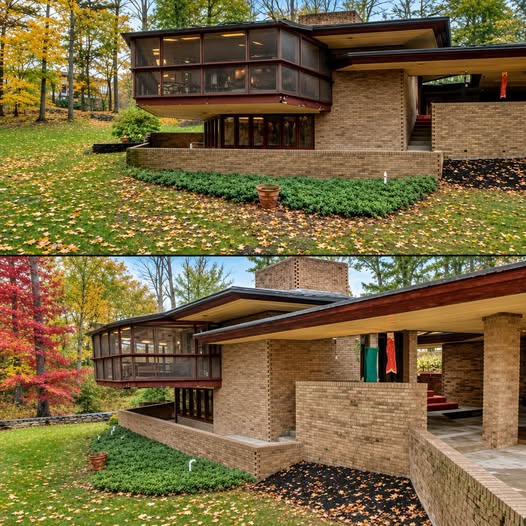
The exterior immediately draws attention with its strong horizontal lines, broad roof overhangs, and substantial brick elements. These features give the house a grounded appearance while reflecting several ideas that became closely associated with mid-century residential architecture.
A Home Shaped by Mid-Century Design
The early 1960s were an interesting period in American residential architecture. Homeowners and architects were increasingly interested in houses that felt open, functional, and connected to the landscape.
This Akron property reflects many of those principles.
Its architecture emphasizes horizontal movement rather than height. Long lines across the exterior help the home appear integrated with the surrounding neighborhood, while the roof structure creates a sense of shelter and visual balance.
The design also avoids unnecessary ornamentation. Instead, its character comes from the relationship between materials, shapes, windows, rooflines, and natural surroundings.
That simplicity is one reason mid-century homes continue to attract attention today.
The Influence of Frank Lloyd Wright
The property also reflects architectural ideas associated with the work of Frank Lloyd Wright, whose influence can be seen throughout American residential design.
Wright frequently emphasized the relationship between a house and its environment. Rather than treating a building as an isolated object, his approach often considered the landscape, materials, proportions, and interior spaces as parts of a larger composition.
This home appears to draw from that broader design philosophy.
The strong horizontal lines and use of brick help visually anchor the structure to its setting. Broad roof overhangs add another layer of character while also contributing to the home’s sheltered appearance.
While the house belongs to the mid-century modern tradition, its design demonstrates how earlier architectural ideas continued to influence residential construction during the 1960s.
Warm Materials Create a Comfortable Atmosphere
One of the most appealing characteristics of the home is the way its modern architecture is balanced with warm, organic materials.
Mid-century modern design is sometimes associated with stark interiors, but many homes from the period were designed to feel comfortable and inviting. Natural wood, brick, stone, and other textured materials could soften the clean geometry of the architecture.
That balance is especially important in a home like this.
The exterior has a strong architectural presence, yet the natural materials prevent it from feeling overly formal. Brick provides texture and permanence, while warmer elements help create a more welcoming character.
The result is a house that combines modernist structure with a sense of everyday comfort.
Horizontal Lines Define the Exterior
Perhaps the most immediately recognizable feature of the property is its emphasis on horizontal lines.
These lines can be seen in the roof structure, exterior proportions, and overall arrangement of the building.
Horizontal architecture was particularly popular in mid-century residential design because it could make a house feel broader and more connected to its site. Instead of emphasizing vertical height, the design encourages the eye to move across the structure.
In this home, that approach gives the exterior a calm and balanced appearance.
The effect is subtle, but it plays an important role in the home’s identity.
Broad Roof Overhangs Add Character
The roof design is another important element.
Cantilevered roof overhangs extend beyond portions of the main structure, creating dramatic lines without relying on decorative details. They also contribute to the home’s relationship with light, shade, and the surrounding outdoor spaces.
From an architectural perspective, these overhangs help define the silhouette of the house.
They also demonstrate how mid-century designers often combined visual appeal with practical considerations. A roof could become one of the most recognizable features of a house while still serving a functional purpose.
More than sixty years after construction, these elements remain an important part of the property’s distinctive appearance.
Brick Gives the Home a Strong Foundation
The extensive use of brick adds another layer of character.
Brick has long been valued in residential architecture for its durability and natural texture. In a modern home, it can also provide a visual contrast to large areas of glass, smooth surfaces, and geometric forms.
Here, the brick elements help make the structure feel established and substantial.
That quality works particularly well with the home’s mid-century design. The clean lines provide a contemporary appearance, while the masonry introduces warmth and a sense of permanence.
It is an example of how a limited selection of materials can create considerable visual interest when they are carefully arranged.
A Design That Has Aged Gracefully
Many architectural styles are strongly associated with a particular decade. Some homes from the 1960s can immediately look dated because of their finishes, colors, or decorative features.
This property demonstrates a different approach.
Its most noticeable characteristics are architectural rather than dependent on temporary trends. The horizontal forms, roof structure, brickwork, and connection between indoor and outdoor spaces give the home a visual identity that does not rely heavily on fashionable decoration.
That can help explain why well-preserved mid-century modern homes remain popular among homeowners, architects, designers, and preservation enthusiasts.
The appeal is often found in the structure itself.
The Importance of Natural Materials
Another defining principle of the home is the use of natural-looking materials.
Organic textures can make modern architecture feel more approachable. Wood and brick, for example, introduce variation and warmth into spaces that might otherwise feel dominated by straight lines and geometric forms.
This combination is particularly effective in mid-century design because it creates a contrast between modern construction techniques and familiar natural materials.
The result can feel both sophisticated and comfortable.
Instead of choosing between modern architecture and traditional warmth, the home brings elements of both approaches together.
A Reflection of Its Era
A house built in 1962 naturally tells us something about the architectural priorities of its time.
The postwar period brought significant changes to American housing. Families were looking for comfortable homes, while architects experimented with new ways to organize living spaces.
Mid-century modern architecture became one of the most recognizable results of that period.
Designers explored open layouts, large windows, integrated outdoor spaces, simpler forms, and new combinations of materials. Homes were often designed around the idea that architecture should support everyday life rather than simply provide a decorative exterior.
This Akron property reflects that philosophy through its restrained but carefully designed appearance.
Why Mid-Century Homes Continue to Attract Attention
The popularity of mid-century modern architecture has remained surprisingly strong.
Part of the appeal comes from its simplicity. Clean architectural lines can make a property feel organized and spacious, while natural materials prevent the design from becoming too cold.
Another factor is the relationship with the outdoors.
Many mid-century homes were designed to make greater use of gardens, patios, yards, and natural light. Large windows and low horizontal forms could create a stronger visual connection between the interior and exterior.
These ideas remain relevant to contemporary homeowners.
Modern residential architecture continues to explore many of the same principles, even when the finished buildings look very different from houses constructed in the 1950s and 1960s.
A Distinctive Presence in the Neighborhood
The home’s architecture gives it a noticeable presence without depending on excessive decoration.
Its low, horizontal profile allows it to sit comfortably within an established neighborhood, while the brickwork and roof structure give it enough character to stand apart.
That combination can be difficult to achieve.
A house can be distinctive without appearing disconnected from its surroundings. In this case, the design appears to rely on proportion, materials, and geometry to achieve that balance.
The result is an exterior that rewards a closer look.
At first, the house may simply appear to have an unusual shape. Looking more carefully reveals the deliberate relationship between its roof, walls, windows, and materials.
Six Decades of Architectural Character
Since its construction in 1962, the home has existed through decades of changing tastes in residential design.
Interior trends have changed repeatedly. Popular colors, furniture styles, flooring materials, kitchens, and bathrooms have all evolved over the years.
Yet the fundamental architectural character of a well-designed mid-century house can remain remarkably consistent.
That is one of the most interesting aspects of properties from this period.
When the underlying architecture is strong, later changes do not necessarily erase its identity. Instead, renovations and updates can sometimes be incorporated while preserving the features that make the original design distinctive.
More Than Just an Older House
It is easy to describe a home built in 1962 simply as an older property.
But architecture can give a house a much longer story.
The materials, proportions, rooflines, windows, and relationship with the surrounding landscape can preserve ideas from the period in which the home was created.
This property is an example of how those ideas can remain visible decades later.
Its design reflects a period when architects were exploring ways to combine modern construction with natural materials and more relaxed relationships between interior and exterior spaces.
That combination continues to influence residential architecture today.
A Timeless Approach to Residential Design
What makes this home especially interesting is not simply its age.
It is the fact that its defining architectural ideas remain understandable more than sixty years after construction.
The emphasis on horizontal lines creates visual calm. The roof overhangs give the home a recognizable silhouette. Brick introduces warmth and durability. Natural materials help balance the geometry.
Together, these elements create a house with a strong sense of identity.
Rather than depending on decoration or passing trends, the architecture itself provides most of the visual interest.
That is one of the qualities that has helped mid-century modern homes remain relevant to new generations of homeowners and design enthusiasts.
A Piece of Mid-Century Architectural History
Built in 1962, this Akron residence represents more than a particular moment in residential construction.
It reflects an architectural philosophy centered around simplicity, natural materials, strong proportions, and a connection with the environment.
Its Wright-influenced character, horizontal composition, broad roof overhangs, and substantial brick elements give it a distinctive personality while keeping the overall design restrained.
More than six decades later, those features still provide a useful reminder of why mid-century modern architecture has remained such an enduring part of American residential design.
A house does not necessarily need elaborate decoration to make an impression. Sometimes, thoughtful proportions, natural materials, and a clear architectural vision are enough to give a home lasting character.