By the time I turned sixty-eight, I had experienced more loss than I ever imagined I would.
My wife, the woman I had shared thirty-seven years of marriage with, passed away after a long illness. Losing her changed everything about my life.
Three years later, another tragedy struck our family.
Our only daughter, Phoebe, died unexpectedly in a car accident.
She was far too young, and there are some losses that no parent ever truly gets over.
Phoebe left behind her husband, Emmett, and their little daughter, Margot.
Margot was only two years old at the time.
She was too young to fully understand why her mother wasn’t coming home, but she noticed the sadness around her.
In the months that followed, Emmett and I became closer than we had ever been.
He had been my son-in-law, but after Phoebe’s death, that description no longer seemed to tell the whole story.
He was family.
He was also grieving.
Together, we tried to give Margot as stable and loving a childhood as possible.
I helped whenever I could.
I picked her up from preschool, looked after her when Emmett had work commitments, attended school events, and answered endless questions about her mother.
As Margot grew older, I made sure she knew that her mother was still an important part of our family.
We looked through old photographs together.
I told her stories about Phoebe as a little girl.
I showed her the places where her mother had grown up.
Sometimes Margot would ask me what her mother was like.
Those conversations were difficult, but I never wanted her to feel as though talking about Phoebe was something she needed to avoid.
For me, Margot became one of the brightest parts of my life.
Then, several years later, Emmett told me that he had met someone.
Her name was Claire.
I won’t pretend I didn’t have mixed feelings at first.
It wasn’t because I wanted Emmett to remain alone.
Quite the opposite.
After everything he had been through, I wanted him to find happiness again.
But I also worried about Margot.
She had already experienced the loss of her mother.
The last thing I wanted was for her to feel that she was being pushed aside in her own family.
When I eventually met Claire, however, my concerns seemed unnecessary.
She was pleasant, polite, and easy to talk to.
More importantly, Margot seemed comfortable around her.
That mattered enormously to me.
Over time, Claire became a regular part of their lives.
Two years after they met, Emmett proposed.
When he told me, I congratulated him sincerely.
I hoped the new marriage would bring happiness and stability to everyone.
Then came the wedding day.
Margot was five years old and absolutely thrilled.
She had been talking about the wedding for weeks.
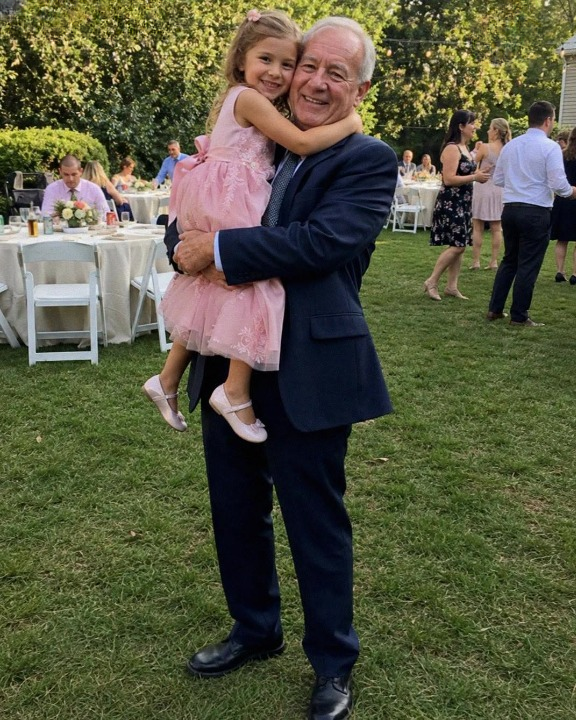
She had a beautiful pink dress, carefully chosen shoes, and a little hairstyle that made her look much older than she actually was.
But what excited her most wasn’t the cake or the decorations.
It was being included.
She kept telling everyone that she was going to be in her father’s wedding photographs.
“Daddy said I can stand with him,” she told me more than once.
I smiled every time she said it.
She was proud of her father.
And she wanted to be part of his special day.
Shortly before the ceremony began, I went looking for her.
I wanted to make sure she was ready.
As I approached one of the rooms where the bridal party had been preparing, I heard voices coming from inside.
I wasn’t trying to listen.
I was simply walking past when I heard Claire speaking.
Then I heard Margot’s name.
I stopped.
Claire said something that immediately made me uncomfortable.
She told Margot that she wasn’t the most important girl in her father’s life anymore and that she should stay out of the family photographs.
For a moment, I couldn’t believe what I had heard.
I stood in the hallway, unsure whether I had misunderstood.
Then the door opened.
Margot walked out.
Her eyes were filled with tears.
She wasn’t crying loudly.
That somehow made it worse.
She simply walked down the hallway, found an empty chair, sat down, and stared at the floor.
I went straight to her.
“Hey, sweetheart,” I said softly.
She looked up at me.
“Grandpa, am I still going to be in Daddy’s pictures?”
That question broke my heart.
I sat beside her and put my arm around her.
“Of course you are,” I told her.
She leaned against me.
I wanted to walk back into that room immediately.
I wanted to demand an explanation.
But I looked at Margot and realized that this wasn’t the time.
She didn’t need a family argument.
She didn’t need adults raising their voices around her.
She needed someone to remind her that she was loved.
So I stayed beside her.
We talked quietly until she felt better.
When the ceremony began, Margot participated just as planned.
I watched her standing proudly near her father.
She looked happy again, although I could tell that what had happened earlier was still somewhere in the back of her mind.
Throughout the ceremony, I kept thinking about something important.
A child should never feel as though love is a competition.
A new marriage doesn’t erase an existing parent-child relationship.
And welcoming a new person into a family doesn’t require pushing another person out.
Still, I didn’t want to ruin Emmett’s wedding day.
So I said nothing.
The ceremony went ahead.
The guests smiled.
Photographs were taken.
Everyone applauded when the newly married couple walked into the reception.
Eventually, dinner was served.
There was laughter and conversation throughout the room.
For a while, I wondered whether I should simply let the matter go.
Perhaps I should speak privately with Emmett later.
Perhaps Claire had spoken without realizing how deeply her words could affect a five-year-old.
But every time I looked at Margot, I remembered her question.
“Am I still going to be in Daddy’s pictures?”
I knew I couldn’t pretend I hadn’t heard what happened.
Then the speeches began.
Several family members stood and offered kind words to the newly married couple.
Everyone raised their glasses.
Eventually, it was my turn.
I stood slowly.
The room gradually became quiet.
I lifted my glass and looked toward Emmett.
Then I looked at Claire.
Finally, I looked at Margot.
I began by congratulating the newlyweds.
I spoke about love, family, and second chances.
I said that life doesn’t always follow the path we expect.
Sometimes people experience loss.
Sometimes families change.
Sometimes new people become part of our lives.
And those changes can be beautiful when they are handled with patience and understanding.
Then I paused.
I looked at Margot again.
“There is something I hope everyone here remembers,” I said.
“A family doesn’t become stronger by making one person feel less important.”
The room became very quiet.
I continued carefully.
“Children need reassurance. They need to know that the arrival of a new spouse, a new home, or a new chapter in life doesn’t mean they have lost their place in the hearts of the people who love them.”
No one interrupted me.
I wasn’t shouting.
I wasn’t insulting anyone.
I simply spoke honestly about what I believed mattered.
Then I turned toward Emmett.
“You have been a devoted father,” I said. “And I hope you will always remember that Margot needs to know she belongs in your life—not because she has to compete with anyone, but because she is your daughter.”
Emmett looked down at the table.
Claire remained silent.
I raised my glass again.
“My wish for this marriage is simple. I hope it brings more love into this family, not less. I hope everyone here learns to make room for one another. And most of all, I hope Margot grows up knowing that she will always have a place beside her father.”
I finished my toast.
For several seconds, nobody moved.
The entire room was silent.
Then Emmett stood.
He walked over to Margot and knelt beside her.
He hugged his daughter tightly.
Margot wrapped her arms around him.
It was a quiet moment, but everyone could see what it meant.
Eventually, the room began to applaud.
I didn’t feel victorious.
That wasn’t what I wanted.
I hadn’t stood up to embarrass anyone.
I had spoken because a little girl needed the adults around her to remember something simple:
Love isn’t a limited resource.
A child doesn’t have to lose her place in a parent’s heart simply because that parent has found love again.
Later that evening, Emmett came to speak with me privately.
He thanked me for what I had said.
Then he admitted that he hadn’t known what had happened before the ceremony.
He promised that he would talk to Claire and make sure Margot never felt excluded from the family again.
I told him that was all I wanted.
As for Margot, she was eventually smiling again.
Before we left the reception, she took my hand.
“Grandpa,” she said, “I really liked my dress.”
I smiled.
“So did I.”
Then she asked me something that made me laugh.
“Do you think Daddy will put the wedding pictures in an album?”
“I think he will,” I said.
She smiled.
And as we walked out together, I realized that sometimes the most important moments in a family aren’t the grand celebrations.
Sometimes they’re the quiet moments when someone simply reminds a child that she is loved, valued, and never forgotten.
That was the message I wanted Margot to carry with her.
Not only on that wedding day, but for the rest of her life.