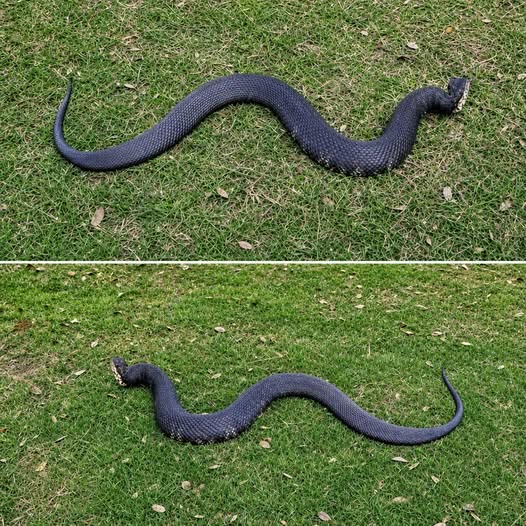
An Unexpected Encounter With a Copperhead Changes a Day in the Woods
A quiet walk through the woods can be one of the simplest ways to slow down and enjoy the outdoors.
There is something calming about walking beneath a canopy of trees, listening to birds, watching sunlight move through the leaves, and following a familiar trail at an easy pace.
But spending time outdoors also means sharing the environment with wildlife.
Most animals prefer to avoid people, and snakes are no exception. Still, hikers occasionally encounter one resting near a trail, moving across a path, or blending almost perfectly into the surrounding leaves.
For one hiker, an ordinary afternoon in the woods took an unexpected turn when a copperhead appeared directly across the trail.
The encounter wasn’t dramatic.
There was no chase.
There was no need for anyone to panic.
Instead, it became a reminder of something every outdoor enthusiast can benefit from knowing: wildlife encounters are usually safest when people give animals space and avoid making sudden decisions.
A Peaceful Afternoon on the Trail
The day began like many other hiking days.
The weather was comfortable, the trail was relatively quiet, and there weren’t many other people around.
The hiker had walked the route many times before.
The trail passed through a mixture of mature trees, low vegetation, fallen branches, and patches of sunlight.
Birds could occasionally be heard in the distance.
Leaves moved gently whenever a breeze passed through.
There was nothing unusual about the surroundings.
The hiker continued walking at a relaxed pace, paying attention to the trail while enjoying the scenery.
Then something caught their attention.
At first, it looked like a fallen branch.
It was lying across part of the path.
The colors blended remarkably well with the leaves and soil around it.
The hiker took another step.
Then stopped.
The object moved.
A Copperhead on the Trail
The hiker quickly realized that the “branch” was actually a snake.
It was a copperhead.
Copperheads are venomous pit vipers found in parts of the eastern and central United States.
They are known for their distinctive copper or reddish-brown coloring and darker hourglass-shaped bands across their bodies.
Their coloring can make them surprisingly difficult to spot.
That camouflage is one reason hikers sometimes don’t notice copperheads until they’re relatively close.
The snake wasn’t moving toward the hiker.
It appeared to be crossing or resting along the trail.
That distinction was important.
A snake lying across a trail isn’t necessarily behaving aggressively.
It may simply be moving between areas of shelter, looking for a suitable place to rest, or responding to its surroundings.
The safest response is usually the simplest one.
Stop.
Give it space.
Let it move away.
Why Copperheads Are Easy to Miss
One of the most interesting characteristics of copperheads is their ability to blend into their surroundings.
Their patterns can resemble dried leaves, bark, rocks, and shadows.
This is particularly noticeable in wooded areas during seasons when the ground is covered with fallen leaves.
A person walking quickly may look directly at a snake without immediately recognizing it.
That’s why paying attention to where you place your feet can be useful when hiking.
It doesn’t mean staring at the ground every second.
It simply means remaining aware of the trail, especially around places where snakes may seek shelter.
Logs, rock piles, thick vegetation, leaf litter, and shaded areas can all provide hiding places for wildlife.
The Importance of Stopping
When the hiker realized what was on the trail, the most useful decision was to stop moving forward.
That might sound obvious.
However, unexpected encounters can cause people to react instinctively.
Someone may jump backward.
Another person may try to move around the animal immediately.
Someone else might attempt to photograph it from a very short distance.
Those reactions can create unnecessary risk.
Stopping provides time to assess the situation.
The snake may continue moving on its own.
If it remains in place, the hiker can wait or choose another route.
There is rarely a good reason to approach a wild snake.
Giving Wildlife an Exit
One of the most important principles when encountering wildlife is to avoid blocking the animal’s path.
A snake that feels cornered has fewer options.
A snake that has plenty of space can simply move away.
That is why keeping a generous distance is preferable to standing directly beside it.
If the trail is narrow, the safest option may be to wait until the snake leaves.
If the snake isn’t moving, turning around and taking another route may be the best choice.
There is no prize for getting closer.
The goal of a hike is to enjoy the outdoors and return home safely.
Why Snakes Are Part of the Ecosystem
It can be easy to view a venomous snake only in terms of the danger associated with its bite.
But snakes also have an important ecological role.
Copperheads help regulate populations of small animals.
Like many other predators, they are part of a larger food web.
Their presence can indicate a functioning ecosystem with suitable habitat and available prey.
That doesn’t mean hikers should approach them.
Respecting wildlife and appreciating its ecological role can happen at the same time as practicing sensible safety.
A snake doesn’t need to be considered either a harmless pet or a dangerous enemy.
It is simply a wild animal.
Understanding Copperhead Behavior
Copperheads are generally not animals that seek out people.
Like many snakes, they would often prefer to remain unnoticed.
Their camouflage is useful precisely because it allows them to blend into their surroundings.
When people encounter them, the snake may freeze instead of immediately moving away.
This can make the animal seem as though it is intentionally confronting the person.
In reality, remaining still can be part of its natural defensive strategy.
The best response is not to test the snake’s behavior.
Give it distance.
Avoid touching it.
Don’t attempt to move it.
And don’t corner it.
A Common Hiking Mistake
One mistake hikers sometimes make is assuming that a snake is harmless because it hasn’t moved.
Another is assuming that every snake is dangerous.
Both assumptions can create problems.
The safest approach is to avoid handling wild snakes altogether.
If you cannot confidently identify a snake from a safe distance, there is no reason to approach it to find out.
Identification is useful for education, but it shouldn’t come at the expense of personal safety.
Modern cameras and phones can often capture images from a considerable distance.
Even then, there is no need to move closer simply to get a better photograph.
What to Do If a Snake Is on the Trail
If you encounter a snake while hiking, a few simple steps can help.
1. Stop
Don’t continue walking toward it.
Give yourself time to understand what you’re seeing.
2. Keep Your Distance
Move away slowly if necessary.
There is no reason to stand within striking range.
3. Don’t Touch It
Never attempt to pick up or handle a wild snake.
This applies even if you believe the snake is harmless.
4. Let It Move
If the snake is crossing the trail, allow it time to continue.
It may disappear into vegetation on its own.
5. Take Another Route If Necessary
If the snake remains in the trail, turn around or choose another path.
6. Keep Children and Pets Away
Children may be curious and pets may try to investigate.
Keep them at a safe distance.
7. Avoid Provoking the Animal
Don’t poke it with a stick.
Don’t throw rocks.
Don’t attempt to make it move.
The safest wildlife encounter is usually the one where neither person nor animal feels threatened.
Why Hiking Trails Can Attract Snakes
Trails pass through habitats that naturally contain wildlife.
Snakes may use open areas to move between patches of vegetation.
They may also cross paths while searching for food or suitable shelter.
During warmer months, snakes may be more visible because their activity increases with temperature.
However, this doesn’t mean hikers should assume that snakes are waiting around every corner.
Most people can hike for years without having a close encounter.
The important thing is simply to understand that the possibility exists.
Seasonal Changes Matter
Snake activity varies throughout the year.
In many areas, warmer months provide more opportunities for snakes to move around.
Spring and fall can also bring increased visibility in some regions because snakes may be moving between seasonal habitats or suitable places for shelter.
Temperature matters as well.
Snakes are ectothermic, meaning their body temperature is strongly influenced by their environment.
They may seek sunlight when they need warmth and shade when they need to avoid excessive heat.
This is another reason hikers may occasionally find snakes near rocks, logs, or sunny sections of a trail.
What About Hiking in Leaf-Covered Areas?
Fallen leaves create excellent camouflage.
A copperhead can become difficult to distinguish from the ground around it.
For that reason, hikers should pay particular attention when walking through areas where the trail becomes less clearly defined.
Using a walking stick can help hikers maintain balance and move through uneven terrain, but it should never be used to poke at animals.
The purpose of the stick is to assist the hiker, not interact with wildlife.
Why Jumping Back Can Be Risky
A surprising snake encounter can cause an instinctive reaction.
Someone may suddenly jump backward without looking.
That can be dangerous on a rocky trail, near a steep slope, or on uneven ground.
A better response is to stop and carefully create distance.
Controlled movement is generally safer than sudden movement.
This is especially important for hikers carrying backpacks, walking with children, or traveling over difficult terrain.
The Role of Good Footwear
Appropriate footwear is useful for hiking for many reasons.
Boots or sturdy shoes can provide better support on uneven terrain.
They can also offer more protection than sandals or thin footwear.
However, footwear should never be considered protection that makes it safe to approach snakes.
Even well-designed hiking boots don’t change the basic rule:
Don’t handle wild snakes.
Don’t Try to Identify a Snake Up Close
People sometimes want to know exactly what species they’ve encountered.
That’s understandable.
Wildlife identification can be fascinating.
But identification should be done from a safe distance.
If you’re uncertain, you can observe general characteristics without approaching.
Color, pattern, body shape, and location can sometimes help with identification.
Photographs taken from a safe distance can also be useful for later identification.
There is no reason to kneel beside a snake or get within a few feet simply to take a photograph.
What If the Snake Doesn’t Leave?
Sometimes an animal doesn’t immediately move.
That doesn’t mean you need to make it move.
Wait.
If you’re on a popular trail and other hikers are approaching, move farther away and allow them to pass if possible.
If the trail is blocked for an extended period, the safest solution may simply be choosing another route.
For particularly busy trails, park staff or local wildlife authorities may be able to provide guidance if a snake is repeatedly found in a heavily used location.
Do not attempt to relocate the animal yourself.
What If a Dog Is With You?
Dogs can make wildlife encounters more complicated.
A curious dog may try to investigate a snake.
That can bring the animal much closer to the dog and the owner.
Keeping dogs on a leash where required—and maintaining control of them in areas with wildlife—is an important part of responsible hiking.
If you see a snake, create distance before your dog gets close.
Don’t allow the dog to sniff or investigate the animal.
This protects both the pet and the snake.
Teaching Children About Snakes
Children naturally become curious when they see wildlife.
Instead of teaching them that every snake is something to fear, parents can teach a simple rule:
“Look, but don’t touch.”
Children should understand that wild animals need space.
If a snake appears on the trail, they should stay close to the adults and avoid sudden movements.
Teaching children to respect wildlife can turn an unexpected encounter into a valuable outdoor lesson.
What Happens If Someone Is Bitten?
Although the best approach is prevention, it is also useful to know what to do if a venomous snake bite occurs.
A suspected venomous snake bite should be treated as a medical emergency.
The person should move away from the snake and seek emergency medical assistance.
Avoid trying to capture or kill the snake.
Do not cut the wound.
Do not attempt to suck out venom.
Do not apply a tourniquet unless specifically instructed by trained medical professionals.
Do not rely on home remedies.
Medical professionals can determine appropriate treatment.
If it can be done safely from a distance, a photograph of the snake may help with identification, but nobody should risk another bite trying to obtain one.
Don’t Blame the Snake
One of the most useful lessons from outdoor encounters is that wildlife isn’t acting according to human intentions.
A snake isn’t “waiting” for someone.
It isn’t necessarily “looking for trouble.”
It may simply be moving through its habitat.
The hiker may be on a trail because they want to enjoy nature.
The snake may be on the same trail because it is part of the environment.
The safest outcome is when both are given enough space to continue on their way.
The Hiker’s Decision
After seeing the copperhead, the hiker decided not to approach.
Instead, they stepped back and waited.
The snake eventually moved away from the trail and disappeared beneath the vegetation.
Within a few minutes, the path was clear again.
The hiker continued the walk, but with a greater awareness of the surroundings.
The experience didn’t ruin the hike.
In some ways, it made the rest of the afternoon more interesting.
The forest suddenly seemed more alive.
Every fallen branch received a second glance.
Every patch of leaves became a reminder that there were animals living quietly around the trail.
A New Appreciation for the Woods
Many people visit forests because they want peace and quiet.
But nature isn’t an empty backdrop.
There are animals beneath the leaves.
Birds above the trees.
Insects moving through the soil.
Small mammals hiding in vegetation.
And snakes moving through the same environment.
Seeing a copperhead can remind hikers that they’re visitors in an ecosystem that existed long before the trail was built.
That perspective can make outdoor recreation more rewarding.
Instead of expecting nature to behave like a controlled park, hikers can learn to observe it as it really is.
How to Make Hiking More Comfortable
You don’t need to be afraid of snakes to prepare for wildlife encounters.
A few habits can make hiking more enjoyable.
Wear appropriate footwear.
Stay aware of the trail.
Avoid putting your hands into holes, piles of leaves, or spaces beneath rocks.
Use caution when stepping over logs.
Keep children nearby.
Keep pets under control.
Carry a charged phone.
Know the general emergency procedures for the area you’re visiting.
And if you see wildlife, observe it from a respectful distance.
These habits apply to more than snakes.
They are useful whenever you’re sharing outdoor spaces with animals.
The Bigger Lesson
The copperhead encounter lasted only a few minutes.
But it changed the way the hiker viewed the trail.
Before that afternoon, the woods had seemed familiar.
Afterward, the same trail felt more dynamic.
The experience highlighted an important truth about outdoor recreation:
You can never completely predict what you’ll see.
That’s part of the appeal.
Every hike has the possibility of an unexpected observation.
It could be a deer standing beside the trail.
A fox disappearing into the trees.
A bird rarely seen in the area.
A turtle crossing the path.
Or a snake blending almost perfectly into the leaves.
The right response is curiosity combined with caution.
Respecting Wildlife Doesn’t Mean Avoiding Nature
Some people become nervous after seeing a venomous snake and decide they should stop hiking.
That usually isn’t necessary.
Understanding wildlife can make people more confident.
The goal isn’t to eliminate every possible encounter.
That’s impossible.
The goal is to know what to do when one happens.
Stop.
Observe.
Give the animal space.
Make a calm decision.
Continue your hike when it is safe to do so.
That’s a practical approach to spending time outdoors.
Final Thoughts
The sight of a copperhead lying across a familiar hiking trail can certainly be surprising.
But an unexpected wildlife encounter doesn’t have to turn into a frightening experience.
The safest response is usually calm and simple.
Don’t approach the snake.
Don’t attempt to t