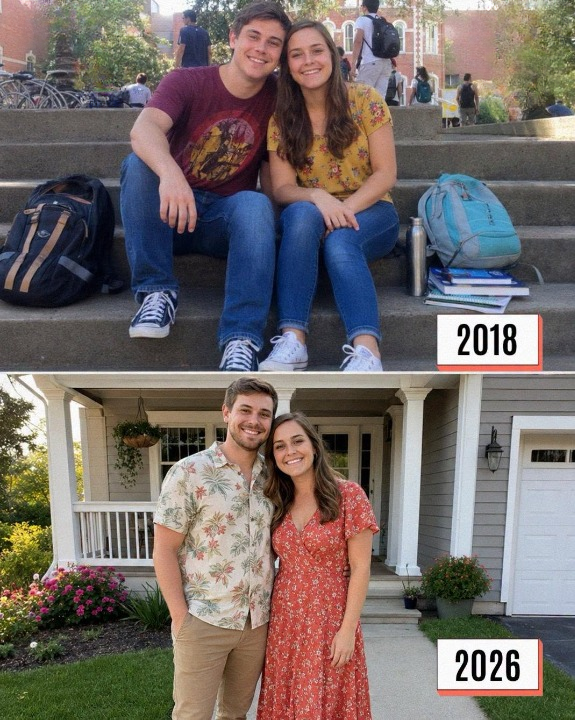
I’m thirty years old, and until recently, I believed Luke was the person I would grow old with.
We met during our second year of college. At first, we were simply friends who studied together, shared late-night meals, and complained about difficult professors. Over time, that friendship turned into something more. By graduation, everyone already treated us like a permanent couple.
A year later, we moved in together.
We didn’t have much money in those early days. Our first apartment was small, the kitchen table wobbled, and the heater seemed to stop working whenever winter became especially cold. Still, I was happy. I believed we were building something meaningful together.
When Luke wanted to change careers, I supported him through the uncertain months. I covered more of our expenses while he completed additional training. When I struggled with anxiety after losing my first job, he stayed beside me and reminded me that one setback didn’t define my future.
We attended each other’s family celebrations, spent holidays together, and became part of the same circle of friends. My parents treated him like a son. His mother called me whenever she needed help choosing his birthday presents.
From the outside, we looked like a married couple in every way except one.
Luke never proposed.
At first, it didn’t bother me. We were young and still finding our place in the world. Marriage could wait until we were more established.
But one year became three. Three became five. Before I knew it, eight years had passed.
By then, most of our college friends were married. Some had already started families. At every wedding, someone would eventually smile at me and ask the same uncomfortable question.
“When will it be your turn?”
I always gave them the same answer.
“When the time is right.”
The truth was that I didn’t know when that would be.
Whenever I tried to discuss marriage with Luke, he had a reasonable-sounding explanation for why we needed to wait. First, he said we should save more money. Then he wanted to become established in his career. Later, he said we should purchase a home before planning a wedding.
There was always another milestone ahead of us.
I loved him, so I believed him. I never wanted to pressure him into proposing. I wanted him to choose me freely and enthusiastically.
Then one ordinary Thursday evening changed everything.
I had gone to the gym after work, but the class I planned to attend was canceled. I returned home nearly an hour earlier than usual.
As I approached our apartment, I could hear Luke speaking inside. The front door wasn’t completely closed, and I realized he was talking on the phone.
I was about to enter when I heard my name.
I stopped without meaning to.
Luke was laughing with his best friend, Ryan. I couldn’t hear Ryan’s side of the conversation, but Luke’s words were painfully clear.
“Come on,” he said. “Just because we’ve been together for eight years doesn’t mean I have to marry her.”
There was a pause before he laughed again.
“She isn’t wife material. She’s great to live with, sure. Life is easy with her. But a wife? That’s completely different.”
I stood silently in the hallway, barely able to breathe.
Eight years of memories passed through my mind at once.
I remembered helping him prepare for job interviews. I remembered taking care of him when he was sick and comforting him when his grandfather died. I thought about the birthdays I had planned, the sacrifices I had made, and the future I had imagined.
To Luke, none of it meant what I thought it meant.
I wasn’t his future wife.
I was simply someone who made his present life comfortable.
For a moment, I wanted to storm inside and demand an explanation. I wanted him to know how deeply his words had hurt me.
Instead, I quietly walked back downstairs.
I sat in my car until my hands stopped shaking. Then I drove to a nearby café, ordered a drink I barely touched, and called my older sister, Natalie.
She listened without interrupting.
When I finished, she asked one question.
“What do you want to do?”
That was when I realized I didn’t want to convince Luke that I was worthy of marriage. I didn’t want a proposal inspired by fear, guilt, or the possibility of losing the comfortable life I provided.
I wanted to leave.
When I returned home later that evening, Luke was watching television as though nothing had happened.
“How was the gym?” he asked.
“Fine,” I replied.
I hated pretending, but I needed time to make careful decisions. We shared an apartment, expenses, and several household accounts. Leaving impulsively could create unnecessary problems.
That night, while Luke slept beside me, I quietly opened my laptop and began making a plan.
The next morning, I checked our rental agreement. Thankfully, the lease was ending soon, and we had been discussing whether to renew it. I contacted the property manager privately and explained that I would not be renewing my portion of the lease.
Then I reviewed our finances.
Although we divided some expenses, I had purchased most of the furniture. The sofa, television, dining table, bedroom set, kitchen appliances, and home-office equipment were mine. I still had the receipts for nearly everything.
Over the following days, I transferred my salary to a new account and removed my card from the shared household services. I didn’t take any money that belonged to Luke. I simply separated what was mine.
Natalie helped me find a small apartment near her neighborhood. It wasn’t luxurious, but it was bright, peaceful, and entirely mine. I paid the deposit and arranged to move in the following week.
Through all of this, Luke noticed nothing.
That realization hurt almost as much as the conversation I had overheard.
He didn’t notice that I had stopped discussing our future. He didn’t notice that I was sorting through documents or quietly packing items he rarely used. He continued enjoying the easy life he had described to Ryan.
Exactly one week after I overheard him, Luke left for work expecting another ordinary day.
As soon as he was gone, Natalie arrived with her husband and two close friends. A moving company came an hour later.
We worked quickly.
I took only the belongings I had purchased or owned before we moved in together. I left Luke’s clothes, electronics, personal items, and furniture untouched.
By late afternoon, the apartment looked completely different.
The comfortable sofa was gone.
The large television was gone.
The dining table where I had served countless meals was gone.
Even the coffee machine Luke used every morning belonged to me.
In the center of the empty living room, I placed a folder containing copies of the relevant receipts, information about the lease, and a list of household accounts he would need to place in his own name.
On top of it, I left one handwritten letter.
Then I placed my key beside it and walked out.
Luke came home shortly after six.
According to what he later told Natalie, he initially thought we had been robbed. He rushed from room to room before realizing that only my possessions were missing.
Then he found the folder.
Inside my letter, I explained everything.
“Luke, last Thursday I came home early and heard your conversation with Ryan. I heard you say that eight years together meant nothing and that I wasn’t someone you could consider marrying. You also said I made your life easy.
“You were right about one thing. I did make your life easy because I loved you and believed we were building a future together. But I won’t continue giving my time, energy, and loyalty to someone who sees me as convenient rather than valuable.
“I’m not leaving to punish you. I’m leaving because I finally understand that we want different lives. You deserve the freedom to search for the person you consider ‘wife material,’ and I deserve the opportunity to find someone who doesn’t need eight years to decide whether I matter.
“I wish you well, but this relationship is over.”
My phone began ringing less than ten minutes after he found the letter.
I didn’t answer immediately.
He called repeatedly and sent message after message.
At first, he claimed I had misunderstood him. Then he said he had only been joking. When that didn’t change my mind, he accused Ryan of encouraging the conversation.
Finally, his messages became apologetic.
He said he had taken me for granted. He said the empty apartment made him understand how much of our life I had created. He even said he had planned to propose eventually.
That word—eventually—confirmed my decision.
When I finally agreed to meet him in a public café, he arrived carrying a small jewelry box.
I stared at it without touching it.
“I bought this today,” he said. “I should have done it years ago.”
“That’s exactly the problem,” I replied. “You bought it because I left, not because you were excited to build a life with me.”
He insisted he loved me.
Perhaps he did, in his own way. But love without respect, honesty, or intention was no longer enough for me.
I pushed the box back across the table.
“I spent years waiting for you to choose me,” I said. “Now I’m choosing myself.”
Walking away was painful. Eight years cannot be erased in a single week. I grieved the relationship, the memories, and the future I once believed we would share.
But as the weeks passed, something surprising happened.
I began to feel lighter.
My new apartment slowly became a home. I selected decorations without wondering whether Luke would approve. I reconnected with friends I had neglected and started taking weekend trips with Natalie.
Most importantly, I stopped measuring my value according to someone else’s uncertainty.
Months later, I heard through mutual friends that Luke had finally admitted the truth. He had assumed I would always be there. Because I had stayed through every delay and accepted every excuse, he believed he could postpone making a real commitment indefinitely.
Losing me taught him a lesson, but returning to him wasn’t required for that lesson to matter.
Sometimes the most important ending is not a dramatic act of revenge. It is the quiet moment when you understand that you deserve better and finally act on that knowledge.
Luke came home expecting dinner, conversation, and another comfortable evening.
Instead, he found an empty apartment, a returned key, and the consequences of words he never expected me to hear.
For eight years, I waited for him to decide whether I was worthy of becoming his wife.
In the end, I realized I had been asking the wrong question.
The question was never whether I was good enough for Luke.
It was whether a man who considered my love merely convenient was good enough for me.