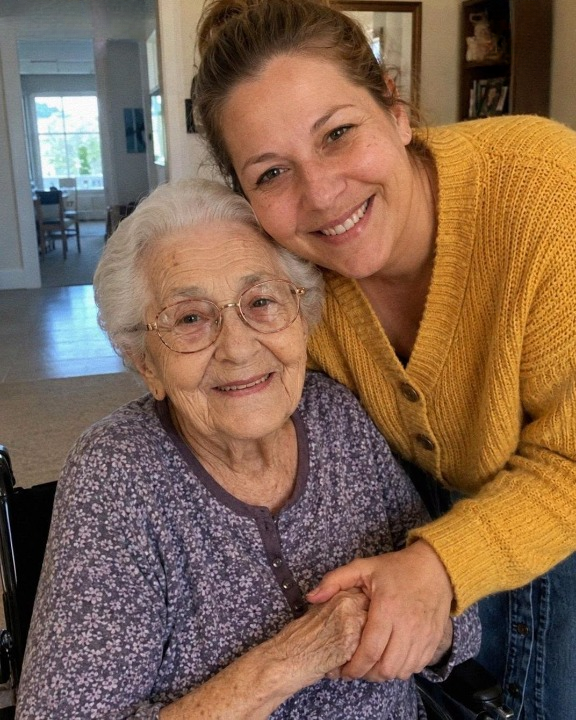
I was only nine years old when my parents died in a car accident. One day, I had a warm home filled with laughter and two parents who made me feel safe. The next, everything familiar disappeared.
My grandmother, Evelyn, became my legal guardian.
I will always be grateful that she gave me a place to live, but growing up in her house was not easy. She was a distant woman who believed kindness made people weak. She provided food, clothing, and a bedroom, yet she rarely showed affection.
She never read bedtime stories to me or asked about my day. She missed nearly every school performance, even when I brought the invitations home weeks in advance. On birthdays, she would leave a simple card on the kitchen table rather than celebrate with me.
Whenever I asked for a few dollars to attend a school event or buy something small, she refused.
“I’m not your mother or father,” she would say. “You shouldn’t expect me to provide every little thing you want.”
Her words confused me because she was extremely wealthy.
Evelyn had started with one modest grocery store and eventually built a successful regional chain. She owned several properties, collected valuable antiques, and was known throughout the community as a sharp businesswoman.
However, very little of that wealth reached me.
When I was accepted into college, I hoped she might finally offer some assistance. Instead, she placed my acceptance letter on the table and looked at me without emotion.
“If you want an education, earn it yourself,” she said.
So I did.
I applied for scholarships, took out student loans, and worked two part-time jobs. Some days, I attended classes in the morning, served customers at a café in the afternoon, and stocked shelves at night.
I was exhausted, but I refused to give up.
By graduation, I had earned a degree, but I was buried under a mountain of debt. I moved into a small apartment and found an entry-level job that barely covered rent, groceries, and my monthly loan payments.
Then, after months of limited communication, my grandmother called.
Her voice sounded weaker than I remembered.
“I’m seriously ill,” she said. “The doctors say I’ll need help.”
I asked whether she had considered hiring a professional caregiver. She could certainly afford one.
“I don’t want a stranger in my house,” she replied. “Come take care of me. If you do, my entire estate will go to you.”
I should have been suspicious. Evelyn had never been generous before.
Still, part of me believed this might be her attempt to repair our relationship. Perhaps illness had caused her to reflect on the past. Maybe she finally understood how alone I had felt growing up.
After thinking carefully, I agreed.
I reduced my hours at work and moved back into her home. What began as occasional assistance soon became a full-time responsibility.
I prepared her meals, organized her medication, drove her to appointments, helped her get dressed, and took her outside for gentle walks whenever the weather was pleasant. When she couldn’t sleep, I sat nearby and kept her company.
Caring for her was not easy.
She criticized how I cooked, complained about the way I arranged her pillows, and rarely thanked me. Some days, nothing I did seemed good enough.
Whenever I felt close to leaving, I remembered her promise.
“Everything will be yours,” she repeated. “You’ll never have to worry about money again.”
Three years passed.
Despite our difficult history, I became deeply involved in her care. I learned to recognize the moments when she was frightened, even though she never admitted it. Sometimes I caught her looking at me with an expression I couldn’t understand.
Near the end of her life, she reached for my hand.
“You stayed,” she whispered.
“Of course I did.”
She nodded slowly but said nothing more.
A few days later, she passed away peacefully.
After the funeral, the family gathered in her lawyer’s office for the reading of the will. Distant relatives who had barely visited her appeared in expensive clothing, whispering about houses, investments, and valuable possessions.
I sat quietly, expecting to hear that the estate had been left to me as promised.
The lawyer cleared his throat and began reading.
The largest portion of my grandmother’s wealth was donated to charities supporting children who had lost their parents. Her grocery stores were transferred to a charitable trust, and several properties were sold to fund scholarships.
A few personal belongings went to relatives.
Then the lawyer reached the end.
My name had not been mentioned once.
I waited for him to turn another page, but he closed the document.
“That concludes the will,” he announced.
I felt as if the room had suddenly lost all its air.
“What about me?” I asked.
The lawyer looked uncomfortable.
“There is no financial inheritance listed in your name.”
“Nothing?”
“I’m afraid not.”
Three years of caregiving had cost me promotions, income, and opportunities. I had trusted my grandmother’s promise. Now I still had my student debt and even less financial security than before.
I left the office devastated.
That night, I barely slept. I wasn’t upset simply because I had missed out on wealth. I felt used by the person who had already made me feel unwanted throughout my childhood.
The next morning, someone knocked on my apartment door.
It was my grandmother’s lawyer.
He carried a sealed envelope.
“Your grandmother gave me strict instructions,” he explained. “I was not permitted to deliver this until today.”
“Why wasn’t it included in the will?”
“She wanted this handled separately.”
Inside the envelope, I found a small key and a handwritten note.
The message read:
“You’ll find a garage at the address below. Inside is what you really deserve.”
I stared at the words.
The phrase didn’t sound comforting. Knowing my grandmother, it could have been one final lesson—or one last disappointment.
Still, I had nothing to lose.
The address led me to an old industrial area near the edge of town. At the end of a quiet road stood a row of rented garages.
I found the correct number and inserted the key.
The metal door lifted slowly.
A powerful smell immediately drifted toward me.
It was the rich scent of soil, wood, and flowering plants.
When I stepped inside, I dropped to my knees.
“Oh my goodness,” I whispered. “This can’t be possible.”
The space was not an ordinary garage. It had been transformed into a climate-controlled storage room filled with wooden shelves, gardening supplies, and dozens of carefully maintained rose plants.
At the center stood a familiar green bench.
It had belonged to my mother.
When I was little, my mother and I used to sit on that bench in our backyard while she taught me how to care for flowers. I thought it had been discarded after my parents died.
Resting on the bench was another letter.
I opened it with shaking hands.
“My dear Clara,” it began, “if you are reading this, then you probably believe I broke my promise. I did not leave you my fortune because I spent your childhood teaching you the wrong lesson. I believed withholding money would make you independent. Instead, I often made you feel unloved. For that, I am deeply sorry.”
I had never imagined my grandmother apologizing for anything.
The letter continued.
“You took care of me even when I gave you very few reasons to stay. You showed patience and kindness that I never showed you. The charities received my public estate, but you are receiving the part of my life that mattered most.”
Behind the bench stood a cabinet. Inside were my parents’ photographs, letters, wedding album, and personal belongings I thought had been lost forever.
There were recordings of my mother singing, old home videos, my father’s wristwatch, and a box containing every school photograph I had ever brought home.
My grandmother had kept them all.
But there was more.
Beneath the cabinet was a document transferring ownership of a small property to me. It was the house where my parents and I had lived before the accident.
My grandmother had secretly purchased it years earlier when it was placed on the market.
The mortgage had been paid in full.
A separate account had also been established to cover the property taxes, repairs, and the remaining balance of my student loans. It was not the enormous fortune I had expected, but it was enough to give me a secure beginning.
The final page explained the roses.
My mother had dreamed of opening a community garden where children dealing with loss could find comfort and companionship. She never had the opportunity to create it.
My grandmother wanted me to finish what she had started.
Weeks later, I visited my childhood home. The building needed some work, but the garden was still spacious and filled with sunlight.
I used part of the account to restore the property. The garage plants were transferred to the yard, and the green bench was placed beneath a large tree.
Eventually, I opened the garden to local families. We offered free weekend activities, gardening lessons, and a peaceful place for children to talk with trained counselors.
The project grew faster than I expected.
One afternoon, the lawyer visited and sat beside me on my mother’s bench.
“Your grandmother knew you would create something meaningful here,” he said.
“Why couldn’t she simply tell me?”
He looked toward the roses.
“Some people understand their mistakes long before they learn how to speak about them.”
My grandmother did break one promise. I did not inherit everything she owned.
Instead, she paid my debts, returned the home and memories I had lost, and gave me the chance to complete my mother’s dream.
I once believed I deserved her entire fortune after sacrificing three years to care for her.
What she left me was smaller in financial value but far greater in meaning. It gave me security, purpose, and a connection to my parents that I thought was gone forever.
For the first time, I understood the sentence in her note.
Inside that garage, I truly found what I deserved—not endless wealth, but the missing pieces of my family and the opportunity to build something beautiful from them.