Introduction: The Moment Everything Starts to Shift
There comes a moment—sometimes quietly, sometimes all at once—when the noise of everyday life begins to feel overwhelming. It isn’t just the constant notifications or the endless to-do lists. It’s the unsettling sense that time is slipping by without being fully lived. For many, that realization begins as a small thought: There has to be another way to live.
That thought has echoed across generations, careers, and lifestyles. For a growing number of people, the answer leads toward quiet cabins, wide-open land, and a slower, more intentional way of life in places like Southeastern Ohio.
For Daniel Harper, the turning point came on an ordinary Tuesday night. Sitting in gridlocked traffic staring at an endless line of red brake lights, his phone buzzed with yet another urgent email. Instead of opening it, he looked out the window at a fading sunset he barely had time to notice. That night, he searched for something simple: “quiet places to live in the U.S.” That single search led him away from skyscrapers and nightlife, steering him straight into the rolling hills and unhurried pace of Southeastern Ohio.
Why More People Are Rethinking Modern Living
Daniel’s story is far from unique. Across the country, people are quietly reevaluating what it means to live well. For decades, success followed a familiar, exhausting formula:
-
Work harder and chase higher milestones
-
Earn more to keep pace with lifestyle inflation
-
Move faster through daily routines
-
Achieve bigger status symbols at the expense of mental health
Today, people are asking deeper, more reflective questions: Do I actually need more, or do I need less? Am I busy, or just overwhelmed? When was the last time I felt truly at peace?
This cultural shift has given rise to slow living—a mindset focused on intentional choices, meaningful time, and a deeper connection to everyday experiences. One of the clearest expressions of that mindset is the modern movement toward cabin living and off-grid lifestyles.
Discovering Southeastern Ohio: A Hidden Retreat
When Daniel first drove into Southeastern Ohio, he didn’t immediately understand the appeal. There were no towering buildings, packed streets, or constant hum of activity. Instead, there was space—miles of rolling hills layered in shades of green, gentle forests, and a wider sky.
The silence wasn’t empty; it was full. For the first time in years, Daniel noticed something simple: he could hear his own thoughts.
The Power of Nature in Everyday Life
Living surrounded by nature changes more than just your scenery; it alters your entire biological and mental rhythm. In cities, time feels compressed, where every hour is scheduled and accounted for. In rural settings like Southeastern Ohio, time expands:
-
Natural Rhythms: Mornings begin with light filtering through trees instead of blaring alarm clocks.
-
Mindful Habits: Evenings stretch longer, shaped by stunning sunsets rather than corporate deadlines.
-
Grounded Awareness: The environment naturally encourages an appreciation for the sound of wind through leaves, the steady rhythm of rain on a roof, and the subtle shift of seasons.
The Cabin: More Than Just a Home
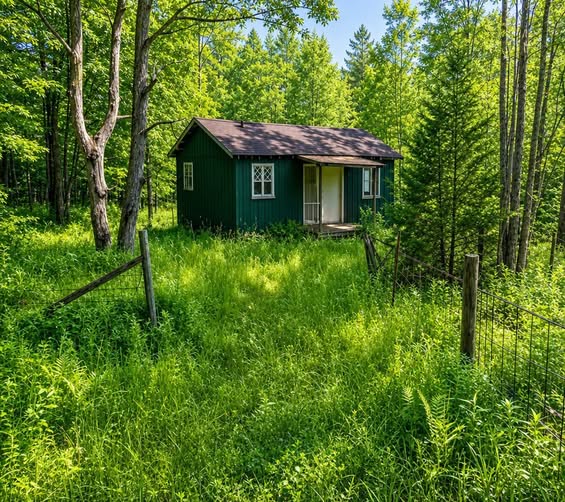
At the heart of this lifestyle is something deceptively simple: the cabin. When Daniel stepped inside his small wooden structure, he was struck by what wasn’t there—no excess, no wasted space, and no digital distractions. Just the essentials:
-
A compact, functional kitchen
-
A modest living area anchored by natural light
-
A bedroom open to the trees
-
A wood-burning stove for reliable warmth
At first, it felt like a step backward. Then, slowly, it began to feel like absolute freedom. Modern homes are often built around abundance, while cabins are built around intention. Every space serves a purpose, and every item matters, fostering a clearer, less scattered mind.
The Reality of Simpler Living: Trade-Offs and Growth
Choosing a rural, off-grid path is deeply rewarding, but it is not without its adjustments. Daniel quickly learned that simple living requires patience and preparation:
-
Grocery stores and medical facilities are farther away.
-
Internet service can be unreliable, requiring intentional disconnection.
-
Emergencies demand a higher level of personal self-sufficiency.
Yet, these very challenges become part of a grounding rhythm. Over time, Daniel even explored off-grid living—integrating solar panels for electricity, rainwater collection systems, and wood-based heating. Every system he built made him more aware of his environment and his place within it.
Financially, the shift brought immense relief. By trading high urban housing costs and constant consumer spending for lower property expenses, he broke free from the pressure of chasing a higher income just to maintain a stressful lifestyle.
Final Reflection: What It Really Means to Live Well
Years after that first Tuesday night in traffic, Daniel sat on his porch watching the sun dip below the hills. No notifications, no deadlines, and no manufactured urgency. For the first time, he didn’t feel like he was chasing life—he felt like he was living it.
That is the quiet promise behind cabin living and off-grid life in places like Southeastern Ohio. It isn’t about perfection or running away from the world; it is a return to simplicity, a reconnection with what matters most, and a reminder that the life we are searching for often begins when everything else finally slows down.