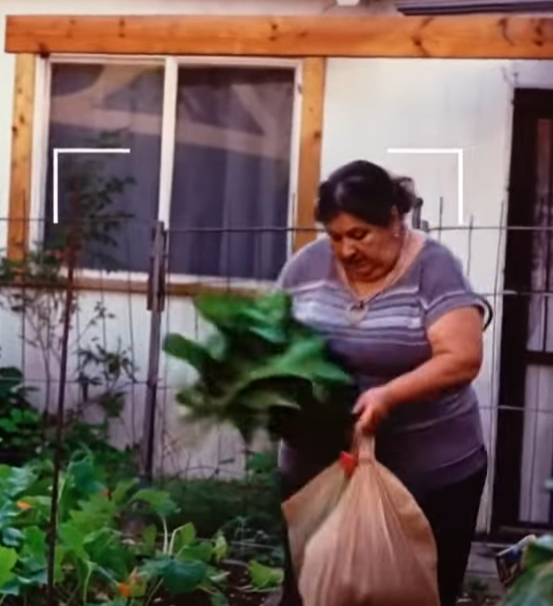
My Neighbor Took Produce From Our Family Garden Without Asking. A Few Days Later, Her Husband Came to Our Door With an Unexpected Request.
After my husband passed away, I moved in with my daughter and her family when I was sixty years old. It was a major change in my life, but helping my daughter care for her three children gave me a renewed sense of purpose. She and her husband both had demanding jobs, so I helped with school pickups, drove the children to their activities, prepared meals, and took care of the many small tasks that keep a busy household running.
Our neighborhood was a close-knit subdivision with approximately sixty homes. Many residents recognized one another, exchanged greetings, and occasionally shared food or helped with everyday responsibilities. It was the kind of place where people often knew what was happening around them, even without making a special effort to keep track.
My daughter and son-in-law owned two adjoining plots of land. Their house stood on one, while the neighboring lot was empty. Knowing how much I enjoyed gardening, they generously allowed me to use the vacant property however I wished.
For me, that patch of land quickly became much more than an empty lot.
A Garden That Gave Me a New Purpose
Gardening had been one of my favorite activities for as long as I could remember. After losing my husband, working with plants gave me something meaningful to focus on each day. I enjoyed preparing the soil, planting seeds, watering the rows, and watching small seedlings gradually turn into healthy plants.
The garden also gave me a reason to spend time outdoors. Some mornings, I would head outside before the household became busy, checking the leaves for signs of new growth and making sure everything had enough water. Other days, I would spend an hour pulling weeds, pruning plants, or harvesting whatever was ready.
Over time, the empty lot began to change.
Tomatoes grew along their supports, vegetables filled the garden beds, and fruit-bearing plants added variety to the space. I organized the garden carefully, trying to make the best use of the available land while keeping everything accessible.
The work required patience, but that was part of what I loved about it. Plants could not be rushed. They needed regular care, suitable weather, and time to mature.
When the first substantial harvest arrived, I felt proud of what I had accomplished. The vegetables tasted fresh, and the fruit was especially satisfying because I had watched it develop over many weeks.
My family enjoyed the produce, but I also liked sharing it with others.
Whenever neighbors asked whether they could have a few tomatoes, some fruit, or a handful of vegetables, I was usually happy to help. If someone needed an ingredient for dinner or wanted to try something fresh from the garden, I could often find something suitable to share.
To me, that was one of the pleasures of growing food. The garden provided more than ingredients for our meals. It created opportunities for friendly conversations and small acts of generosity.
However, I believed there was an important difference between offering something freely and having it taken without permission.
At first, I had no reason to think that distinction would become an issue.
When the Harvest Started Disappearing
The first sign that something was wrong was so ordinary that I almost dismissed it.
I went outside one morning to collect tomatoes and noticed that several ripe ones were missing. I remembered seeing them on the plants during my previous visit, so I assumed I might have picked them earlier and forgotten.
Gardening can be busy, especially when several vegetables ripen at the same time. I continued with my usual tasks and did not think much more about it.
A few days later, I noticed another difference.
Some fruit that should have been ready for picking had disappeared. A section of the garden looked as though someone had harvested it, yet I had not touched it myself.
I began paying closer attention.
At first, I wondered whether I had misremembered how much produce was available. Plants change quickly, and I knew that not every missing vegetable necessarily indicated a problem. I also considered whether animals might have reached certain parts of the garden.
But the missing harvest continued.
Each time I checked the garden, something seemed to be gone. Sometimes it was a few tomatoes. Other times, the amount appeared larger. The pattern became difficult to explain through ordinary gardening activity alone.
What bothered me most was not simply the loss of food. It was the uncertainty.
I had invested time, effort, and money into creating the garden. Every vegetable represented weeks of watering, weeding, and care. I did not expect to keep every piece of produce for myself, but I wanted to know that the garden was being treated respectfully.
I mentioned the situation to my daughter and son-in-law.
They listened and understood why I was concerned. Rather than immediately accusing anyone, we discussed possible explanations and considered how we might determine what was happening.
My son-in-law suggested installing security cameras that could monitor the property.
The cameras were intended to help us understand what was occurring when nobody was outside. Since the lot was next to the family home, monitoring the area seemed like a practical way to establish whether someone was entering the garden.
We agreed that it was better to gather information before confronting anyone.
What the Cameras Revealed
Once the cameras were in place, we continued our normal routine. I watered the plants, checked the vegetables, and tried not to let the situation take over my enjoyment of gardening.
When my son-in-law reviewed the recordings, however, he discovered something that changed our understanding of the missing produce.
According to the footage, our new neighbor had been entering the garden and taking vegetables and fruit without asking.
The recordings showed visits at different times, including early in the morning and late at night. Some of the activity reportedly occurred around five o’clock in the morning, while other visits happened at approximately eleven o’clock at night.
Those details explained why I had not noticed anyone while working outdoors.
The garden was usually quiet during those hours. By the time I went outside later in the morning, the person had already left, and the missing produce was all that remained.
Learning what had happened was disappointing.
Our family had never made a secret of the fact that we enjoyed sharing the harvest. Neighbors had received vegetables and fruit from us before, and I had always been willing to give something away when people asked.
That generosity was a choice, though. It did not mean that anyone could enter the property and help themselves whenever they wanted.
The distinction mattered because the garden was not a public space. Although the lot was vacant before I began cultivating it, my daughter and son-in-law had given me permission to use it, and I had devoted considerable effort to maintaining it.
The produce belonged to the family, and I believed we had a reasonable expectation that others would respect the property.
At the same time, I did not want the situation to become an unnecessary neighborhood dispute. We lived in a small community, and a confrontation could affect relationships long after the immediate issue had been resolved.
I wanted the behavior to stop, but I also hoped the matter could be addressed calmly.
Why Asking Permission Matters
Some people might view a few missing vegetables as a minor inconvenience. After all, gardens often produce more than one household can consume, and sharing food is common in many communities.
But the value of the produce was only one part of the issue.
Growing vegetables requires consistent effort. Someone must prepare the ground, purchase seeds or plants, provide water, remove weeds, monitor plant health, and harvest the crops at the right time.
Depending on the size of the garden, these responsibilities can take hours every week.
When someone takes the harvest without permission, the gardener loses not only the food but also the opportunity to decide how that food will be used.
Perhaps I had planned to cook those tomatoes for dinner. Perhaps I wanted to preserve some of the fruit for later in the year. Maybe I intended to give the vegetables to another neighbor who had already asked for them.
Once the produce was gone, those choices disappeared.
The issue also involved trust. Our family had created an environment where people could ask for something and often receive a friendly response. Discovering that someone had entered the garden without asking made that openness feel less comfortable.
It raised a question I had not previously considered: how could we continue sharing generously while making sure our property and efforts were respected?
I did not believe the answer had to be hostility. Clear boundaries could be established without treating every neighbor as a potential problem.
We could continue offering produce when we wished while also making it clear that taking it without permission was unacceptable.
That seemed like a reasonable approach, regardless of what had motivated the behavior.
The Neighborhood Connection Made It More Complicated
Because our subdivision contained only about sixty properties, residents often encountered one another during ordinary activities. People crossed paths while walking dogs, collecting mail, working in their yards, or driving through the neighborhood.
That closeness could be a positive thing. Neighbors sometimes helped one another with deliveries, shared tools, or offered food from their gardens.
However, close communities can also make disagreements feel more personal.
When a stranger takes something from a property, the situation may be handled as a straightforward security concern. When the person lives nearby, the homeowner may have to consider how future interactions will unfold.
Would the neighbors continue greeting one another? Would other residents become involved? Could a disagreement over a garden affect the atmosphere of the street?
These questions did not change our right to establish boundaries, but they influenced how I hoped the issue would be resolved.
I was also conscious that my grandchildren lived in the home. I wanted them to see that problems could be addressed firmly without unnecessary arguments or p