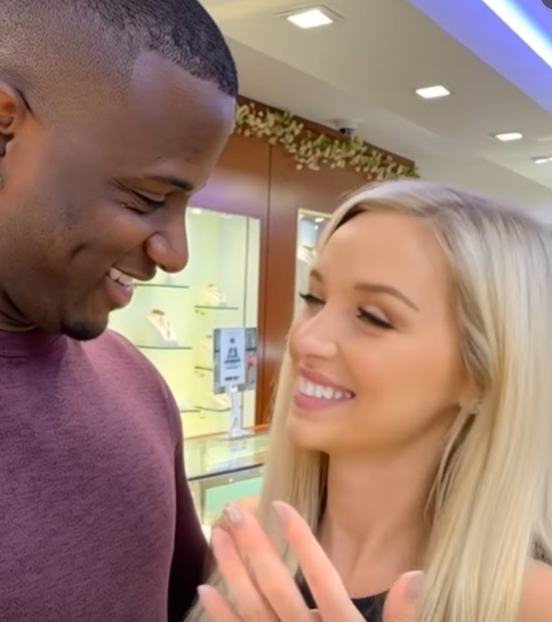
She Accepted His Proposal but Asked to Choose a Different Engagement Ring: A Story About Love, Money, and Expectations
He had spent months preparing for the moment he hoped would change his life. He saved carefully, adjusted his spending, and put aside money for an engagement ring he believed his girlfriend would treasure for years. When he finally proposed at the lake where they had shared their first date, he expected the evening to become one of their happiest memories.
She said yes.
For a moment, everything seemed to be going exactly as he had imagined. But later that evening, she asked whether they could choose a different ring together.
Her request caught him off guard. He had spent a great deal of time thinking about the design, comparing options, and deciding what would suit her. He had chosen an oval diamond set in a platinum band, hoping for something elegant and timeless rather than overly elaborate.
To him, the ring represented months of saving and a serious commitment to their future. To her, it apparently did not feel like the right piece of jewelry.
She explained that she loved him and wanted to marry him, but she hoped to select a ring that better reflected her personal style. She suggested that they visit a jeweler together over the weekend.
Her response left him with mixed feelings. He was pleased that she had accepted his proposal, yet he could not help wondering why the ring he had chosen seemed so disappointing to her.
What began as a romantic milestone quickly became a moment of reflection about expectations, communication, and the meaning people attach to engagement rings.
Months of Saving for One Important Moment
The proposal had not happened spontaneously. He had spent months setting money aside, making small sacrifices, and reconsidering purchases that might otherwise have seemed insignificant.
He reduced his spending on takeout, decided against a trip to Atlanta with his friends, and even sold a collection of old vinyl records. Each decision brought him closer to the amount he wanted to spend on the ring.
For him, the process was about more than buying jewelry. He wanted to demonstrate that he was serious about their relationship and willing to make an effort to build a future together.
He also wanted the proposal to feel personal.
The lake where they had their first date seemed like the perfect location. It was a place connected to the beginning of their relationship, and returning there offered a natural way to bring their shared history into the occasion.
He imagined the scene carefully. He would get down on one knee, ask the question he had been thinking about for months, and give her a ring that symbolized the commitment they were making.
When the moment arrived, she accepted.
That answer mattered. Yet her later request about the ring introduced an unexpected complication into an evening he had imagined differently.
A Different Ring Than He Had Expected
The ring he selected was a classic design: an oval diamond with a platinum band. He believed it was elegant enough to remain attractive over time and simple enough to suit a range of outfits and occasions.
He had not chosen it casually. The purchase reflected his budget, his taste, and his understanding of what she might enjoy wearing.
Her response suggested that their preferences were not quite aligned.
She told him that the ring did not feel like her and proposed that they choose another one together. She did not withdraw her acceptance of the proposal, and she reassured him that she loved him.
Still, he found the request difficult to process.
When someone spends months planning a meaningful gesture, it is natural to hope that the recipient will appreciate both the result and the effort behind it. A request to change something so central to the occasion can feel like criticism, even when the other person intends it as a practical suggestion.
He had not simply bought an accessory. He had chosen something he hoped would become part of their shared story.
Now he wondered whether his girlfriend understood how much the purchase meant to him.
At the same time, her preference deserved consideration. An engagement ring is often worn every day, potentially for decades. Comfort, design, lifestyle, and personal taste can all matter when choosing one.
The disagreement therefore involved two reasonable concerns: his desire for his effort to be appreciated and her desire for jewelry that felt right for her.
The challenge was finding a way to respect both.
When Money Becomes Part of the Conversation
Another element complicated his reaction: the difference between their financial backgrounds.
He described his girlfriend as coming from a comfortable family. Her upbringing included the kind of privileges associated with a suburban Connecticut lifestyle and a summer house in Maine. He also felt that members of her family could be judgmental about social background and the work people did.
Those impressions influenced how he interpreted her request.
Because he had made sacrifices to afford the ring, he wondered whether she viewed the purchase differently because she was accustomed to a more comfortable standard of living.
Perhaps, he thought, the ring did not meet expectations he had not fully understood. Perhaps she was used to choosing expensive items herself and had a different idea of what an engagement ring should look like.
But those possibilities remained assumptions rather than established facts.
A person’s financial background does not automatically determine how they value gifts, and requesting a different ring does not necessarily mean that someone is ungrateful or focused on money.
The girlfriend had said that the design did not suit her. Based on the account, she had not demanded a more expensive ring or criticized the amount he had spent.
That distinction matters.
If she simply preferred a different style, the situation might be resolved through an ordinary conversation. If she expected him to spend beyond his means or treated his financial limitations with contempt, that would raise a separate concern.
The couple would need to discuss their expectations to understand which issue, if either, was actually present.
Why the Request Felt Personal
The man’s disappointment was not solely about jewelry. It was connected to the emotional effort behind the proposal.
He had planned the evening, chosen a meaningful location, saved for the purchase, and imagined how his girlfriend might react. In his mind, the ring was part of a carefully prepared expression of love.
When she asked to replace it, he began questioning whether the gesture had been enough.
That reaction is understandable. People often attach personal meaning to gifts because they represent time, sacrifice, and an attempt to understand another person’s wishes.
A disappointing response can therefore feel like a judgment of the giver rather than a comment about the item itself.
However, the two are not necessarily the same.
Someone can appreciate the person who chose a gift while recognizing that the object does not fit their taste. Likewise, a recipient can express a preference without intending to diminish the giver’s effort.
The way the conversation unfolds often matters more than the initial request.
A thoughtful explanation, an acknowledgment of the effort involved, and a willingness to find a solution together can help prevent a disagreement from becoming a lasting source of resentment.
What an Engagement Ring Represents
Engagement rings carry different meanings for different couples.
For some, the ring is a family heirloom that connects generations. For others, it is a carefully selected piece of jewelry that reflects their shared values. Some couples prefer traditional diamonds, while others choose alternative gemstones, understated bands, vintage designs, or rings made from materials that fit their budget.
There is no single design that suits everyone.
The oval diamond and platinum band in this story may have represented timeless elegance to the person who bought it. His girlfriend may have preferred a different stone shape, setting, metal, or overall appearance.
Because an engagement ring can become an everyday item, personal preference is a legitimate consideration. A person should feel comfortable wearing it, and the design should ideally reflect their taste rather than someone else’s assumptions about what an engagement ring ought to look like.
That does not mean the purchaser’s feelings are irrelevant.
The time and thought invested in choosing the ring also deserve respect. A couple can acknowledge the meaning behind the original choice while deciding together whether an alternative would work better.
In many relationships, discussing jewelry preferences before making a purchase can reduce uncertainty. Some couples shop together from the beginning, while others preserve the surprise of the proposal and make the final selection afterward.
Both approaches can work when the people involved communicate openly.
The Importance of How She Asked
The girlfriend’s request, as described, was relatively straightforward. She told him she loved him, confirmed that she wanted to marry him, and suggested choosing a different ring together.
Those details are important because they suggest that she was not necessarily rejecting the relationship.
However, the man’s emotional reaction also deserves attention. He had put significant effort into the proposal and may have needed reassurance that his girlfriend understood what the ring represented to him.
A useful conversation would allow both people to explain their perspectives without treating either one as automatically unreasonable.
He could tell her that he was happy she had accepted his proposal but that the request had surprised him. He could explain how much time he had spent saving and choosing the ring, and why her reaction made him feel uncertain.
She could explain which aspects of the ring did not suit her and reassure him about what she appreciated in the proposal itself.
The discussion could then move toward practical questions.
Would she prefer a different design at a similar price? Would she be comfortable contributing to an upgrade if she wanted a more expensive option? Could the original ring be exchanged or returned? Was there a way to preserve the meaning of the first ring even if she chose another one?
These questions would help the couple move beyond assumptions and toward an arrangement that felt fair to both.
Why Financial Expectations Matter Before Marriage
The disagreement also provides an opportunity to consider a broader topic: how couples handle money.
Financial compatibility does not require two people to earn the same amount or come from similar backgrounds. It does require some understanding of each other’s priorities, habits, and expectations.
One partner might place a high value on saving for a home, while the other prefers spending more on travel or experiences. One person might feel comfortable buying luxury items, while the other prefers practical purchases and a larger financial cushion.
Neither approach automatically determines whether a relationship will succeed. Problems are more likely when partners avoid discussing their expectations or assume that the other person shares their priorities.
Before marriage, couples can benefit from discussing their attitudes toward saving, spending, debt, financial support for relatives, and major purchases.
The engagement ring conversation could be a useful starting point. It might reveal whether the disagreement is simply about design or whether the couple has different assumptions about what gifts should cost and who should pay for them.
If the girlfriend wants a more expensive ring, the couple can discuss whether the additional cost is affordable and how it would be covered. There is no reason to take on debt or compromise important financial goals merely to satisfy an outside expectation.
A ring should reflect the couple’s circumstances, not pressure them into spending more than they can comfortably afford.
Looking Beyond the First Reaction
The man described remaining quiet during the drive home while his girlfriend hummed along to the radio. Her relaxed behavior seemed to contrast with the uncertainty he was experiencing.
That difference may have made the evening feel even more uncomfortable. He was reconsidering what had happened, while she appeared to believe that the situation was manageable.
Yet people process unexpected conversations differently. One partner may need time to reflect, while the other may see an easy practical solution.
Her calmness does not establish that she was indifferent to his feelings. Likewise, his silence does not mean he had already made a final judgment about their future.
The more productive question is what happens when they talk about it again.
If she listens to his concerns and expresses appreciation for the effort he made, he may feel more comfortable discussing a replacement. If he listens to her preferences without assuming they reflect a lack of respect, she may feel able to explain what she wants honestly.
The disagreement could become a useful lesson in communicating expectations before marriage.
Alternatively, if the conversation reveals a persistent pattern of belittling, financial pressure, or disregard for one another’s feelings, the couple would have a more substantial issue to address.
One request alone cannot establish that pattern. Their response to the disagreement may provide more meaningful information.
Should He Exchange the Ring?
There is no universal answer to that question.
If the ring is eligible for a return or exchange and the couple can agree on a replacement within their budget, choosing another design together may be a sensible option.
He would not necessarily be admitting that his original choice was wrong. He would be recognizing that a shared decision can be more practical than relying on assumptions about another person’s taste.
His girlfriend, in turn, could acknowledge that the first ring was chosen with care and that replacing it involves time, effort, and possibly additional expense.
If the ring cannot be returned, they might discuss whether resizing, changing the setting, or keeping it as a meaningful memento would be appropriate. Any modification would depend on the ring’s construction, the jeweler’s advice, and the couple’s preferences.
The key is that neither person should feel forced into an arrangement that creates resentment.
He should not have to spend beyond his means to prove his commitment. She should not have to wear a design she strongly dislikes simply to protect his feelings.
A respectful compromise should take both perspectives into account.
A Proposal Is the Beginning of a Conversation
An engagement proposal is often imagined as a single defining moment, but it marks the beginning of a new stage in a relationship rather than the end of its difficult decisions.
Couples will continue to encounter differences in taste, spending habits, family traditions, and expectations. Some disagreements will be minor, while others will require careful discussion.
The ability to work through those differences is an important part of building a shared life.
In this case, the man’s disappointment is understandable because the ring represented months of effort and a personal expression of love. His girlfriend’s preference is also understandable because she may want a ring that reflects her identity and that she will feel comfortable wearing.
Neither perspective needs to cancel out the other.
What matters is whether they can talk about the issue with consideration, recognize the meaning behind each other’s actions, and agree on a practical solution.
The request to choose another ring does not automatically mean that the proposal was unsuccessful or that the relationship is in trouble. It does, however, create an opportunity to discuss financial expectations, personal preferences, and the way they respond when one person’s intentions do not produce the reaction they hoped for.
The man still has a decision to make, but he does not have to make it based solely on the disappointment he felt that evening.
He can give himself time to reflect, speak honestly with his girlfriend, and pay attention to how they handle the conversation together.
Ultimately, the value of an engagement is not determined by the shape of a diamond or the cost of a platinum band. It is reflected in the respect, communication, and shared responsibility that the couple brings to their future.
A different ring might be the right choice for them. So might keeping the original. The more important decision is whether they can reach that outcome together without either person feeling that their feelings or efforts have been dismissed.