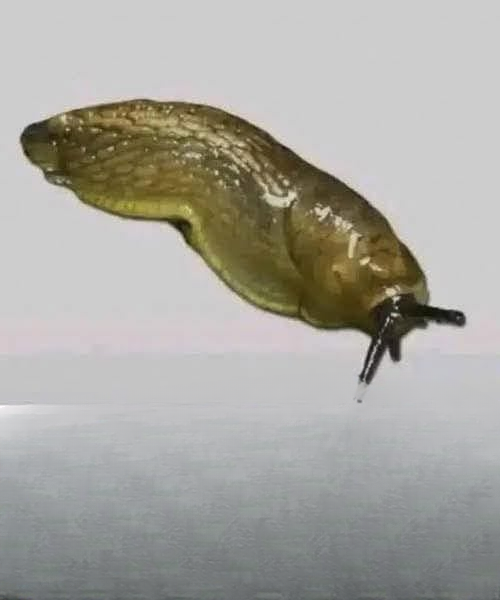
Why a Slug Might Enter Your Home: What It Means, Why It Happens, and What You Can Do
Finding a slug in your garden, on a patio, or even inside your home can be an unexpected experience. These small, soft-bodied creatures often appear after rain or during damp weather, leaving shiny trails across the surfaces they travel over. While some people immediately want to remove them, others wonder why they have appeared and whether their presence reveals anything about the surrounding environment.
Slugs are common members of many outdoor ecosystems. They live in gardens, forests, fields, and other places where moisture and food are available. Although they are not always welcome around plants or inside a house, their behavior is generally straightforward: they are searching for suitable conditions in which to survive.
A slug entering a home does not have a scientifically established symbolic meaning. It does not predict good luck, financial changes, or future events. However, its presence can offer practical clues about moisture, access points, and the conditions around a building.
Understanding these clues can help homeowners respond appropriately. Instead of reacting with disgust or immediately reaching for chemicals, it is possible to identify why the slug appeared, remove it safely, and reduce the chances of future visits.
Why Do Slugs Enter Houses?
Slugs are soft-bodied mollusks that depend on moisture to remain active. Unlike animals with protective shells or thick, water-resistant coverings, many slugs are vulnerable to drying out. Their behavior is strongly influenced by humidity, temperature, rainfall, and the availability of food.
A home may accidentally provide a route into a protected environment, particularly when outdoor conditions are wet or when small gaps allow slugs to pass through.
Several common factors can explain why one appears indoors.
1. Moisture Around the Building
Moisture is one of the most important factors affecting slug activity. After rainfall, soil becomes damp, plants retain water, and shaded surfaces may remain wet for hours. These conditions make it easier for slugs to move around without drying out.
The ground around a house can offer similar conditions, especially beneath plant pots, along garden walls, beside outdoor taps, or near areas with poor drainage.
If a slug enters through a gap beneath a door or another low opening, it may continue moving until it finds a suitable place to stop.
A slug indoors does not automatically mean that the house has a serious dampness problem. It may have entered accidentally from the garden. Nevertheless, repeated sightings near the same location can justify checking for condensation, plumbing leaks, damp materials, or water collecting near the building.
2. Small Gaps Around Doors and Windows
Slugs can move through surprisingly narrow openings because their bodies are soft and flexible. Gaps beneath exterior doors, spaces around pipes, damaged weatherstripping, and openings near basement entrances may provide access.
Ground-level rooms are often more exposed to these routes than upper floors, although the layout of each property makes a difference.
A slug may enter while following a damp surface or moving toward an area where food is available. It does not need a large opening or a deliberate invitation from the homeowner.
Checking door sweeps, repairing damaged seals, and closing unnecessary gaps can help reduce the likelihood of slugs entering.
Any repair should preserve required ventilation and drainage. Openings that serve a necessary building function should not be blocked without understanding their purpose.
3. Garden Plants and Organic Material
Slugs feed on a range of organic materials. Depending on the species and available food, their diet may include living plant tissue, decaying leaves, fungi, and other plant material.
Gardens containing dense vegetation, leaf litter, compost, and damp soil can provide favorable conditions.
A slug may hide beneath a plant container during the day and become active after sunset. It might then travel along a wall, cross a patio, or approach a doorway.
Potted plants can occasionally bring slugs closer to indoor spaces, especially when containers are moved inside without being inspected.
If you regularly bring outdoor plants indoors, check the undersides of pots and the surrounding soil. This simple step can help prevent unwanted visitors from entering along with the plants.
4. Cool and Shaded Areas
Direct sunlight and dry conditions can make travel difficult for slugs. As a result, they often favor shaded locations and become more active during cooler periods.
The area around a building may contain several protected routes, including the underside of steps, spaces beneath garden furniture, shaded foundations, and the edges of flower beds.
If the indoor environment is relatively cool and a slug finds an opening, it may continue into the house before encountering conditions that are too dry.
The animal is not necessarily attracted to the building itself. It may simply be following a path that begins outdoors and happens to lead inside.
5. Food Residue or Accessible Organic Matter
Slugs do not enter homes because they are specifically searching for human food in the same way that some household pests do. However, accessible organic material can make certain locations attractive to them.
Food scraps, vegetables stored in low or open containers, decaying plant matter near an entrance, and damp organic debris may provide opportunities for feeding.
Keeping kitchen areas clean, storing food appropriately, and removing decaying vegetation near doors can make indoor and outdoor spaces less inviting.
These measures are sensible household habits, even when a slug’s arrival was simply accidental.
Does a Slug in Your Home Have a Hidden Meaning?
People have long assigned symbolic meanings to animals that appear unexpectedly. In folklore, insects, birds, amphibians, and other creatures have sometimes been associated with prosperity, change, patience, or different stages of life.
Slugs may also inspire personal interpretations because of their slow movement and ability to persist in challenging environments. Someone might associate a slug with patience, gradual progress, or the importance of paying attention to small details.
Such interpretations can be interesting as personal reflections or cultural storytelling, but they are not scientific explanations.
There is no reliable evidence that a slug entering a house predicts a financial opportunity, a change in a relationship, a family event, or an approaching problem. Its presence is better understood through its biology and the conditions surrounding the property.
Slugs and the Idea of Patience
Because slugs move slowly, they can be used as symbols of patience and gradual progress in a story or personal reflection.
The comparison is easy to understand. A slug does not travel quickly, but it can continue moving toward a suitable destination. Someone who sees one might use the encounter as a reminder that progress does not always happen immediately.
That can be a meaningful personal interpretation, but it does not mean the animal has arrived to deliver a message.
In practical terms, a slug is moving in response to its environment. Its route may be influenced by moisture, temperature, shelter, and the availability of food.
Slugs and Environmental Awareness
A more practical interpretation is that the encounter provides an opportunity to observe the natural environment.
If slugs frequently appear around your home, you might discover that the garden retains moisture, that vegetation is dense near the foundations, or that there are small gaps around a doorway.
These observations can help you improve maintenance and understand the wildlife living around your property.
However, one slug does not prove that a house is damp or that a garden has a particular ecological condition. It is simply one piece of information that may be useful when considered alongside other observations.
Why Cultural Beliefs Should Be Kept Separate From Facts
Folklore can provide insight into how people understand the natural world. Different communities may assign different meanings to the same animal, and those meanings can change over time.
It is reasonable to enjoy such stories while recognizing their limitations.
When it comes to a slug entering a home, the most reliable explanations involve ordinary environmental conditions. Moisture, food, shelter, and accessible openings provide a much stronger basis for understanding the encounter than predictions about future events.
What Role Do Slugs Play in Nature?
Although slugs are often viewed as garden pests, they are part of many natural ecosystems. Their role is more complex than their reputation might suggest.
Depending on the species, slugs consume living plants, dead vegetation, fungi, and other organic material. Their feeding behavior can sometimes damage garden crops, but it can also contribute to the breakdown of organic matter.
Slugs also serve as food for various animals, including some birds, beetles, amphibians, reptiles, and small mammals.
This makes them part of the food web, connecting plant material and decomposing organic matter with animals that feed on them.
Their importance varies by habitat and species. Some slugs are non-native or invasive in certain regions