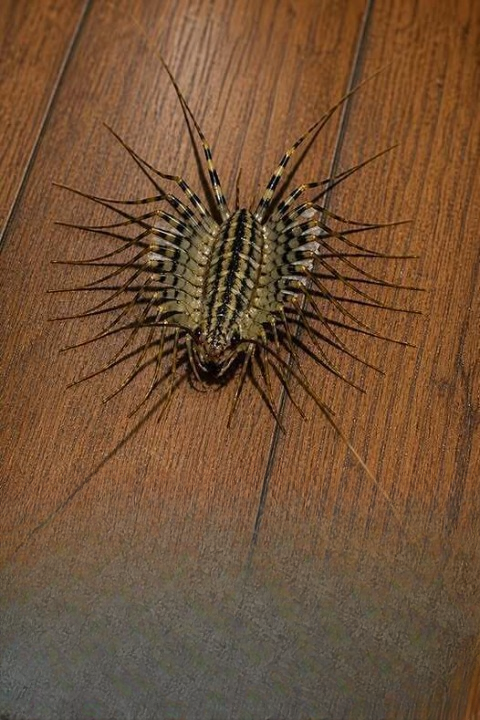
What I Learned After Discovering a House Centipede in My Home
It was a quiet night, and the house had finally settled into that familiar stillness that comes long after everyone has gone to sleep. The television was off, the lights were dim, and the world outside seemed calm and silent. Like many people, I enjoy those peaceful late-night moments when everything feels slower and more relaxed.
Then, out of the corner of my eye, I noticed movement across the floor.
At first, I wasn’t sure what I had seen. It moved quickly—faster than most insects people commonly encounter indoors. A small creature with many delicate legs crossed the tile and disappeared into the shadow near a wall before I could get a closer look.
My immediate reaction was surprise.
Many people have similar experiences when they unexpectedly encounter an unfamiliar insect inside their home. It’s natural to feel curious, concerned, or even slightly startled when something appears that you don’t recognize. After all, our homes are spaces where we expect comfort and familiarity.
The next morning, I decided to learn more about what I had seen.
That simple moment led me into an interesting exploration of one of the most misunderstood household visitors: the house centipede.
A Common but Misunderstood Visitor
House centipedes are found in many regions around the world and are more common than many people realize. Because they tend to stay hidden in dark, quiet places, many homeowners may live alongside them for years without ever noticing.
When people first see a house centipede, the appearance often catches their attention immediately.
Its long legs, slender body, and quick movements make it look quite different from insects people encounter every day. For some individuals, this unusual appearance can be surprising. Others may simply be curious.
But appearance alone does not tell the whole story.
Learning more about these creatures reveals that they play a specific role in the indoor environment and often remain unnoticed because they prefer to stay away from people.
What Is a House Centipede?
The house centipede is an arthropod known for its many long legs and fast movement. Unlike insects, which have six legs, centipedes have multiple pairs of legs along their bodies.
House centipedes are typically light brown or grayish in color, with darker markings and very long, delicate legs. They can move quickly, which helps them navigate walls, ceilings, floors, and other surfaces.
Although their appearance may seem unusual, they are generally shy creatures that prefer hidden locations.
You are most likely to encounter them in areas such as:
- Basements
- Bathrooms
- Laundry rooms
- Storage spaces
- Closets
- Garages
- Kitchens
- Areas with higher humidity
These locations often provide the moisture and shelter they prefer.
Why Are House Centipedes Found Indoors?
Like many small creatures, house centipedes seek environments that provide favorable conditions.
Three main factors often attract them:
1. Moisture
House centipedes prefer areas with humidity. Bathrooms, basements, and spaces with limited airflow can be attractive environments.
If a home has leaking pipes, condensation, or damp corners, it may create suitable conditions.
2. Shelter
They prefer quiet places where they can remain hidden during daylight hours.
Cracks, storage boxes, gaps behind furniture, and unused corners provide places to rest.
3. Food Sources
House centipedes feed on other small household pests.
Their presence can sometimes indicate that other insects are also present in the home.
This is one reason people occasionally discover them in areas where there are:
- Silverfish
- Small spiders
- Ants
- Moths
- Other tiny insects
Nature’s Indoor Hunters
One of the most interesting things I learned was that house centipedes are active hunters.
Unlike insects that search for food scraps or stored items, house centipedes primarily feed on other small creatures.
They use their speed and agility to capture tiny insects in hidden areas of a home.
This means that their presence may sometimes indicate that they are finding food sources elsewhere indoors.
In many ways, they are part of the natural balance found in indoor environments.
Why They Move So Quickly
One of the first questions many people ask is:
Why are house centipedes so fast?
Their long legs allow them to move efficiently across surfaces. Speed helps them locate food and avoid larger animals.
This quick movement can make encounters more memorable because the creature may disappear before a person has time to fully identify it.
Although their speed can be surprising, it is simply a natural adaptation.
Are House Centipedes Dangerous?
Many people wonder whether house centipedes pose a risk to humans.
House centipedes generally avoid people and prefer to stay hidden.
They are not aggressive and usually move away quickly when disturbed.
Like many small creatures, they prefer avoiding contact rather than interacting with people.
For most homeowners, house centipedes are simply an occasional household visitor rather than a significant concern.
However, if someone has questions about pests or unusual insects in their home, local pest management professionals can provide advice tailored to specific situations.
Why We React Strongly to Unfamiliar Creatures
Our reactions to insects and small creatures are often influenced by surprise.
Something unexpected moving quickly can immediately capture attention.
This response is natural.
Humans are wired to notice sudden movement, unfamiliar shapes, and unexpected changes in the environment.
Sometimes our first reaction is based more on surprise than on actual understanding.
Learning about a creature often changes the way we view it.
Knowledge replaces uncertainty.
Curiosity replaces confusion.
And understanding helps us see that many creatures are simply following their natural behaviors.
A Reminder About Home Maintenance
My unexpected discovery also reminded me of something important:
The condition of a home affects the types of creatures that may appear indoors.
Simple maintenance steps can improve comfort and reduce conditions that attract insects.
These include:
- Repairing leaks
- Reducing moisture
- Improving ventilation
- Sealing cracks and gaps
- Keeping storage areas organized
- Cleaning hidden spaces regularly
These practices can help create a cleaner and more comfortable indoor environment.
Why Moisture Matters
Moisture plays a major role in indoor ecosystems.
Damp spaces can attract various insects and small creatures.
This is why bathrooms, basements, and laundry areas are often locations where homeowners notice unusual visitors.
Reducing excess humidity can improve indoor comfort while also discouraging conditions that attract certain pests.
Small improvements can make a noticeable difference over time.
The Hidden World Inside Every Home
One thing I found fascinating was the realization that homes contain small ecosystems that often go unnoticed.
Most of the time, we never think about it.
We clean, organize, decorate, and enjoy our living spaces without considering the tiny creatures that may occasionally pass through hidden corners.
Yet nature exists all around us.
Outside our doors, there are birds, insects, plants, and animals interacting in countless ways.
Indoors, smaller versions of these natural processes can sometimes be found as well.
Understanding this helps us see our homes in a slightly different way.
Curiosity Can Replace Fear
When I first noticed movement across the floor, my reaction was immediate surprise.
But after learning more, my perspective changed.
Instead of seeing only something unfamiliar, I began to see part of a larger natural story.
Many creatures that appear unusual at first are simply following instincts that have existed for thousands of years.
They search for food.
They seek shelter.
They respond to their environment.
And in most cases, they are far more interested in avoiding people than interacting with them.
A Lesson in Observation
That late-night encounter became an unexpected lesson in observation.
Sometimes, when we encounter something unfamiliar, our first instinct is to react quickly.
But taking a moment to learn more can provide valuable perspective.
This applies not only to insects and nature but to many parts of life.
Information often leads to understanding.
Understanding often leads to better decisions.
And curiosity can turn an ordinary moment into an opportunity to learn something new.
Practical Tips for Homeowners
If you notice house centipedes or other insects indoors, consider these practical steps:
- Check for excess moisture.
- Repair leaks promptly.
- Improve ventilation where needed.
- Seal entry points around doors and windows.
- Reduce clutter in storage areas.
- Keep floors and hidden corners clean.
- Consult local professionals if pest concerns become significant.
These steps support a healthy home environment.
Why Education Matters
One of the best ways to reduce unnecessary worry is through education.
When people understand what they are seeing, they can make informed decisions.
House centipedes may look unusual, but learning about their behavior provides context.
This doesn’t mean everyone will enjoy seeing one indoors.
Most people still prefer unexpected visitors to remain outside.
But understanding the role of different creatures helps transform uncertainty into knowledge.
Final Thoughts
What began as a simple late-night surprise turned into an interesting lesson about the natural world that exists around us every day.
House centipedes are one of many creatures that quietly share our environments, often remaining hidden and unnoticed.
Their unusual appearance and fast movements can certainly attract attention, but learning about them reveals a more complete picture.
Sometimes, an unexpected discovery becomes an opportunity to learn.
And sometimes, the things we understand the least become far less mysterious once we take the time to explore them.
That night reminded me of something simple:
Curiosity can often turn surprise into knowledge.
And knowledge can change the way we see the world—even the tiny parts of it moving quietly across the floor in the middle of the night.